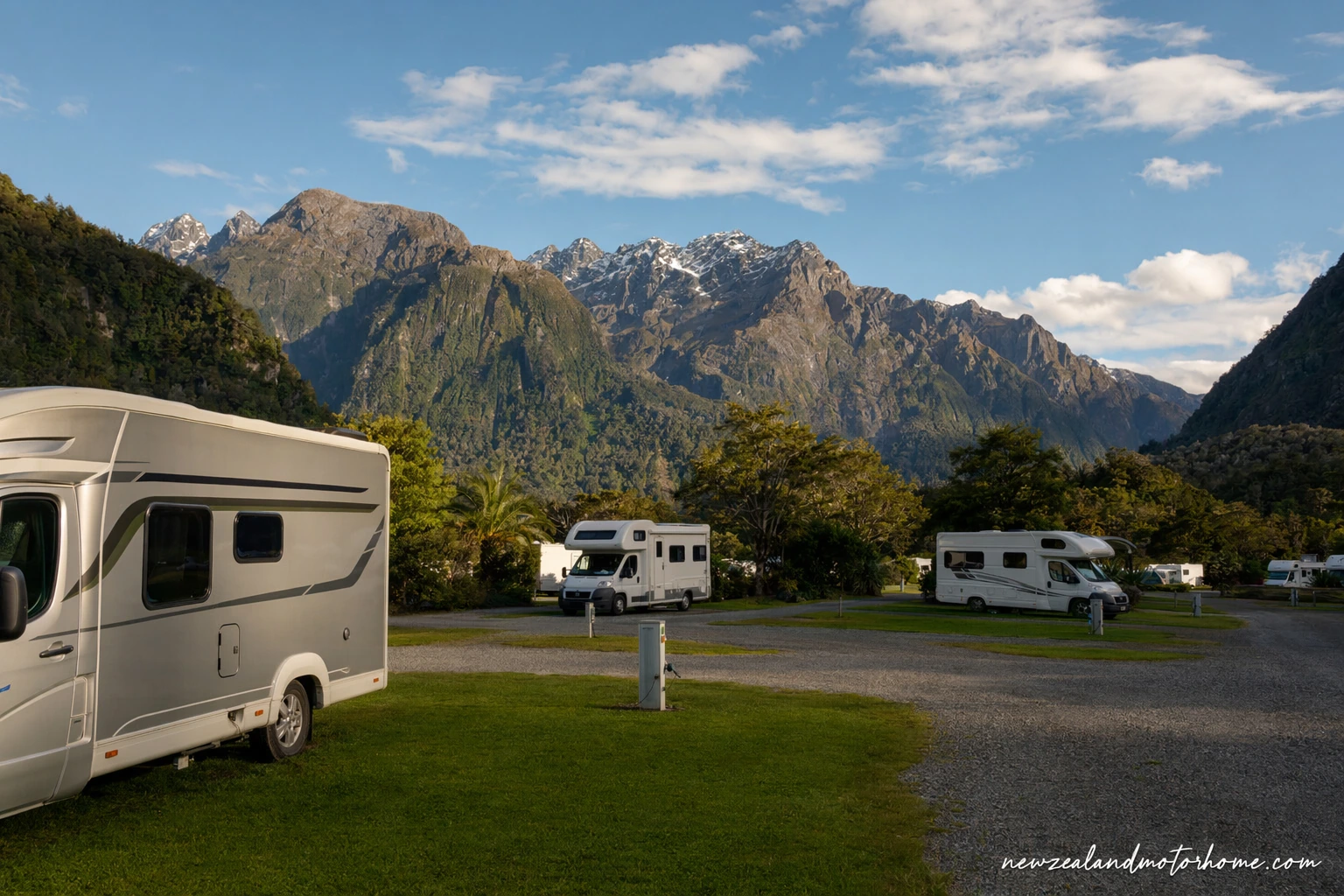
- Best hub: Te Anau
- Site types: powered, unpowered, basic DOC-style
- Allow 2–4 nights for Fiordland
- Milford Road: slow motorhome driving
- Self-contained van strongly recommended
Holiday parks Fiordland style are less about big resort rows and more about choosing the right base for the road you want to drive next. In a campervan, Te Anau is the practical hub, Manapouri is the quieter lakeside pause, and the Milford Road is a scenic corridor where you need to think hard about power, fresh water, toilets and where you are legally allowed to sleep.
This guide is written for self-drive travellers sleeping in their hired van. You’ll find how the main campgrounds Fiordland offers are spread out, when powered sites matter, where to empty and refill, and what to expect when driving a longer or higher motorhome towards Milford Sound.
How Fiordland’s campervan bases are spread out
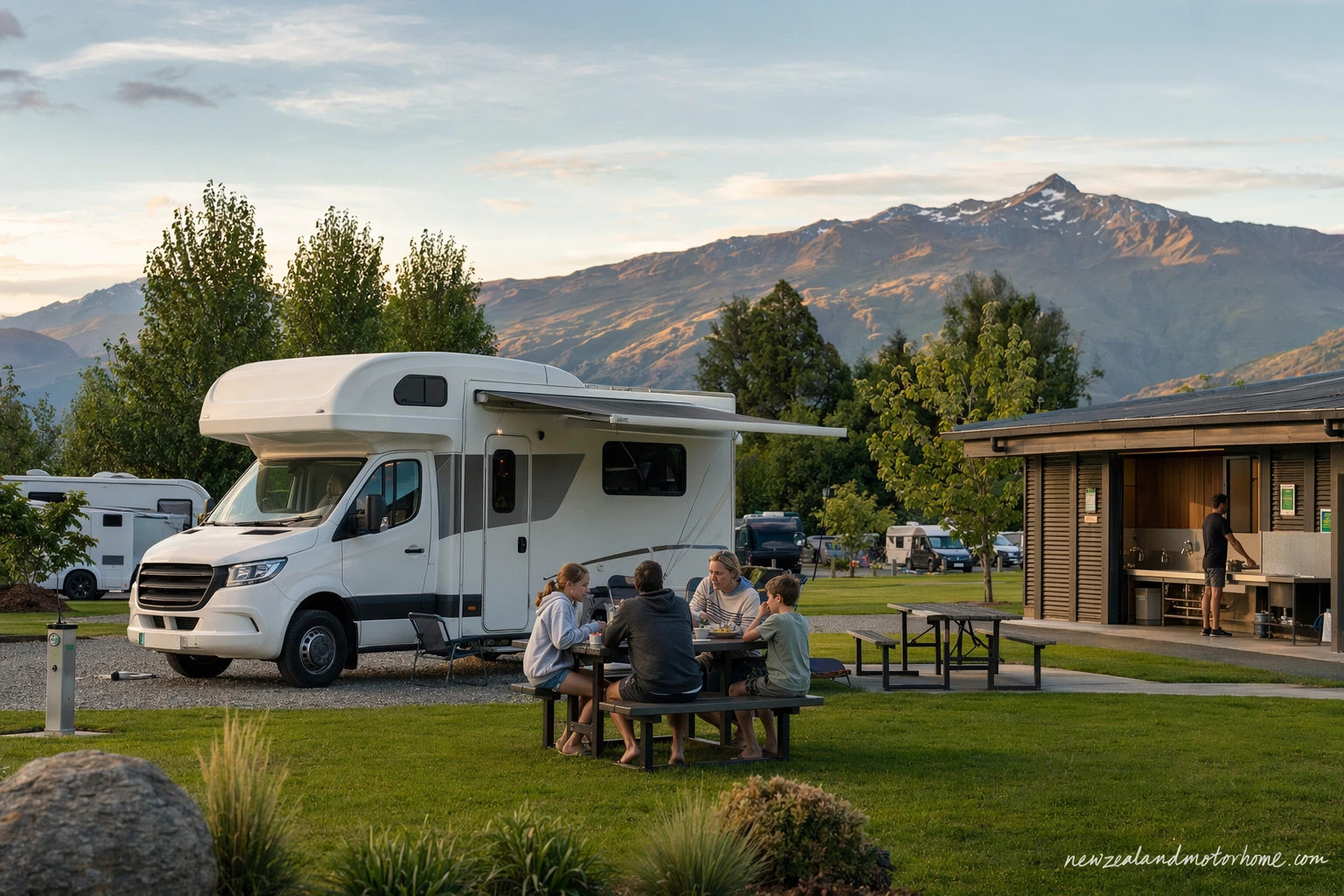
Fiordland is huge, but the usable overnight options for campervans cluster in a few places. Te Anau has the strongest choice of holiday parks, groceries, fuel, LPG bottle swaps or fills, public toilets and dump-station access. It is the easiest place to reset the van before driving into the national park.
Manapouri, about 20 minutes from Te Anau, suits travellers who want a calmer night before or after a Doubtful Sound trip. Milford Sound itself has very limited overnight capacity for campervans and needs advance planning, especially in summer or around public holidays.
- Te Anau: best all-round base for powered sites Fiordland wide, dump stations, food, fuel and Milford day trips.
- Manapouri: quieter lake setting, good for Doubtful Sound departures and a slower second night.
- Milford Road DOC-style campsites: scenic, usually unpowered, more basic, and better for certified self-contained vans.
- Milford Sound: very limited places to stay overnight; do not arrive assuming you can park up anywhere.
Powered, unpowered and basic campsites in Fiordland
If you are travelling in a modern campervan with a fridge, heater, device charging and possibly electric cooking, a powered site every second or third night makes Fiordland much easier. Te Anau holiday parks are the most reliable place to plug in, top up fresh water, use laundry facilities and let the house battery properly recover after several damp, cool nights.
The more scenic campsites Fiordland is known for are often simpler: unpowered bays, long-drop or basic toilets, no showers, and no dump station. They can be wonderful in settled weather, but they require a van that is genuinely set up for off-grid camping, with enough grey-water capacity and a toilet that meets current self-containment certification rules.
A quick top 10 holiday park Fiordland search can be misleading because there are not ten large, full-service parks scattered through the national park. The better question is whether tonight needs power and facilities, or whether you can comfortably manage an unpowered conservation-style site without breaching freedom camping rules.
Freedom camping rules and self-containment checks
Fiordland is not a place to wing it with overnight parking. Much of the land is national park, road corridor or council-controlled area, and restrictions can change by exact location. A lay-by that looks quiet during the day is not automatically a legal overnight stop for a campervan.
Travel with proof that your hired van is certified self-contained, and still read the signs at each car park, lakeshore and roadside reserve. In sensitive places around Te Anau, Manapouri and the Milford Road, overnight stays may be limited to marked campsites or recognised campgrounds Fiordland authorities manage.
- Do not empty grey water into drains, gravel or bush.
- Use your onboard toilet or campground facilities; do not rely on finding public toilets open late.
- Arrive before dark at basic sites so you can park the van without blocking access.
- Check current council and Department of Conservation notices before committing to an overnight stop.
Dump stations, water, fuel and LPG before the Milford Road
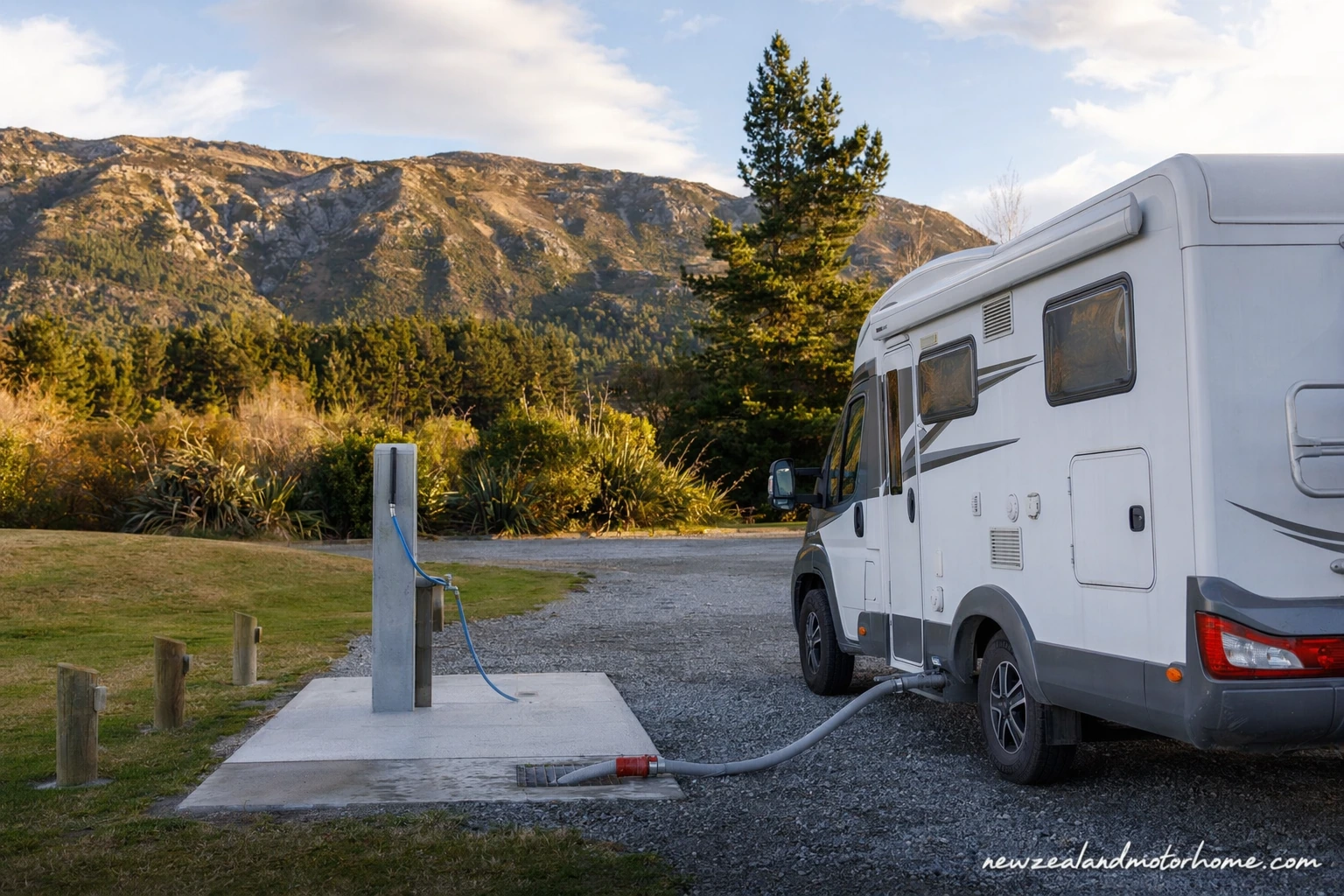
Te Anau is the sensible service stop before you point the bonnet towards Milford Sound. Empty the toilet cassette and grey-water tank, fill fresh water, check fuel range and sort LPG while you are still in town. Many holiday parks provide guest dump facilities, and Te Anau also has public service options, but availability and access can vary, so do the practical jobs when you see the chance.
Do not count on solving van-service problems once you are deep on the Milford Road. There are long stretches without shops, fuel, mobile coverage or a place to legally discharge waste. In colder months, a full LPG bottle is not just for cooking; it may be what keeps the cabin comfortable after rain and low cloud roll through.
If you would like a route that spaces powered nights, dump stations and scenic unpowered stops sensibly, you can send your dates through the plan-your-trip form and we’ll help shape the driving days around the van rather than around a rental-car itinerary.
Driving between Fiordland holiday parks in a motorhome
The distances on the map look modest, but Fiordland driving is slow in a campervan. Te Anau to Milford Sound is about 118 kilometres each way, yet most self-drive travellers should allow at least half a day one way if stopping for photos, short walks and weather delays. The road includes narrow sections, one-lane bridges, avalanche zones in season and the Homer Tunnel approach, where you need to use low gears and avoid overheating brakes on the descent.
Longer motorhomes need extra care at popular stops such as Mirror Lakes, The Chasm area when open, and small roadside viewpoints. If a car park is tight, keep moving rather than nosing into a space you cannot reverse out of safely. Pull well off the traffic lane, fold mirrors if needed, and never leave the van in a bus turning area.
- Te Anau to Manapouri: easy short hop, useful for a rest night or Doubtful Sound connection.
- Te Anau to Milford Sound: spectacular but demanding; start early with tanks sorted.
- Te Anau to Queenstown or Invercargill: straightforward touring roads, but still allow for wind, rain and fuel stops.
Common questions
Is Te Anau the best place to book a Fiordland holiday park?
For most campervan trips, yes. Te Anau has the widest choice of powered and unpowered sites, food supplies, fuel, dump-station access and practical van services before the Milford Road.
Can I freedom camp on the road to Milford Sound?
Only where overnight camping is specifically allowed. Much of the Milford Road sits within sensitive national park land, so use marked campsites or booked accommodation, and carry current self-containment certification for your van.
Do Fiordland campsites have powered sites?
Full-service holiday parks in Te Anau and some settled areas are the best bet for power. Many scenic DOC-style campsites are unpowered, so arrive with charged batteries, fresh water and empty waste tanks.
Should I stay at Milford Sound overnight in a campervan?
It can be memorable, but options are limited and should be arranged before you drive in. Do not rely on finding a spare legal park on arrival, especially in summer or after bad-weather road closures.
Where should I empty the toilet cassette before exploring Fiordland?
Te Anau is the most practical place to empty and refill before heading deeper into the region. Many holiday parks have guest facilities, and public dump-station options are generally easier to find there than on the Milford Road.
Have a planner shape this for your dates
Send a short outline — your dates, party size, and the kind of trip you want. A planner replies with a vehicle recommendation, a paced route, and the realistic budget.