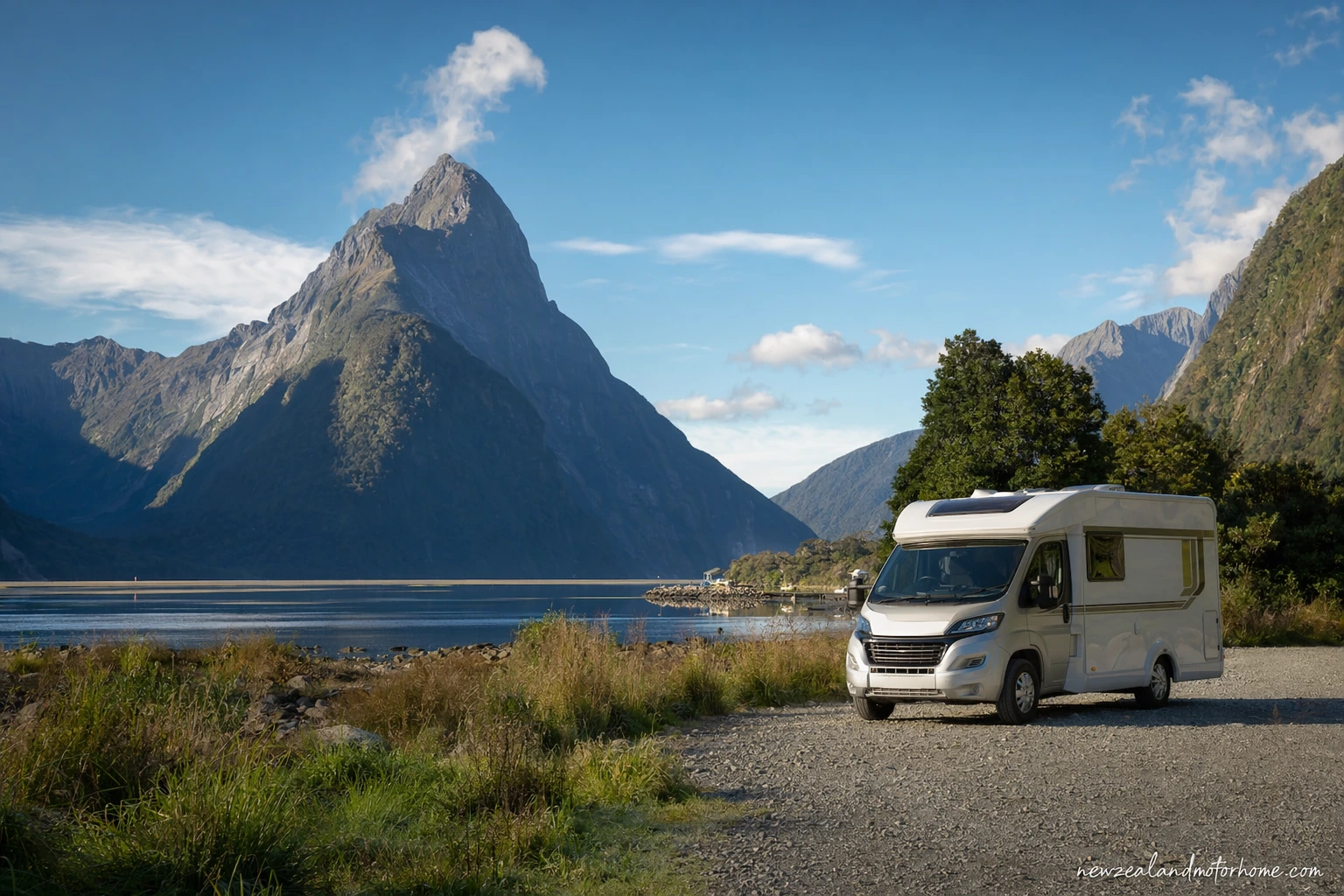
- Best months: late February–April
- Allow 3–4 nights if you can
- Fuel and dump before Milford Road
- Powered sites useful in wet weather
- Winter chains may be required
Fiordland is not a place you simply squeeze in between fuel stops. In a campervan, the timing matters: rain can sit on the mountains, Milford Road can close in winter, and the best overnight spots are often a careful balance between scenery, self-containment rules and how far you want to drive after dark.
This guide looks at the best time to visit Fiordland NZ for a self-drive motorhome trip, with month-by-month weather notes, campsite availability, freedom camping realities, dump station planning, road conditions and the seasonal feel of Te Anau, Manapouri, Milford Sound and Doubtful Sound access.
Best overall months for a Fiordland campervan trip
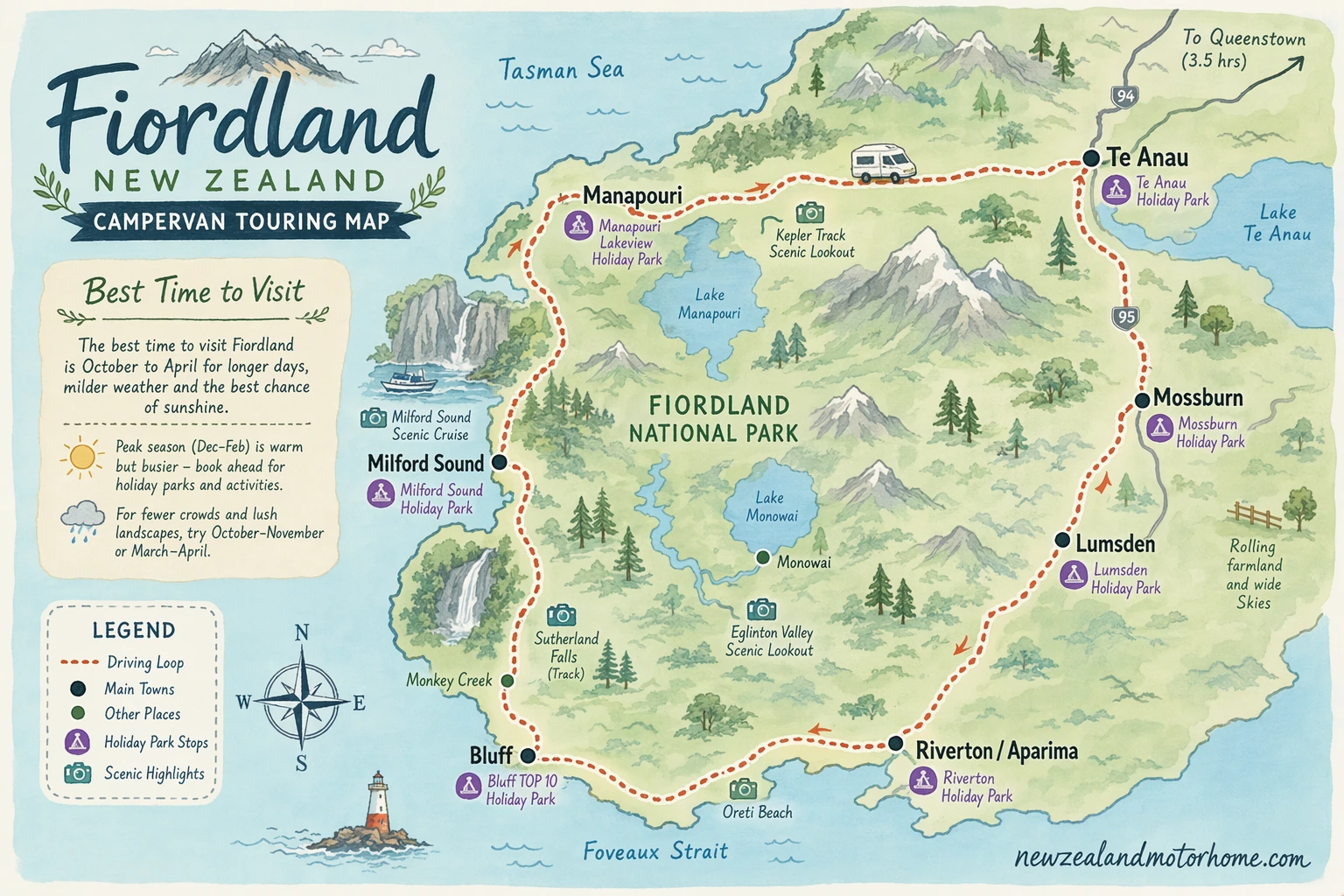
For most campervan travellers, the sweet spot is from late February to April. The days are still long enough for Milford Road stops, the worst of the summer rush has eased, and the weather, while still very Fiordland, is often more settled than mid-winter. March is especially good if you want warm afternoons, fewer full holiday parks and a better chance of finding an unpowered site without locking in every night weeks ahead.
December and January are beautiful but busy. If you are driving a larger motorhome, you will feel that busyness at lakefront parking areas, Milford Sound day parking, and popular DOC-style campgrounds along the road. Book powered sites in Te Anau early if you need to charge batteries, run a heater or use holiday park laundry after several wet days.
- Best balance: late February, March and April.
- Warmest feel: January and February, with sandflies and crowds to match.
- Quietest road feel: May, June and parts of September, but with shorter daylight and colder nights.
- Most caution needed: July and August, when snow, ice and avalanche control can affect Milford Road.
Fiordland weather by month: what it means for your van
Any honest look at Fiordland weather by month has to start with this: it rains a lot, in every season. That is part of why the cliffs, beech forest and waterfalls are so dramatic. For campervan travel, the question is less “will it rain?” and more “can we dry gear, keep batteries topped up, and avoid committing to a long exposed drive in poor visibility?”
- January–February: warmest months, long daylight, busy campsites, frequent sandflies near water and still plenty of heavy rain days.
- March–April: cooler mornings, often calmer travel pace, good daylight for Milford Road and a strong shoulder-season choice.
- May–June: quieter, colder and darker; powered sites become more useful if your van heating relies on 240V.
- July–August: winter driving conditions, possible snow and ice, and a real need to check Milford Road status before leaving Te Anau.
- September–October: changeable spring weather, waterfalls in full voice, some windier days and gradually improving daylight.
- November–December: fresh green forest, longer days and rising visitor numbers as summer bookings build.
Pack your van as if the outside world will be wet for two days in a row. A small mat at the sliding door, a place to hang damp jackets, and a plan for using holiday park dryers can make the trip much more comfortable.
Campsites, freedom camping and overnight planning
Fiordland is not the region for assuming you can pull over anywhere for the night. Much of the landscape sits within national park, and overnight camping is restricted to designated places. A certified self-contained van helps with flexibility, but it does not override local bylaws, DOC rules or “no camping” signs.
Te Anau is the most practical base for a motorhome: it has holiday parks with powered and unpowered sites, food supplies, fuel, fresh-water fills and dump station options. Manapouri is quieter and useful for Doubtful Sound trips, but still requires a little more forward planning. Along Milford Road, DOC-style campsites such as those near lakes and forest clearings are scenic, but facilities are simpler and spaces can fill early in peak season.
- Summer: book Te Anau powered sites ahead, especially if you need laundry, showers and a recharge night.
- Shoulder seasons: more chance of spontaneous unpowered sites, though weekends and school holidays can still be tight.
- Winter: fewer travellers, but check which campgrounds and services are open before relying on them.
- Milford Sound: do not plan to freedom camp in day parking areas; use legal overnight options and arrive with water, fuel and waste sorted.
Driving conditions: Milford Road, parking and van size
Milford Road is one of New Zealand’s great drives, but in a campervan it deserves respect. From Te Anau to Milford Sound there are long stretches with no fuel, limited mobile coverage and no easy alternative route. Fill diesel or petrol in Te Anau, top up fresh water, empty the toilet cassette, and check LPG before you point the van towards the mountains.
The road is sealed and used by campervans every day in season, but it is not a casual late-evening drive if you are tired. Expect narrow sections, tight bends, steep grades near the Homer Tunnel, changing light in the valley and sudden weather. In winter, chains may be required and the road can close for snow, ice or avalanche work; always check current road conditions before leaving.
- Large motorhomes: allow extra time for photo stops and pull over only where the bay is long enough for your vehicle.
- Height and ventilation: the Homer Tunnel is part of the standard route, but follow all signals and keep spacing sensible.
- Parking at Milford Sound: follow current signs for visitor or Deepwater Basin parking, and do not treat day parks as overnight stops.
- Driving after rain: waterfalls are superb, but watch for surface water, misted mirrors and slower traffic.
What is open, crowded or easier by season
When to visit Fiordland depends partly on what you want to do outside the van. Boat trips on Milford Sound and Doubtful Sound operate across much of the year, but schedules, daylight and weather disruptions can change the shape of your day. If you are taking a Doubtful Sound trip, your van stays parked at or near Manapouri while you travel by boat and coach into the fiord, so plan an overnight before or after rather than trying to dash onward tired.
Summer brings the widest range of walking, cruising and lakefront activity, but it also brings the most pressure on parking and campsites. Autumn feels more relaxed and is excellent for travellers who prefer a quieter holiday park and a slower morning start. Winter can be stark and beautiful, yet it suits confident drivers who are happy to build in weather buffers and keep plans flexible.
- Great Walk season: huts and tracks are busiest through the main walking months, which also affects Te Anau accommodation demand.
- Short walks: many Milford Road stops are easiest in summer and autumn when daylight is generous.
- Wet days: good for waterfalls, less good for drying boots and bedding in a compact campervan.
- School holidays: expect tighter powered-site availability and more families in holiday parks.
How many days to allow in Fiordland
A rushed one-night detour rarely does Fiordland justice in a motorhome. At minimum, allow two nights: one in Te Anau and one either on Milford Road, back in Te Anau, or near Manapouri depending on your plans. Three to four nights is much better, giving you a weather buffer for Milford Sound and time to sort practical van jobs without eating into daylight.
A comfortable campervan rhythm is to arrive in Te Anau, plug into a powered site if the weather has been cold or wet, stock up, then drive Milford Road the next day without towing your whole schedule behind you. If you want a hand matching season, van size and overnight stops, our plan-your-trip step is there for a calm second opinion before you lock in dates.
- Two nights: workable for Milford Sound if weather and road conditions behave.
- Three nights: better for one full Milford Road day plus a restock and laundry night.
- Four or more nights: ideal if adding Manapouri, Doubtful Sound or slower lakeside time.
Common questions
What is the best time to visit Fiordland NZ in a campervan?
Late February to April is the best all-round window for most campervan travellers. You get reasonable daylight, slightly calmer campsite demand than peak summer, and fewer winter road complications.
Can I freedom camp in Fiordland with a self-contained van?
Only in places where overnight camping is legally allowed. A certified self-contained vehicle gives you more options in New Zealand, but Fiordland has national park rules and local restrictions, so always use designated sites and check signs on arrival.
Do I need to book campsites in Te Anau in advance?
In December, January, February and school holidays, yes, especially for powered sites or larger motorhomes. In autumn and spring you may have more flexibility, but booking your first night is still sensible after a long drive.
Is Milford Road suitable for a motorhome?
Yes, many campervans and motorhomes drive Milford Road, but it needs careful timing. Fill fuel in Te Anau, check road conditions, allow extra time, and be prepared for snow, ice or closures in winter.
Where should I empty the toilet cassette before Milford Sound?
Plan to use dump station facilities in Te Anau or Manapouri before heading deep into Fiordland. Do not rely on finding full motorhome services at Milford Sound, and never empty grey water or toilet waste outside approved dump stations.
Have a planner shape this for your dates
Send a short outline — your dates, party size, and the kind of trip you want. A planner replies with a vehicle recommendation, a paced route, and the realistic budget.