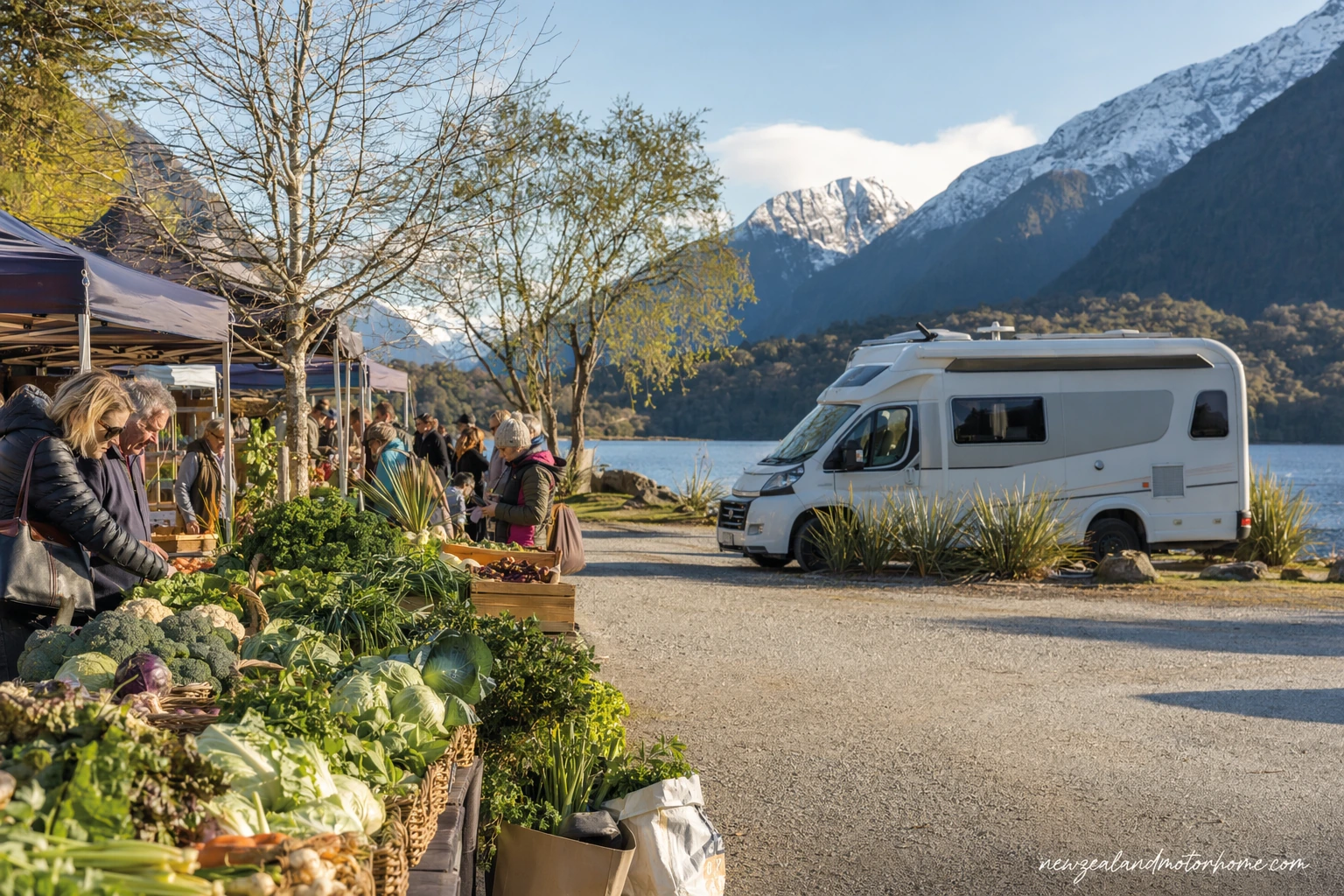
- Best hub: Te Anau
- Peak market feel: summer weekends
- Allow: half a day plus services
- Van note: arrive early for long parks
- Site mix: powered, unpowered, DOC
Fiordland is not a big-market region in the city sense. It is quieter and more seasonal: a Saturday morning in Te Anau, a summer pop-up near the lake, a roadside stall with honesty-box eggs, and locally made bits that travel well in a campervan pantry.
This guide is written for self-drive travellers sleeping in their hired van. You’ll find how to approach farmers markets Fiordland without getting caught in tight town parking, what fresh produce Fiordland is most likely to offer, and how to link a market stop with dump stations, water fills, LPG and overnight sites before heading towards Milford Sound, Manapouri or the Southern Scenic Route.
Where the market action is: Te Anau first, pop-ups second
Te Anau is the practical hub for farmers markets Fiordland. It has the biggest mix of groceries, fuel, campervan services and community events, so most travellers use it as the restock point before a Fiordland National Park drive. Market days are usually concentrated around weekends, especially in the warmer months and over holiday periods, but local schedules can shift with weather, stallholder numbers and community events.
For a campervan, the best approach is to treat Te Anau as a morning stop rather than a quick roadside dash. Park the van, walk the centre and lakefront, then do your supermarket top-up only after seeing what the market has. That way the fresh bread, eggs, greens, berries, preserves or honey do not get buried under a full food shop.
- Most likely base: Te Anau town centre and lakefront area.
- Best timing: weekend mornings, with extra food markets Fiordland campervan travellers may find during summer and long weekends.
- Check before you drive: look for current posters, visitor information boards or community pages the day before.
- Van note: arrive early if you are in a longer motorhome, as central spaces fill fast when the weather is settled.
Parking the van without squeezing into the wrong space
Te Anau is easier than Queenstown, but a 7-metre motorhome still needs a little patience. Around the lakefront and town centre, look for longer parallel spaces or larger public parking areas rather than forcing the van into short angle parks. Keep clear of coach bays, boat-ramp manoeuvring areas and motel entrances; locals use these streets every day, not just on market mornings.
If the central parking looks tight, park a few streets back and walk in with a reusable bag or chilly bag. The town is flat enough for an easy stroll, and it saves the slow loop of trying to turn a motorhome around among pedestrians and reversing cars.
- Longer vans: choose edge spaces where your rear overhang will not block a footpath or traffic lane.
- High-roof vans: watch trees and shop awnings when pulling in close to the kerb.
- Fridge planning: switch the fridge to 12V while driving, then open it as little as possible after buying chilled food.
- Rubbish: take packaging back to your campsite bins; market areas are not dump spots for van waste.
What to buy for a Fiordland campervan pantry
Fresh produce Fiordland is seasonal and often supplemented by nearby Southland and Central Otago growers, so expect the mix to change through the year. In summer and early autumn you may see salad greens, herbs, berries, stone fruit, tomatoes, baking, preserves and eggs. Cooler months lean more towards hardy vegetables, honey, jams, chutneys, bread and small-batch pantry items.
Buy with the next road in mind. The Milford Road has no proper supermarket once you leave Te Anau, and there is no fuel at Milford Sound. If you are heading into DOC campgrounds or a non-powered site, choose meals that do not rely on running your fridge hard all day or using lots of fresh water for washing up.
- Good van buys: eggs, bread, fruit, salad greens, spreads, cheese if you have reliable refrigeration, and one-pan vegetables.
- For Milford Road: pack lunch before you go; café and shop options are limited and can be busy.
- For non-powered nights: pre-chop vegetables while on power, then cook simply at the campsite.
- For sandfly evenings: choose quick meals so you are not standing outside the van for too long.
Services to sort before or after the market
A market stop works best when it sits inside a practical service loop. Te Anau is where you should sort fuel, LPG, potable water, groceries and waste before pushing deeper into Fiordland. Do not assume you can fill water at a random public tap, and do not leave toilet waste until you are already on the Milford Road.
Most travellers are better off emptying the cassette and grey water, refilling fresh water, then buying food. That keeps the van lighter and cleaner before you load fresh produce. If you are unsure how to join Te Anau, Manapouri and Milford Sound into a sensible self-drive loop, you can use the talk-to-us planning step and we’ll help you line up stops without rushing the driving days.
- Dump stations: use signposted public dump points or your holiday park facilities; never drain grey water roadside.
- Fresh water: fill from marked potable taps only, usually at campgrounds, holiday parks or designated service points.
- LPG: top up or swap bottles in Te Anau before heading towards Milford Sound or remote DOC campsites.
- Self-containment: carry proof of current certification if using designated freedom camping areas.
Overnight stops that pair well with weekend markets Fiordland
If the market is your morning anchor, stay close the night before. Te Anau has holiday park and campground options with powered and unpowered sites, which is useful if you want to chill food properly, charge devices, dump waste and take on water before a national park drive. Powered sites are especially handy before Milford Road, where cold mornings and camera charging can drain a house battery faster than expected.
Manapouri is a calmer overnight choice if you are heading for Doubtful Sound connections or want a quieter lakeside feel after shopping in Te Anau. DOC-style campsites north of Te Anau on the Milford Road suit self-contained vans and simple cooking, but they are not a replacement for town services. Stock, dump and fill first.
- Te Anau: best for powered sites, dump facilities, fuel, food and an easy walk to market activity.
- Manapouri: good for a quieter night and access to the lake, with fewer services than Te Anau.
- Milford Road DOC camps: scenic but basic; expect unpowered sites and limited facilities.
- Freedom camping: only use legal, signposted areas and follow local council rules for certified self-contained vehicles.
Road notes for market-to-mountains driving
From Te Anau, the driving becomes properly Fiordland. The Milford Road is sealed and spectacular, but it is not a casual late-afternoon run in poor weather. Allow extra time for slow corners, wet surfaces, photo stops, buses, rental vehicles and the Homer Tunnel. Longer motorhomes should use pull-outs thoughtfully and avoid stopping where signs mark avalanche, rockfall or no-parking zones.
After a weekend market, it is tempting to linger over coffee and then leave town late. In winter or heavy rain, that can put you on the steepest, darkest part of the road at the worst time. If your van is tall or catches wind, check the forecast and keep loose produce packed low so it does not roll out when you open cupboards at camp.
- Fuel: fill in Te Anau; do not rely on services further along the Milford Road.
- Vehicle size: standard campervans can drive the route, but take care with overhang, mirrors and tunnel traffic.
- Weather: heavy rain is normal in Fiordland; waterproof your market bags and keep towels near the sliding door.
- Timing: buy food in the morning, service the van, then drive with daylight in hand.
Common questions
Are farmers markets in Fiordland open every week?
Can I park a large motorhome near Te Anau market stalls?
Is there fresh produce in Fiordland before driving to Milford Sound?
Can I freedom camp after visiting a Fiordland food market?
Should I choose powered or unpowered sites after buying market food?
Have a planner shape this for your dates
Send a short outline — your dates, party size, and the kind of trip you want. A planner replies with a vehicle recommendation, a paced route, and the realistic budget.