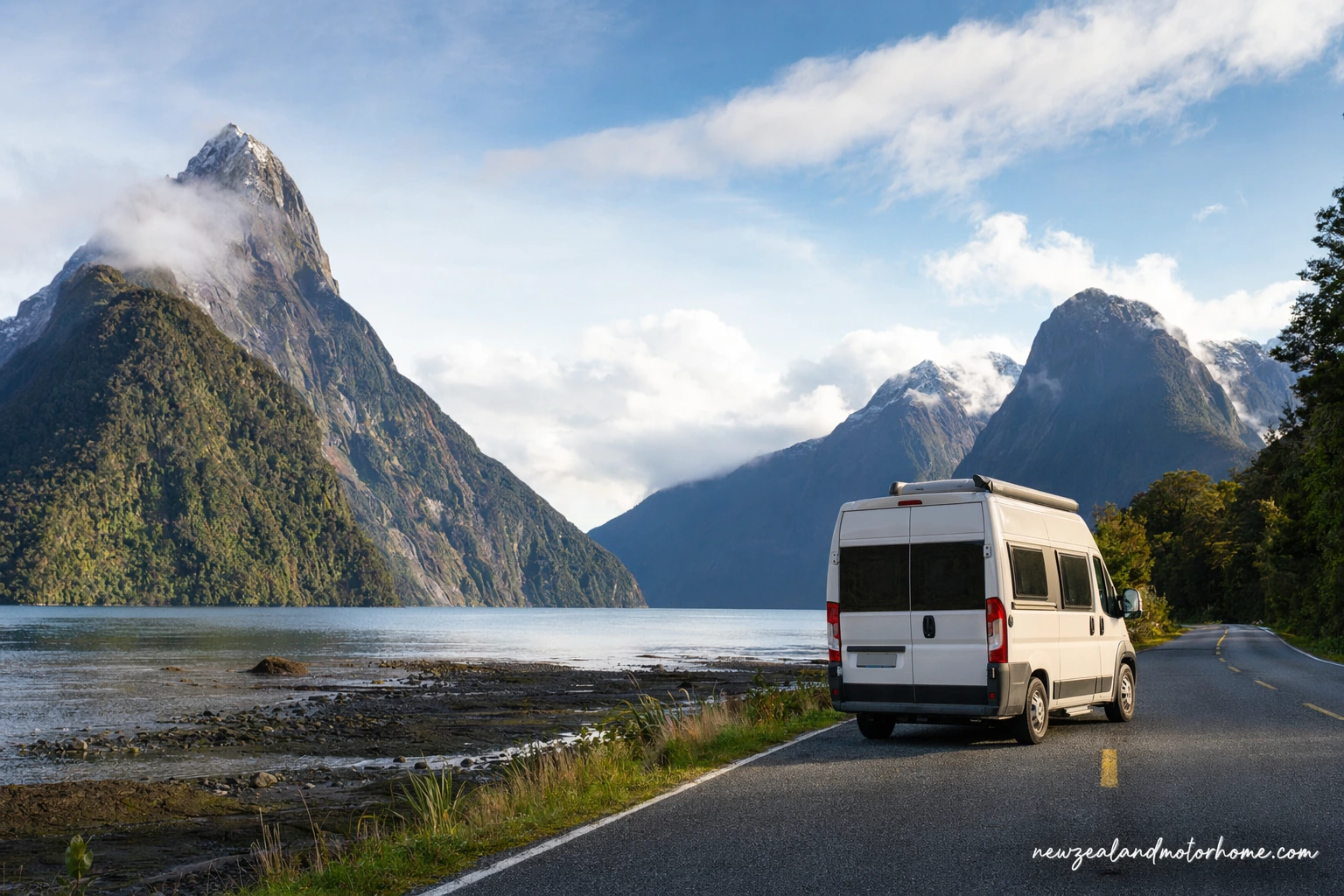
- Best base: Te Anau
- Allow 3-5 nights if possible
- Milford Road has no fuel
- Freedom camping is restricted
- Unpowered remote sites need self-sufficiency
Fiordland is where a campervan trip starts to feel properly remote: long beech-lined valleys, sudden rain, mirror-still lakes and the big drive to Milford Sound/Piopiotahi. It is brilliant by van, but it rewards travellers who plan fuel, water, weather and overnight stops before rolling past Te Anau.
This campervan guide Fiordland NZ page is written for self-drive motorhome travellers sleeping in their own hired van. You will find practical notes on the Milford Road, where to base yourself, powered and unpowered sites, dump stations, freedom camping restrictions, and the Fiordland campervan stops that are worth slowing down for.
How many days to allow and where to base the van
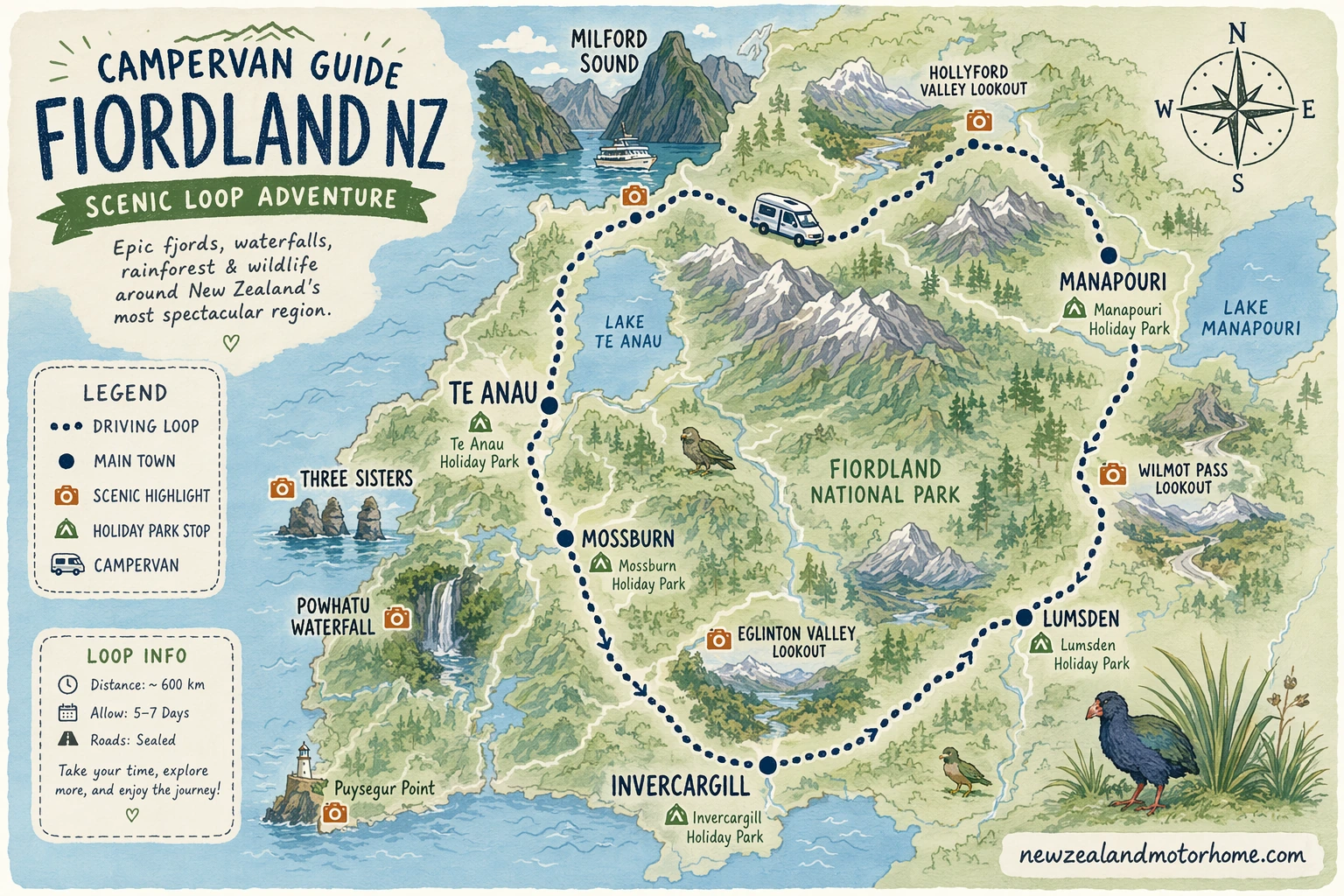
For most self-drive travellers, Te Anau is the easiest campervan base for Fiordland. It has fuel, groceries, fresh-water fills, dump station access and a choice of powered sites before you commit to the more isolated Milford Road. Manapouri is quieter and works well if Doubtful Sound/Patea is on your list, but it has fewer services, so arrive with your grey-water tank empty and your fresh tank topped up.
A rushed one-night visit can get you to Milford Sound and back, but it leaves no room for weather delays, short walks or a slower morning beside the lake. Three to four nights is a far better motorhome Fiordland rhythm, especially if you want both Milford and Manapouri without moving the van every day.
- 2 days: Te Anau overnight, Milford Road day trip, return to Te Anau.
- 3 days: Te Anau plus one unpowered DOC-style night on the Milford Road if booked or permitted for your vehicle.
- 4-5 days: Add Manapouri, Kepler Track day walks, lakefront downtime and a buffer for rain.
If you are unsure whether your van size, travel month and preferred campsite style fit together, use the talk to us step and we can help shape the Fiordland section of your route without overloading the driving days.
Driving the Milford Road in a campervan
The Milford Road, State Highway 94, is one of New Zealand’s great drives, but it is not a casual city-to-beach run. From Te Anau there is no fuel, very limited mobile coverage, long stretches with no shops, and weather that can change while you are still deciding whether to stop for a photo. Fill fuel, water and LPG in Te Anau before leaving.
Campervan drivers need to take extra care around the Homer Tunnel, on the steeper descents, and in the narrow sections where coaches, rental cars and road-work vehicles all share the same lane width. Use lower gears on descents, pull into proper lay-bys rather than half-parking on the shoulder, and allow longer than the map suggests.
- Mirror Lakes: small parking areas; easier early before tour traffic builds.
- Lake Gunn and Cascade Creek: good places to pause the van, stretch and use facilities where provided.
- The Divide: a useful long-vehicle stop for Routeburn or Key Summit walks, but spaces can fill quickly.
- Homer Tunnel: check winter conditions, keep headlights on, and do not stop inside the tunnel.
- Milford Sound: use marked long-vehicle parking and allow time to walk to the cruise terminal if you have a booking.
In winter and spring, snow, ice and avalanche controls can affect the road. Carry chains if your hire agreement and the season require them, and always check current road conditions before driving beyond Te Anau Downs.
Overnight stops: powered, unpowered and freedom camping
Fiordland is not the place to rely on finding a casual roadside freedom camping spot at dusk. Much of the region sits inside or beside Fiordland National Park, and overnight parking is tightly controlled. A current self-containment certification does not give permission to sleep anywhere; you still need to use legal, signposted places and follow DOC or council rules.
Te Anau is the easiest place for powered sites, hot showers, laundry and a reset after wet weather. Along the Milford Road, overnight options are generally unpowered conservation-style camps with basic facilities and no dump station. These suit certified self-contained vans that can manage a night or two without plugging in, provided you arrive with enough water and battery capacity.
- Powered sites: best found in Te Anau and, to a lesser extent, Manapouri.
- Unpowered sites: available at selected conservation camps on the Milford Road; expect basic facilities and book or check rules in advance.
- Freedom camping: restricted around Te Anau, Milford Road and the national park; only use places where overnight stays are clearly allowed.
- Non-self-contained vans: plan on holiday parks or campsites with toilets, not remote roadside stops.
A good Fiordland campervan plan usually alternates comfort and remoteness: a powered night in Te Anau, an unpowered night closer to the mountains if conditions suit, then back to services before tanks and batteries get low.
Dump stations, water, LPG and supplies
Te Anau is the practical service hub for campervans in Fiordland. Treat it as your reset point for groceries, fuel, fresh water, rubbish disposal, toilet cassette emptying and LPG checks. Once you head towards Milford Sound, services become sparse very quickly, and conservation camps do not have facilities for emptying grey water or toilet waste.
Do not drive the Milford Road with a nearly full grey-water tank or a toilet cassette you hope to empty later. The same goes for fresh water: rain is common in Fiordland, but potable water for your van is not something to assume at every stop.
- Empty grey water and toilet waste at an approved dump station before leaving Te Anau.
- Top up fresh water where it is clearly signed as drinkable.
- Check LPG before cold, damp nights; heating and cooking use more than many first-timers expect.
- Pack groceries for at least the next day if staying up the Milford Road.
- Take rubbish back to town rather than leaving it at small scenic stops.
Manapouri has some campervan services, but it is better treated as a quiet lakeside base than a full resupply point. If you are connecting Te Anau, Manapouri and Milford, do your main van chores in Te Anau first.
Things to do in Fiordland with a campervan
The best things to do Fiordland campervan travellers can enjoy are often simple: park legally, make a brew, and let the weather move across the ranges. That said, some experiences do need timing. Milford Sound cruises, Doubtful Sound departures, glowworm trips and popular day walks can all shape where you should sleep the night before.
For Milford Sound, many van travellers either stay in Te Anau and leave early, or sleep at a legal unpowered site along the Milford Road to shorten the morning drive. For Doubtful Sound, park the van in Manapouri for the day and join the lake-and-coach connection; you do not drive your campervan over Wilmot Pass.
- Milford Sound/Piopiotahi: arrive early, use long-vehicle parking, and allow time for the terminal walk.
- Key Summit: a rewarding day walk from The Divide, with proper parking but high demand in fine weather.
- Lake Gunn Nature Walk: short, van-friendly and atmospheric in light rain.
- Kepler Track day sections: easy to pair with a Te Anau powered-site base.
- Manapouri lakefront: good for a slower night before or after Doubtful Sound.
Build in pauses rather than stacking the day too tightly. In Fiordland, a half-hour weather window at a lookout can be more memorable than another rushed stop squeezed into a long driving schedule.
Seasonal weather, sandflies and van safety
Fiordland is wet by reputation and by reality. Rain can make waterfalls spectacular, but it also brings misted windscreens, slower braking, damp gear and muddy campsite ground. In a larger motorhome, keep your weight balanced, secure loose items before winding sections, and avoid soft verges when pulling over for photos.
Summer brings longer days and busy parking areas, especially around Milford Sound and The Divide. Winter is quieter but requires more attention to road conditions, daylight hours, heating, battery use and possible snow or ice. Sandflies are part of the Fiordland deal year-round in sheltered, damp places, so keep insect repellent handy and close the van door quickly at dusk.
- Check road and weather updates before committing to the Milford Road.
- Use designated pull-outs only; narrow shoulders can drop away or become soft after rain.
- Ventilate the van overnight to reduce condensation, even when it is cold.
- Keep food sealed and never feed kea or other wildlife around parking areas.
- Leave a driving buffer after cruises or walks so you are not descending in the dark while tired.
The slower you travel here, the better Fiordland feels. Plan the essentials, then give yourself enough time to sit out a shower, wait for a cloud to lift, or choose the safer overnight stop.
Common questions
Can I freedom camp on the Milford Road in a certified self-contained campervan?
Not wherever you like. Overnight camping on and around the Milford Road is restricted, and self-containment certification only helps if the site itself allows overnight stays. Use legal DOC or council-approved sites and check current rules before you park up for the night.
Is the Milford Road suitable for a large motorhome?
Yes, many motorhomes drive it, but it needs care. Expect narrow sections, steep grades, the Homer Tunnel, weather changes and limited places to turn around. If your van is long or high, allow extra time and use marked long-vehicle parking areas only.
Where should I empty my toilet cassette before Milford Sound?
Use an approved dump station in Te Anau before you head up the Milford Road. Do not assume you can empty waste at DOC camps or scenic stops. Travel with empty waste tanks and enough fresh water for the full out-and-back drive.
Should I stay in Te Anau or Milford Sound overnight?
Te Anau has the best choice of powered sites, supplies and campervan services, so it suits most travellers. Staying closer to Milford can reduce the morning drive, but options are limited, often unpowered or booked ahead, and you need to be self-sufficient.
How long do I need for Fiordland in a campervan?
Allow at least two nights if you only want Milford Sound from Te Anau. Three to five nights is more comfortable for a Fiordland campervan trip, giving you time for Manapouri, short walks, laundry, tank resets and weather delays.
Have a planner shape this for your dates
Send a short outline — your dates, party size, and the kind of trip you want. A planner replies with a vehicle recommendation, a paced route, and the realistic budget.