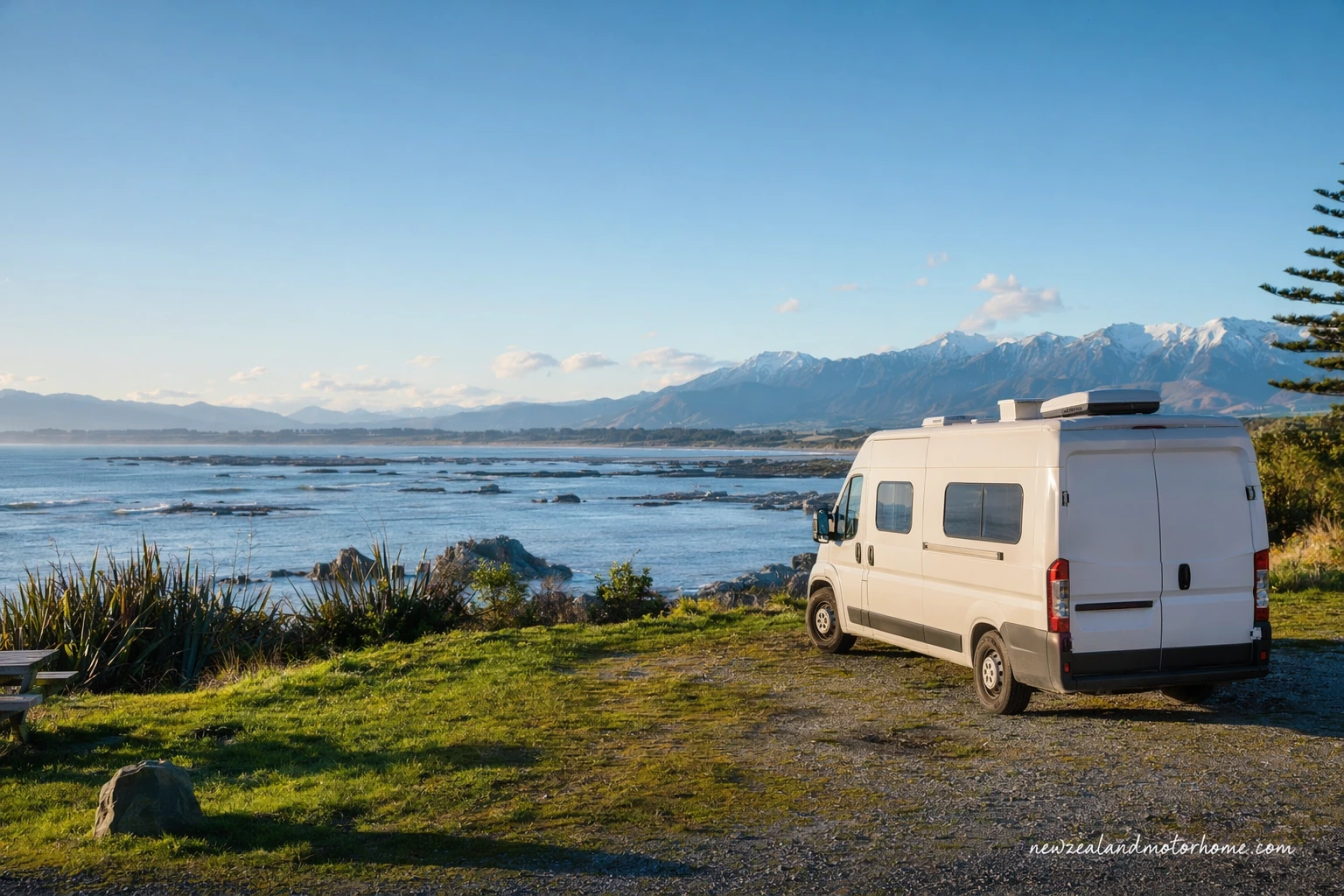
- Best over 1-2 nights
- SH1 coastal driving
- Certified self-contained for freedom camping
- Powered sites useful in winter
- Large vans: use sealed pull-ins
Kaikōura is one of those South Island drives where the van door opens straight to salt air, shingle beach and big ranges. For self-drive campervan travellers, the trick is not just knowing what to see, but where a larger vehicle can actually pull in, turn around, fill up and sleep legally.
This guide strings together the best campervan stops Kaikoura offers: coastal viewpoints, seal-watching pull-ins, town and peninsula parking, freedom camping Kaikoura notes, holiday park options, and the practical bits that keep a motorhome day running smoothly.
First, read Kaikōura like a campervan driver
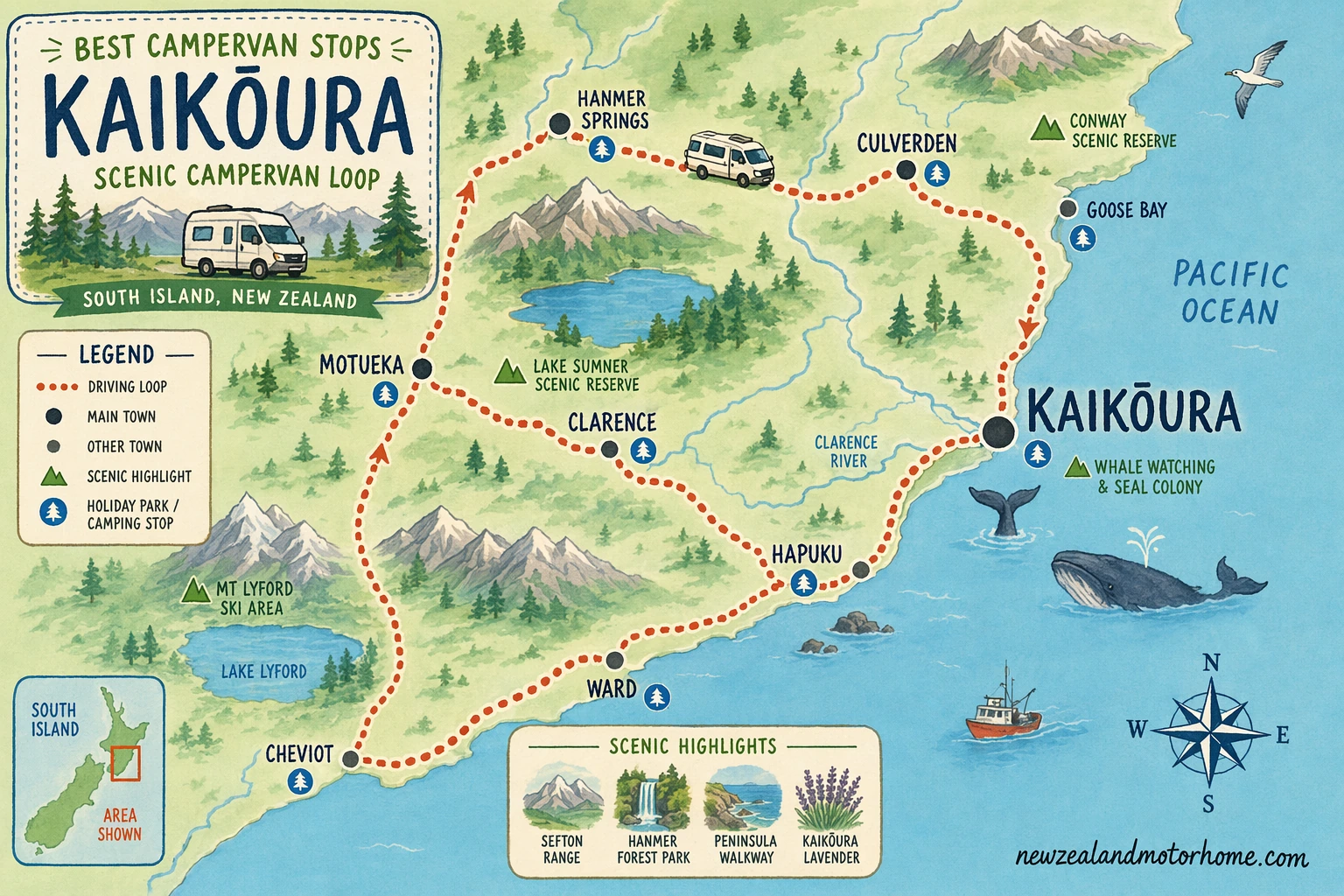
Kaikōura sits hard against State Highway 1, with the Pacific on one side and steep country on the other. That makes the scenery superb, but it also means pull-ins can be narrow, busy or exposed to wind. If you are in a longer motorhome, take the early, obvious lay-bys rather than trying to stop suddenly at a view you have already half-passed.
Allow more time than the map suggests, especially if you are coming from Blenheim, Picton or Christchurch. SH1 north and south of town has had major coastal works over the years, so check the current road status before you roll. In wet weather or strong winds, keep both hands on the wheel around open coastal corners.
- Best driving rhythm: arrive outside peak lunchtime if you want easier van parking in town.
- Long vehicle tip: use signed scenic lay-bys and avoid squeezing onto soft shingle shoulders.
- Height note: town streets are straightforward, but watch tree branches in beach-edge car parks.
- Self-containment: carry your certificate details and follow the signs; rules are enforced here.
Coastal pull-ins for views, seals and a proper leg stretch
The coastline either side of Kaikōura is the drive people remember: dark rocks, kelp, surf, seabirds and the Seaward Kaikōura Range rising behind the road. The best van stops are the wider, sealed pull-ins where you can get fully off the carriageway, open the sliding door safely and take a few minutes without blocking traffic.
North of town, look for signed coastal viewing areas rather than informal shoulders. These are better for high-roof vans and are less likely to leave you fighting passing trucks when you rejoin SH1. South of town, the coast opens and closes in quick sections, so plan to stop at the bigger bays instead of braking late for every glimpse.
- Seal viewing: give seals a wide berth, never park between wildlife and the sea, and keep children close around rocks.
- Photo stops: choose pull-ins where the van sits level; coastal wind can catch a raised roof or open door.
- Lunch stops: a self-contained van is ideal, but take rubbish with you and do not drain grey water roadside.
Town, Point Kean and South Bay: easy stops close together
If you only have half a day, focus on the compact run from Kaikōura town to the peninsula. Park the campervan in a marked public space near the town centre for coffee, groceries and a harbour wander, then continue towards Point Kean for the classic seal colony and coastal rock shelves. Point Kean can be busy, so longer motorhomes are better arriving early or later in the afternoon when day traffic thins.
From Point Kean, the Kaikōura Peninsula Walkway is the best way to see the coast without moving the van every ten minutes. Lock up, take water and walk a section rather than trying to chase every viewpoint by road. If the Point Kean parking area is full or awkward for your vehicle length, loop around to South Bay and use the more open feel there for a breather.
- Point Kean: scenic but popular; avoid overhanging the roadway with a long rear overhang.
- Fyffe Quay and the harbour: good for short stops, but watch pedestrians, boat trailers and tight turning areas.
- South Bay: useful for a quieter picnic stop and access to the peninsula track from the other side.
Where to stay campervan Kaikoura: holiday parks or legal freedom camping
When people ask where to stay campervan Kaikoura, the honest answer is: decide first whether you want facilities or a simple legal overnight. Holiday parks in and around town suit vans needing powered sites, showers, laundry, fresh water and a dump station. They are also a calmer choice if southerly weather is pushing along the coast or if you want to plug in after several unpowered nights.
Freedom camping Kaikoura is not a park-anywhere situation. Overnight stays are restricted to designated places and generally require a certified self-contained vehicle, with signs setting out time limits, vehicle numbers or seasonal conditions. Check the current council information on arrival, because boundaries and enforcement can change.
- Choose powered: if you need to charge house batteries, run a heater safely or reset after cold coastal weather.
- Choose unpowered: if your solar, battery and water are healthy and the forecast is settled.
- Choose freedom camping: only where signs allow it, with toilets on board and grey water retained.
- Avoid: beach access tracks, boat ramps, residential verges and any spot signed no overnight camping.
Services: fuel, water, dump stations and stocking the van
Kaikōura is a good reset point between bigger South Island drives. Top up fuel before you leave town, especially if you are heading north along the coast or south towards rural Canterbury with a heavier motorhome. For fresh water and waste, use your holiday park facilities or council-signed dump station points; do not assume every public tap is for filling a campervan tank.
For LPG, groceries and basic van supplies, plan your errands while you are already parked in town rather than circling repeatedly through the busiest streets. Larger vans are easier to manage if one person walks to check access before committing to a tight forecourt or rear car park.
If you would like help threading Kaikōura into a wider South Island route, use the talk-to-us step and tell us your van size, travel month and whether you prefer powered sites or freedom camping nights.
A simple one-day campervan route around Kaikōura
For a relaxed day, start with a coastal pull-in north or south of town while the light is low and the road is quieter. Continue into Kaikōura for supplies and a short town walk, then drive out to Point Kean for seal viewing and the peninsula track. Finish at South Bay or your chosen overnight stop so you are not hunting for a site in the dark.
If you are staying two nights, use the first afternoon for the peninsula and the second morning for a slower coastal drive before departure. That gives you time to let weather, tides and parking pressure work in your favour, which is often the difference between a rushed stop and a good campervan day.
- Short stay: town centre, Point Kean, South Bay, legal overnight.
- Two-night stay: add northern and southern coastal pull-ins, a longer peninsula walk and a full service stop.
- Departure tip: dump, fill water and fuel up before joining SH1 for the next long leg.
Common questions
Can I freedom camp in Kaikōura in a campervan?
Yes, but only in designated places and only if your vehicle meets the stated requirements, usually certified self-containment. Always read the local signs on arrival, as freedom camping Kaikoura rules can change by location and season.
Is Kaikōura suitable for a large motorhome?
Yes, but you need to be selective with stops. Use sealed scenic pull-ins, arrive early at Point Kean, and avoid soft shoulders or tight beach access tracks where turning a long vehicle can be awkward.
Do I need a powered site in Kaikōura?
Not always, but a powered site is useful after cold weather, cloudy solar days or several freedom camping nights. Holiday parks also make it easier to dump waste, refill fresh water, shower and do laundry in one stop.
Where is the easiest place to park the van for the peninsula walk?
Point Kean is the classic start, but it can fill quickly and is tighter for longer motorhomes. South Bay can be a more relaxed alternative if you want to walk part of the peninsula track without squeezing into the busiest car park.
Should I book a holiday park before arriving?
In summer, school holidays and long weekends, booking ahead is sensible, especially if you need a powered site. Outside peak periods you may have more flexibility, but it is still worth checking before you commit to arriving late.
Have a planner shape this for your dates
Send a short outline — your dates, party size, and the kind of trip you want. A planner replies with a vehicle recommendation, a paced route, and the realistic budget.