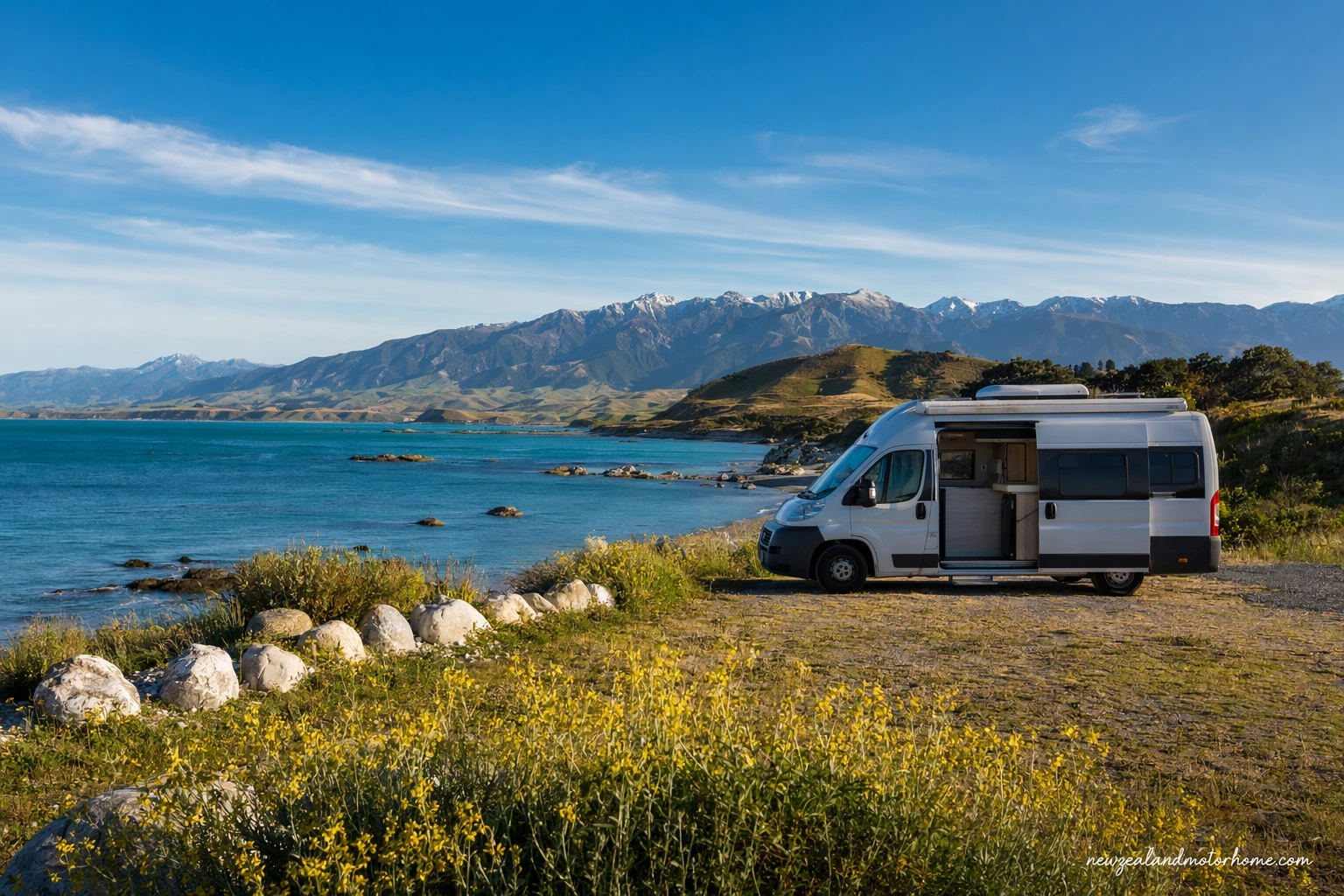
- Best months: Mar-Apr and Oct-Nov
- Allow 1-2 nights
- Book powered sites in summer
- Certified self-contained for freedom camping
- Check SH1 conditions after heavy rain
Kaikōura is one of those South Island stops where the drive is part of the stay: the Pacific hard against SH1, the Seaward Kaikōura Range rising behind town, and seals hauled out near the rocks when you least expect them. For a campervan traveller, the best time to visit Kaikoura NZ is less about one perfect month and more about matching weather, road conditions, campsite space and your tolerance for busy car parks.
This guide looks at when to visit Kaikoura for settled days, quieter overnight stops, marine wildlife, freedom-camping practicalities and van-friendly driving. It is written for people sleeping in the vehicle they drive, so you will find notes on powered sites, dump stations, fresh water, LPG, parking the van and what the coastal road can feel like in different seasons.
Quick answer: the best campervan months for Kaikōura
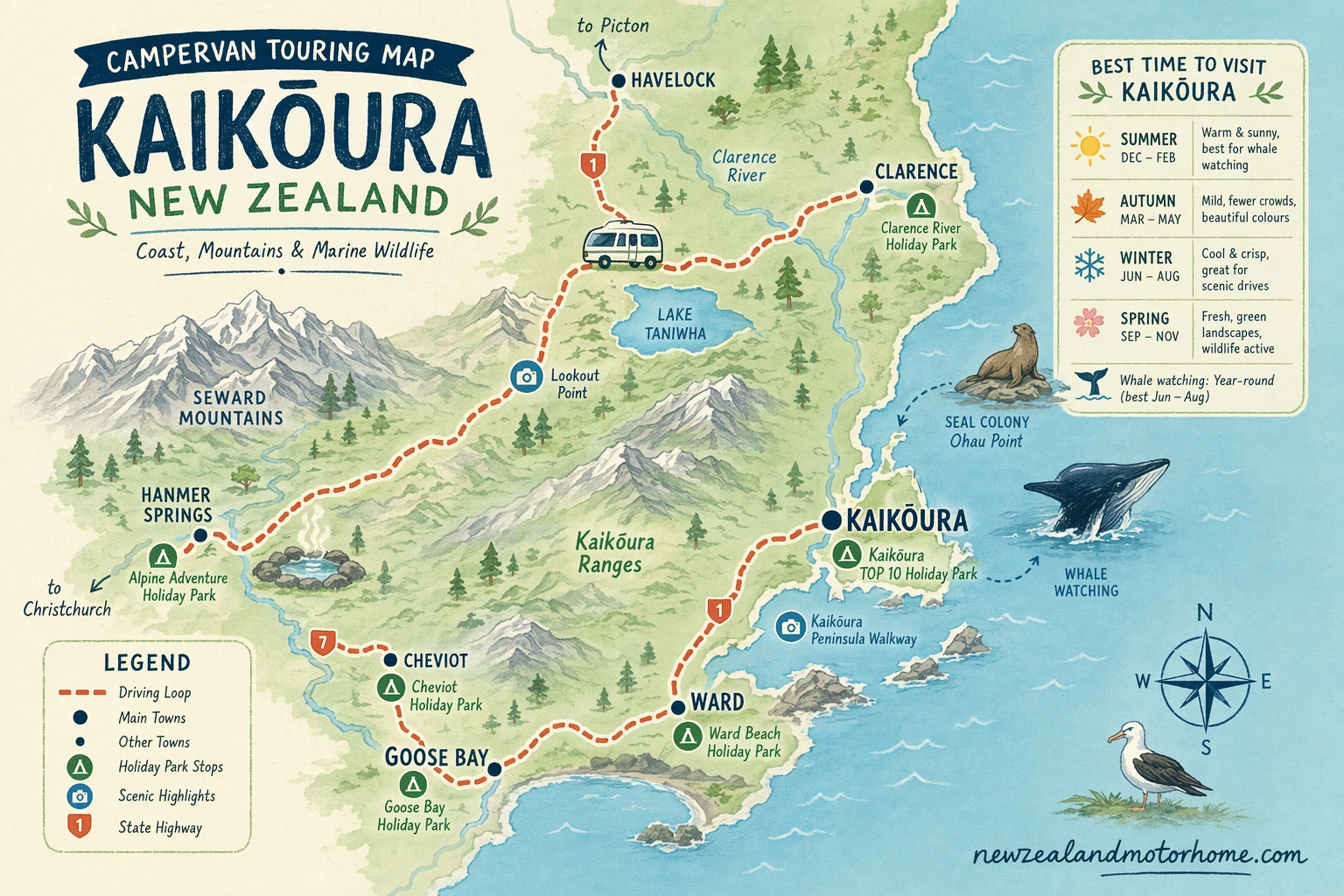
For most self-drive campervan trips, March to May and September to November are the easiest months to enjoy Kaikōura. The days are usually usable for the Peninsula Walkway, whale-watching sailings and coastal pull-ins, while holiday parks and legal overnight areas tend to feel less squeezed than they do in late December and January.
Summer is still excellent if you want long evenings and warm sea air, but you need to book powered sites earlier and arrive with a Plan B for parking. Winter is quieter and atmospheric, with snow on the ranges behind town, but you will want a warmer van, reliable house battery, and more respect for short daylight hours.
- Best all-round: March, April, October and November.
- Warmest: January and February, with the busiest campgrounds.
- Quietest: June to August, apart from school holidays and good-weather weekends.
- Best for flexible van life: shoulder seasons, when you can often choose between powered and unpowered sites without rushing.
Kaikoura weather by month: what it means for a van trip
Kaikoura weather by month can change quickly because the coast and mountains sit so close together. A calm morning can become a gusty afternoon, and a wet southerly can make the harbour look steel-grey even when the forecast sounded mild. Pack for layers rather than one season, especially if you are sleeping in a compact camper where wet jackets and towels take over fast.
As a broad guide, December to February brings the warmest days and longest light, often comfortable for cooking outside the van. March to May is cooler but often settled, with less pressure on sites. June to August is cold at night and can feel damp in an uninsulated van, while September to November is changeable but fresh, with blossom in town and snow still visible on the tops.
- Dec-Feb: warmest days, busy beaches, book holiday-park sites ahead.
- Mar-May: settled driving, fewer queues, good for self-contained vans moving slowly.
- Jun-Aug: cold nights, quieter powered sites, check heating and battery capacity.
- Sep-Nov: mixed weather, lighter crowds, good for walkers with waterproof gear.
Wind is the detail many first-time visitors underestimate. Park with your sliding door away from the strongest gusts where you can, secure awnings properly, and avoid leaving roof vents wide open if the forecast is for a southerly change.
Summer in Kaikōura: long days, tight sites and early starts
December, January and February are the classic holiday months: long daylight, warmer evenings and more people wanting the same beachside parks, marine tours and fish-and-chip stops. If you are travelling in a motorhome over about seven metres, summer is when pre-booking a suitable site matters most, especially if you need power for a fridge, medical device, heater or reliable battery top-up.
Town parking can fill quickly by late morning. Use marked longer bays where provided, avoid squeezing into short angle parks, and do not block access for boat trailers around the South Bay and harbour areas. For the Peninsula Walkway, it is often easier to park earlier, walk before the day heats up, then return to the van for lunch rather than trying to shift between crowded viewpoints.
- Powered sites: book ahead for late December through January.
- Unpowered sites: more flexible, but still limited during peak holiday weeks.
- Freedom camping: only use currently permitted areas if your vehicle is certified self-contained, and check signs on arrival.
- Servicing: empty the toilet and top up fresh water before settling in for a multi-night stay.
Summer is also when you should be careful around roadside wildlife stops north and south of town. Pull fully off the road only where it is safe and legal; SH1 traffic can be fast, and a campervan takes longer to rejoin the lane than a car.
Autumn and spring: the easiest seasons for a relaxed itinerary
Autumn and spring are the sweet spots for many campervan travellers deciding when to visit Kaikoura. You still have enough daylight for the coastal drive, the Peninsula Walkway and a slow coffee stop in town, but you are less likely to be competing for every powered site or legal overnight space.
March and April often feel especially good in a van: warm enough to sit outside, cooler for sleeping, and less frantic in the car parks. October and November can be excellent too, though spring winds and showers mean you should keep a waterproof layer handy and be ready to shuffle your walking or wildlife plans by a few hours.
- Good for: flexible road trips between Picton, Kaikōura and Christchurch.
- Site choice: better chance of choosing a quieter corner or an unpowered grass site.
- Driving: more forgiving daylight than winter, with fewer peak-summer delays.
- Van comfort: easier temperatures for sleeping without running heating all night.
If you are building Kaikōura into a longer South Island loop and want help timing ferry arrivals, overnight stops and dump-station days, you can talk to us before you lock in the route.
Winter: quieter nights, colder vans and mountain views
June, July and August are not the wrong time to visit; they are simply more demanding in a campervan. The town is calmer, the ranges can be beautiful with snow, and powered sites are valuable because cold nights use more battery and gas. If your hire van has diesel heating or a good LPG heater, confirm how it works before you leave the depot, not when you are already parked up in a southerly.
Winter days are short, so plan your driving around daylight. The coastal SH1 run can be stunning in low winter sun, but rain, spray, slips or roadworks can slow things down. Always check current road conditions before committing to the Picton-Christchurch leg, and treat the Inland Road as a more winding alternative rather than an easy shortcut in rough weather.
- Before you park: check you are level enough for sleeping and safe fridge operation.
- Before bed: close thermal blinds, ventilate lightly, and avoid creating condensation.
- Before leaving town: dump waste, fill fresh water, and check LPG if you are heading into quieter stretches.
Winter freedom camping can sound tempting because places are less busy, but the rules do not relax because it is cold. Use legal signed areas only, carry proof of self-containment certification if required, and leave no grey water or rubbish behind.
Staying overnight and servicing the van in Kaikōura
Kaikōura works best when you treat it as an overnight stop, not just a lunch break. A night or two gives you a better chance of a calm sea window, an unhurried coastal walk, and time to service the van without racing the daylight. Holiday parks are the simplest choice if you need power, showers, laundry, fresh water and a dump point in one place.
Freedom camping is more restricted and more closely watched in popular coastal districts, so do not assume you can sleep anywhere with a sea view. Check the current Kaikōura District rules, roadside signs and any app information against what is physically posted on site. Your campervan must meet the current self-containment requirements where those apply, and some places may still have night limits or vehicle-number caps.
- Fresh water: refill at your campground or signed public fill points only; do not use random taps.
- Dump stations: empty toilet cassettes and grey water at approved dump points in town or at participating campgrounds.
- LPG and fuel: top up in Kaikōura before a late run north or south, especially outside summer trading hours.
- Large vans: ask for a suitable length site and be cautious with low branches, tight campground corners and narrow beach access roads.
For a short visit, one night is enough to get a feel for the coast. For a weather-dependent whale-watching or kayaking plan, two nights gives you a much better buffer if wind or sea conditions shift.
Common questions
What is the best month to visit Kaikōura in a campervan?
March and April are often the easiest months: warm enough for outdoor time, cooler for sleeping, and less crowded than midsummer. October and November are also good if you do not mind more changeable spring weather.
Can I freedom camp in Kaikōura?
Only in places where current local rules and signage allow it, and usually only if your campervan is certified self-contained. Kaikōura is a popular coastal area, so check the district council information and on-site signs before you settle in for the night.
Is winter too cold for a Kaikōura motorhome trip?
No, but you need the right van setup. Choose powered sites where practical, understand your heater, carry warm bedding, and allow for short daylight hours and occasional weather-related road delays.
How many nights should I allow in Kaikōura?
One night works for a scenic stop between Picton and Christchurch. Two nights is better if you want a wildlife cruise, the Peninsula Walkway, and enough flexibility for wind or sea conditions.
Are Kaikōura holiday parks busy in summer?
Yes, especially from late December through January and during school holidays. Book powered sites ahead, particularly for larger motorhomes or if you need easy access to dump stations, fresh water and laundry.
Is SH1 to Kaikōura suitable for large campervans?
Yes, SH1 is the main route and is used by large vehicles, but it is a coastal road with traffic, pull-offs, roadworks at times and weather exposure. Drive to conditions, avoid sudden wildlife stops, and check current road updates before travelling after heavy rain.
Have a planner shape this for your dates
Send a short outline — your dates, party size, and the kind of trip you want. A planner replies with a vehicle recommendation, a paced route, and the realistic budget.