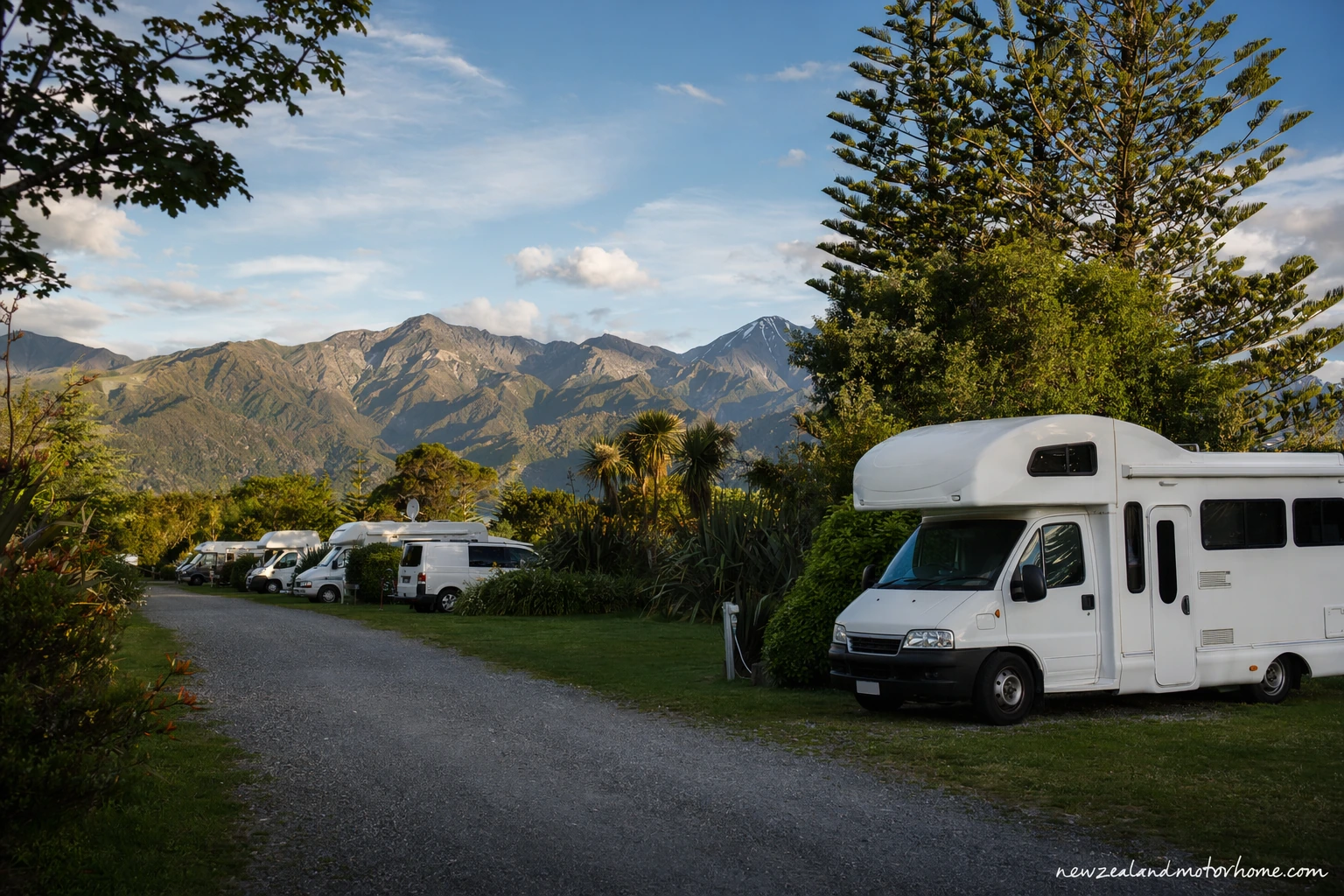
- Best with 1–2 nights
- Powered and unpowered sites
- Self-contained rules apply
- SH1 coastal driving care
- Dump and refill in town
Kaikōura is one of those motorhome stops where the practical bits matter as much as the view. State Highway 1 squeezes between the Pacific and the Seaward Kaikōura Range, so choosing the right overnight base can save you from backtracking, tight town parking, or arriving after dark with a grey-water tank that needs attention.
This guide looks at holiday parks Kaikoura travellers commonly use as campervan bases: in-town parks for easy walking, beachfront campsites Kaikoura-side for a slower coastal night, and quieter campgrounds Kaikoura-bound on the approaches north and south. You’ll also find notes on powered sites Kaikoura-wide, dump stations, fresh water, LPG, freedom camping rules, and how to move a hired van around the peninsula without making the day harder than it needs to be.
Where the holiday parks sit around Kaikōura
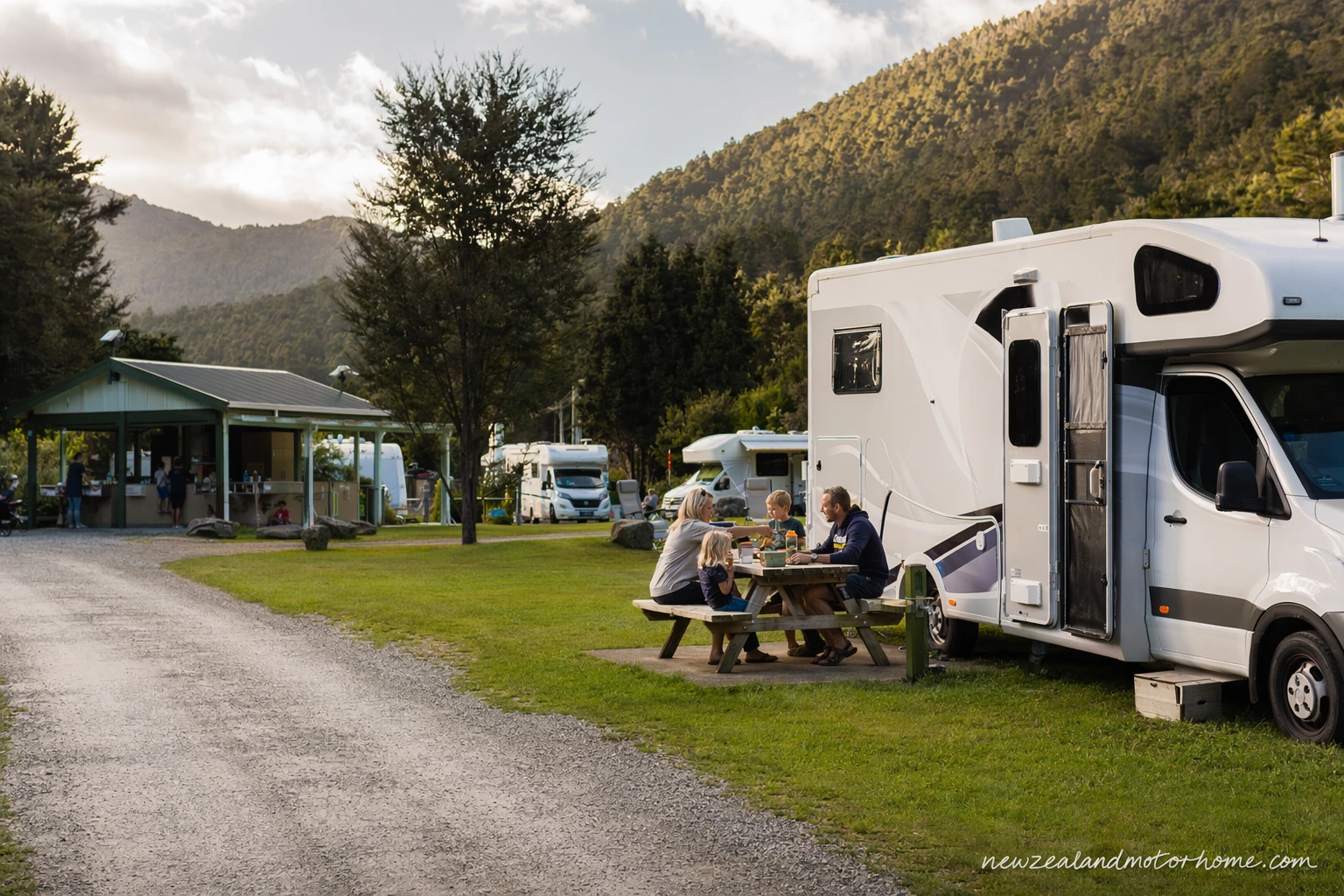
Kaikōura’s campervan accommodation is not spread evenly across a big resort town; it is clustered around three useful bases. Town-side holiday parks suit travellers who want to park the van once and walk to food, the waterfront, whale-watch check-ins, and the supermarket. South of town, beachfront parks and campsites give you easier beach access and a quieter evening, while northern coastal stops work best if you are breaking the drive between Blenheim, Picton, and Christchurch.
If you are searching for a top 10 holiday park Kaikoura option, treat it as one part of the decision rather than the whole answer. The best park for your van depends on whether you need power, a dump point, late-afternoon arrival access, or a base close enough to town that you do not have to hunt for a long parking bay the next morning.
- Town base: handy for errands, fuel, groceries, booked activities, and walking instead of driving the van through busy streets.
- South-coast base: better for a beach night, sunrise, and a simple departure towards Christchurch.
- North-coast base: useful on Picton or Blenheim travel days, especially if you do not want to push on after the coastal SH1 section.
- Peninsula visit: park in marked public parking areas and avoid squeezing a large motorhome into short car bays near cafés or lookout pull-offs.
Powered sites, unpowered sites and what to check before booking
Most holiday parks in the Kaikōura area offer a mix of powered and unpowered campervan sites, but the feel can vary a lot. In town you are usually choosing convenience and facilities; by the beach you may be choosing space, surf sound, and a more exposed coastal setting. If you are travelling in a larger motorhome, ask for a site that suits your length and whether you can stay hitched or need to reverse into a narrower bay.
Powered sites Kaikoura-wide are popular in winter, during school holidays, and whenever the marine tour calendar is busy. Power also helps if you are running a fridge, charging camera batteries after a wildlife day, or using a heater in a hired van on cold southerly nights. Unpowered sites can be a good fit for certified self-contained vans with healthy house batteries, but do not assume every grass area is level or suitable after heavy rain.
- Confirm whether the site is grass, gravel, or hardstand, especially after wet weather.
- Check if your power lead reaches the bollard and whether the park requires an approved caravan-style lead.
- Ask about turning room if your motorhome is over 7 metres or you are new to reversing.
- Use shared kitchens and lounges in bad weather rather than cooking with doors open in strong coastal wind.
Dump stations, fresh water, LPG and daily van chores
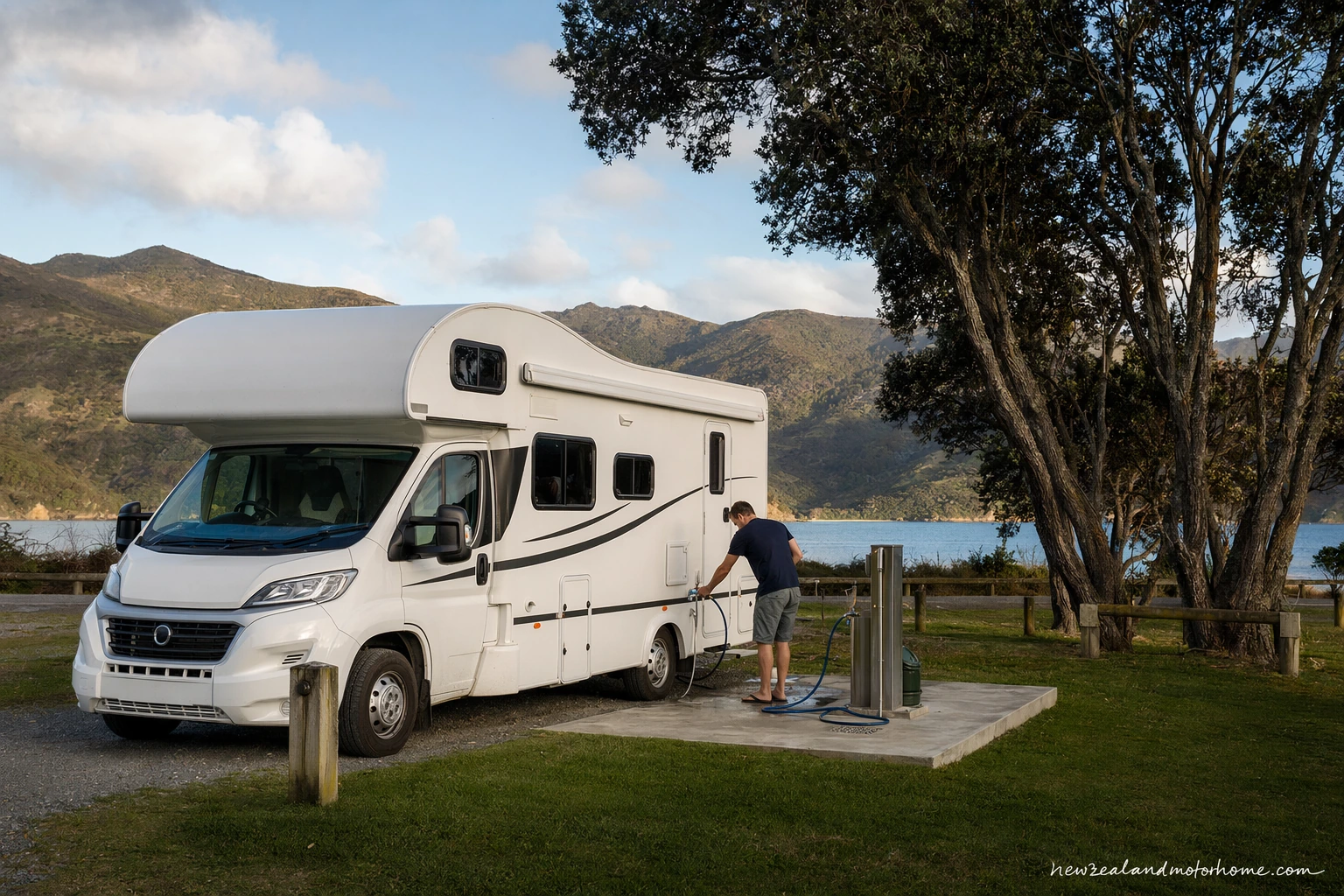
Kaikōura is a good place to reset the campervan before you head into longer rural stretches. Many holiday parks provide dump stations and fresh-water taps for guests, and this is often the simplest option: empty grey and black water before checkout, refill fresh water, then leave town without needing another stop. If you are not staying in a park, use a council-listed public dump point or an approved facility shown on current camping apps and signage.
Fuel and LPG are easier to sort in Kaikōura town than on the open coastal road. Top up before driving north towards the Marlborough coast or south towards Cheviot and Christchurch, particularly if you are arriving late or travelling outside the main summer season. Do not rely on every campground having swap bottles, and never rinse cassettes at a drinking-water tap unless it is specifically signed for that purpose.
- Best rhythm: arrive with enough fresh water for the night, then dump and refill before leaving.
- Cassette care: use marked dump-station hoses only and keep drinking-water hoses separate.
- LPG: check your bottle level in town, especially before a cold inland detour or winter stay.
- Rubbish: use park bins where provided, or take waste with you until you reach an approved disposal point.
Freedom camping rules around Kaikōura
Kaikōura’s coastline is sensitive, popular, and closely managed, so freedom camping is not a fallback plan for every beach pull-off. Expect local rules to require a certified self-contained vehicle in permitted areas, with restrictions on where you can stay and for how long. Non-self-contained vans should use holiday parks, DOC-style camps where permitted, or campgrounds with toilets.
Rules can change after storms, roadworks, summer pressure, or bylaw updates, so check the current Kaikōura District Council information and on-site signs before you settle in for the night. A quiet lay-by beside SH1 may be fine for a rest break but not legal as an overnight stop. If you are unsure, book a proper site; it is usually calmer than being moved on after dark.
- Carry proof of your vehicle’s self-containment certification and know where the warrant label is displayed.
- Do not camp on beach berms, dunes, boat ramps, or informal tracks.
- Keep all wastewater on board until you reach a dump station.
- Arrive before dusk so you can read signs and choose a legal overnight stop without rushing.
Driving the van between Kaikōura bases
The SH1 coastal drive is spectacular but not a road for drifting along while deciding where to stop. Shoulders can be narrow, trains run close to the highway, and some pull-offs are better suited to cars than long motorhomes. Use proper lay-bys, give yourself room to rejoin traffic, and watch for seals, cyclists, road cones, and sudden queues around viewpoints.
In town, the easiest approach is to park the van in a suitable long bay or at your holiday park, then walk or use short transfers where available. The peninsula roads are manageable in a campervan, but they are busier in the middle of the day and some parking areas have tight angles. Avoid taking a hired van onto soft gravel edges or down beach access tracks, even if other vehicles have left tyre marks.
- From Picton/Blenheim: allow a relaxed arrival; the coastal section can be slower with roadworks or wind.
- From Christchurch: fill up before the rural stretch if you are arriving late, then choose a south-side or town-side base.
- Inland Road: the route via Waiau is scenic but narrower, with stock, bends, and winter ice risk.
- Big vans: plan fuel, supermarket, and dump-station stops in daylight rather than squeezing into busy town spaces at night.
Which base unlocks the best Kaikōura days
A town holiday park is the easiest choice for a first Kaikōura night if you have bookings, chores, or an early start. You can leave the motorhome plugged in, walk to dinner, organise laundry, and avoid moving the van for every small errand. It is also the most forgiving base if weather changes and a marine trip is rescheduled.
A beachfront or south-coast campground suits a slower two-night stay: one day for the peninsula walkway, seal viewing from signed areas, and beach time, and another for a marine activity or inland scenic drive. If you are only passing through, a north or south approach camp can turn Kaikōura into an easy stopover rather than a long driving day. If you want help matching your van size, season, and overnight style, mention Kaikōura when you use the plan-your-trip step.
- One night: choose town if you need services, or a coastal park if the van is already stocked and tanks are comfortable.
- Two nights: stay put, use power, walk more, and avoid repacking the van each morning.
- Winter: prioritise power, hardstand or well-drained sites, and shorter evening driving.
- Summer: book ahead, arrive earlier, and expect popular campgrounds Kaikoura-side to fill quickly.
Common questions
Do I need to book holiday parks in Kaikōura ahead?
Are there powered sites in Kaikōura for larger motorhomes?
Can I freedom camp on the beach near Kaikōura?
Where should I empty wastewater in Kaikōura?
Is Kaikōura easy to drive through in a hired campervan?
Have a planner shape this for your dates
Send a short outline — your dates, party size, and the kind of trip you want. A planner replies with a vehicle recommendation, a paced route, and the realistic budget.