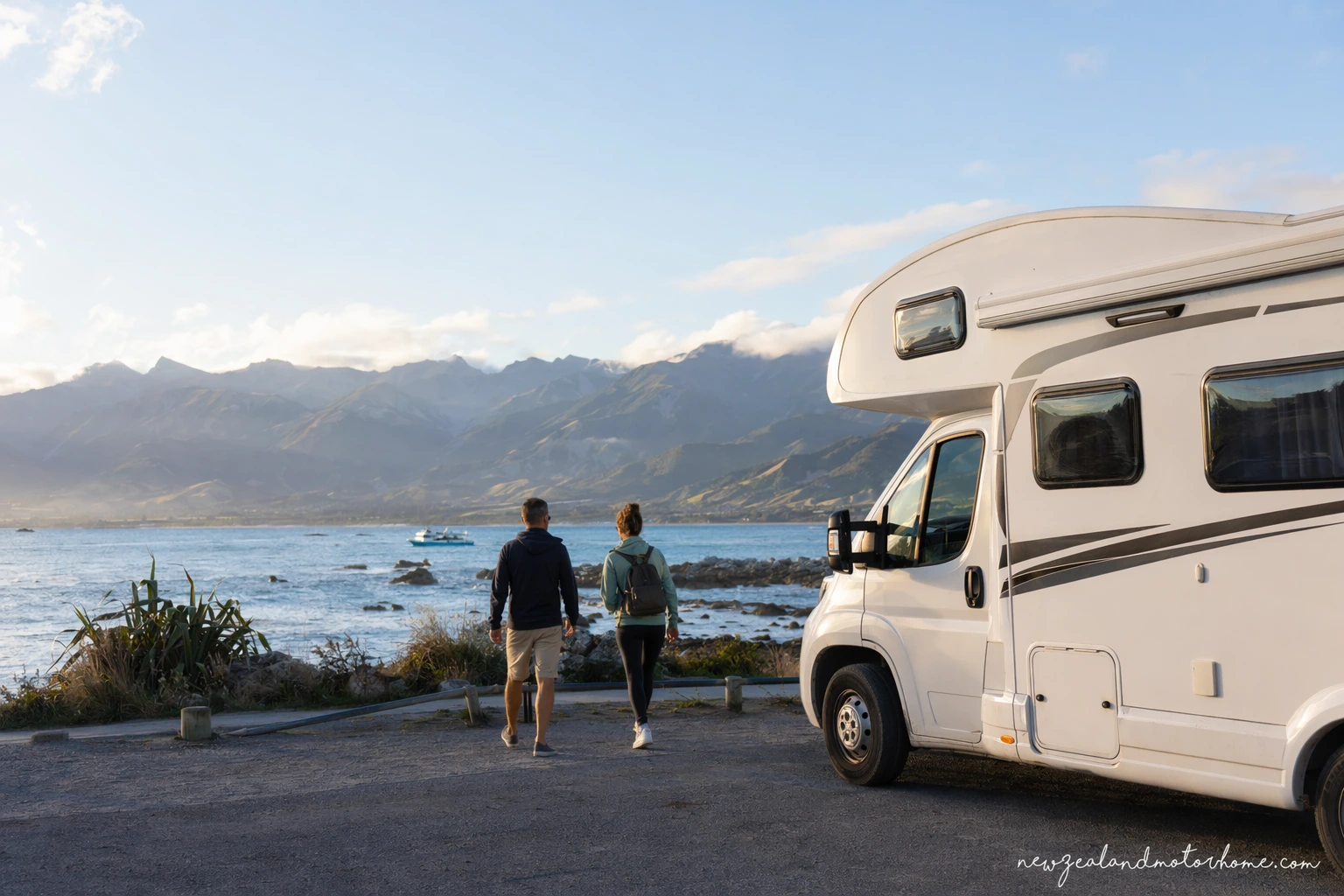
Visiting Kaikoura whale watching by campervan without the stress
- Allow half a day for the tour
- One overnight stop recommended
- Use legal town or station-area parking
- Powered and unpowered sites nearby
- Freedom camping rules are restricted
Kaikōura is one of those rare South Island stops where the road, the mountains and the sea all crowd in at once. For campervan travellers, visiting Kaikoura whale watching by campervan is straightforward, but it pays to think ahead: where you will park a taller van, how early to arrive, and whether you should stay the night in town rather than rushing the coast road.
This guide is written for people driving and sleeping in their own hired motorhome or campervan. You will find practical notes on Kaikoura whale watching campervan parking, road access on State Highway 1, nearby powered and unpowered sites, dump stations, water, LPG, and what to do if the sea or weather changes your sailing time.
Where campervans park for Kaikōura whale watching
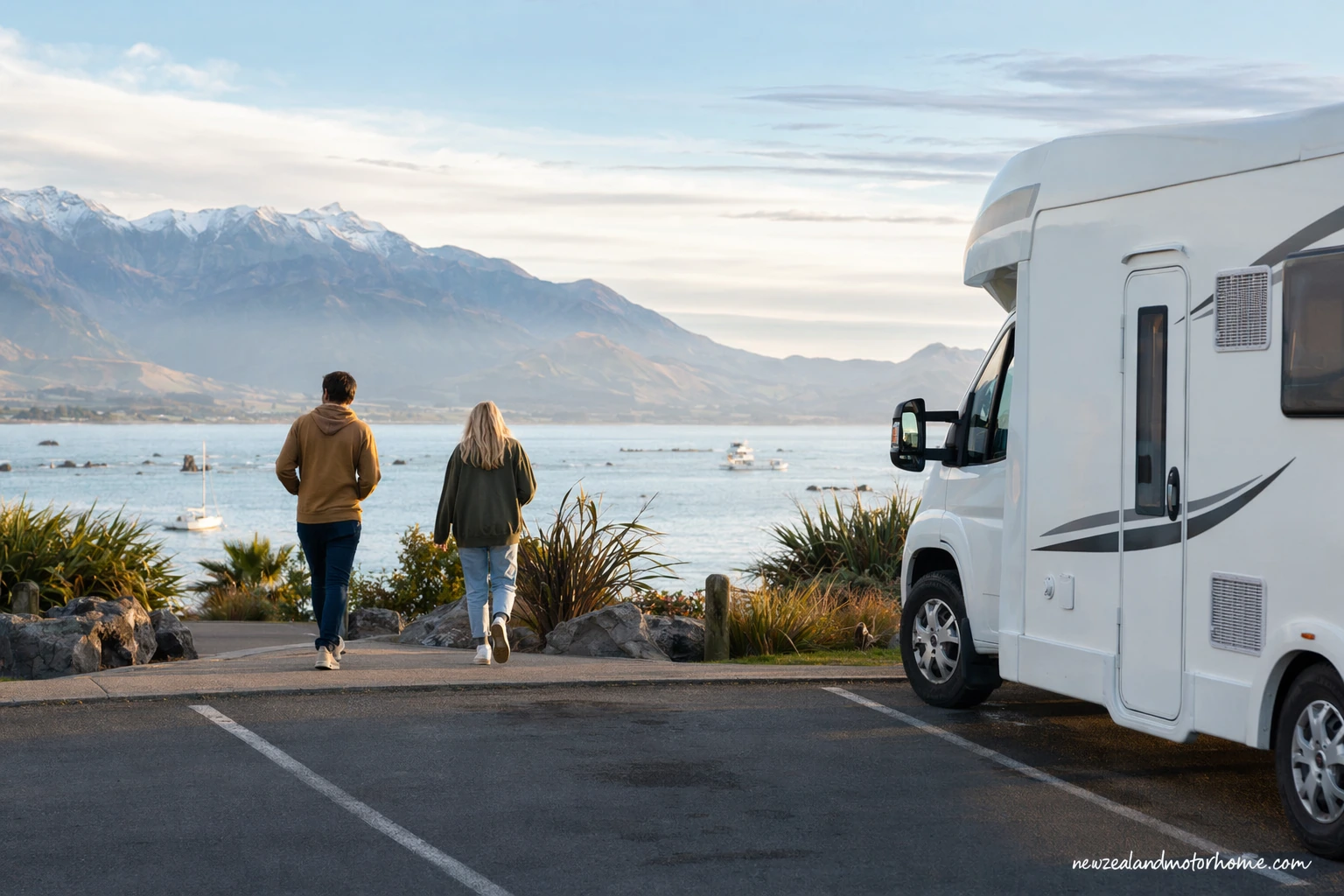
The main whale-watching check-in area is near Kaikōura’s railway station precinct, just back from the town centre. Campervans usually use the signposted visitor parking around the station area, but treat it like a busy coastal attraction car park rather than a guaranteed motorhome bay. Arrive early, especially in summer, school holidays and on calm winter mornings when sailings are popular.
Most hired 2-berth and 4-berth campervans will fit more easily than a long 6-berth motorhome. If you are over about 7 metres, look for longer edge spaces, avoid overhanging footpaths, and leave room for buses and turning traffic. The parking is generally open-air, but always check current signs for any height, time or access restrictions before you leave the van.
- Do not plan to overnight in the whale-watching car park.
- Keep the cab clear of valuables before you go out on the water.
- Allow extra time to walk from the van, check in and use the toilets before departure.
- If the car park is tight, park legally elsewhere in town and walk back rather than squeezing into a short bay.
How to get to Kaikōura whale watching by road
If you are wondering how to get to Kaikoura whale watching in a campervan, the simple answer is State Highway 1. From Christchurch it is roughly a half-day drive at motorhome pace, allowing for fuel, food and photo stops. From Blenheim or Picton, the road follows the coast south for long stretches, with rail lines, beach pull-outs and slow vehicle opportunities to watch for.
The coastal highway is sealed and suitable for standard hire campervans and motorhomes, but it is not a road to rush. There can be roadworks, wind, sea spray, tight temporary lanes and traffic queues after slips or maintenance. In a taller van, keep both hands on the wheel in exposed coastal sections and use pull-over areas to let faster traffic pass.
- From Christchurch: allow around 2.5 to 3.5 hours, more if stopping along the coast.
- From Blenheim: allow around 2 hours, plus time for slow coastal sections.
- From Hanmer Springs: allow around 2 to 2.5 hours via the inland route and SH1.
- Fill fuel before you are down to the warning light; service gaps feel longer in a heavy van.
How long to allow, and why an overnight stop helps
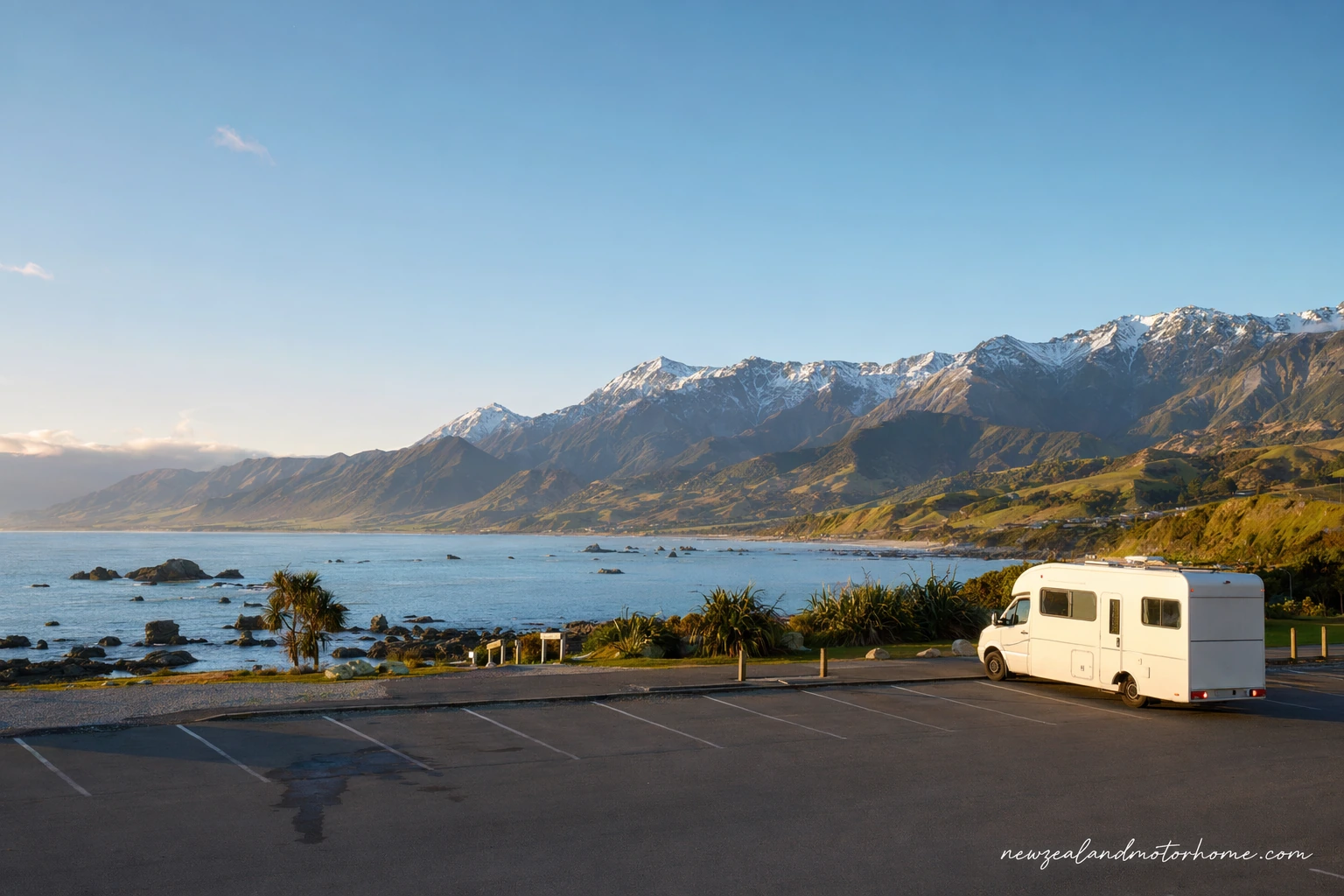
For the whale-watching experience itself, allow a solid half-day rather than trying to slot it between two long drives. You will need time to park the van, check in, attend any briefing, join the transfer or boarding process, and return without watching the clock. Sea conditions can also shift, so a flexible day works better than a tight point-to-point itinerary.
In a campervan, the easiest rhythm is to arrive in Kaikōura the afternoon before, plug into a powered site if you need to charge devices or run heating, then book the whale watching for the next morning. If a sailing moves or is cancelled, you have breathing room instead of a stressful drive to your next overnight stop.
- Best minimum stay: one night in Kaikōura.
- Better if travelling slowly: two nights, especially in winter or shoulder season.
- Before sailing: secure loose items in cupboards and close roof vents in case wind picks up while you are away.
- After sailing: give yourself time for lunch or the peninsula before driving SH1 tired.
Campsites near Kaikōura whale watching
There are several campsites near Kaikoura whale watching, with the most useful options clustered around Kaikōura township, Beach Road, the Esplanade side of town and South Bay. For most travellers, a holiday park is the cleanest choice: you can choose a powered or unpowered site, refill fresh water, use showers, and sort laundry after a salty coastal day.
Freedom camping around Kaikōura is controlled, and the rules can change by season and by exact street or reserve. Only use clearly permitted areas, and only if your campervan is certified self-contained with the current documentation displayed as required. Do not assume a seaside pull-off or beach car park is legal for sleeping, even if other vans are parked there during the day.
Before you settle in, make a quick services plan. Kaikōura has fuel and basic town services, while dump stations, fresh-water fills and LPG swaps or refills may be at holiday parks, service stations or signposted public facilities depending on what is open. If you are arriving late, top up water and empty waste earlier in the day rather than relying on last-minute access.
- Choose powered if you need heating, device charging or fridge confidence overnight.
- Choose unpowered if your house battery and solar are coping and you want a simpler stop.
- Use dump stations properly; never empty grey water into roadside drains.
- Check holiday park access if your motorhome is long, high or towing a bike rack.
What to do nearby with the van parked
Once the whale watching is done, leave the van parked where it is legal and enjoy Kaikōura at walking pace if you can. The town centre is compact, and the seafront is better without trying to nose a long motorhome into every short angle park. For lunch stops, look for level public parking where your rear overhang is not blocking the footpath or traffic lane.
The Kaikōura Peninsula is the obvious add-on, with coastal views, seabirds and seal viewing areas. Drive gently around the Peninsula Road and South Bay area, as there are walkers, cyclists, parked cars and tight turns. At seal areas, keep well back from wildlife and do not use the van as a viewing platform if it blocks traffic.
- Point Kean and peninsula car parks can be busy and are not overnight stops.
- South Bay is useful for a quieter look at the harbour side of the peninsula.
- Kaikōura town is a good place to restock groceries before continuing north or south.
- If you want help fitting Kaikōura into a wider South Island loop, mention your van size and travel dates via talk to us.
Keep planning
Holiday parks kaikoura
Read onFarmers markets kaikoura
Read onCampervan guide kaikoura nz
Read onBest time to visit kaikoura nz
Read onBest campervan stops kaikoura
Read onVisiting zealandia wellington by campervan
Read onCommon questions
Can I park a campervan at the Kaikōura whale watching departure point?
Usually, yes, campervans use the signposted visitor parking near the railway station check-in area. Longer motorhomes should arrive early and look for edge spaces rather than short central bays. Always obey current signs, as parking layouts and restrictions can change.
Can I sleep overnight in the whale-watching car park?
No, do not plan to use the whale-watching car park as an overnight stop. Book a nearby holiday park or use only clearly permitted freedom camping areas if your van is certified self-contained. Kaikōura’s coastal parking is actively managed.
Are there powered campsites near Kaikōura whale watching?
Yes. Kaikōura has holiday park options within a short drive of the whale-watching check-in area, including powered and unpowered sites. Powered sites are a good choice in cooler months or if you need to recharge after several freedom camping nights.
How early should I arrive in a motorhome?
Arrive earlier than the standard check-in time, especially if your motorhome is over about 7 metres. Parking, walking to check-in and sorting wet-weather gear all take longer in a van. In peak periods, give yourself a generous buffer.
Is the road to Kaikōura suitable for large campervans?
State Highway 1 is suitable for standard hire campervans and motorhomes, but the coastal sections can be windy, narrow in places and affected by roadworks. Drive at motorhome pace, use slow-vehicle pull-offs, and check road conditions after heavy rain or strong coastal weather.
Have a planner shape this for your dates
Send a short outline — your dates, party size, and the kind of trip you want. A planner replies with a vehicle recommendation, a paced route, and the realistic budget.