- Allow 1–2 nights
- SH1 coastal driving
- Powered sites recommended in winter
- Freedom camping restricted
- Best for self-contained vans
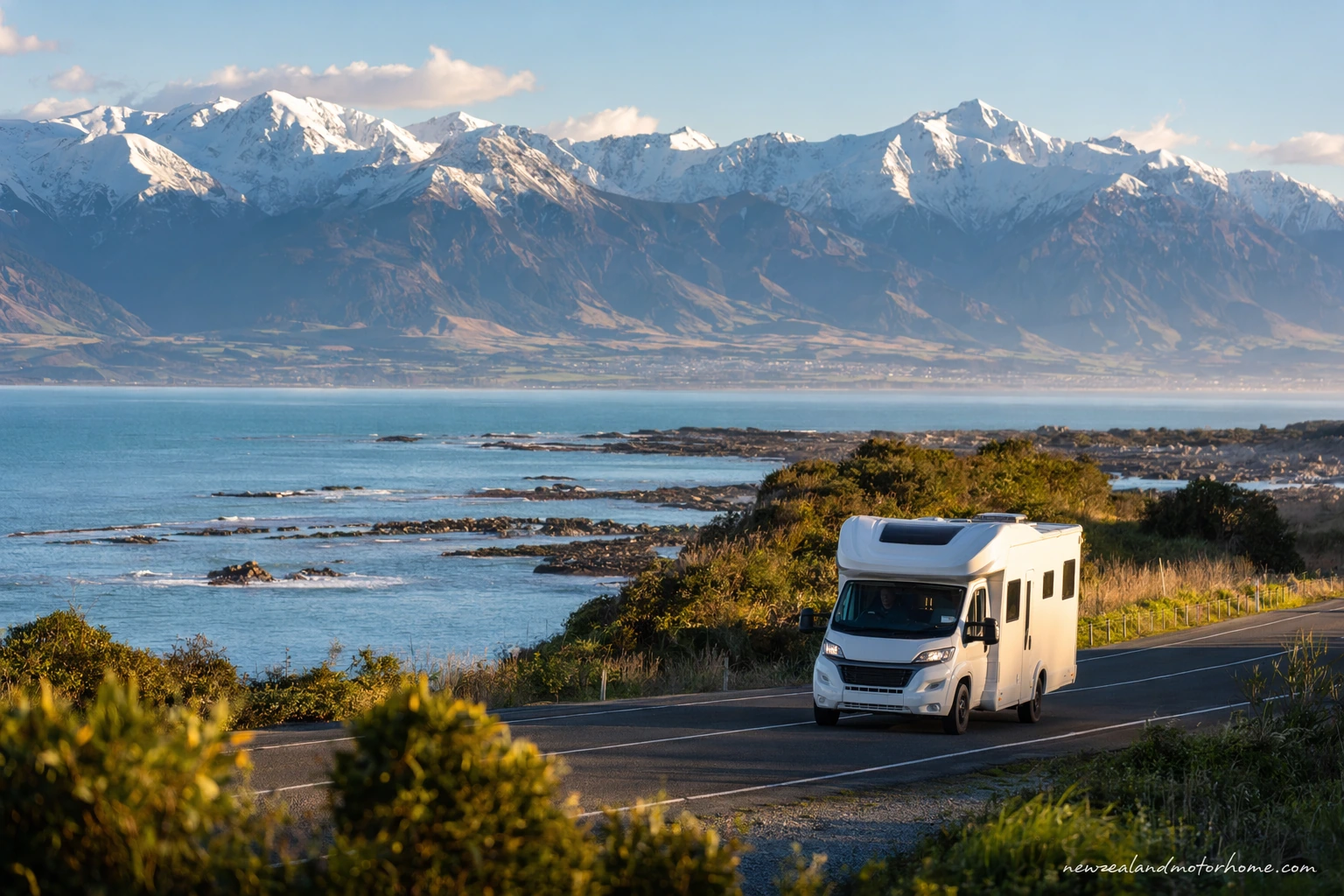
Kaikōura is one of those South Island stops where the road, rail line and sea all squeeze together, so arriving by van feels wonderfully close to the place. You can wake to surf on one side and the Seaward Kaikōura Range on the other, then spend the day moving between seal viewpoints, seafood shacks, walks and sheltered overnight spots without needing to drive far.
This campervan guide Kaikoura NZ page is written for self-drive travellers sleeping in their hired campervan or motorhome. It covers the SH1 approach, where to park the van for the peninsula, what to expect from powered, unpowered and freedom camping options, and the practical bits: dump stations, fresh water, LPG, road width, wind and how many days to allow.
How Kaikōura works for a campervan trip
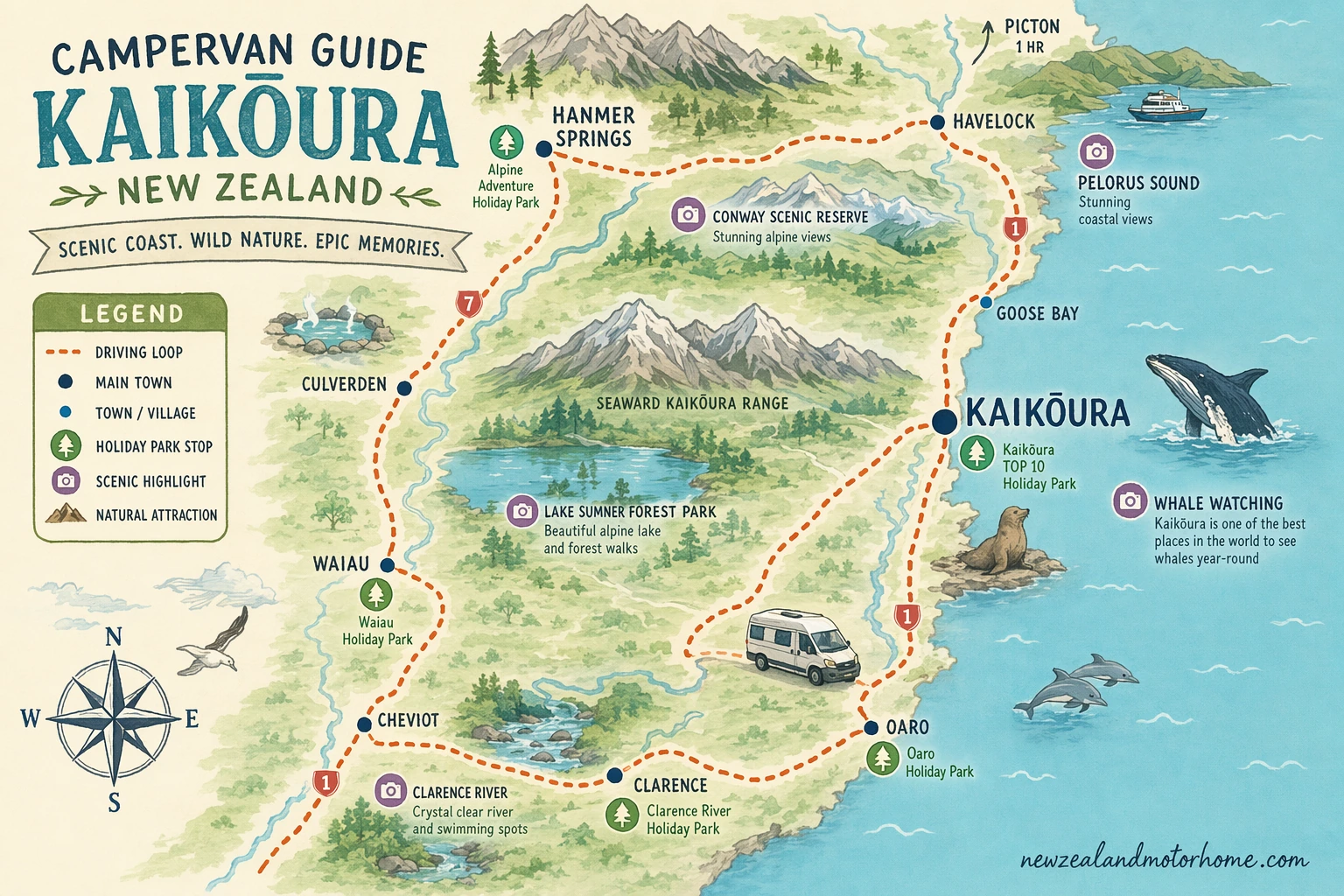
Kaikōura is compact, but it is not a place to rush through if you are travelling in a campervan. The town sits between the coast and the mountains, with most services along or just off SH1, and the peninsula running south-east towards Point Kean. A Kaikoura campervan stay is easiest when you base yourself for at least one night rather than trying to park, walk, refuel, dump waste and carry on in the same afternoon.
The town centre has supermarkets, fuel, food stops and visitor information, while the coast road and peninsula have the views. In a longer motorhome, Kaikoura parking is usually simplest when you choose larger public parking areas and walk the last few minutes rather than hunting for a kerbside gap on narrow residential streets.
- Best base style: a holiday park or campground if you want power, showers, laundry and easy dumping.
- Best short stop: the town waterfront for food and a leg stretch, then drive to a signed peninsula car park.
- Best pace: one night minimum, two nights if you want a wildlife tour, the Peninsula Walkway and a slow morning.
- Best van habit: park nose-out where you can, as coastal car parks can fill quickly in fine weather.
Driving in: SH1 coast, inland routes and van-size notes
Most campervans reach Kaikōura on State Highway 1, either south from Blenheim and Picton or north from Christchurch. The coastal sections are spectacular, but they are also working roads with rail crossings, tunnels, tight shoulders, sea-wind gusts and busy pull-offs where drivers slow suddenly for photos or seals. Keep your speed comfortable for the van, not for the ute behind you.
North of Kaikōura, SH1 runs close to the sea in places, so allow extra time and avoid treating the drive as a quick transfer to the ferry. South towards Cheviot and Christchurch, the road opens and tightens in turns; watch for roadworks, cyclists and stock trucks. In winter, early starts can mean low sun, shaded corners and frost inland.
The Inland Road through Waiau and Mt Lyford can be a useful alternative when open, but it is slower and more winding. It suits confident drivers in shorter or medium campervans; if you are in a long motorhome, towing, or travelling in icy weather, check current conditions before committing.
- Long motorhomes: plan fuel and food stops before you are tired, as reversing in small seaside pull-offs can be awkward.
- Height: normal SH1 driving is straightforward, but always check campground tree cover and older service-station canopies.
- Wind: exposed coastal sections can push high-sided vans; slow down before bridges and open cuttings.
- Photo stops: use formed pull-offs only and leave room for other large vehicles to turn.
Where to stay: powered sites, unpowered sites and freedom camping
For a first visit, a powered site in or near Kaikōura is the easiest overnight choice. You get a level pitch, toilets and showers, a place to top up fresh water, and usually access to a dump point if you are staying. This is useful after the coastal drive, especially if you are running a fridge, heater or devices from the house battery.
Unpowered campground sites suit self-contained vans that only need a legal place to sleep and access to basic facilities. Around Kaikōura, look for established campgrounds in the town, South Bay and further along the coast, then choose based on the next morning’s plan: town for cafés and supplies, South Bay for the peninsula and harbour side, or a quieter coastal site if you are continuing north or south.
Freedom camping is more restricted here than many first-time visitors expect. Use only areas currently permitted by Kaikōura District Council and obey the signs on the ground, as beach reserves and busy town streets may be restricted or prohibited. You should have a certified self-contained vehicle and be ready to move on if a site is full.
- Powered site: best for two-night stays, winter heating, laundry and battery recovery.
- Unpowered site: fine for certified self-contained vans with full water and empty waste tanks.
- Freedom camping: check the current council map before arrival and arrive early, not after dark.
- Quiet etiquette: keep slide-outs, chairs and cooking gear within your marked site or clearly allowed area.
Things to do in Kaikōura when your bed is on board
The best things to do Kaikoura campervan travellers usually enjoy are close together, which is part of the appeal. Park once near the peninsula or waterfront, then walk rather than shuttling the van between tiny car parks. The Peninsula Walkway is the classic: sea views, limestone platforms, birdlife and often seals, with the option to do a shorter out-and-back if weather or time is tight.
Point Kean is popular, but it can be busy and the parking is not designed for everyone to arrive in large vehicles at once. If you are in a motorhome, Kaikoura is more relaxed when you visit early or later in the day, avoid blocking turning circles, and never park close to seals or on fragile coastal edges. Give wildlife space; seals can move faster than they look.
For marine activities such as whale watching, kayaking or boat trips, check where your operator asks campervans to park before you book. Some departures use harbour-side areas, and larger vans may need a little extra walking time. If your itinerary is tight, add a weather buffer because sea conditions can change plans.
- Easy van-friendly wander: town waterfront, beach, food stops and visitor information.
- Half-day outing: Peninsula Walkway from a signed car park, with layers for wind.
- Wildlife rule: keep your distance, use zoom for photos and do not put the van between animals and the sea.
- Rainy-day reset: use the time for laundry, dumping, groceries and a relaxed powered-site night.
Dump stations, fresh water, LPG and supplies
Kaikōura has the services you need for a sensible campervan stop, but do not leave everything until late evening. Fuel and groceries are straightforward in town, while LPG bottle swaps or fills depend on current service-station availability and bottle type. If your heater or cooker is getting low in winter, sort it before driving on to a quieter coastal overnight.
For waste and water, use proper facilities only. Holiday parks and campgrounds generally provide dump points and potable water for staying guests, and public dump-station access should be checked against the current council information or a reliable camping app before you arrive. Never empty grey water into roadside drains, beach car parks or public toilets.
A good rhythm is to arrive with at least half a fresh-water tank, book or choose your overnight stop, then dump and refill before you leave town the next day. If you would like help fitting Kaikōura into a wider Picton-to-Christchurch or West Coast loop, you can use talk to us and we will sanity-check the driving days from a campervan point of view.
- Before arrival: check toilet cassette space, grey-water level and LPG.
- In town: refuel before side trips if you are heading inland or north late in the day.
- Before departure: dump waste, fill drinking water and secure cupboards for the SH1 bends.
- Low-impact rule: leave coastal parks cleaner than you found them, even on a short lunch stop.
How many days to allow in Kaikōura
One night works if Kaikōura is a scenic break between Picton and Christchurch, but it can feel rushed in a campervan because you still need to park, plug in or level up, manage tanks and cook or find dinner. Two nights is the sweet spot for most travellers: one day for the peninsula and town, plus time for a marine activity or a slower coastal drive.
If you are travelling in peak summer, school holidays or around long weekends, book powered sites earlier and arrive before the campground office rush. In winter, daylight is shorter but the mountain backdrop can be superb, and a powered site is worth considering for heating and battery comfort.
- Quick stop: lunch, waterfront stroll and seal viewing, but no relaxed overnight rhythm.
- One night: good for a rest between longer drives if you book ahead.
- Two nights: best balance for walks, wildlife, supplies and a calm morning departure.
- Three nights: useful if you want weather backup or a genuine coastal pause in the itinerary.
Common questions
Can I freedom camp in Kaikōura in a campervan?
Only in places currently allowed by Kaikōura District Council, and usually only if your vehicle is certified self-contained. Check the latest council map and the signs at the site, because rules can change and some beach or town areas are restricted.
Is Kaikōura suitable for a large motorhome?
Yes, but choose parking carefully. SH1 is suitable for large vehicles, while some coastal pull-offs and peninsula parking areas can be tight when busy, so arrive early, use formed parking and avoid streets where you would need to reverse a long way.
Where should I park for the Kaikōura Peninsula Walkway?
Use signed public car parks near the peninsula, then walk from there rather than trying to edge the van into small roadside gaps. If you are in a long motorhome, avoid peak middle-of-the-day parking pressure and do not block turning areas or beach access.
Do I need to book a powered site in Kaikōura?
In summer, school holidays and long weekends, booking is wise, especially for powered sites. Outside busy periods you may have more flexibility, but a powered night is still useful for charging batteries, running heating and doing laundry after a coastal driving day.
How long is the drive from Picton or Christchurch to Kaikōura by campervan?
Allow more time than a car-routing app suggests, particularly on the coastal SH1 sections and if you plan to stop for photos or food. Campervans are slower on bends, need more room for parking, and are more affected by wind.
Can I refill water and dump waste in Kaikōura?
Yes, but use authorised facilities only. Campgrounds commonly provide water and dump points for guests, and public dump-station availability should be checked with current council information or a trusted camping app before relying on it.
Have a planner shape this for your dates
Send a short outline — your dates, party size, and the kind of trip you want. A planner replies with a vehicle recommendation, a paced route, and the realistic budget.