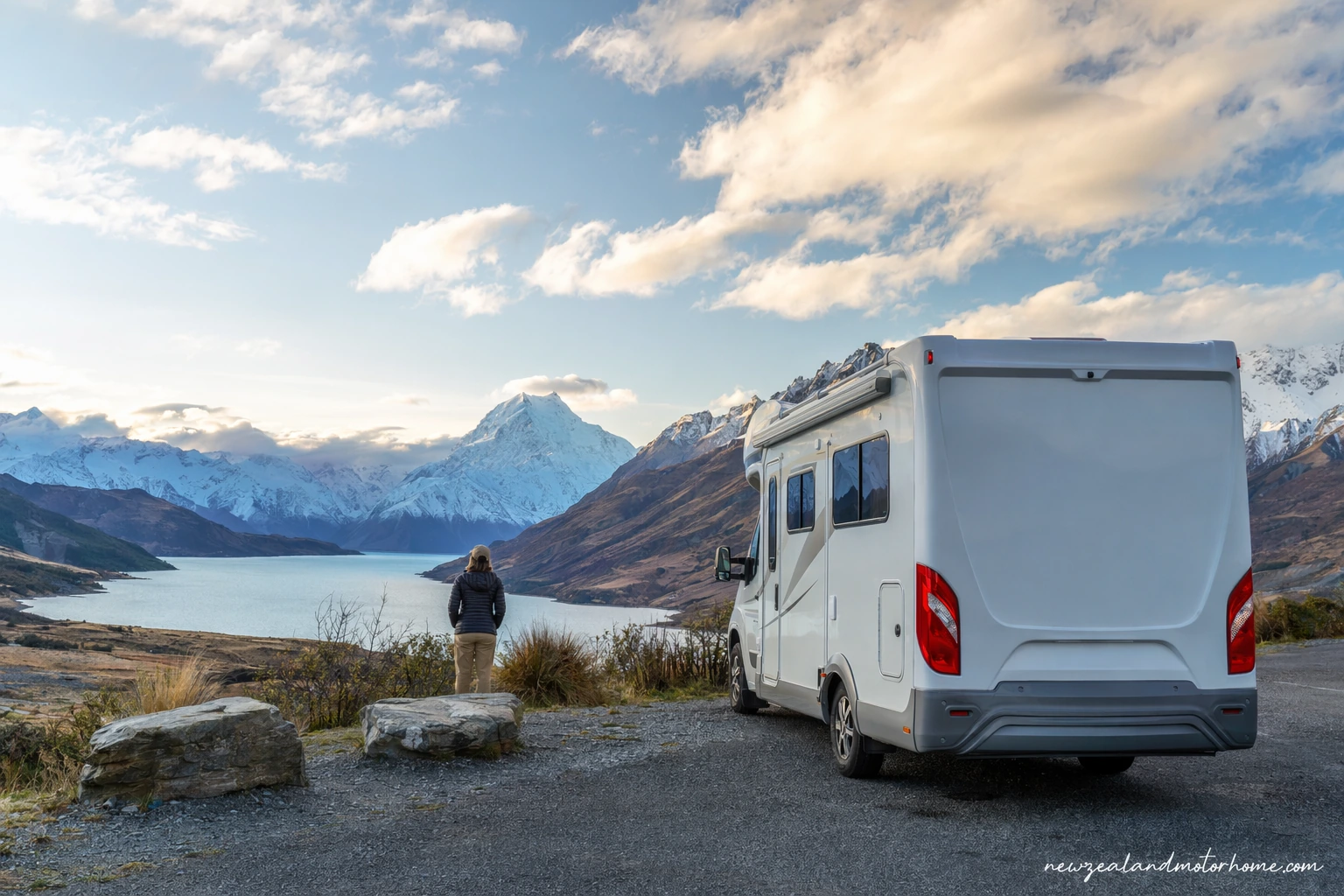
The best campervan stops Mount Cook for views, walks and overnight stays
- Allow 1–2 nights
- Sealed SH80 access
- DOC unpowered and powered-site options nearby
- Freedom camping restricted
- Best serviced from Twizel or Tekapo
Aoraki/Mount Cook is one of those places where the drive is part of the stay. In a campervan, you are not just ticking off a viewpoint; you are choosing where to pull in safely, how early to reach the walking track car parks, and where the van can legally sleep once the day-trippers have gone.
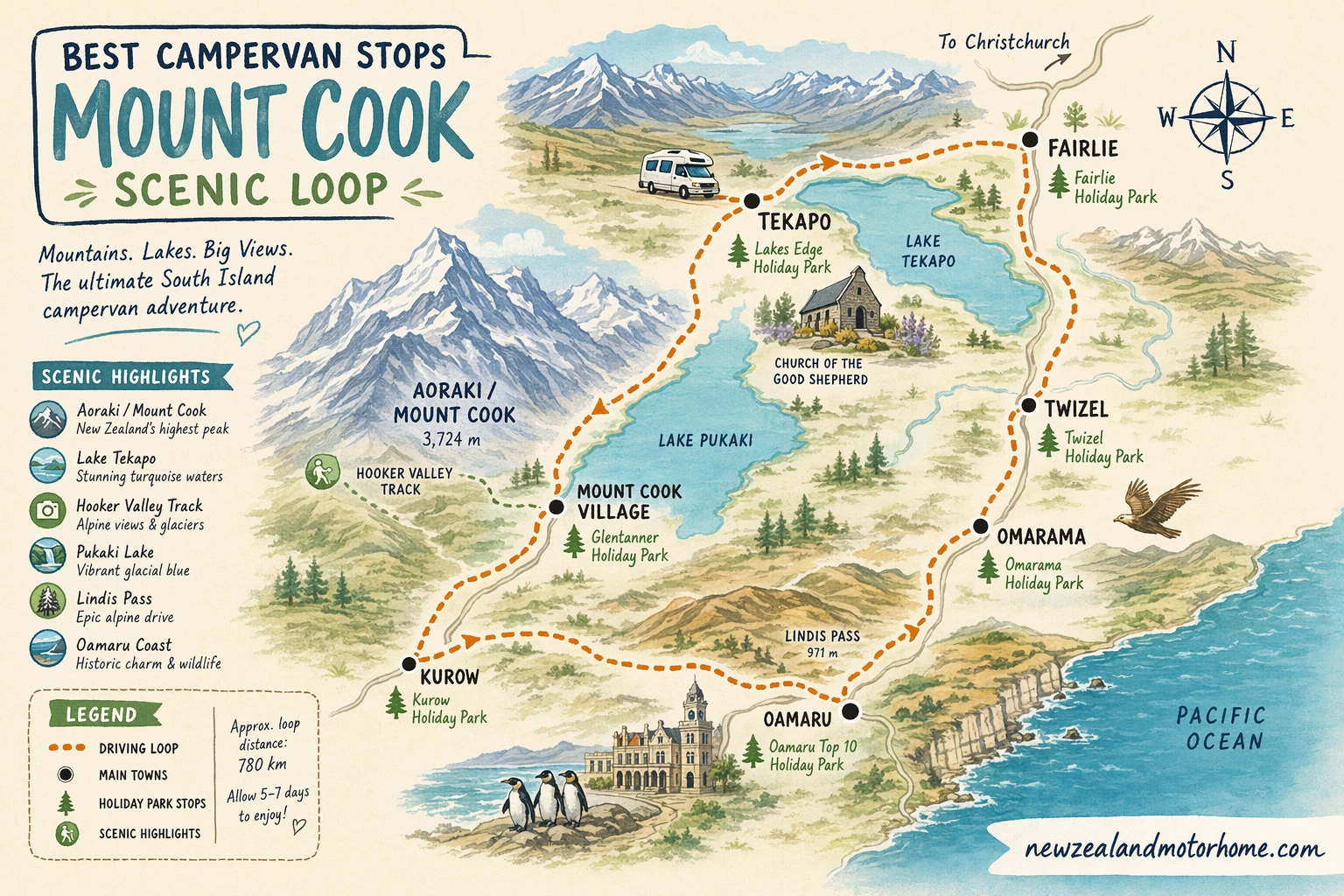
This guide rounds up the best campervan stops Mount Cook has for self-drive travellers, from Lake Pukaki pull-ins to Hooker Valley, Tasman Valley, DOC-style overnighting and powered-site options nearby. You will also find practical notes on freedom camping Mount Cook, fresh water, dump stations, LPG and how to string the stops together without rushing the road.
Start with the Lake Pukaki approach
The approach from Twizel along the western edge of Lake Pukaki is the classic campervan lead-in to Aoraki/Mount Cook. The road is sealed and straightforward, but it is exposed to strong nor'west winds, so keep both hands on the wheel if you are in a high-roof motorhome or a longer van.
Use the formed pull-ins and viewing areas only, rather than edging onto soft lakefront ground. Some bays are fine for a compact campervan but awkward for a large motorhome turning across traffic, so if a stop looks tight, carry on to the next proper lay-by.
- Best use: scenic photo stops before you enter the national park.
- Van fit: most formed pull-ins suit standard campervans; longer motorhomes should choose wider bays with clear exit lines.
- Facilities: treat this stretch as a view stop, not a service stop; arrive with water and empty waste tanks.
- Driving note: do not stop in the traffic lane for photos, even when the mountain is clear and tempting.
Peter’s Lookout and the big-water viewpoint stops
Peter’s Lookout is one of the most photographed stops on the Mount Cook road, with Lake Pukaki running straight towards Aoraki. It is a proper pull-off rather than a place to improvise roadside parking, which makes it a useful stop for campervans when it is not already full.
In peak summer, arrive early or be prepared to skip it and use another marked viewpoint. Reversing a long motorhome in a busy scenic bay is not fun, especially with rental cars, cyclists and people stepping into the road for photos.
- Best use: short scenic stop on the way in or out, not an overnight.
- Parking tip: nose in only if you have a safe way to turn around; otherwise choose a bay where you can drive through or exit cleanly.
- Self-containment: keep grey water contained and use your onboard toilet; there are no campervan services here.
- Timing: late afternoon light can be beautiful, but the car park can still be busy when the sky is clear.
Aoraki/Mount Cook Village and Hooker Valley parking
Once you reach Aoraki/Mount Cook Village, slow the pace and think like a van traveller: park once, walk what you can, and avoid shifting the vehicle between small car parks unless you need to. The village area has visitor facilities, but it is not a place to rely on for dumping, LPG or a big fresh-water refill.
The Hooker Valley Track is the headline walk and the White Horse Hill area is the main starting point. The car park is large by national park standards, but it still fills on clear days. If you are driving a longer motorhome, aim for early morning or late afternoon so you are not trying to squeeze into the last short space.
- Best use: Hooker Valley Track, Kea Point and mountain-view picnics from the van.
- Van fit: campervans and motorhomes can fit, but longer vehicles need patience and tidy parking.
- Overnight note: only stay overnight where camping is specifically permitted and paid or booked as required.
- Weather note: carry layers in the van; the wind can change the feel of the car park faster than the forecast suggests.
Tasman Valley for glacier views without the same crush
The Tasman Valley side trip is a strong campervan stop because it gives you a different angle on the park: moraine, glacier lake, braided valley floor and big sky. The access road is sealed, but take it gently in a larger van and watch for walkers, cyclists and vehicles turning into track car parks.
The Tasman Glacier viewpoint and Blue Lakes area are better treated as a half-day stop than a quick look. Park the van properly, lock away loose items, and allow time for wind at the viewpoint; doors can catch hard gusts up here.
- Best use: glacier viewpoints, shorter walks and a quieter break from the main valley.
- Parking tip: use marked spaces and avoid blocking turning circles, especially if other motorhomes are already there.
- Facilities: limited; bring drinking water and take all rubbish back in the van.
- Road note: check conditions in winter, when ice and shaded corners can make a high-sided vehicle feel less settled.
Where to stay in a campervan around Mount Cook
If you are wondering where to stay campervan Mount Cook, the key choice is between being right in the national park on a simple unpowered site, or staying farther out with more facilities. White Horse Hill is the classic close-to-the-walks option: basic, scenic, unpowered and very handy for early starts, but you need to be genuinely self-contained and prepared for cold nights.
For powered sites, showers, laundry, water fills and easier waste management, look to the holiday park-style options on the road back towards Lake Pukaki or in Twizel. This is often the better choice if your batteries are low, your grey tank is filling, or you want a warmer reset before continuing through the Mackenzie Country.
For freedom camping Mount Cook, do not wing it. The national park and Mackenzie District have restrictions, and a certified self-contained vehicle does not automatically mean you can sleep anywhere with a view. Always check current DOC and council signs on the day, and if you want help matching the right overnight stops to your van setup, you can talk to us before you lock in the route.
- Closest stay: unpowered DOC-style camping near the main walking tracks, where permitted and booked or paid as required.
- More facilities: powered sites and dump/water support are usually easier outside the national park.
- Freedom camping: only use legal designated areas and comply with self-containment rules.
- Cold-weather note: even in shoulder season, expect chilly nights and manage house batteries carefully.
Services, supplies and a simple two-day campervan flow
Mount Cook is not the place to arrive with a nearly full grey tank, an empty fresh-water tank and a low LPG bottle. Top up and empty out in the larger service towns such as Twizel or Tekapo before you drive in, and assume the national park itself is for walking, viewing and sleeping only at designated sites.
A relaxed two-day flow works well: stock up and service the van, drive the Lake Pukaki viewpoints, stay near Aoraki/Mount Cook, walk Hooker Valley early, then visit Tasman Valley before heading back out. If the forecast is poor, keep your plan flexible; cloud can hide the summit, but the valley and lake stops are still worthwhile when the weather shifts.
- Before driving in: fuel up, check LPG, fill fresh water and use a dump station.
- Night one: stay close to the walking tracks if you are set up for unpowered camping.
- Night two: choose a powered site outside the park if you need recharge, showers or laundry.
- Van length: allow extra time for parking and turning; do not count on squeezing a large motorhome into the last available viewpoint space.
Keep planning
Holiday parks mount cook
Read onFarmers markets mount cook
Read onCampervan guide mount cook nz
Read onBest time to visit mount cook nz
Read onHoliday parks mount maunganui
Read onTaking a campervan on the cook strait ferry
Read onCommon questions
Can I freedom camp in Mount Cook in a certified self-contained campervan?
Not just anywhere. Freedom camping Mount Cook is restricted, especially within the national park, and self-containment certification does not override local signs or DOC rules. Use only designated legal areas and check current notices before settling in for the night.
Where should I stay in a campervan if I want to walk Hooker Valley early?
The closest practical option is the permitted camping area near White Horse Hill, where you can start walking before the main car parks fill. It is unpowered and basic, so arrive with water, battery charge and empty waste tanks.
Are the roads to Mount Cook suitable for a large motorhome?
Yes, the main road from Lake Pukaki to Aoraki/Mount Cook is sealed and commonly driven by campervans and motorhomes. The bigger issues are wind, winter ice, busy viewpoint pull-ins and having enough space to turn a longer vehicle safely.
Where can I dump waste and fill fresh water near Mount Cook?
Plan to use dump stations and fresh-water fills in larger service towns such as Twizel or Tekapo, or at your booked holiday park if it provides those facilities. Do not assume you can service the van inside the national park.
Do I need a powered site around Mount Cook?
You do not need one if your van is well set up, your batteries are healthy and you are comfortable with unpowered camping. In colder weather, or after several off-grid nights, a powered site outside the park can be a sensible reset.
When is the best time of day to park a campervan at the main viewpoints?
Early morning is usually easiest for Hooker Valley and the popular Lake Pukaki pull-ins. Late afternoon can be quieter and beautiful for light, but always leave enough daylight to park and set up your overnight stop legally.
Have a planner shape this for your dates
Send a short outline — your dates, party size, and the kind of trip you want. A planner replies with a vehicle recommendation, a paced route, and the realistic budget.