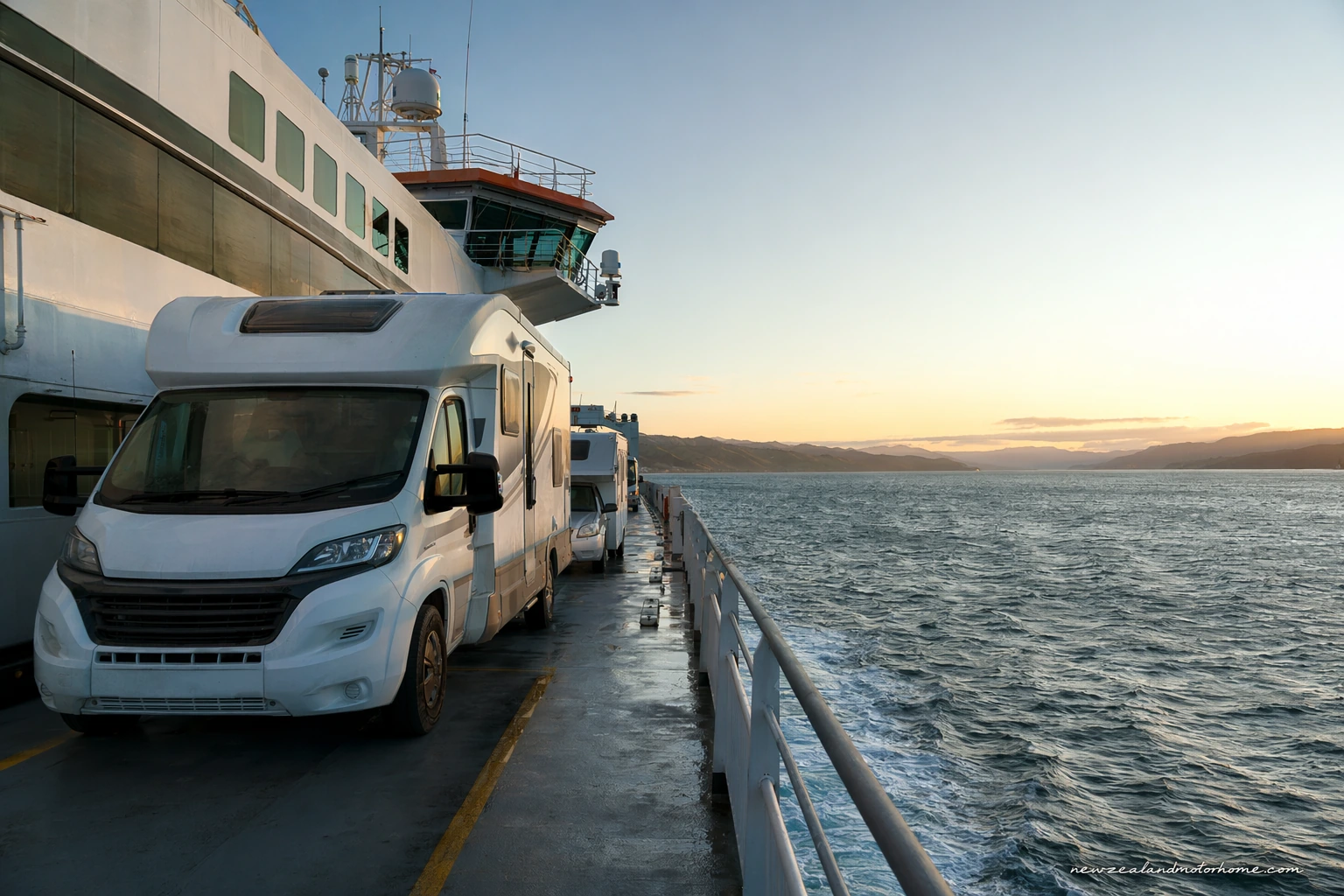
What to know before taking a campervan on the Cook Strait ferry
- Route: Wellington to Picton
- Book full van length
- Turn LPG off at cylinder
- Stay nearby for early sailings
- Self-contained rules still apply
The Cook Strait crossing is one of the big hinges of a New Zealand motorhome trip: Wellington on one side, Picton and the Marlborough Sounds on the other, and your whole home-on-wheels parked below deck while you sail between islands.
Taking a campervan on the Cook Strait ferry is straightforward, but it works best when you plan like a van traveller rather than a foot passenger. Vehicle length, LPG, fridge power, check-in lanes, overnight stops and your first dump station after landing all matter more than the sailing itself.
This guide walks through the practical van side of the crossing, so you can book the right space, arrive without a scramble, and keep your North and South Island route flowing.
How the ferry fits into a self-drive campervan route
The Cook Strait ferry links Wellington and Picton, so it is usually the join between a lower North Island loop and a South Island route through Marlborough, Nelson, Kaikōura or the West Coast. Most campervan travellers use it once during a one-way hire, or twice if they are doing a full return circuit.
When you book, the important detail is not just that you are travelling with a vehicle — it is the full size of the van as it will travel on the day. Measure or confirm the total length including bike racks, tow bars, rear storage boxes and any fixed accessories. Height can matter too, especially with solar panels, roof vents or a high-top motorhome.
- Book the van as a campervan or motorhome, not as a standard car.
- Use the full vehicle length, including anything attached to the rear.
- Allow for check-in time at the terminal; do not plan a tight drive from a faraway campsite.
- Keep your booking details handy in the cab, as you may need them before entering the marshalling lanes.
If you are still shaping the wider trip, it helps to decide whether the ferry is a midpoint or a final transfer. You can sketch your timing with us through the plan-your-trip step, especially if your hire pick-up and drop-off are in different islands.
Preparing the van before check-in
Before you reach the terminal, give the campervan a quick travel reset. You will not normally be able to access the vehicle during the crossing, so anything you need on board should come with you: warm layers, medication, chargers, snacks, water bottles, wallets and any child essentials.
LPG is the big one. Ferry operators require gas cylinders to be turned off for the sailing, and staff may ask you to confirm this. Turn the cylinder off at the bottle, not just at the appliance. If your fridge can run off battery for a short period, cool it down beforehand and avoid opening it once you have packed for the terminal.
- Turn off LPG at the cylinder before boarding.
- Secure cupboard latches, drawers, loose pans and anything on benches.
- Empty grey water and the toilet cassette before the day if you are close to capacity.
- Top up fresh water only if you need it; carrying a full tank adds weight on a hilly approach.
- Take a small day bag, as the vehicle deck is off-limits during sailing.
It is worth using a dump station and fresh-water tap either the night before or the morning of travel, rather than hunting for one after dark. Wellington and Picton both have holiday parks and service points in the wider area, but locations and access can change, so check current facilities before you roll in.
At the Wellington and Picton terminals with a motorhome
Ferry terminals are built for vehicles, but they are still busy working areas. Follow the signs for vehicle check-in, stay in the correct lane, and keep your speed low around staff, freight traffic and other travellers. You may sit in a marshalling lane for a while, so use that time to do a final gas, handbrake and day-bag check.
When it is your turn to board, crew will guide you onto the vehicle deck. In a larger motorhome, take it slowly and use your mirrors; there may be ramps, tight spacing and low visual clearance around other vehicles. Once parked, leave the van in gear or park, apply the handbrake firmly, lock it, and follow crew directions to the passenger areas.
- Do not stop in the loading lane to repack the van; do that before check-in.
- Switch off noisy alarms if your vehicle has a motion sensor, as ferry movement can trigger them.
- Note the deck or stairwell you use, so you can find the van after arrival.
- Keep keys, valuables and travel documents with you.
Wellington can feel urban and tight after a run of rural campsites, so plan your approach with your vehicle height and lane changes in mind. Picton is smaller and easier to read, but queues can still build around busy sailings, school holidays and summer weekends.
Where to stay before and after the crossing
A calm ferry day often starts the night before. If you have an early sailing, choose an overnight stop close enough that you are not driving unfamiliar roads in the dark while trying to meet check-in. A powered site can be useful before the crossing because it lets you chill the fridge, charge devices and reset the house battery.
On the Wellington side, many campervan travellers stay north of the city or in the wider harbour area rather than trying to thread a long motorhome through central streets at peak hour. On the Picton side, staying nearby gives you an easy start into Marlborough the next morning, or a buffer if the ferry arrives late.
- Use holiday parks or legal freedom camping areas that match your self-containment certification.
- Do not assume you can overnight in a ferry terminal car park; check the rules and signage.
- Book powered sites early in summer, over long weekends and around school holidays.
- Arrive with enough daylight to set up, especially if you need to dump, refill water or swap LPG.
Freedom camping rules vary by council area and can change between nearby bays or streets. A certified self-contained van gives you more options, but it does not give you permission to stop anywhere. Always check local signage and current council maps before you settle in for the night.
Driving away from the ferry: first kilometres on each island
After landing in Picton, give yourself a moment before pushing on. The roads out through Marlborough are beautiful but can be winding, and the Queen Charlotte Drive side in particular is not a place to rush a high-sided campervan. If you are heading to Blenheim, Nelson or Kaikōura, check your fuel, fresh water and daylight before committing to the next leg.
Arriving in Wellington is a different kind of adjustment. You move quickly from the ferry into urban traffic, multi-lane roads and hill suburbs. If your next stop is north towards Kāpiti, Wairarapa or Tongariro, plan a sensible exit route rather than relying on last-minute lane changes in a large van.
- Let faster traffic pass when safe on narrow or hilly roads.
- Watch for wind gusts, especially on exposed harbour roads and open highways.
- Check bridge and car park height restrictions before diverting into town centres.
- Refuel before remote stretches if your next overnight stop is away from main centres.
Cook Strait weather can affect sailing times, and a late arrival can knock on to your campsite check-in. Keep the first night after the ferry simple: a nearby holiday park or legal self-contained stop beats a long, tired drive in the dark.
Common questions
Do I need to book a special ticket for a campervan?
Yes. Book as a vehicle travelling on the ferry, using the correct campervan or motorhome length and height. Include rear bike racks, tow bars or storage boxes in the total length.
Can I stay in my campervan during the Cook Strait crossing?
No, passengers are generally not allowed to remain on the vehicle deck during sailing. Take everything you need with you before you leave the van, including medication, warm clothing and valuables.
What should I do with LPG before boarding?
Turn LPG off at the cylinder before boarding and keep gas appliances off for the crossing. Ferry staff may ask you to confirm the gas is shut off, so make it part of your pre-check-in routine.
Is it better to stay near the ferry the night before?
For early sailings, yes. Staying nearby reduces stress, gives you time to dump waste or fill water, and helps avoid a long drive in the dark before check-in.
Can a large motorhome fit on the Cook Strait ferry?
Large motorhomes use the ferry every day, but you must book the correct dimensions and follow crew directions when loading. Drive slowly on ramps and vehicle decks, and be honest about height and length when booking.
What happens if bad weather delays the ferry?
Cook Strait can be affected by wind and sea conditions, so build flexibility into your first campsite after the crossing. Avoid planning a long onward drive or a hard-to-reach freedom camping spot immediately after a late sailing.
Have a planner shape this for your dates
Send a short outline — your dates, party size, and the kind of trip you want. A planner replies with a vehicle recommendation, a paced route, and the realistic budget.