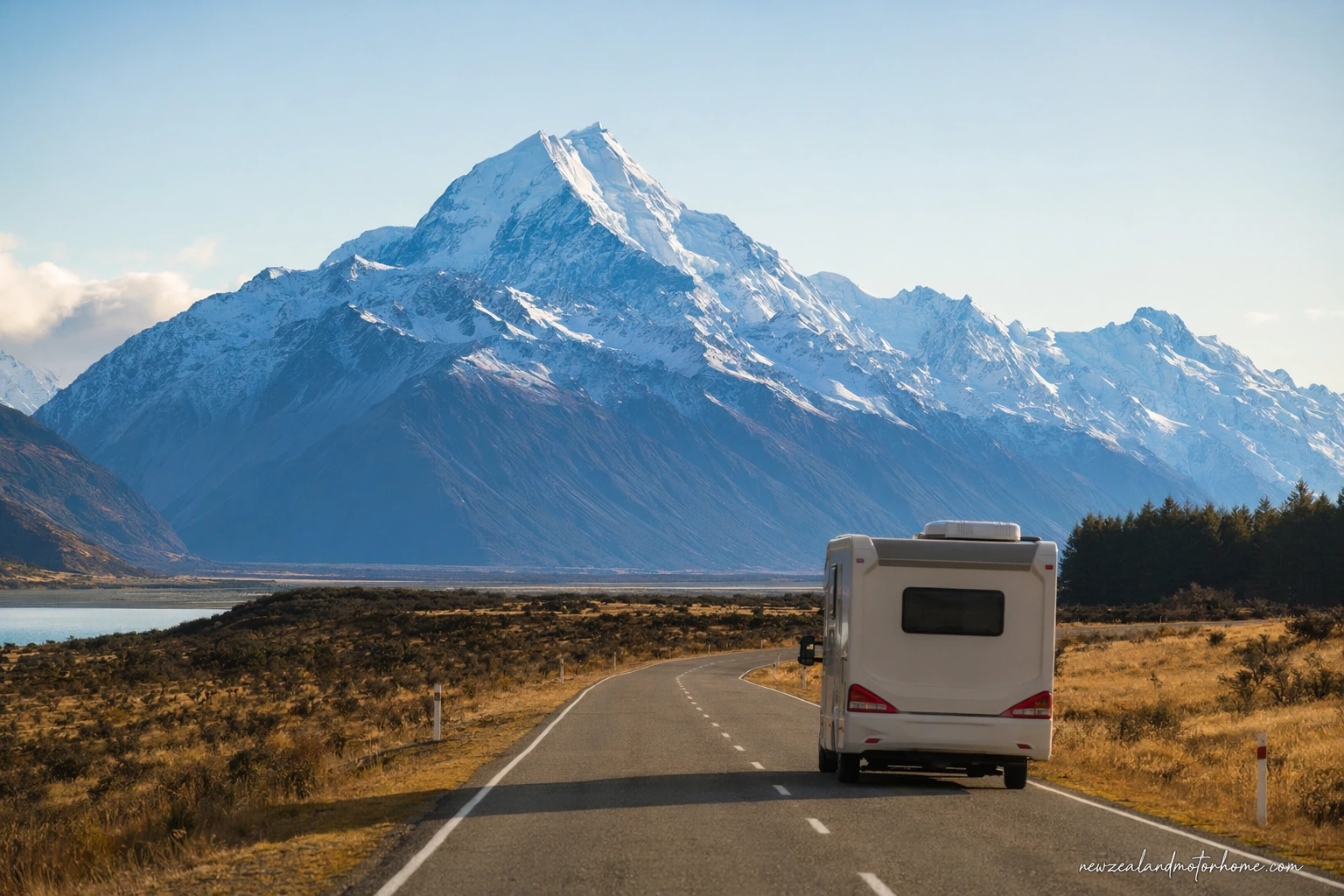
Your campervan guide Mount Cook NZ, from lake roads to alpine nights
- Best stay: 2 nights
- Main access: sealed SH80
- Sites: unpowered in-park, powered nearby
- Dump before or after the valley
- Wind and winter ice matter
Aoraki/Mount Cook is one of those places where the drive is part of the stay: Lake Pukaki on one side, the big white shoulder of Aoraki ahead, and just enough pull-offs to make you slow the van and keep looking back. This campervan guide Mount Cook NZ is written for travellers sleeping in their hired campervan or motorhome, not just passing through for a photo stop.
Below you’ll find the practical bits that matter in a van: where to base yourself, how the roads feel in a larger vehicle, where to park for the main walks, what to do about dump stations, fresh water and LPG, and how long to allow if the weather closes in.
Getting to Mount Cook in a campervan
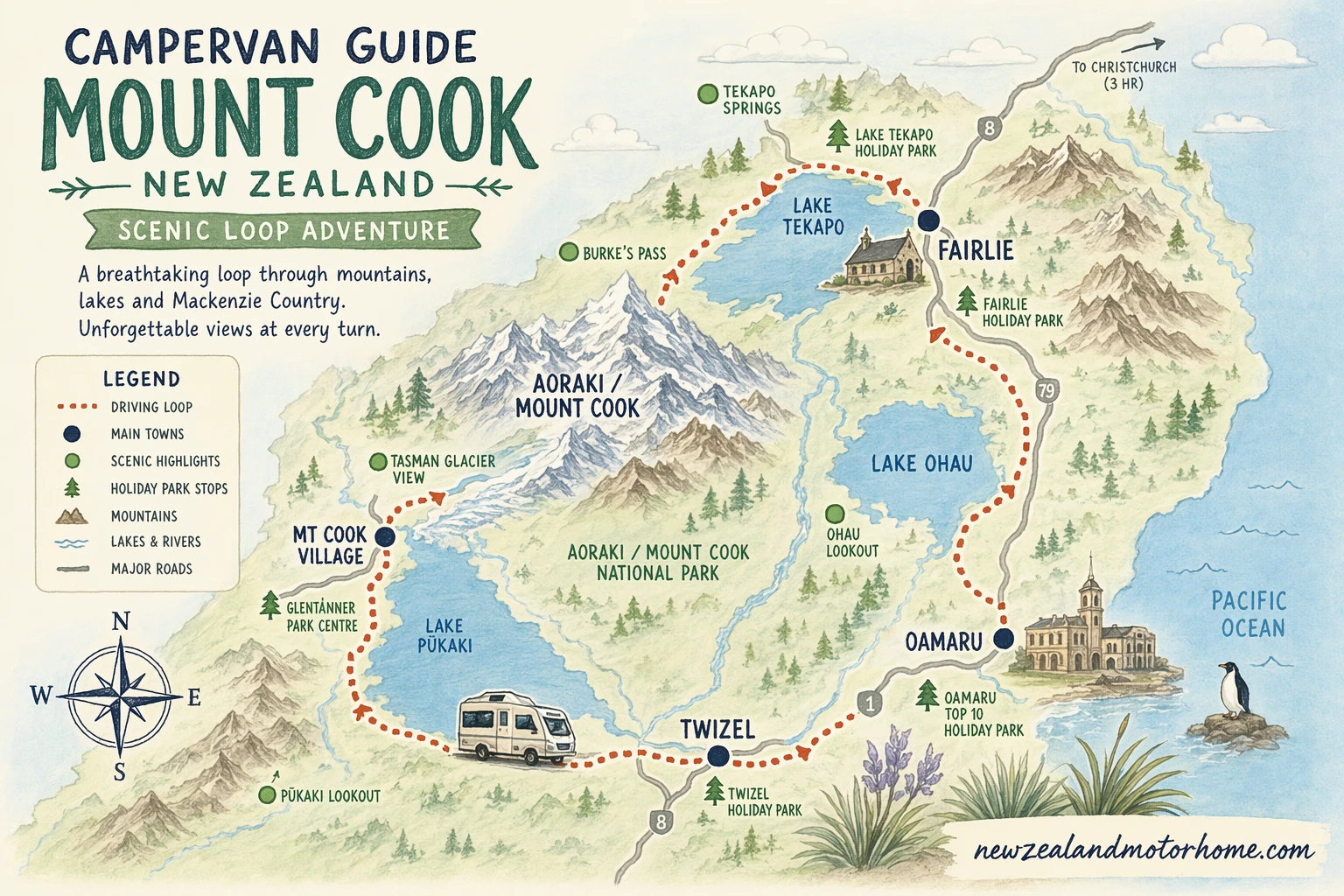
The main approach is State Highway 80 from Twizel, running along the western edge of Lake Pukaki to Aoraki/Mount Cook Village. It is sealed and usually straightforward for a campervan or motorhome, but it is exposed: crosswinds off the lake can push at high-sided vehicles, and winter can bring ice, snow and very low cloud.
Fill the tank, top up groceries and check LPG before you turn off towards the national park. Services become limited once you leave Twizel, and you do not want to arrive at your overnight stop with an empty water tank, low gas bottle and no simple option to sort it.
- Best service base: Twizel for fuel, supermarket supplies, LPG options, fresh water and dump-station planning.
- Road style: sealed alpine highway, open and scenic, with few places to safely turn a long van once traffic builds.
- Winter note: carry chains if your hire agreement and forecast require them, and never park where snow-clearing vehicles need access.
- Driving pace: allow extra time for photo stops, wind and slower cornering in a longer vehicle.
Where to stay: powered, unpowered and self-contained options
The classic Mount Cook campervan base is the White Horse Hill area near the start of the Hooker Valley Track. It is a national park-style campground with unpowered sites and basic facilities, and it suits self-contained vans that are happy without mains power for the night. Arrive early in busy periods; once the walking crowd and overnight vans overlap, the parking area can feel tight.
If you want a powered site, hot showers, laundry-style facilities or an easier reset after a few nights off-grid, look just outside the village area towards Glentanner or back to Twizel. For a motorhome Mount Cook stay, that powered-night strategy works well: plug in, refill, dump waste, then head into the park with lighter tanks and a full battery.
Freedom camping is not something to improvise here. Aoraki/Mount Cook National Park and the Mackenzie District have strict rules, and roadside pull-offs beside Lake Pukaki are not automatically overnight spots just because other vans have stopped there. Use official camping areas, follow on-site signs, and make sure your van’s self-containment certification is valid if you are staying anywhere that requires it.
- Unpowered national park feel: White Horse Hill area, close to walking tracks, no dump station.
- Powered-site reset: look outside the village or back towards Twizel if you need mains power and more facilities.
- Freedom camping: only where current council or DOC signage clearly allows it.
- Waste: plan to dump before or after the park rather than expecting to do it at the trailhead.
Parking the van for walks and viewpoints
Most things to do Mount Cook campervan travellers have on their list start from a small number of car parks, so timing matters. The Hooker Valley Track, Kea Point and White Horse Hill area share the same general parking zone, and it can fill quickly on clear mornings. If you are in a longer motorhome, it is much easier to park before the day visitors arrive than to thread through a crowded gravel area at midday.
The Tasman Valley Road leads to the Tasman Glacier viewpoint and Blue Lakes walking area. It is a short side trip and normally manageable in a campervan, but take it gently: parking is more limited, and turning space can be awkward if several larger vehicles arrive together.
- Hooker Valley Track: park at White Horse Hill, start early, and keep your van within marked areas.
- Kea Point: same parking area, a shorter walk and a good option when the wind is up.
- Tasman Glacier viewpoint: use the signed car park and avoid blocking coach or emergency access.
- Village stop: park considerately for the visitor centre and toilets; do not treat day-parking bays as an overnight camp.
Keep wet jackets, walking shoes and layers easy to reach before you leave the van. Weather can change quickly under Aoraki, and walking back to the campervan in sideways rain is not the time to discover your dry gear is packed under the bed.
Dump stations, fresh water, LPG and van chores
Mount Cook is a place to arrive prepared. There is no reason to carry full grey-water tanks up the valley if you can empty them beforehand, and there is no benefit in dragging a half-full fresh tank around if you are watching payload in a larger motorhome. Sort the basics in Twizel, Lake Tekapo or another service town on your route, then use the park for walking and sleeping rather than chores.
As with all NZ motorhome trips, use only approved dump stations for toilet cassette and grey water. Never tip waste into roadside drains, public toilets, tussock land or lake edges; this area is alpine, fragile and heavily used. If your hire van has a grey-water monitor, check it before heading to an unpowered site for more than one night.
- Before entering SH80: empty toilet cassette and grey water, refill fresh water if needed, check LPG and battery level.
- In the village: expect limited campervan servicing; do not rely on finding a full reset there.
- After your stay: use an approved dump station in the next service town and rinse gear before the next leg.
- Power management: unpowered nights mean watching heater use, fridge load and device charging.
How many days to allow for a Mount Cook campervan stay
One night is possible, especially if you arrive from Tekapo or Twizel in the afternoon and leave after a morning walk. But two nights is the sweet spot for most campervan travellers: one clear-weather window for the Hooker Valley or Tasman Glacier, one relaxed evening under the dark sky, and less pressure if cloud sits low on the peaks.
Three nights is worthwhile if you like slow mornings, photography, or want a weather buffer without moving the van every day. In winter, allow even more flexibility; the road may be open but icy, tracks can be slippery, and daylight is shorter. In summer, the challenge is more about parking early, managing heat inside the van and booking or choosing overnight stops before they fill.
- Fast pass: 1 night if the forecast is good and your van is already stocked.
- Best balance: 2 nights for walks, viewpoints and a calmer departure.
- Weather buffer: 3 nights if Aoraki is the centrepiece of your route.
- Route pairing: works naturally with Lake Tekapo, Twizel, Omarama and the Waitaki or Mackenzie country.
If you are stitching Mount Cook into a wider South Island loop and want help balancing powered nights, dump-station stops and realistic drive times, you can talk to us before you lock the route in.
Keep planning
Holiday parks mount cook
Read onFarmers markets mount cook
Read onBest time to visit mount cook nz
Read onBest campervan stops mount cook
Read onHoliday parks mount maunganui
Read onTaking a campervan on the cook strait ferry
Read onCommon questions
Can I take a large motorhome to Mount Cook?
Yes, the main road to Aoraki/Mount Cook Village is sealed and commonly used by campervans and motorhomes. Drive to the conditions, leave extra braking distance, and be mindful of wind on the Lake Pukaki section, especially in a high-sided vehicle.
Is there freedom camping at Mount Cook?
Do not assume you can freedom camp inside the national park or beside Lake Pukaki pull-offs. Use official campgrounds or areas where current DOC or council signage clearly permits overnight stays, and make sure your van’s self-containment certification meets the requirement.
Where should I dump grey water and toilet waste?
Plan to use an approved dump station in a service town such as Twizel, Lake Tekapo or on your onward route. Do not rely on the trailhead or village for full campervan servicing, and never empty waste into public toilets, drains or the landscape.
Do I need a powered site for Mount Cook?
Not necessarily. If your campervan is self-contained and your battery, LPG and water are in good shape, an unpowered night can work well. Choose a powered site before or after your Mount Cook stay if you need to recharge, run heating more comfortably or reset laundry and devices.
What are the best things to do in Mount Cook with a campervan?
Park early at White Horse Hill for the Hooker Valley Track or Kea Point, and use the Tasman Valley car park for the glacier viewpoint. The visitor centre and short village stops are also easy if you park considerately and avoid treating day-parking spaces as overnight sites.
Have a planner shape this for your dates
Send a short outline — your dates, party size, and the kind of trip you want. A planner replies with a vehicle recommendation, a paced route, and the realistic budget.