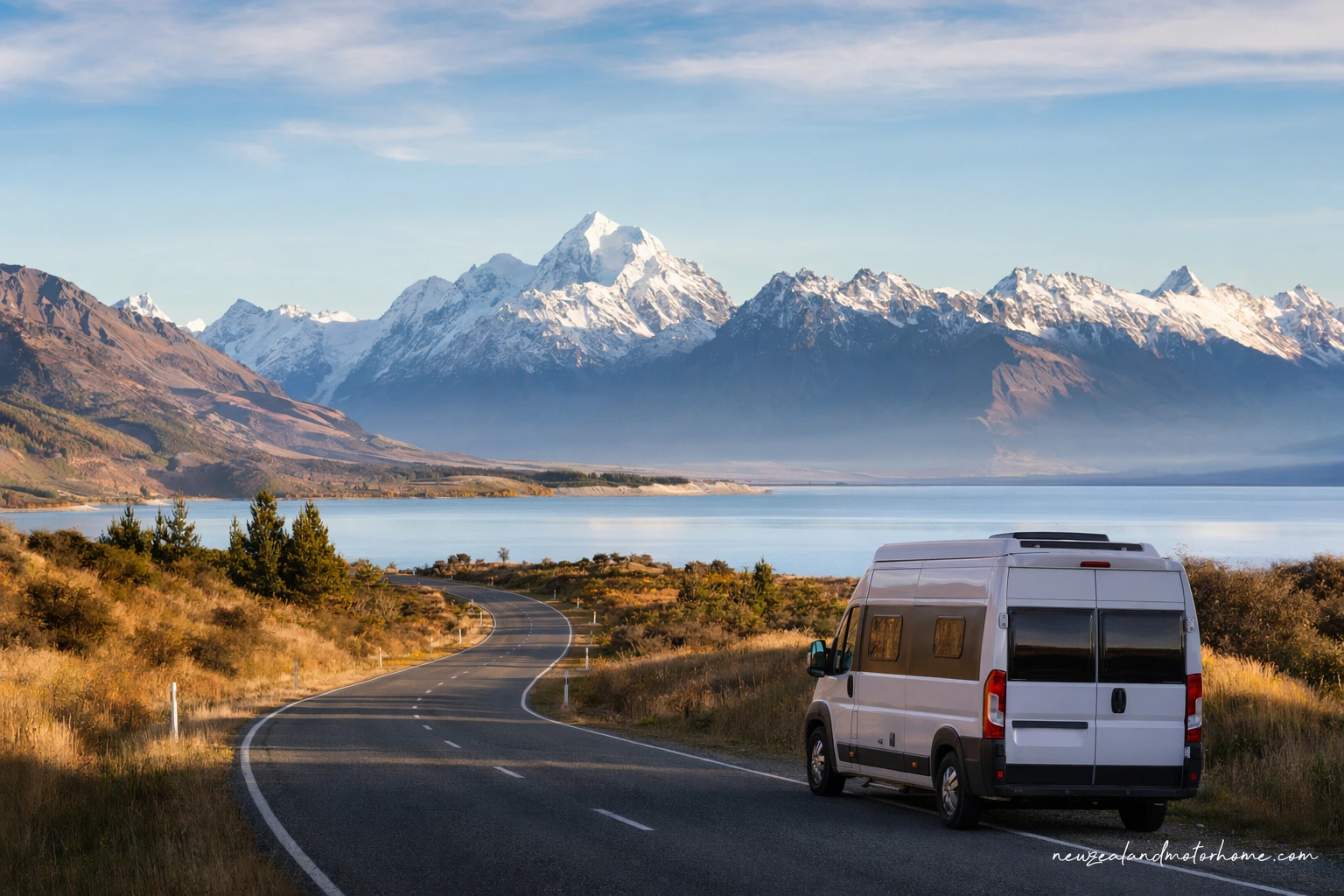
- Best season: March to early May
- Allow 2 nights if possible
- Use designated campsites only
- Stock and dump in Twizel
- Watch wind in high-sided vans
Aoraki/Mount Cook is one of those places where your campervan becomes part of the view: snow on the high peaks, the Hooker Valley swinging bridges ahead, and your kettle steaming back at the van afterwards. But the season changes everything here, from how early you need to book a site to whether you should expect ice on the road in the morning.
This guide is written for travellers driving and sleeping in their hired campervan or motorhome. You’ll find the best time to visit mount cook nz for weather, walking, quieter campsites, road conditions, water and dump-station planning, plus what to think about if you are in a longer vehicle.
The best overall months for a Mount Cook campervan trip
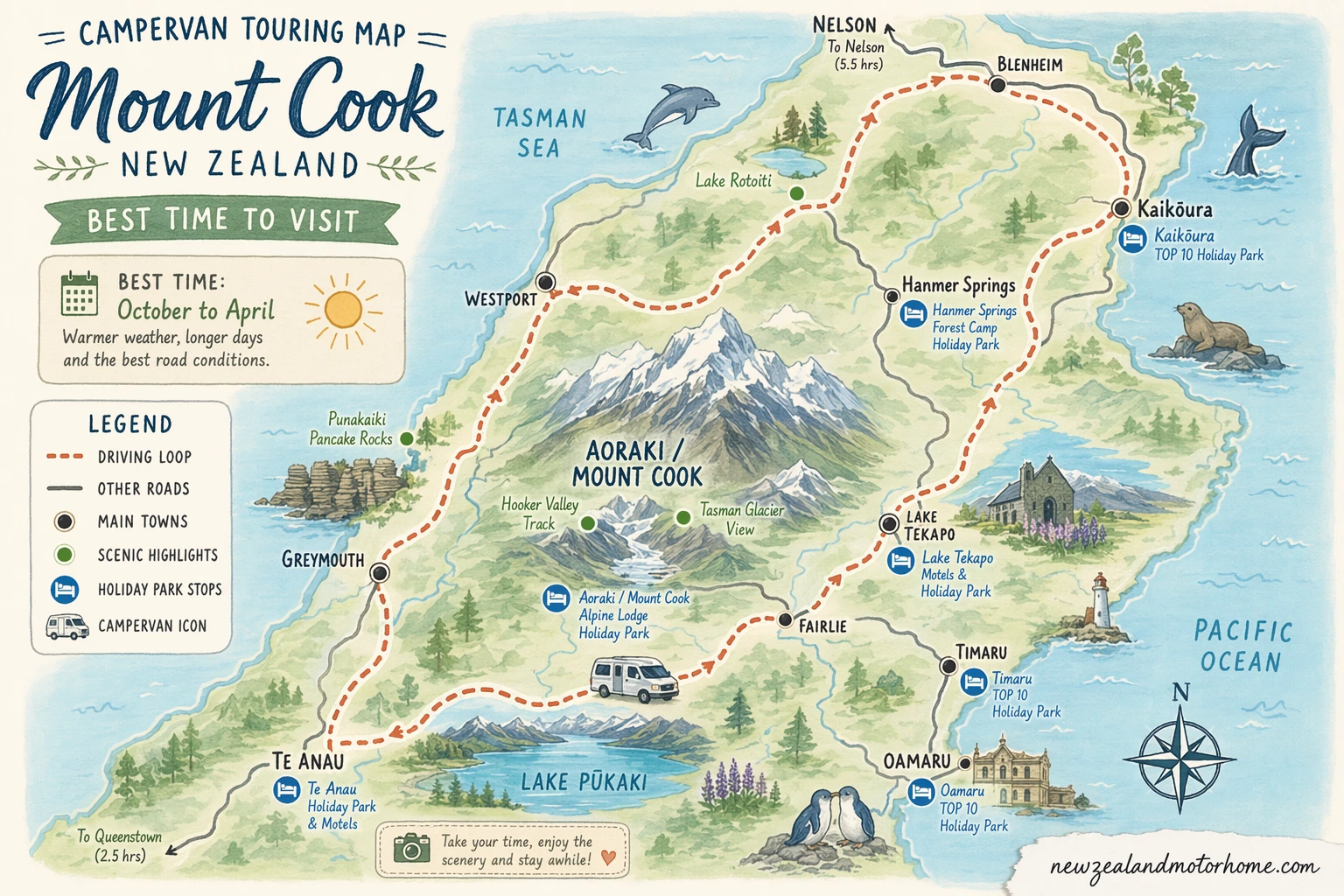
For most self-drive campervan travellers, March, April and early May are the sweet spot. The days are often settled, the light is soft on the Tasman and Hooker valleys, and the peak summer pressure on campsites has eased. Nights can still be properly cold, so a powered site before or after your national park night can make the van feel much more comfortable.
Late November and early December are also good if you want longer daylight and alpine flowers without the deepest holiday crowds. January and February bring the warmest weather, but they also bring the busiest car parks, fuller campgrounds and more day traffic on State Highway 80 into the village.
- Best balance: March to early May for calmer conditions and easier campsite planning.
- Warmest period: January and February, with early starts needed for parking near the main walks.
- Quietest feel: June to August, but only if you are confident with winter van driving and cold-weather camping.
- Most changeable: Spring, when wind, rain and fresh snow can all turn up in the same week.
Mount Cook weather by month: what it means in the van
Mount Cook weather by month is less predictable than the calendar suggests because you are travelling into an alpine valley. A clear morning can become a windy afternoon, and even summer evenings can feel cold once the sun drops behind the mountains. Pack for layers, keep wet gear separate from bedding, and check the forecast before committing to walks away from the van.
December to February usually gives the mildest daytime temperatures and the longest evenings, which suits travellers who want to walk the Hooker Valley Track after the day-trip rush. March to May brings crisp mornings, gold tones around the Mackenzie Basin and fewer people around the village. June to August is winter: expect frosts, possible snow, shorter daylight and a real need to manage condensation inside the campervan.
September to November is beautiful but unsettled. Spring winds can be hard on high-sided motorhomes, and avalanche or slip warnings may affect some tracks after heavy weather. If you are wondering when to visit Mount Cook for photography and walks without the full summer crowd, aim for a flexible autumn window and give yourself a spare night in case cloud sits low on the peaks.
Where to stay overnight in each season
Inside Aoraki/Mount Cook National Park, overnighting is not a case of pulling into any scenic lay-by. Freedom camping is restricted, and being certified self-contained does not give you permission to sleep in track car parks or roadside pull-offs where camping is not allowed. Plan on using designated campsites and holiday parks, especially in summer.
The well-known DOC campsite near White Horse Hill puts you close to the Hooker Valley and Sealy Tarns track starts. It is an unpowered alpine-style option, so arrive with full water, charged house batteries, enough gas and an empty toilet cassette. For powered sites, showers, laundry and easier bad-weather resets, look to holiday-park style stays around Glentanner or Twizel before or after your park night.
- Summer: book ahead and arrive early enough to park the van without squeezing a long motorhome into awkward spaces.
- Autumn: availability is usually easier, but weekends and clear-weather windows still draw travellers in.
- Winter: check what is open before you drive in; some services may operate differently in cold months.
- Spring: keep plans flexible, as weather can make an extra powered night in Twizel feel like a very good decision.
Driving conditions on the road to Aoraki/Mount Cook
The drive in on State Highway 80 beside Lake Pukaki is sealed and spectacular, but it deserves respect in a campervan. The road can be exposed to strong crosswinds, especially in spring and nor’west weather. If you are in a taller motorhome, slow down, keep both hands on the wheel, and avoid stopping on narrow shoulders just because the view is good.
In winter and after cold clear nights, watch for frost and ice in shaded sections and around car parks. Snow can temporarily affect access, and you should follow road-condition updates before heading past Twizel. Chains may be advised or required during winter weather events, and not every rental vehicle is supplied with them unless requested or permitted by your hire agreement.
Fuel up before you commit to the valley. Services in Mount Cook Village are limited compared with Twizel, so treat Twizel as your practical staging point for diesel or petrol, groceries, LPG checks, fresh water and dump-station planning. If you’d like someone to sanity-check your seasonal route and overnight stops, the talk-to-us step is there for exactly that.
Parking for walks, viewpoints and rainy-day gaps
For the Hooker Valley Track, Tasman Glacier area and village viewpoints, the main rule is simple: start early in busy months. Campervans take longer to manoeuvre and need more room than cars, so arriving before the mid-morning rush makes parking less stressful. Avoid overhanging into turning areas, and never block access for shuttle vehicles, emergency services or other vans.
The White Horse Hill area is the practical base for the Hooker Valley Track and Sealy Tarns, but it can fill quickly in summer and on perfect autumn days. The Tasman Valley car park is reached by a side road and is a good shorter outing if the weather window is brief. On wet or windy days, it can be better to wait it out with a hot drink in the van than push into exposed terrain just because you have arrived.
- Long vehicles: give yourself extra turning space and avoid roadside photo stops where you cannot fully clear the lane.
- Wet gear: use a rear locker, shower cubicle or plastic tub so damp boots do not soak your bedding.
- Battery use: cold nights and heater fans can drain house batteries faster, so plan powered resets.
How many days to allow in your campervan itinerary
One night can work if you are lucky with weather, but two nights is much safer for a campervan trip to Mount Cook. The mountains make their own cloud, and a spare morning can be the difference between seeing Aoraki and seeing only grey. If you are travelling in winter or spring, build in even more flexibility rather than driving tired or in poor visibility.
A practical pattern is to stock and service the van in Twizel, drive to Mount Cook for one or two nights, then return towards Lake Pukaki, Tekapo or Omarama with your toilet cassette and grey water managed properly. Do not assume you can empty waste or fill every tank inside the national park. Treat water, LPG and dump stations as part of the route plan, not an afterthought at the end of the day.
Keep planning
Holiday parks mount cook
Read onFarmers markets mount cook
Read onCampervan guide mount cook nz
Read onBest campervan stops mount cook
Read onHoliday parks mount maunganui
Read onTaking a campervan on the cook strait ferry
Read onCommon questions
What is the best time to visit Mount Cook NZ in a campervan?
March to early May is the best all-round period for many campervan travellers: fewer crowds than summer, often settled weather and crisp clear views. If you want the warmest days, choose January or February, but book overnight sites early.
Can I freedom camp near Mount Cook Village?
Do not plan on freedom camping in random car parks or roadside pull-offs around Aoraki/Mount Cook National Park. Use designated campsites or holiday parks, and remember that self-containment certification does not override local or national park camping rules.
Is the road to Mount Cook suitable for a large motorhome?
Yes, the main road in is sealed and commonly driven by campervans and motorhomes. The main things to watch are crosswinds, winter ice, limited shoulder space for photo stops, and allowing enough room when parking at track starts.
Do I need a powered site at Mount Cook?
You do not always need one, but powered nights are useful before or after an unpowered alpine campsite stay. Cold nights, heater use, charging devices and drying wet gear all make a powered site in the wider Mackenzie area worthwhile.
Where should I empty the toilet cassette and fill fresh water?
Plan to use dump stations and water fills before entering the national park area, commonly around larger service stops such as Twizel or at holiday-park facilities where you are staying. Do not rely on finding full motorhome services in Mount Cook Village.
Is winter worth it for a Mount Cook campervan trip?
Winter can be stunning, with snowy peaks and quiet trails, but it is colder and less forgiving. Check road conditions, confirm campsite or holiday-park availability, manage condensation in the van, and avoid driving early or late when ice is more likely.
Have a planner shape this for your dates
Send a short outline — your dates, party size, and the kind of trip you want. A planner replies with a vehicle recommendation, a paced route, and the realistic budget.