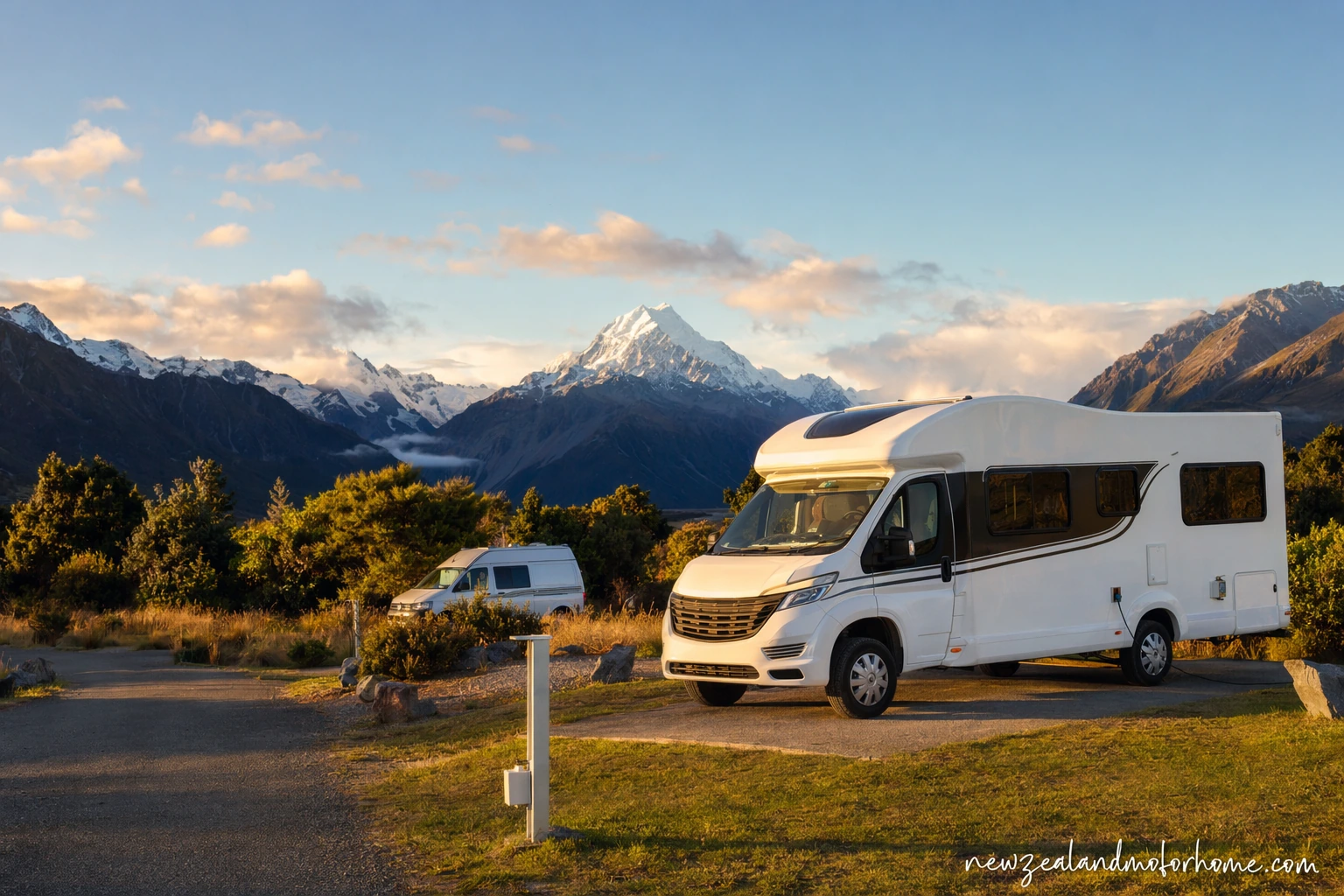
- Best season: Oct-Apr, winter with care
- Allow 1-2 nights for Aoraki
- Powered sites mostly outside the village
- Certified self-contained for freedom camping
- Service the van in Twizel or Tekapo
Holiday parks Mount Cook are not clustered like they are in beach towns. Around Aoraki/Mount Cook, your choices spread from the national park road end to Glentanner, Twizel, Lake Tekapo, Fairlie and Omarama, with a mix of powered sites, basic DOC camping and self-contained freedom camping areas.
This guide is written for travellers driving and sleeping in a hired campervan or motorhome. It explains where to park the van overnight, what each base unlocks, how far you will drive between campgrounds Mount Cook travellers actually use, and where to think about dump stations, fresh water, LPG and weather before you head up SH80.
How the Mount Cook camping spread works
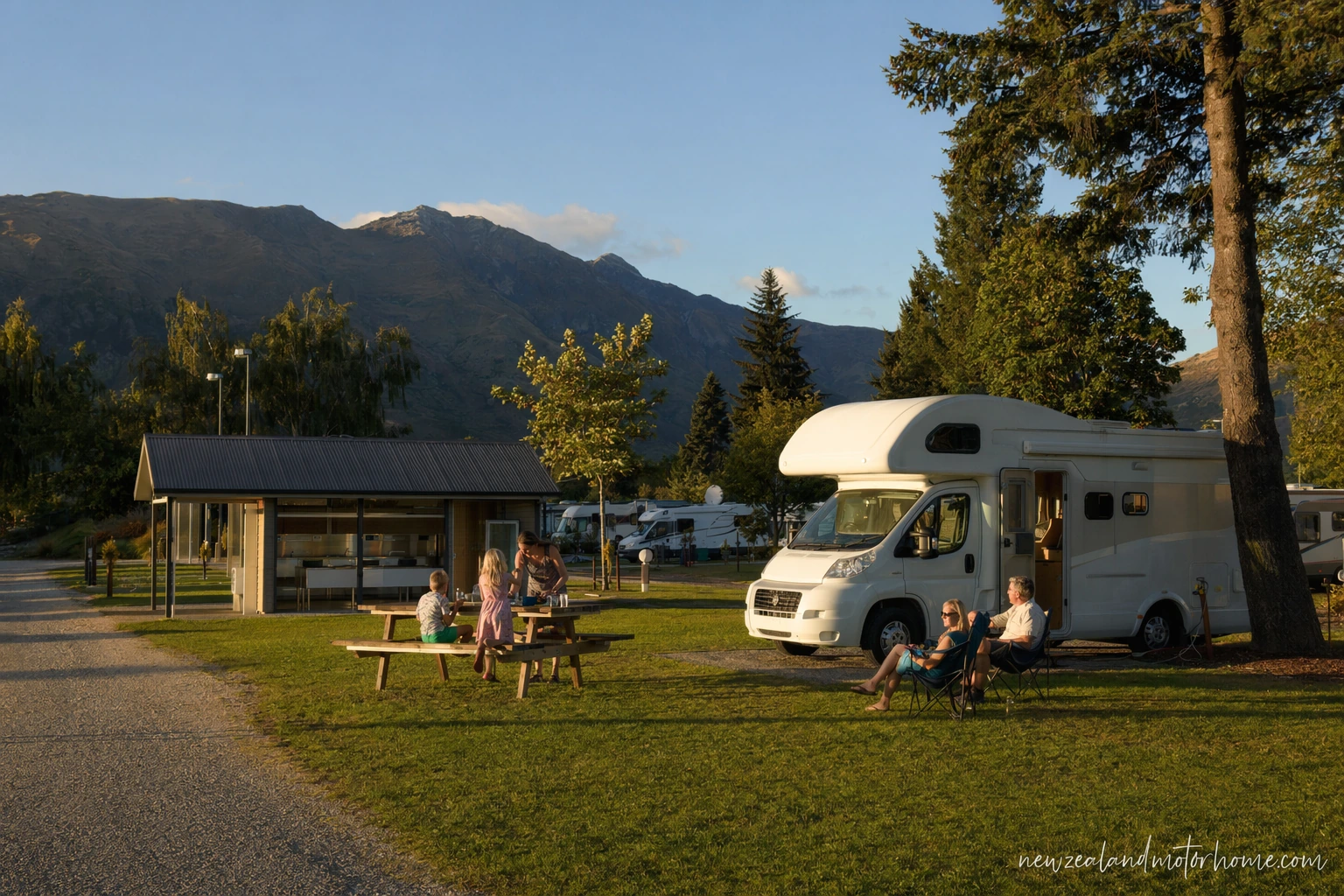
The first thing to know is that Mount Cook Village is small and the national park setting is tightly managed. There is not a long strip of commercial holiday parks in the village itself, so most campervan travellers choose between staying close to the Hooker Valley tracks, basing at Glentanner, or sleeping in Twizel or Tekapo and driving in for the day.
If you are comparing campsites Mount Cook wide, think in terms of what you want the next morning to feel like. A night near the park gives you a quick start for walks and sunrise views; Twizel gives more services; Tekapo adds the lake and hot pools area; Fairlie or Omarama are useful if you are arriving late from Christchurch, Dunedin or the Waitaki.
- Closest to the walks: DOC-style camping near the road end, generally unpowered and more basic.
- Closest full-service base: Glentanner, with campervan facilities and big-sky views on the road to Aoraki.
- Best service towns: Twizel and Lake Tekapo for groceries, fuel, water, dump stations and weather resets.
- Arrival or departure bases: Fairlie and Omarama if your route needs an easier first or last night.
Powered sites Mount Cook travellers should book carefully
Powered sites Mount Cook travellers search for are usually outside the national park village rather than right beside the Hooker Valley Track. Glentanner is the main close option for a serviced campervan stay, while Twizel and Tekapo have a broader range of holiday park-style sites with powered and unpowered bays.
In summer, school holidays and clear-weather windows, the best-located powered sites can fill quickly. A larger motorhome may also need a longer bay, so book by vehicle length rather than assuming every site will suit a 6-berth van. If you rely on 240V power for heating, charging camera gear or running appliances without draining the house battery, do not leave this decision until dusk.
- Powered site: useful for cold nights, battery top-ups and longer stays in one base.
- Unpowered site: fine for one night if your van battery, gas bottle and water tank are in good shape.
- Hardstand vs grass: ask or check current site notes after heavy rain, especially with a heavier motorhome.
- Long vans: confirm the site length and turning room before committing.
What each campervan base unlocks
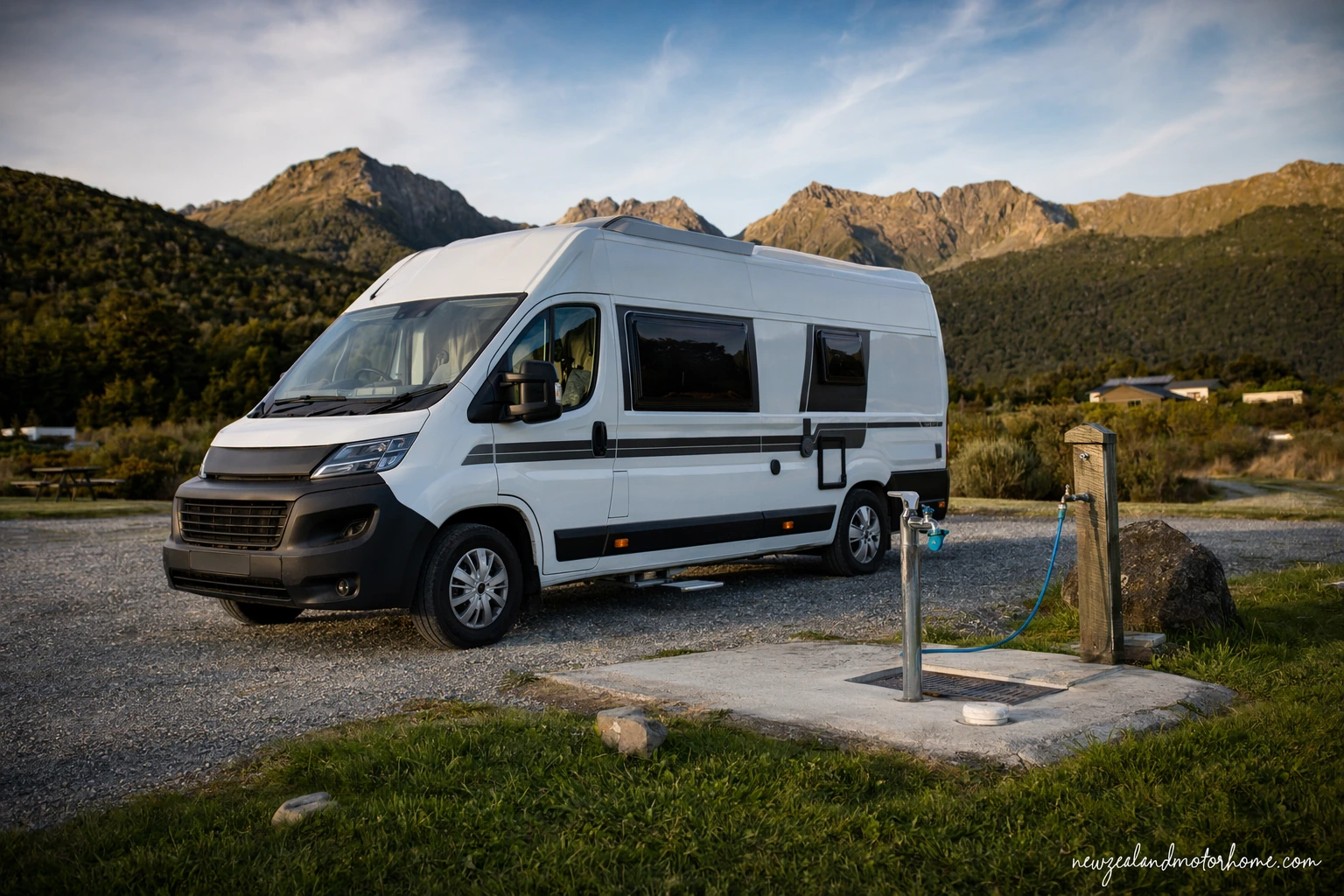
Staying close to Aoraki is about access. From the national park end of SH80 you can start the Hooker Valley Track early, walk the Kea Point Track before the car parks fill, and return to the van for lunch without a long drive. The trade-off is fewer services and more reliance on your own fresh water, LPG and battery.
Glentanner gives you a practical halfway feeling: still dramatic, still close to Mount Cook, but more comfortable for many self-drive travellers. Twizel is the easiest all-round base if you want supermarkets, fuel, dump stations and the option to sit out bad weather. Tekapo works well if your Mount Cook visit is part of a broader Mackenzie Country loop rather than the sole focus.
- Aoraki road end: best for early walks and alpine atmosphere; expect basic or limited facilities.
- Glentanner: good for a closer serviced stay with lake-and-mountain driving on both sides.
- Twizel: practical for supplies, dump and refill routines, and day trips into the park.
- Lake Tekapo: better if you also want the lakefront, stargazing and an easy northbound route.
If you are trying to balance a scenic night with a sensible servicing day, sketch your route before booking. You can also talk to us if you want a Mount Cook stop woven into a wider South Island campervan plan.
Freedom camping and self-containment around Aoraki
Freedom camping around Mount Cook is not a park-anywhere situation. The national park, roadside pull-offs and lakeshore areas are controlled by DOC and local council rules, and those rules can change with conservation pressure, weather damage and seasonal demand. Always follow the sign in front of you, not an old app review.
In the wider Mackenzie area, freedom camping is generally limited to designated places and normally requires a certified self-contained vehicle. That means your campervan must have the correct self-containment certification for the way it is being used, and you still need to respect stay limits, no-camping zones and waste rules. If in doubt, choose a holiday park or DOC campground rather than risking a fine or damaging access for everyone.
- Do not overnight in scenic pull-offs unless signs clearly allow it.
- Use toilets in your van or public facilities; the alpine environment is fragile.
- Contain all grey water and empty only at an approved dump station.
- Check current bylaws for Mackenzie District and DOC land before relying on a free site.
Dump stations, water, LPG and road notes for the van
Do your servicing before you drive deep into the Mount Cook road. Twizel and Lake Tekapo are the easiest places to plan dump-station stops, fresh-water fills, groceries and fuel. Holiday parks can often help guests with water and waste facilities, but you should not assume a non-guest can use them; check before you arrive with a full grey-water tank.
LPG is another one to sort in the service towns rather than leaving it until you are under the mountains. Cold nights use more gas for heating and hot water, and a half bottle can disappear faster than expected if you are cooking inside because of wind. Refill or swap where your hire van setup allows, and make sure you know which system your rental uses.
SH80 from Lake Pukaki to Aoraki/Mount Cook Village is sealed and straightforward in good weather, but it is exposed. High-sided motorhomes can feel the nor'wester, winter mornings can bring ice, and the final car parks can be busy when the weather clears. Drive with headlights on, keep both hands on the wheel in gusts, and avoid squeezing a long van into informal roadside spaces.
- Service before SH80: empty grey and toilet cassette, fill fresh water and check LPG.
- Allow extra time: photo stops are tempting, but use proper pull-offs with room to rejoin safely.
- Winter note: check road conditions and your hire agreement for snow-chain requirements.
- Parking: use marked car parks at tracks and attractions; do not block turning areas for buses and larger vans.
A sensible Mount Cook holiday park rhythm
A good campervan rhythm is often one scenic night and one service night. For example, you might stay close to Aoraki or Glentanner for early walking, then move to Twizel or Tekapo to plug in, dump, refill and reset. This is more comfortable than trying to run several cold alpine nights from an unpowered site without thinking about battery and gas use.
Be wary of generic top 10 holiday park Mount Cook lists that treat every campground as if it sits beside the same trailhead. Distance matters here. A campsite that looks close on a map can still mean a 45 to 75 minute morning drive, and that changes how you plan sunrise walks, dinner, laundry and safe arrival in daylight.
- One-night visit: choose the closest available legal stay, then service in Twizel or Tekapo afterwards.
- Two-night visit: consider one serviced powered night and one scenic unpowered night if weather is settled.
- Bad weather: base in a service town so you can wait for a clearer walking window.
- Long motorhome: prioritise booked sites and easy turning over the most photogenic option.
Keep planning
Farmers markets mount cook
Read onCampervan guide mount cook nz
Read onBest time to visit mount cook nz
Read onBest campervan stops mount cook
Read onHoliday parks mount maunganui
Read onTaking a campervan on the cook strait ferry
Read onCommon questions
Are there holiday parks right in Mount Cook Village?
There are limited overnight options in and near the national park, but not a row of full-service holiday parks in the village itself. Many campervan travellers use Glentanner, Twizel or Lake Tekapo for powered sites and fuller facilities.
Can I get powered sites near Mount Cook?
Yes, but the closest powered sites Mount Cook visitors use are generally outside the village, with Glentanner and the service towns being the practical choices. Book early in summer and confirm your motorhome length when reserving.
Is freedom camping allowed around Lake Pukaki and Aoraki?
Only where current signs and bylaws allow it, and usually only for certified self-contained campervans. Do not assume a lakefront pull-off or mountain viewpoint is legal for overnight parking.
Where should I empty the toilet cassette before Mount Cook?
Plan to use approved dump stations in service towns such as Twizel or Lake Tekapo, or facilities at your holiday park if you are staying there. Avoid driving into the national park with full grey water or a full cassette.
Is the road to Mount Cook suitable for a large motorhome?
SH80 is sealed and commonly driven by campervans and motorhomes, but it is exposed to wind and winter ice. Take care in gusty weather, use proper pull-offs, and avoid tight informal parking spots if your van is long.
How many nights should I allow for Mount Cook campgrounds?
One night works if you only want a key walk in good weather, but two nights gives you a better chance of clear views. A practical plan is one night close to Aoraki and another in Twizel or Tekapo to recharge, dump and refill.
Have a planner shape this for your dates
Send a short outline — your dates, party size, and the kind of trip you want. A planner replies with a vehicle recommendation, a paced route, and the realistic budget.