- Best season: October to April
- Allow 7–14 days by campervan
- Mix powered and unpowered nights
- Check freedom camping signs locally
- Long vans need early beach parking
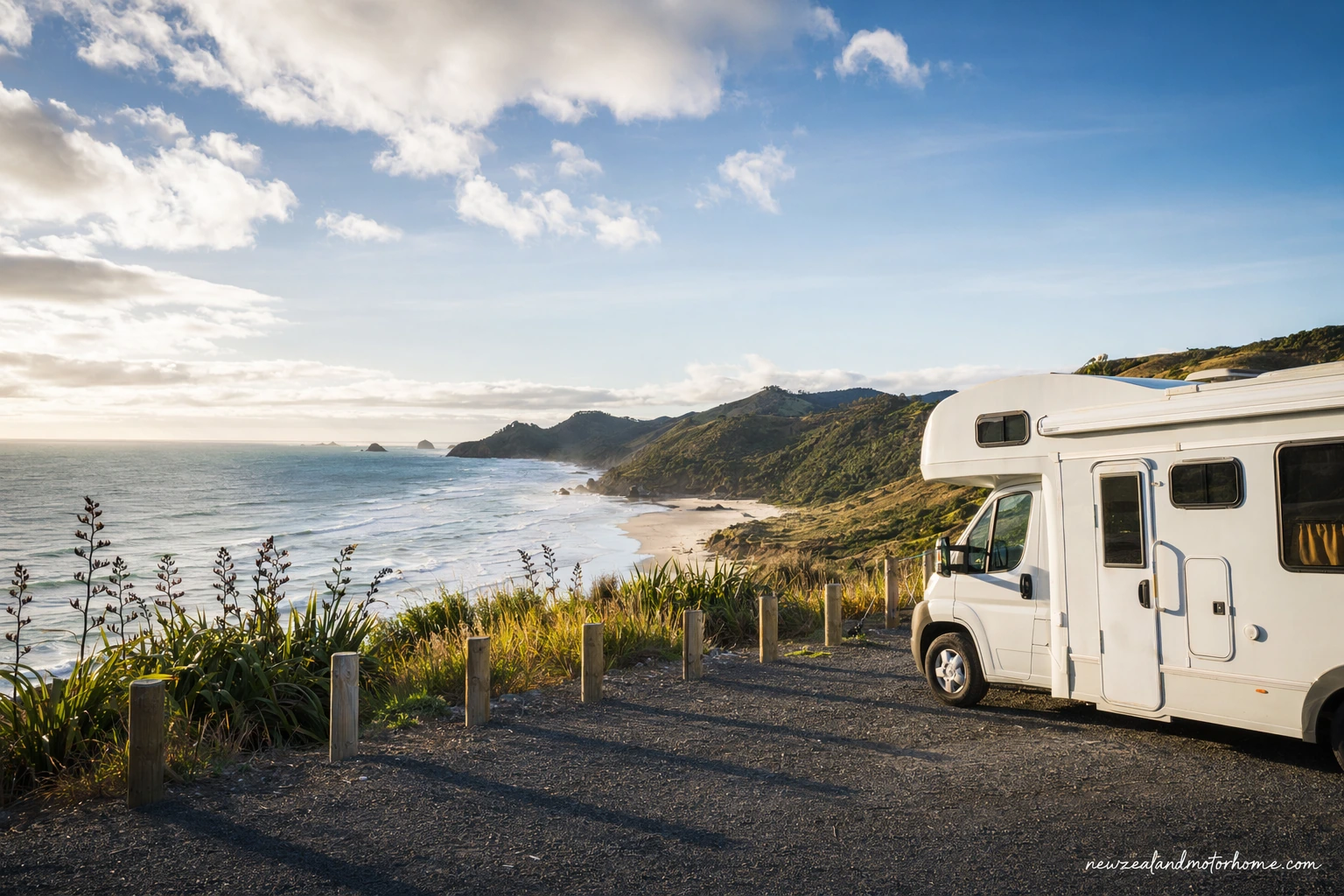
Northland is made for slow campervan travel: tidal harbours, pōhutukawa-fringed bays, headland lookouts and small towns where you can top up water, empty the cassette and keep rolling. The trick is knowing which beautiful stops actually work when you are driving and sleeping in the van, not just visiting in a car.
This guide strings together the best campervan stops Northland can offer, with practical notes on where to park the van, when to choose a powered holiday park over a basic site, and how freedom camping Northland rules affect your overnight choices. If you want help turning these stops into a sensible day-by-day route, you can also use our plan-your-trip step before you lock in your hire van dates.
Start easy: Mangawhai, Waipū and the Whangārei coast
Coming north from Auckland, the east coast gives you a gentle first night before the roads get more winding. Mangawhai Heads and Waipū Cove are good early campervan stops because you can get your beach fix without committing to a long remote drive. Use marked beach car parks for daytime stops, keep clear of boat ramps and turning circles, and avoid trying to squeeze a longer motorhome into tiny residential beach-end spaces.
For overnighting, look for established holiday parks or council-approved camping areas rather than assuming a scenic car park is legal. A powered site is worth considering on your first night if you need to cool the fridge properly, charge devices, and get used to the van’s water, gas and waste systems.
- Good for: first-night shakedown, beach walks, easy supermarket access nearby.
- Van note: the coast roads are sealed but can be busy in summer; arrive earlier if you are in a 7 metre motorhome.
- Services: plan fuel, LPG bottle swaps and groceries before heading towards smaller bays.
Whangārei Heads and Bream Head: big views, narrow-road manners
Whangārei is a handy campervan reset point before you follow the harbour out to Whangārei Heads. It is the place to think practically: dump station, fresh-water fill, supermarket, fuel and any small repair or tyre check you have been putting off. Once you leave town, the road becomes more local and scenic, with fewer easy places to turn a large van around.
The heads are best treated as a day-exploring area from a legal overnight base nearby. Pull-ins around the harbour and beaches are lovely for lunch, but check signs carefully before settling in after dark. If you are wondering where to stay campervan Northland-style without stress, this is a good place to choose a proper campground or holiday park and use the van as a day base.
- Parking tip: use larger signed reserves and avoid blocking beach access, farm gates or boat trailers.
- Road note: allow extra time; the harbour road is sealed but has bends, cyclists and local traffic.
- Stay choice: powered sites suit travellers who have just done several unpowered nights further north.
Tutukākā, Matapōuri and the Bay of Islands: scenic stops with busy-season pressure
The Tutukākā Coast is one of Northland’s standout campervan stretches, but it needs a light touch. Matapōuri, Whale Bay walking access and Tutukākā Harbour all attract plenty of visitors, and van parking can fill quickly. In a longer motorhome, aim for early-morning or late-afternoon stops, take the first sensible legal space you see, and do not nose into soft grass verges after rain.
From there, the Bay of Islands makes a useful next base. Paihia, Waitangi, Russell, Kerikeri and Ōpua all have different advantages, but for campervan travellers the practical win is access to holiday parks, dump stations, water and food supplies. If you take the vehicle ferry to Russell, check loading instructions, secure cupboards inside the van, and be patient with tight manoeuvring around other vehicles.
- Good daytime stops: Tutukākā Harbour, Matapōuri beach access areas, Waitangi waterfront, Kerikeri river walks.
- Overnight strategy: pre-book in peak school holidays; spontaneous freedom camping is limited and sign-controlled.
- Van services: use Bay of Islands towns to empty waste and refill fresh water before heading into more remote Far North roads.
Puketi, Kerikeri and Hokianga: kauri forest to harbour sunsets
A Northland loop feels more complete when you cut inland from the Bay of Islands towards Puketi Forest, then across to the Hokianga Harbour. The forest roads and car parks can be shaded, damp and tighter than the coast, so keep an eye on overhanging branches if your hire van has a roof vent, solar panel or high-top sleeper. Use formed parking areas only, especially around kauri protection zones.
Ōpononi and Ōmāpere are classic Hokianga campervan stops for harbour views and dune sunsets. The harbour edge is tempting, but overnight rules are specific and can change by reserve, so read the signs on the day. A legal campground or designated self-contained site is the better call if you want to sit outside the van at dusk without wondering whether you will be moved on.
- Best for: forest walks, quieter roads, west-coast light and a break from busier beach towns.
- Self-containment: carry your certificate details and make sure wastewater tanks are closed when parked.
- Road note: expect hills and bends between the east coast and Hokianga; drive to the van, not to the speed limit.
Ahipara, Kaitāia and Cape Reinga: remote Northland done properly
North of Kaitāia, distances feel bigger and services thin out. Treat Kaitāia as your practical staging stop: fuel up, buy food, check LPG and empty the toilet cassette if needed. Ahipara is a rewarding west-coast base, but do not drive a hired campervan onto Ninety Mile Beach unless your rental agreement explicitly allows it; many do not, and sand plus tides are unforgiving.
The run to Cape Reinga / Te Rerenga Wairua is one of the great Northland drives, with sealed road all the way to the cape car park. The car park can take campervans, but it is a daytime visitor stop, not a default overnight. For sleeping nearby, use legal campgrounds or DOC-style sites where permitted, and arrive with fresh water, food and spare time rather than rolling in late with an empty tank and a full cassette.
- Driving note: long, exposed stretches can be windy; keep both hands on the wheel in a high-sided motorhome.
- Parking tip: at Cape Reinga, park neatly in marked bays and leave room for turning buses and other large vehicles.
- Overnight note: remote sites are often unpowered and basic; conserve battery, water and grey-tank space.
How to link the stops without rushing the van
A comfortable Northland campervan trip usually works best as a loop rather than a dash to the cape and back. Allow time for short driving days, because Northland roads are often sealed but narrow, rolling and slower than they look on a map. Two hours behind the wheel can feel like plenty once you add beach walks, dump-station stops and finding a level overnight pitch.
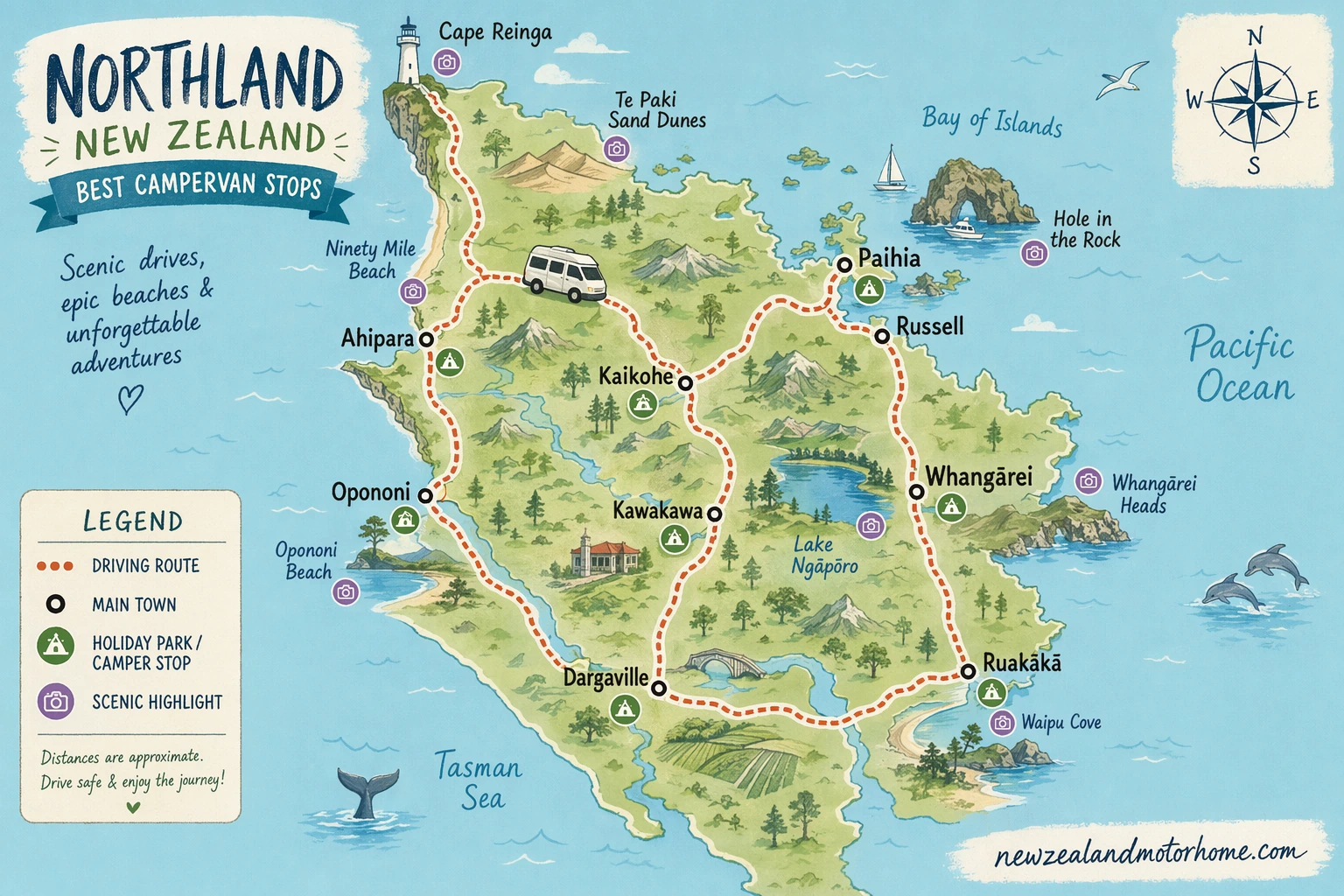
A sensible flow is Auckland or Whangārei to Mangawhai or Waipū, then Whangārei Heads, Tutukākā, Bay of Islands, Hokianga, Kaitāia or Ahipara, Cape Reinga, and back south with one flexible buffer night. That buffer matters in a campervan: bad weather, a full campground, or a cassette that needs emptying can change your plan.
- Days to allow: 7 days is workable; 10 to 14 days feels much better.
- Freedom camping Northland: only use places where camping is allowed for your vehicle type, and obey local time limits and self-containment rules.
- Powered vs unpowered: mix them; use powered sites every few nights if you are relying on heating, devices or a 12V fridge in cloudy weather.
Common questions
Can I freedom camp anywhere in Northland if my campervan is self-contained?
No. Certified self-containment helps, but it does not give you permission to sleep in every car park or beach reserve. Check local council signs, time limits and vehicle-type rules at each stop, and move on if camping is not clearly allowed.
Where should I refill water and empty waste on a Northland loop?
Use bigger towns such as Whangārei, the Bay of Islands area, Kerikeri, Kaitāia and Dargaville as service points. Do not leave dump-station planning until you are at a remote beach; many of the prettiest stops have no campervan facilities.
Is Cape Reinga suitable for a large motorhome?
Yes, the road to Cape Reinga is sealed and the visitor car park can accommodate larger vehicles when it is not too full. Go early, park only in marked areas, and treat it as a day stop unless you have arranged a legal overnight site elsewhere.
How many days do I need for the best campervan stops in Northland?
A week covers the highlights if you keep moving, but 10 to 14 days is more enjoyable in a campervan. That gives you time to use dump stations, sit out bad weather, and stay two nights in places like the Bay of Islands or Hokianga.
Should I book holiday parks in Northland ahead?
Book ahead for summer, public holidays and long weekends, especially near beaches and the Bay of Islands. Outside peak periods you can be more flexible, but it is still worth checking availability if you need a powered site or have a longer motorhome.
Have a planner shape this for your dates
Send a short outline — your dates, party size, and the kind of trip you want. A planner replies with a vehicle recommendation, a paced route, and the realistic budget.