- Best season: spring to autumn
- Allow 3–7 days for a market loop
- Arrive early with larger vans
- Powered sites help after big food shops
- Self-contained rules apply for freedom camping
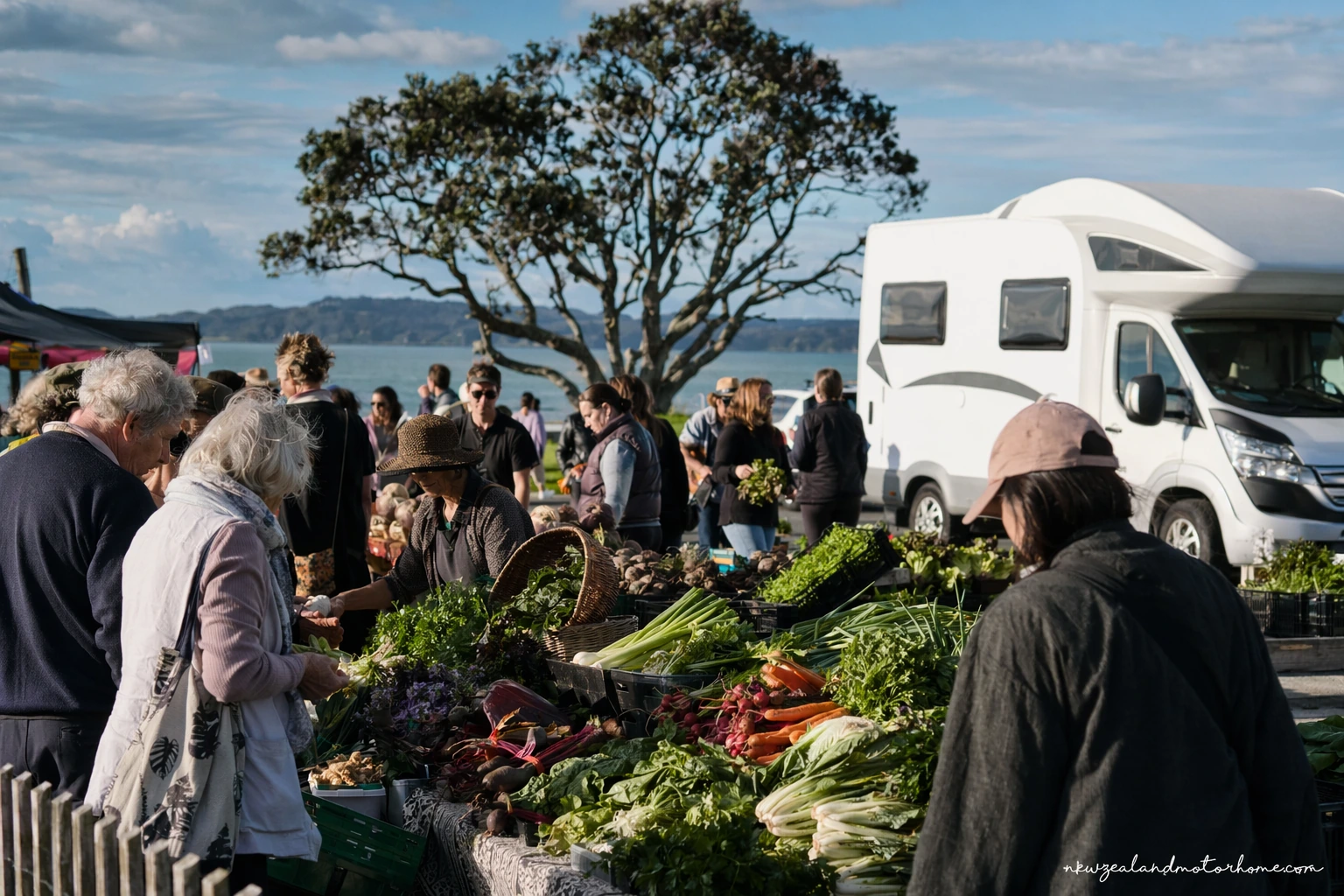
Northland is one of the easiest regions in New Zealand to shop straight from the grower: avocados and citrus around Kerikeri, kūmara near Dargaville, honey, olive oil, seafood, sourdough, eggs and roadside fruit stalls tucked between bays. For a campervan traveller, the real joy is that your fridge, pantry and picnic table are travelling with you.
This guide to farmers markets Northland focuses on the self-drive details: which market towns suit a larger van, where to aim for parking, how to pair market mornings with dump stations, fresh-water fills and sensible overnight stops, and how to avoid arriving with an empty gas bottle and a full grey-water tank.
How to build a Northland market route in a campervan
Northland’s food markets are spread along two main touring lines: the east coast route through Whangārei, Mangawhai, Waipū, Paihia and Kerikeri, and the west-and-far-north route through Dargaville, the Hokianga, Ahipara and Kaitaia. In a motorhome, it works best to treat markets as morning anchors rather than tight appointments; roads are often winding, and you will want time for bakery stops, beach walks and slow pull-outs.
Weekend markets Northland-wide are usually busiest in the first two hours. If you are driving a long van or a motorhome with a rear overhang, arrive early and park slightly away from the stalls rather than trying to squeeze into the closest angle parks. Keep an eye out for height bars at beach car parks and supermarket lots, especially in resort towns.
- Best rhythm: shop in the morning, repack the fridge at the van, then drive a short scenic leg.
- Van parking: choose parallel street parking or large public car parks on the edge of town centres.
- Before market day: empty grey water, top up fresh water and check LPG so your produce is easy to cook that night.
- Road note: some coastal detours are narrow and hilly; allow more time than the map suggests in a 6-berth motorhome.
Whangārei and the Bream Bay markets
Whangārei is a practical first market stop if you are coming north from Auckland. The city has a good spread of fresh produce Northland growers bring in from surrounding farms, plus bread, plants, preserves and breakfast food that travels well in a campervan pantry. The market atmosphere is local rather than polished, which is exactly why it suits a stocked-up road trip.
For parking the van, look for larger public parking areas around the edge of the central city and walk in, rather than threading through the tightest inner streets at peak market time. If you are carrying bikes, Whangārei is also a useful place to leave the motorhome settled and ride between the marina, river paths and cafés.
South-east of the city, Mangawhai and Waipū markets can be excellent additions when you are following the coast. These are popular weekend spots, so treat them as early starts and avoid blocking residential driveways or boat-ramp access while you hunt for a park.
- Overnight base: Whangārei, Ruakākā, Waipū and Mangawhai all have holiday park options with powered sites; book ahead in summer.
- Services: Whangārei is the easy place for fuel, LPG swaps, supermarkets, dump stations and fresh-water planning.
- Van tip: if a market car park looks cramped, do a loop and park farther out; a ten-minute walk is better than a three-point turn under pressure.
Bay of Islands and Kerikeri: orchards, bread and harbour stops
The Bay of Islands is where food markets Northland campervan trips start to feel properly abundant. Kerikeri’s orchard country is known for citrus, avocados, macadamias, honey and seasonal fruit, while Paihia and Russell add harbour views, picnic spots and easy access to short walks. Market days can vary between towns and seasons, so check the current day and hours before you commit your driving plan.
Kerikeri is generally kinder to campervans than the waterfront streets of Paihia at busy times. For a larger motorhome, park in a bigger town car park or on a wider side street where permitted, then walk to the stalls. In Paihia, be especially cautious around the wharf and waterfront parking; spaces turn over quickly, pedestrians step out often, and longer vans can overhang marked bays.
Once you have stocked up, use the afternoon for a short hop rather than a big drive. Fresh berries, bread, cheese and smoked fish are far more enjoyable when you can pull into a legal picnic area, open the side door and make lunch without rushing.
- Overnight base: Paihia, Waitangi, Kerikeri and Russell have holiday parks with powered and unpowered sites.
- Servicing: plan dump station and fresh-water stops around Kerikeri, Paihia/Waitangi or Russell before heading to smaller coastal roads.
- Driving note: the Russell road and ferry approaches can feel tight in a large motorhome; check dimensions and take corners slowly.
West coast and Hokianga: slower markets, bigger landscapes
The west coast has a different feel: fewer polished stalls, more local produce, fish-and-chip evenings, kūmara country and big harbour skies. Dargaville is a useful stop for kūmara, seasonal vegetables and supplies before you head into the Kauri Coast. Around the Hokianga, markets and community stalls are often more seasonal or occasional, so flexibility matters.
In a campervan, this side of Northland rewards slower planning. Roads through Waipōua Forest and around the harbour are beautiful but winding, with limited passing opportunities and some pull-outs that are too short for long vehicles. Keep your fresh food secure in cupboards and do not leave fruit rolling loose on the bench before a forest drive.
Freedom camping rules vary by district and site, and many scenic waterfront areas are closely managed. Only stay overnight where it is permitted for your vehicle, and make sure your campervan’s self-containment certification is current. If you would rather have showers, laundry and a guaranteed legal sleep, use a holiday park or campground base around Dargaville, Ōmāpere, Ōpononi or Rawene.
- Good pairing: Dargaville supplies, Waipōua Forest, then a Hokianga overnight.
- Van note: fill water and empty waste before remote harbour roads, where services are thinner.
- Cooking idea: kūmara, greens and local eggs make an easy one-pan motorhome dinner.
Far North market stops: Kaitaia, Ahipara and Cape Reinga planning
If you are heading for Te Rerenga Wairua Cape Reinga, think of Kaitaia as your practical reset point. It is the best place in the Far North to top up groceries, fuel, LPG and water before the long run north. Local stalls and markets can add fruit, vegetables, baking and preserves to the van before you spend a night near Ahipara, Doubtless Bay or another permitted stop.
Do not underestimate distances at the top of the island. The road to Cape Reinga is sealed, but it is still a long return drive for a motorhome day, and wind can be tiring in a high-sided vehicle. Pack market food into the fridge before you leave town, carry drinking water, and avoid planning a late-night arrival at an unfamiliar campground.
If you want help linking market days with realistic driving legs, dump stations and overnight stops, send us your rough dates through /talk-to-us/ and we can shape it into a campervan-friendly plan.
- Before going north: refuel, check LPG, top up fresh water and empty grey/black water.
- Overnight base: consider Ahipara, Kaitaia or Doubtless Bay rather than driving too far after dark.
- Beach warning: Ninety Mile Beach is not a casual campervan shortcut; follow rental conditions and local advice.
Keeping produce fresh in the van
Northland heat and humidity can be hard on leafy greens, berries and bread, especially if the van is parked in full sun while you wander a market. Before you shop, make space in the fridge and decide what needs chilling straight away. A soft chilly bag is handy for the walk back to the motorhome, even if your fridge is only a few streets away.
Buy with your route in mind. Tomatoes, citrus, kūmara, onions and honey travel well; delicate salad leaves and fish are better eaten the same day. If you are on unpowered sites for a couple of nights, keep an eye on your house battery and fridge settings, and avoid opening the fridge every ten minutes after a big market haul.
- Powered site advantage: useful after a large shop, especially in summer when the fridge is working hard.
- Unpowered site tip: pre-cool drinks, park in shade where allowed, and limit fridge opening.
- Waste: use sealed rubbish and compost bags so fruit scraps do not attract insects inside the van.
- Biosecurity habit: clean soil from vegetables before it spreads through lockers, mats and the sink area.
Common questions
What are the best days for farmers markets in Northland?
Can I park a large campervan close to Northland markets?
Where should I stay overnight after a market day?
Are there dump stations and fresh-water fills near the main market towns?
What Northland produce is best for campervan cooking?
Have a planner shape this for your dates
Send a short outline — your dates, party size, and the kind of trip you want. A planner replies with a vehicle recommendation, a paced route, and the realistic budget.