- Best season: spring to autumn
- Allow 5–10 days for a loop
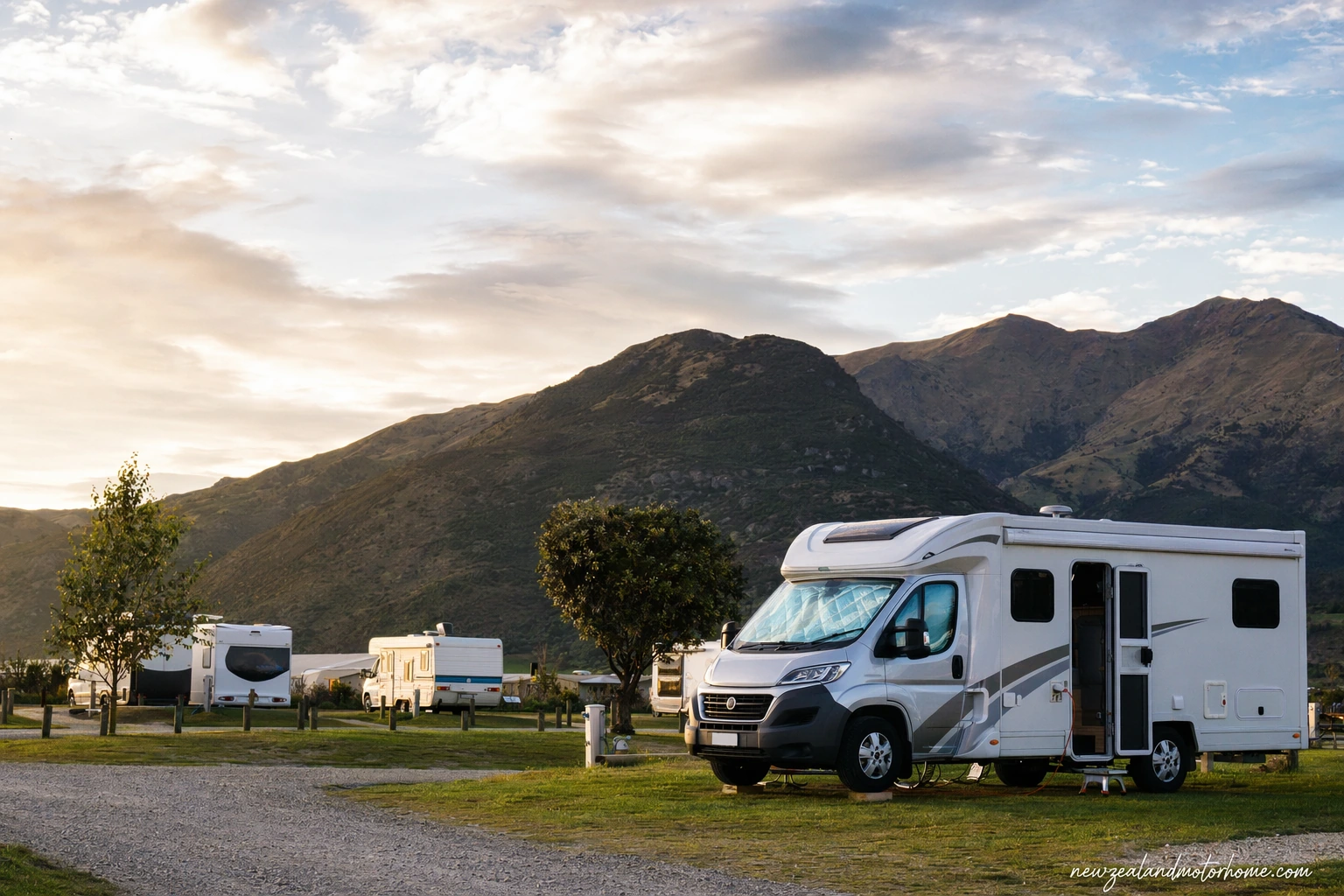
- Powered and unpowered sites
- Certified self-contained for freedom camping
- Take care on winding coastal roads
Northland suits a campervan holiday because the distances are friendly, the coast changes quickly, and most good bases sit close to the water rather than tucked behind a city fringe. You can park the van near a harbour in Whangārei, move on to the Bay of Islands, cross to the Hokianga, then push north for long beaches and quieter campgrounds.
This guide looks at holiday parks Northland-wide from a motorhome point of view: where powered and unpowered sites tend to be, how to think about dump stations and water fills, and which overnight bases unlock the next day’s drive. It is written for travellers sleeping in their own hired van, not hopping between motels.
How Northland’s campervan bases are spread
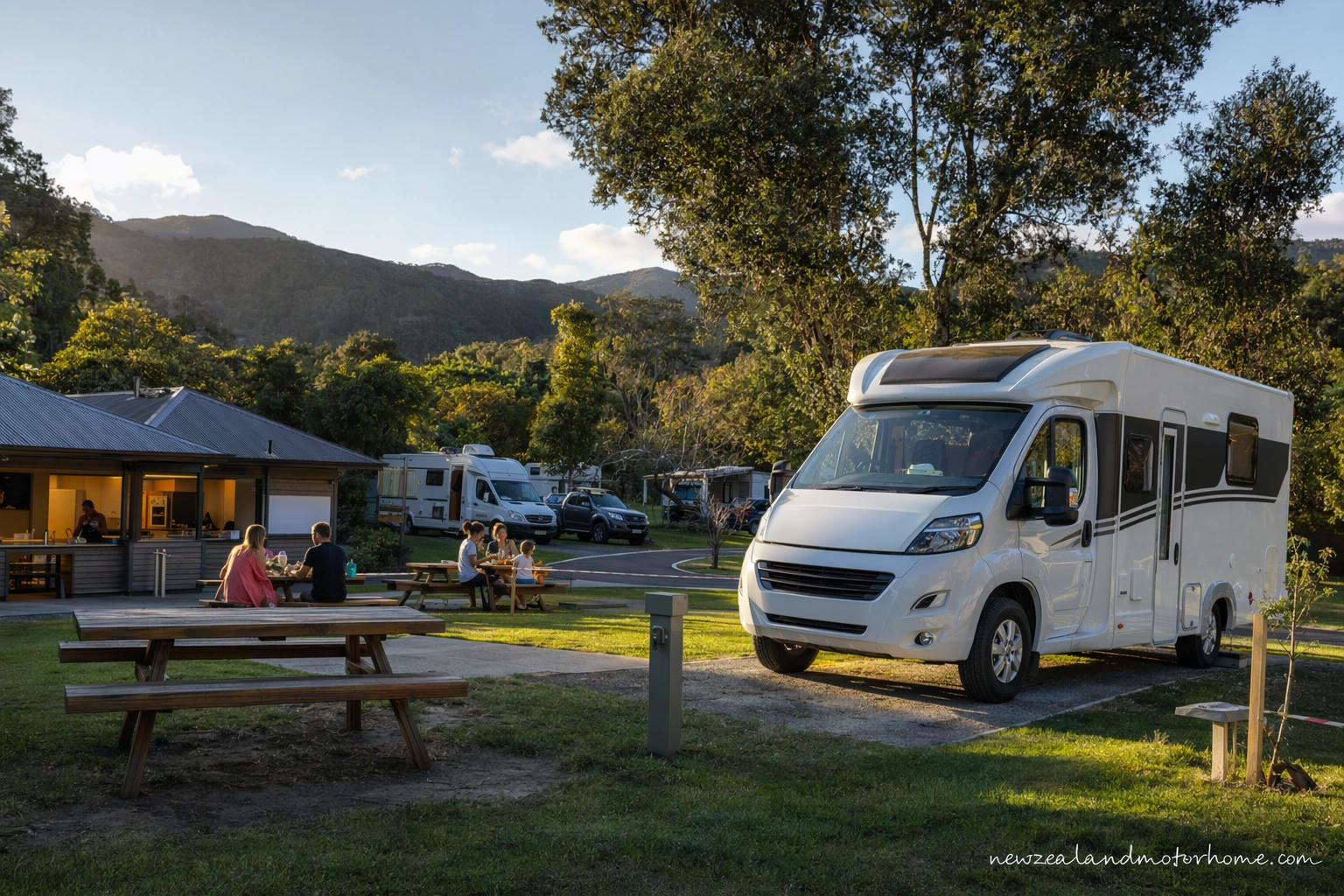
Northland’s holiday parks are not evenly spaced like city accommodation. They cluster around beach towns, harbour edges and service centres, which is helpful when you need a powered night, laundry, fresh water or a proper dump station after a few days off-grid.
If you have searched for a top 10 holiday park northland list, use it as a starting point rather than a fixed route. The best park for a motorhome is often the one that lines up with your driving day, has a site long enough for your vehicle, and lets you arrive without tackling a narrow coastal road after dark.
- Southern entry: Waipū, Mangawhai and Whangārei work well after the drive north from Auckland.
- East coast touring: Tutukākā, Paihia, Russell, Kerikeri, Mangōnui and Doubtless Bay suit beach and harbour stays.
- West coast touring: Dargaville, Opononi, Ōmāpere and the Hokianga give you access to dunes, kauri forest and quieter sunsets.
- Far North staging: Kaitaia and Ahipara are practical bases before or after a Cape Reinga day trip.
Whangārei, Waipū and Tutukākā: easy first nights
The lower part of Northland is useful for easing into van life. Holiday parks and campgrounds Northland travellers use around Waipū, Mangawhai and Whangārei often suit a first powered night, especially if you want to sort bedding, check your fridge on mains power and learn where your water and grey-waste controls are.
Whangārei is the practical hub: fuel, supermarket stops, LPG bottle swaps or refills, and service facilities are easier here than on the smaller coastal roads. Tutukākā and the bays beyond are beautiful, but some side roads are winding and can feel narrow in a long motorhome, so give yourself daylight and avoid rushing the last few kilometres.
- Good for: first night from Auckland, Whangārei Heads, Tutukākā Coast and Poor Knights departure days.
- Site choice: book powered if you are still learning battery use; unpowered can work once you know your solar and fridge rhythm.
- Van note: check tree cover and site length if you have a taller motorhome or rear bike rack.
Bay of Islands bases: Paihia, Russell and Kerikeri
The Bay of Islands has some of the most popular campsites Northland offers, but it also has the region’s busiest summer roads. Paihia is convenient if you want harbour cruises, Waitangi and easy supplies; Kerikeri works better for food shops, orchard country and a calmer reset; Russell is lovely but the road in is slower and more winding for larger vans.
Powered sites Northland-wide can book out over school holidays, and the Bay is where that pressure shows first. If you are travelling in a 7-metre-plus motorhome, ask for a drive-on or easy-reversing site rather than assuming every grass bay will fit.
- Paihia: best for leaving the van parked and walking to wharf, beach and food options.
- Kerikeri: useful for restocking, fresh produce, dump station planning and a less beach-crowded night.
- Russell: better as a slower stay; arrive before dark and be patient on bends.
- Day trips: Waitangi, Haruru Falls, Opua, coastal walks and short ferry connections.
Hokianga and the Kauri Coast: slower roads, bigger rewards
The west coast side of Northland feels different in a van. Distances look short on a map, but the roads through Waipoua Forest and around the Hokianga are winding, shaded and slower, with places where a wide motorhome needs extra care. Keep your speed modest, use pull-outs when safe, and avoid arriving at a park tired after a long east-to-west crossing.
Holiday parks around Opononi and Ōmāpere make good bases for the Hokianga Harbour, dune views and kauri forest visits. Dargaville is a practical service stop before or after the coast, especially for groceries, fuel and planning your next dump station rather than hoping one appears at a remote beach.
- Good for: Hokianga sunsets, Waipoua Forest, dune walks and quieter harbour days.
- Driving note: allow extra time for SH12 and forest sections; tall vans should watch overhanging branches.
- Camping style: mix a powered night with an unpowered harbour stay if your house battery is coping.
- Practical tip: fill fresh water before heading into smaller coastal settlements.
Doubtless Bay, Ahipara and the Far North
North of the Bay of Islands, the holiday park network becomes more about staging and less about ticking off towns. Doubtless Bay and Mangōnui give you a relaxed east-coast base, while Kaitaia is the useful service centre for fuel, groceries, LPG and preparing for a longer drive towards Te Paki or Cape Reinga.
Ahipara is a favourite campervan stop because it puts you near the west coast without needing to drive your hired van onto Ninety Mile Beach. Most rental agreements do not allow beach driving, and even capable-looking vans can get caught by soft sand, tides and saltwater exposure.
- Doubtless Bay: good for gentler beach days, swimming spots and a quieter powered-site reset.
- Kaitaia: practical before the Cape Reinga drive; top up fuel and water here.
- Ahipara: park the van and explore on foot rather than treating the beach as a road.
- Far North note: mobile reception and services can thin out, so download maps and confirm your overnight stop.
Freedom camping, dump stations and booking rhythm
Northland councils manage freedom camping carefully, especially near beaches and small reserves. A certified self-contained campervan is usually the starting point, but certification does not mean you can overnight anywhere; check local signs and current council maps before settling in for the night.
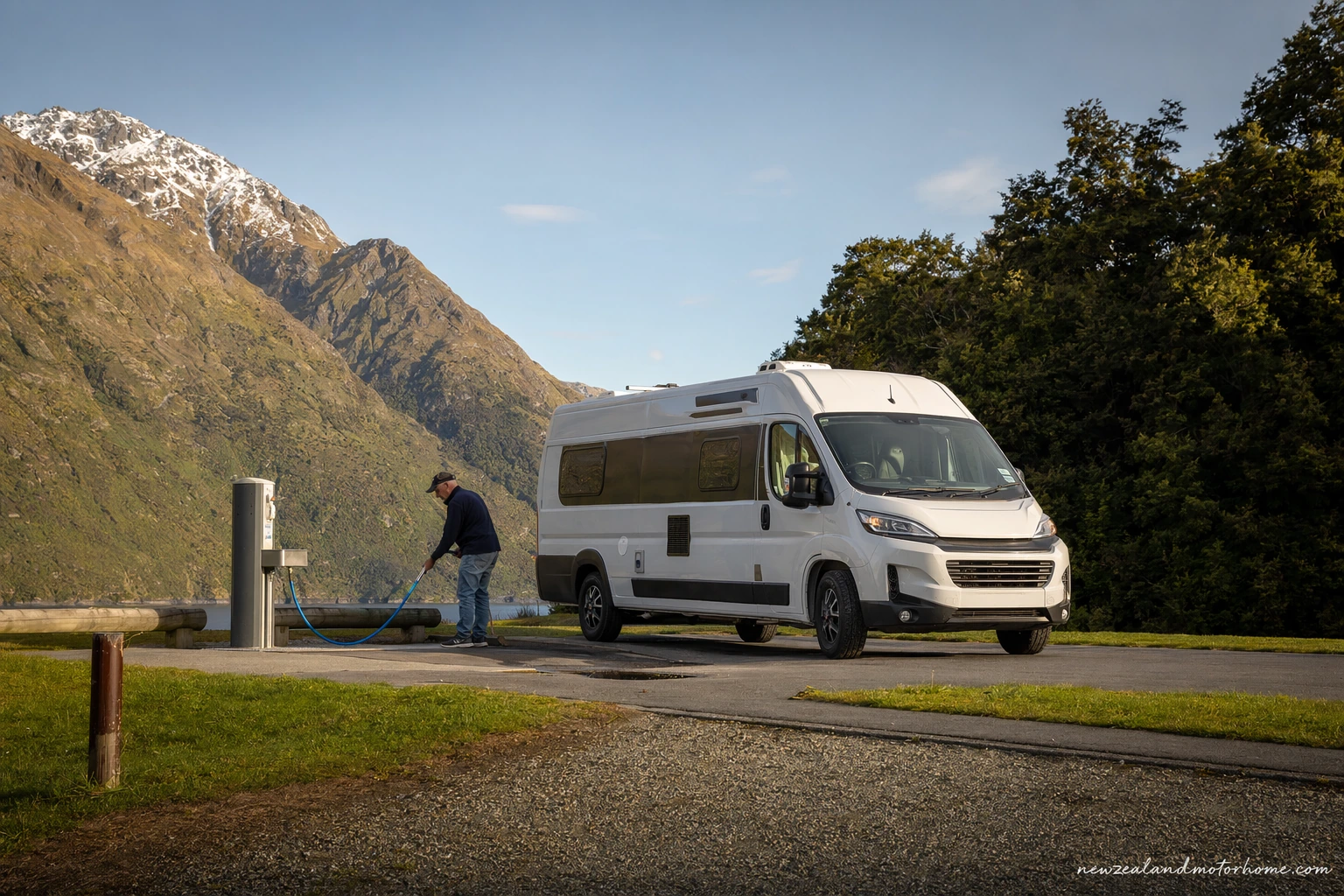
A smooth Northland route usually alternates holiday parks with carefully chosen freedom camping or low-cost campsites. Use holiday parks for showers, laundry, powered charging, rubbish, fresh water and dump stations, then keep unpowered nights for places where your tanks and batteries are comfortably within range.
If you want a hand shaping the loop around your van size, travel dates and how often you want a powered site, you can talk to us before locking in your Northland stops.
- Dump before remote nights: do not carry full grey or toilet tanks into small beach communities.
- Arrive early in summer: daylight makes site access, levelling and awning decisions easier.
- Check site surfaces: heavy rain can make grass sites soft for larger motorhomes.
- Respect limits: freedom camping areas may have vehicle caps, time limits or seasonal closures.
Common questions
Do I need to book holiday parks in Northland ahead?
Are there many powered sites Northland campervan travellers can use?
Can I freedom camp instead of using holiday parks Northland-wide?
Where should I empty my toilet and grey water?
Is Northland suitable for a large motorhome?
Have a planner shape this for your dates
Send a short outline — your dates, party size, and the kind of trip you want. A planner replies with a vehicle recommendation, a paced route, and the realistic budget.