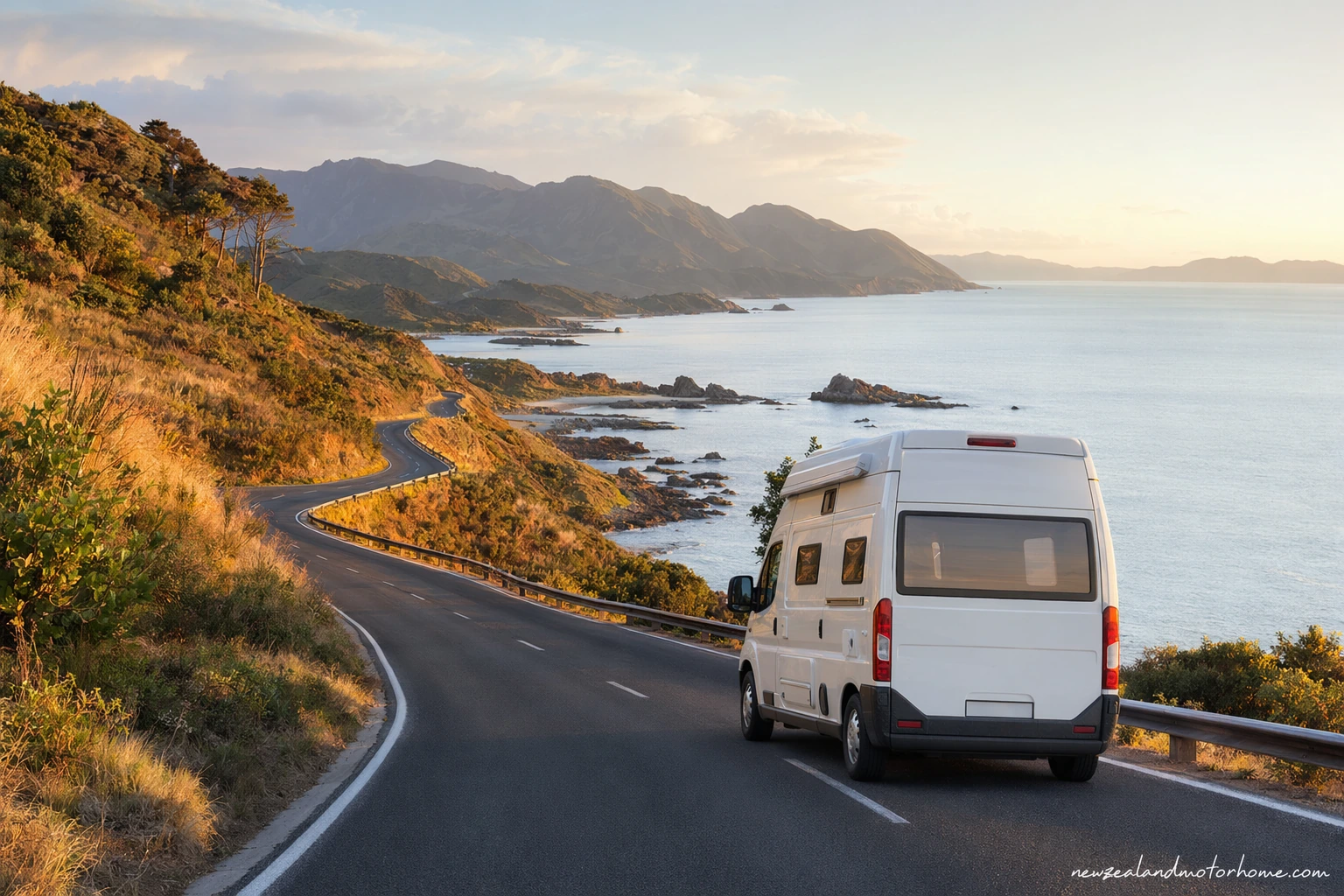
- Allow 5–10 days
- Best February–April
- Certified self-contained needed
- Powered sites in main towns
- Avoid beach driving
Northland is a brilliant region to do slowly in a campervan: warm harbours, kauri forest, surf beaches, small-town food stops and headlands where the road simply runs out. It is also a place where your overnight choices, water top-ups and road timing matter, because distances look short on the map but many drives are narrow, winding or too good to rush.
This campervan guide Northland NZ page is written for travellers driving and sleeping in their own hired van or motorhome. You will find practical notes on route shape, van-suitable stops, powered and unpowered nights, dump stations, LPG and fresh-water planning, freedom camping rules and the kind of roads where it pays to arrive in daylight.
How many days to allow for a Northland campervan trip
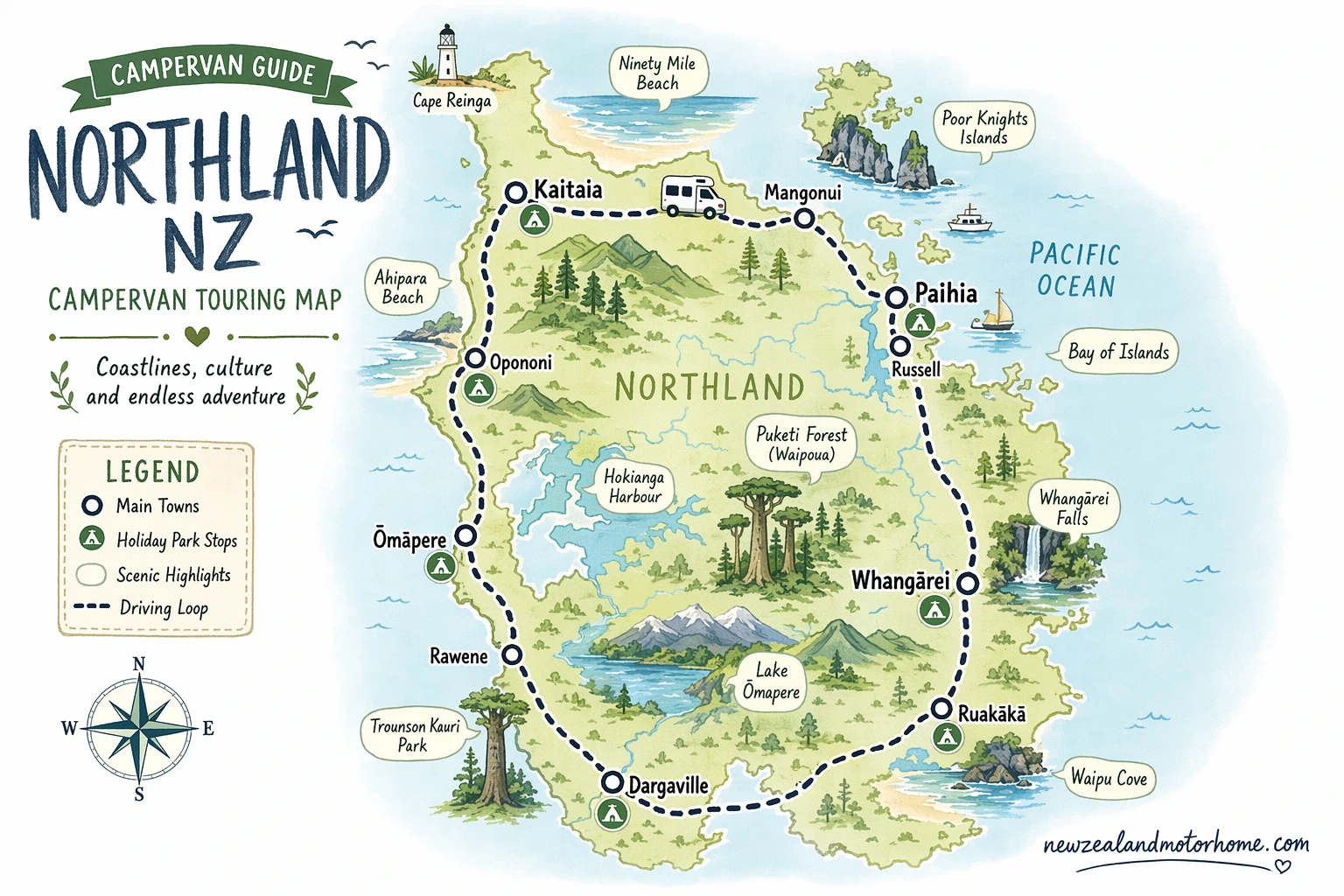
For a first Northland campervan trip, allow at least 5 to 7 days from Auckland and back. That gives you time for Whangārei, the Bay of Islands, the Far North and either the Hokianga or Waipōua Forest without turning every day into a packing-and-driving day. Ten days feels much better if you want Tutukākā, Matauri Bay, Cape Reinga and the west coast.
A simple loop is Auckland to Whangārei, Paihia or Kerikeri, Awanui or Doubtless Bay, Cape Reinga, Ahipara, Hokianga, Waipōua and back south through Dargaville. In a larger motorhome, build in shorter days and avoid arriving late to coastal campgrounds, as some access roads are tight, hilly or unlit.
- Fast taste: 4 nights, Whangārei, Bay of Islands, Cape Reinga area, Hokianga.
- Comfortable loop: 6 to 8 nights with two-night stops in the Bay of Islands and Far North.
- Slow coastal trip: 10 to 14 nights, adding Tutukākā, Karikari Peninsula and Waipōua.
Road notes for motorhome Northland driving
Main highways in Northland are sealed, but they are not motorway-style once you leave Auckland. Expect rolling hills, one-lane bridges, logging trucks, tight town approaches and corners that make cups rattle in the cupboards. Keep your van speed conservative and use pull-offs to let locals pass, especially on SH10, the Tutukākā Coast road, the Hokianga approaches and roads around Waipōua Forest.
Do not drive a hired campervan on Ninety Mile Beach unless your rental agreement specifically allows it, which most do not. It is a public highway in parts, but sand, tides and recovery costs make it a poor idea in a motorhome. If Cape Reinga is on your list, drive the sealed road north from Awanui and take your time; fuel and food options thin out after Kaitāia.
- Vehicle size: most 6-berth motorhomes can manage the main loop, but coastal side roads may have narrow shoulders and limited turning space.
- Height: check for low branches in older holiday parks, beach reserves and forest car parks.
- Gravel: some scenic detours and beach accesses include gravel; confirm your hire conditions before committing.
- Kauri areas: use cleaning stations and keep to formed tracks to help protect kauri from dieback disease.
Best places to stop, park and explore by van
The best things to do Northland campervan style are the ones where you can park once and wander without hunting for town parking all day. In Whangārei, choose a legal day park before walking the Town Basin or heading to Whangārei Falls. Around Tutukākā and Matapōuri, arrive early in summer because beach car parks fill quickly and long vehicles can be awkward once the roadside spaces are gone.
In the Bay of Islands, Paihia and Waitangi are easier with a van if you use signed public parking and explore on foot or by ferry. Kerikeri suits a restock day: supermarkets, fuel, cafés and nearby short walks make it a practical pause before pushing further north. At Cape Reinga, the main car park can take motorhomes, but it is exposed, busy in peak season and not an overnight stop.
- Whangārei: good for supplies, laundry, fuel, LPG and a first night north of Auckland.
- Bay of Islands: beaches, Waitangi, ferries and sheltered holiday parks with powered sites.
- Karikari and Doubtless Bay: long beach days, but check campground access and wind exposure.
- Hokianga: harbour sunsets, dunes and a slower west-coast feel; book ahead in summer.
- Waipōua Forest: memorable kauri walks, with limited space for large vehicles at busy times.
Where to stay: powered, unpowered and freedom camping
Northland has a useful mix of holiday parks, DOC-style conservation camps, council areas and private rural stays, but you should not assume you can pull up anywhere by the beach. Freedom camping rules change between districts and individual reserves, and enforcement is active in popular coastal spots. Travel with current certified self-containment documentation visible and always read the local signs before settling in.
Powered sites are easiest around Whangārei, Paihia, Kerikeri, Doubtless Bay, Kaitāia, Ahipara, Opononi and Dargaville. These are the sensible places to recharge house batteries, do laundry, empty waste and reset after a run of beach nights. Unpowered sites can be beautiful, but check whether they suit your van length, whether there is potable water, and whether generators are restricted.
- Use powered sites every few nights if you are running a fridge, devices, heater fan or CPAP machine.
- Book summer coastal nights ahead, especially from late December through January.
- Arrive before dark at rural and beach camps; turning a long motorhome around on grass in the rain is no fun.
- Keep receipts or booking confirmations handy where camping areas are monitored.
Dump stations, water, LPG and restock points
Plan your services around the bigger towns rather than waiting until the fresh-water light is blinking. Whangārei is the main reset point in the south, with supermarkets, fuel, LPG bottle swap or fills, laundries and public dump-station options. Further north, Paihia, Waitangi, Kerikeri, Kaitāia and Awanui are useful before the Cape Reinga run, while Dargaville and the Hokianga settlements help when you loop down the west coast.
Not every dump station has potable water, and not every holiday park allows non-guests to use facilities, so check signage and current council information before relying on a stop. Carry a dedicated drinking-water hose, use the correct grey and black-water points, and never empty waste into public toilets or stormwater drains.
If you would like a route that lines up your overnight stops with realistic service days, you can talk to us before you lock in your dates. Northland rewards a little planning: a full water tank, an empty cassette and a fuel stop in the right town can turn a long coastal day into an easy one.
Season, weather and booking notes
Northland is one of the warmer parts of Aotearoa, but the weather is still coastal and changeable. Summer brings the easiest swimming and the busiest campgrounds; shoulder seasons bring quieter roads and cooler nights. Winter can be excellent for a motorhome Northland loop if your van has decent heating and you are prepared for rain, muddy grass sites and shorter daylight.
Wind matters more than temperature in exposed places like Cape Reinga, Karikari Peninsula, Ahipara and some harbour edges. Park nose into the wind where you can, secure awnings properly, and avoid setting up on soft sand or low grass after heavy rain. If a site manager suggests a firmer bay for your vehicle weight, take the advice.
- Peak pressure: Christmas, New Year, long weekends and school holidays.
- Best balance: February to April or October to early December.
- Rainy-day fallback: choose towns with powered sites, laundries and nearby short walks.
Common questions
Can I freedom camp in Northland in a hired campervan?
Only in places where local rules allow it, and you generally need a current certified self-contained vehicle. Northland councils manage freedom camping differently, so check signs on arrival and use current council information rather than assuming a beach reserve is legal overnight.
Is Cape Reinga suitable for a motorhome?
Yes, the sealed road to Cape Reinga is suitable for most hired motorhomes, but it is a long drive with limited services north of Kaitāia and Awanui. The Cape car park is for day use, not overnight camping, so plan a legal night before or after your visit.
Should I drive my campervan on Ninety Mile Beach?
No, not unless your hire agreement specifically permits it. Sand, tides and soft exits can trap heavy vehicles, and many rental contracts exclude beach driving. Use the sealed roads and join a permitted local beach experience if that is important to you.
Where are the best service towns for water, fuel and dumping waste?
Whangārei, Kerikeri, Paihia or Waitangi, Kaitāia, Awanui and Dargaville are the main towns to plan around. Facilities vary, so do not leave dumping, fresh water or LPG until a remote beach stop at the end of the day.
How long should I spend in Northland by campervan?
Five to seven days is a practical minimum for a loop from Auckland, but ten days gives you a much better rhythm. With extra time, you can slow down for Tutukākā, the Bay of Islands, Cape Reinga, Hokianga and Waipōua without moving camp every night.
Are Northland roads difficult in a large campervan?
The main roads are manageable, but they are often narrow, hilly and winding. Drive in daylight where possible, let faster traffic pass, watch your rear overhang on tight beach access roads, and check any gravel detour against your rental conditions.
Have a planner shape this for your dates
Send a short outline — your dates, party size, and the kind of trip you want. A planner replies with a vehicle recommendation, a paced route, and the realistic budget.