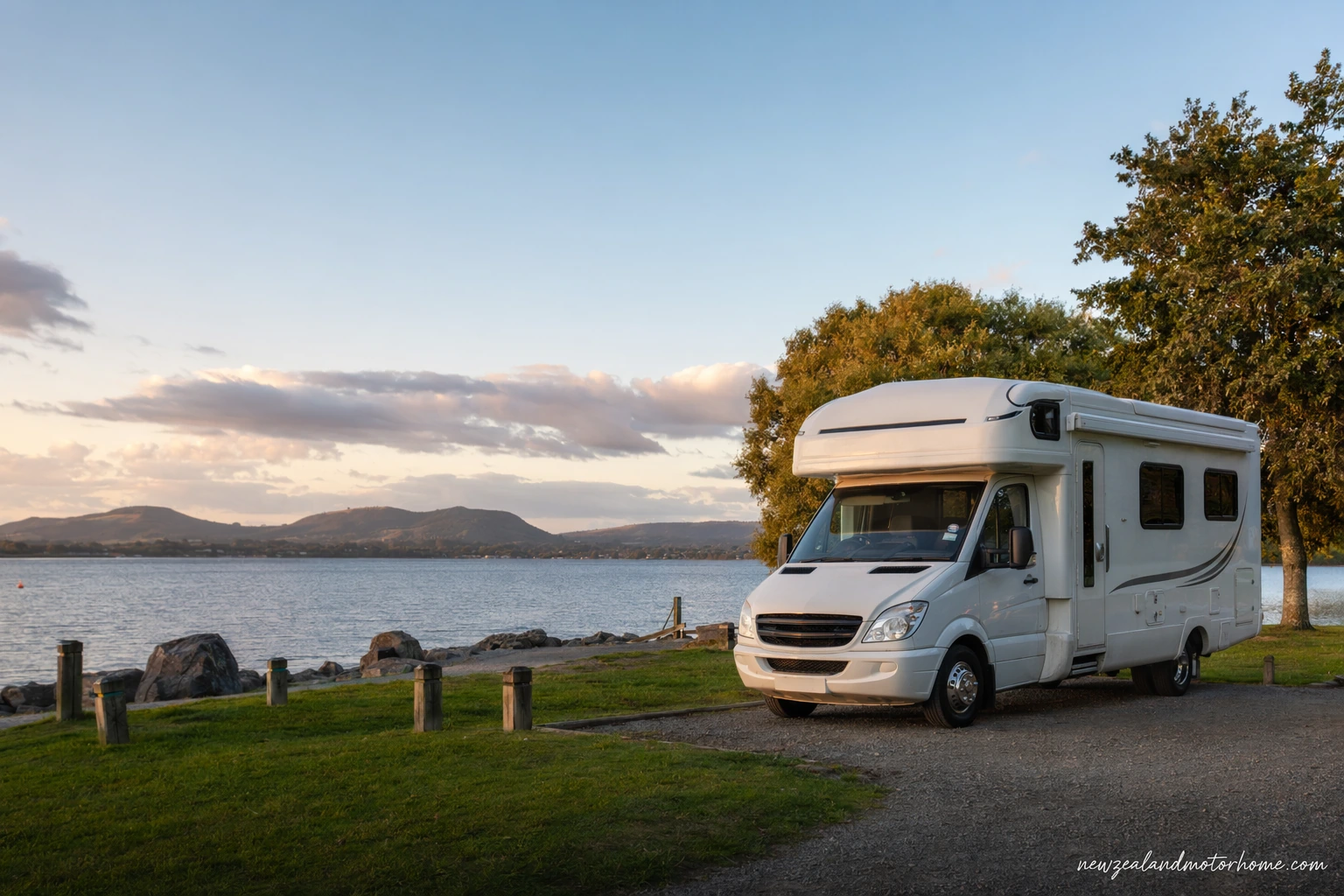
The best campervan stops Rotorua has for lake days and easy overnights
- Best with 2–3 nights
- Mix powered sites and legal camping
- Check self-containment rules
- Larger vans need formed car parks
- Plan water, waste and LPG early
Rotorua is one of those places where a campervan makes real sense: lakes in every direction, geothermal steam rising beside the road, forest trails close to town, and enough overnight options to slow down without feeling stuck. The trick is knowing which stops are worth driving into with a van, where you can actually park without blocking a tight roadside bay, and what to sort before you head out around the lakes.
This guide is for self-drive travellers sleeping in their own hired campervan or motorhome. We’ve focused on practical stops: viewpoints, lakefront pull-ins, holiday parks, compliant freedom camping options, dump stations, fresh-water planning and road notes for larger vehicles. If you’re still shaping the loop, you can also send us your draft through /talk-to-us/ and we’ll help line the stops up sensibly.
Start in Rotorua town before you chase the lakes
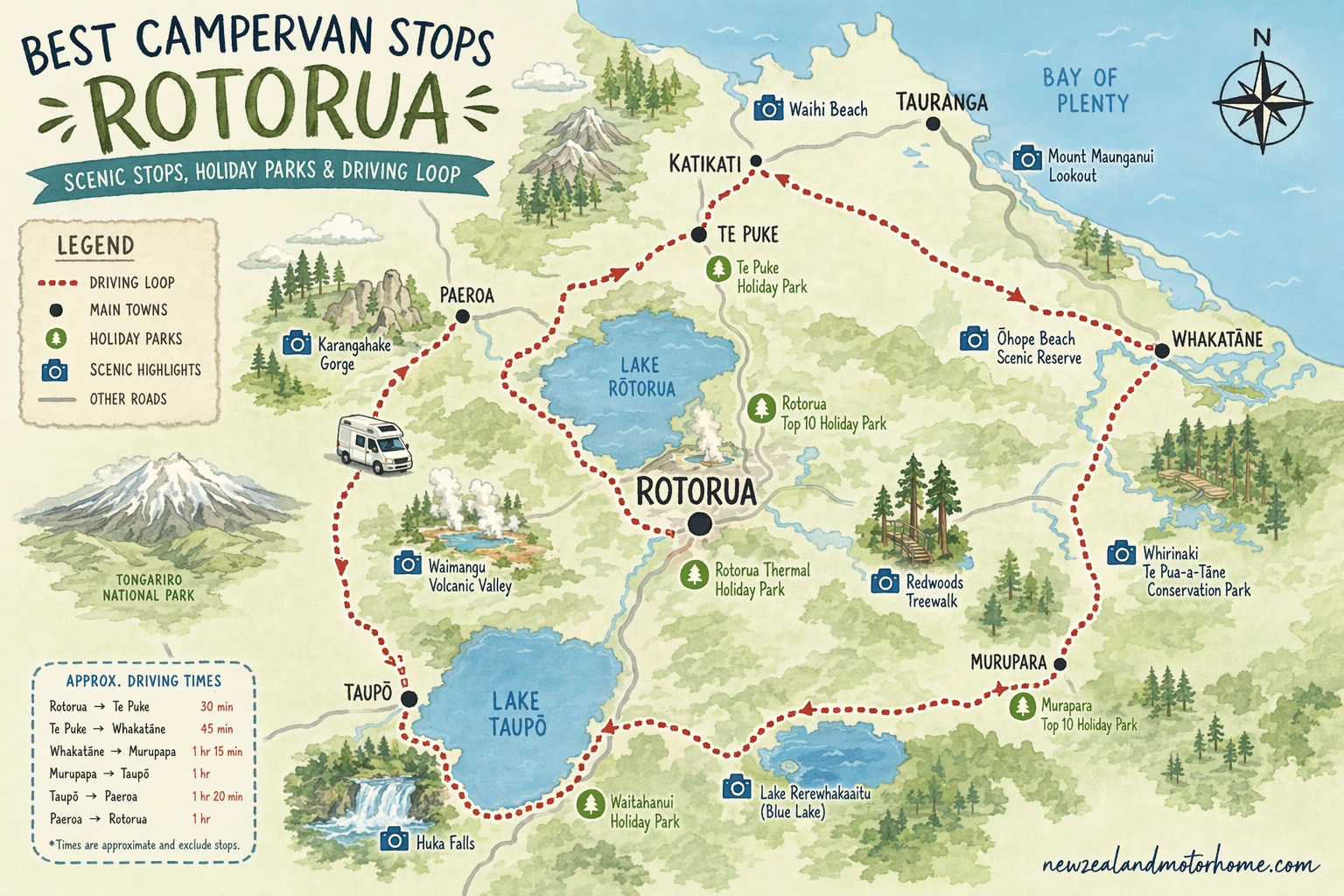
Rotorua’s central area is the easiest place to get your bearings, stock the fridge, check LPG, and confirm where your first overnight stop will be. If you’ve just picked up the van or driven in from Auckland, Tauranga or Taupō, give yourself a little time here before heading to the smaller lake roads.
For daytime wandering, look for marked public parking that gives you room to open the sliding door without sitting over the line. Longer motorhomes are usually better off using larger car park areas on the edge of the town centre rather than squeezing into angle parks near busy cafés. Keep valuables tucked away; Rotorua has plenty of visitors and a visible van can attract attention if left messy.
- Good first jobs: groceries, rubbish sorting, toilet cassette check, fresh-water top-up and LPG planning.
- Overnight style: central holiday parks suit travellers who want powered sites, showers, laundry and an easy reset night.
- Driving note: town streets are manageable, but steam vents and geothermal areas mean some roadside edges are not places to pull onto unless they are clearly formed for parking.
If you’re wondering where to stay campervan Rotorua on your first night, a holiday park close to town is the least stressful option. It gives you a legal base, a chance to charge devices and house batteries on a powered site, and an easy start for the lake circuit the next morning.
Lake Rotorua viewpoints and easy van-friendly pull-ins
Lake Rotorua is the natural first lap because it sits right beside town and has several places where you can stop without committing to a long side road. The western and northern edges are especially useful for a slow morning drive, picnic lunch, or photo stop before moving towards Hamurana, Ngongotahā or the airport side of the lake.
Choose pull-ins that are sealed or well-formed, with enough turning room for your vehicle length. Some lakefront spaces are fine for a compact campervan but awkward in a larger motorhome once boat trailers arrive. If a bay is already busy, keep rolling rather than nose-in parking where you will need to reverse out into fast traffic.
- Best for: lake views, coffee stops, short walks and a gentle first drive after collecting the van.
- Van fit: easier in smaller campers; longer motorhomes should stick to open car parks and avoid narrow waterfront residential streets.
- Stay rule: daytime parking does not mean overnight camping. Check current council signage before assuming any lakefront space is part of freedom camping Rotorua allowances.
Lake Rotorua is also useful as a weather fallback. If the forest tracks are wet or the southern lakes are misty, you can still make a pleasant half day from town, the lakefront, and a powered-site reset without pushing the van along narrow rural roads.
Blue Lake and Lake Tarawera for the classic Rotorua day out
The drive to Tikitapu / Blue Lake and on towards Lake Tarawera is one of the best campervan stops Rotorua offers if you want that proper lakes-and-bush feeling without a huge drive. The road is sealed, but it is narrower and more winding than the town approaches, so take it gently in a high-sided van and let faster traffic pass where it is safe.
Blue Lake has popular day-use areas, walking access and lake views, but summer weekends can fill quickly with swimmers, paddleboards and boat trailers. Arrive earlier in the day if you want a straightforward park. A compact campervan will usually be easier than a long motorhome, particularly when people are carrying gear across the car park.
- Parking tip: use formed car parks only; soft grass can look harmless and still leave a heavy motorhome stuck after rain.
- Facilities: expect basic day-use facilities rather than full motorhome services; arrive with water and an emptied toilet cassette.
- Road note: watch for cyclists, runners and pedestrians around Blue Lake, especially near walking track access points.
Lake Tarawera rewards the extra drive with bigger views and a quieter feel outside peak periods. It is a good picnic and photo stop, but plan your turnaround carefully if you are in a larger vehicle. Do not rely on being able to sleep wherever the view is good; overnight stays need to match local rules, signage and your self-containment certification.
Redwoods, geothermal stops and where the van actually fits
Rotorua’s attractions are close together, but not every attraction car park is equally comfortable in a campervan. The Redwoods area, geothermal valleys, Māori cultural experiences and adventure stops can all be easy if you arrive outside the busiest window and pay attention to height, length and turning space before you commit.
For the Redwoods / Whakarewarewa Forest, parking turnover is high and the access roads can be busy with walkers, mountain bikers and shuttle traffic. If you’re in a long van, avoid taking the last tiny gap at the end of a row. Park where you can leave cleanly without reversing across people unloading bikes or children stepping out from between vehicles.
- Powered-site strategy: stay plugged in the night before a busy attraction day so your fridge, heater and devices start strong.
- Security habit: close curtains, put bags out of sight and lock the cab even for a short walk.
- Geothermal caution: use official parking only; roadside steam and soft ground are not places to improvise a van stop.
If you’re linking several paid attractions, it can be smarter to base yourself for two nights rather than shifting camps every evening. Rotorua rewards slow travel: park the van once, walk or use short drives during the day, then come back to a legal overnight site with showers and space to sort wet towels.
Freedom camping Rotorua and holiday park choices
Freedom camping Rotorua is possible in some circumstances, but it is not a free-for-all around every lakefront or reserve. Rules can change, sites may be seasonal, and many areas require a certified self-contained vehicle. Always check current council information and the signs at the site on the day you arrive.
For many travellers, the best pattern is a mix: one or two holiday park nights for power, laundry, long showers and dump station access, then a simple compliant overnight if it lines up with your route. This keeps the van comfortable and avoids the common mistake of trying to stretch grey-water, toilet cassette capacity and house batteries too far.
- Choose powered sites when: nights are cold, you are running a fridge hard, or you need to recharge after several unpowered stops.
- Choose unpowered sites when: your battery and water levels are healthy and you only need a legal place to sleep.
- Before any freedom camp: confirm self-containment status, maximum stay, arrival window, no-camping zones and whether toilets or bins are provided.
If your main question is where to stay campervan Rotorua, think in loops rather than single sites. Town-based holiday parks suit attraction days; lake-area stops suit early swims and quieter evenings; and a final serviced night before leaving Rotorua helps you dump waste, refill fresh water and reset for the next leg.
A simple two-night Rotorua campervan route
For a tidy first visit, spend your arrival night in or near Rotorua town on a powered site. Use that time to buy groceries, empty the toilet cassette if needed, fill fresh water and confirm your next night’s legal camping option. The following morning, drive the Lake Rotorua edge, stop for viewpoints, then continue towards the forest or geothermal attractions.
On day two, make the Blue Lake and Lake Tarawera drive early, before the day-use car parks are full. Keep the itinerary light if you are in a larger motorhome; one lake walk, one swim stop and one longer scenic pause is plenty. Return to town or a booked site before dark rather than hunting for a space on unfamiliar lakeside roads.
- Night 1: Rotorua town holiday park or another serviced legal site for power, showers and laundry.
- Day 2: Lake Rotorua viewpoints, Redwoods or geothermal stop, then a legal overnight that matches your certification.
- Day 3: Blue Lake and Lake Tarawera, then head for Taupō, Tauranga, Waitomo or back north depending on your wider route.
This route keeps driving distances short and gives you time to enjoy the stops rather than just ticking them off. It also leaves room for the practical side of van travel: water, waste, charging, weather changes and finding a park that suits the size of the vehicle you’re actually driving.
Keep planning
Wellington to rotorua campervan
Read onVisiting polynesian spa rotorua by campervan
Read onVisiting agrodome rotorua by campervan
Read onTauranga to rotorua campervan
Read onRotorua to whangarei campervan
Read onRotorua to timaru campervan
Read onCommon questions
Can I freedom camp beside the lakes in Rotorua?
Only where current local rules and on-site signs allow it, and usually only in a certified self-contained campervan or motorhome. Do not assume a scenic lakefront pull-in is an overnight site. Check council guidance on the day, as restrictions and designated areas can change.
Is Rotorua easy to drive in a larger motorhome?
The main roads into Rotorua are straightforward, but some lake and forest roads are narrower, winding and busy in summer. Longer motorhomes should use well-formed car parks and avoid squeezing into residential lakefront streets or soft grass edges. Take your time and plan turnarounds before driving down small side roads.
Where should I stay in a campervan for a first night in Rotorua?
A serviced holiday park or legal campground close to town is the easiest first-night choice. You can plug into power, use showers and laundry, top up fresh water and reset before heading out to the lakes. It is especially useful after a long drive from Auckland or the Coromandel.
Do I need a self-contained campervan for Rotorua?
You do not need self-containment for every holiday park stay, but it matters if you want to use designated freedom camping areas. Your vehicle must meet the relevant certification requirements, and you still need to follow local stay limits and signage. If in doubt, choose a campground with proper facilities.
Are there dump stations and fresh-water points around Rotorua?
Rotorua has motorhome services available through selected holiday parks, service areas and public facilities, but locations and access can change. Plan to dump grey water and toilet waste before heading to smaller lake stops, where facilities are limited. Never empty waste into public toilets, drains or bush areas.
How many days should I allow for Rotorua by campervan?
Two nights is a comfortable minimum for the lake viewpoints, Redwoods and one or two geothermal or cultural stops. Add a third night if you want a slower pace, more time at Blue Lake or Lake Tarawera, or a practical reset with power and laundry before the next region.
Have a planner shape this for your dates
Send a short outline — your dates, party size, and the kind of trip you want. A planner replies with a vehicle recommendation, a paced route, and the realistic budget.