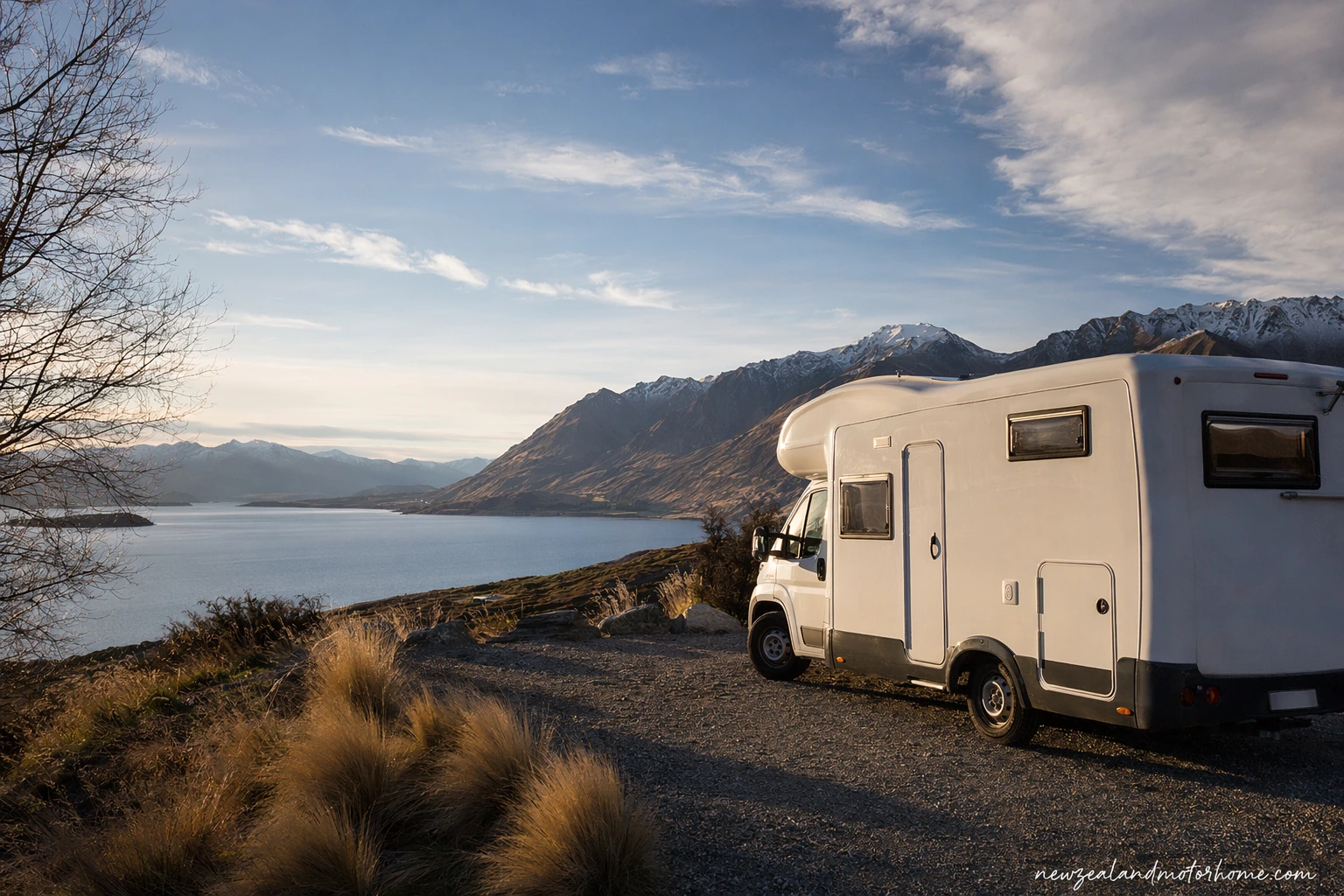
- Allow 2–3 days
- Powered sites recommended in winter
- Freedom camping tightly restricted
- Check van rules on gravel roads
- Service the van before Haast or Cardrona
Wanaka is one of those places where a campervan trip feels easy until every lakefront bay looks tempting and every car park has a sign you need to read properly. The best campervan stops Wanaka has to offer are a mix of quick scenic pull-ins, proper day-walk bases, paid powered sites and a few carefully managed overnight options outside the busy centre.
This guide is written for self-drive campervan and motorhome travellers: where the van actually fits, where not to overnight, how to think about freedom camping Wanaka rules, and how to link the lake, town, Hawea, Glendhu Bay and the Cardrona road without backtracking.
Start with Wanaka lakefront, but treat it as a daytime stop
The town lakefront is the classic first stop: Roys Bay, the willow-lined shore, views across to Treble Cone and easy access to cafés, groceries and walking paths. For campervans, the trick is to use the marked public parking areas and avoid squeezing a long vehicle into angled street parks when the lakefront is busy.
Most central lakefront spaces are for short daytime visits, not overnighting. If you are arriving in a larger motorhome, look for flatter, more open parking away from the tightest shopping blocks, then walk back along the lake rather than trying to thread the van through peak-hour pedestrian traffic.
- Good for: first views, supplies, lake walks and a relaxed lunch in the van.
- Van note: long rear overhangs can sit awkwardly in kerbside parks; do not block footpaths or cycle lanes.
- Overnight: assume no overnight parking on the central lakefront unless a current sign specifically allows it.
- Best timing: early morning or later afternoon, especially in summer and during ski season.
Waterfall Creek, Wanaka Station Park and the quieter lake-edge pull-ins
Waterfall Creek is the stop many travellers aim for when they want the famous lone willow view, but it is not the place to linger with a big rig at the busiest time of day. Parking is limited around the lake-edge access points, and turning space can get pinched when cars, cyclists and walkers all arrive together.
Wanaka Station Park and the wider lake path give you a gentler way to enjoy the same shoreline feel without treating the van like a city runabout. Park where the bay and signs allow, then walk the last stretch. It is better for your mirrors, tyres and nerves.
- Best use: park once, make a thermos, and follow the lakeside track on foot.
- Large motorhome tip: avoid committing to narrow dead-end access roads unless you can see a clear turning area.
- Facilities: use town toilets and services before heading out; not every scenic pull-in has bins or water.
- Respect note: these are shared local recreation areas, not informal campsites.
Mount Iron, Albert Town and the Clutha River side of Wanaka
For a view without driving high into the mountains, Mount Iron is a practical campervan stop on the edge of town. The car parks can fill quickly, but they are more straightforward than many lakefront nooks, and the loop track rewards you with a proper look over Lake Wanaka, Lake Hawea, the Clutha River and the basin you have just driven through.
Albert Town is useful if you are deciding where to stay campervan Wanaka without wanting to be right in the town centre. The Clutha River outlet area has a different feel from the lakefront: poplars, river walks, swimming spots in settled weather and easier connections towards Hawea, Luggate and the West Coast route.
- Good for: a half-day away from the busiest lakefront parking.
- Overnight options: use official campgrounds or signed permitted areas only; check current rules before setting up.
- Services: do your dump station, rubbish and fresh-water jobs in Wanaka rather than assuming river-side stops will have them.
- Road note: the bridges and approaches are fine for standard hire vans, but keep your speed down around cyclists and locals.
Glendhu Bay, Roys Peak and Diamond Lake for the mountain side
The drive west from Wanaka towards Glendhu Bay is one of the best short campervan runs in the region: lake on one side, folded brown hills on the other, and the mountains getting closer with every bend. Glendhu Bay has more space than the central lakefront and is a strong base if you want a paid overnight near the water rather than just a photo stop.
Roys Peak and Diamond Lake are better treated as day-walk stops. Roys Peak car park can be full before breakfast in high season, and neither place should be used as a casual overnight unless current signage says so. If you are in a larger motorhome, allow extra time to park neatly and avoid swinging wide across the road when leaving.
- Glendhu Bay: useful for lake access, paid camping options and a slower pace outside town.
- Roys Peak: arrive early, carry water, and expect a busy car park in summer and autumn.
- Diamond Lake: a good scenic walk option with mountain views without committing to a full Roys Peak day.
- Matukituki caution: beyond the sealed road, check conditions and your hire agreement before taking a campervan onto gravel, fords or narrow valley roads.
Where to overnight: holiday parks, official campgrounds and freedom camping rules
Wanaka is not a place to wing it after dark and hope a lakefront park will do. Freedom camping Wanaka rules are actively managed, and many attractive reserves, roadside bays and town-side lake edges are no-camping areas. If your vehicle is not currently certified self-contained, plan on staying in a holiday park or official campground.
For comfort, a powered site in or near town keeps things simple: plug in, top up fresh water, use the showers, and deal with grey water and cassette emptying properly. Unpowered sites suit travellers with good battery capacity, but winter heating, fridge load and short daylight can make power worth booking.
- Powered sites: best for winter, families, e-bikes, laptops and longer stays.
- Unpowered sites: fine for one or two nights if your battery, solar and water use are under control.
- Freedom camping: only use signed permitted areas and follow current self-containment requirements.
- Arrival tip: in summer, school holidays and ski weekends, book ahead rather than circling town in a tired van.
If you want these stops turned into a sensible loop with legal overnights already thought through, you can talk to us before you lock in your campervan hire dates.
Services and route notes before you roll on
Wanaka is the place to reset the van before you point towards the Haast Pass, Cardrona, Cromwell or Queenstown. Fill fresh water where it is allowed, empty grey water and the toilet cassette at an approved dump station, and sort rubbish in town rather than carrying an overflowing bag into the next scenic reserve.
LPG, groceries, fuel and basic vehicle supplies are easiest in Wanaka itself. Once you drive towards the West Coast or up over the Crown Range, services spread out and the road becomes more committing, especially in winter. Check your vehicle height, weight and snow-chain obligations if your route includes alpine passes.
- Dump stations: use council-listed or campground facilities; never drain grey water at a pull-in.
- Fresh water: top up before remote day trips, especially if you are freedom camping legally outside town.
- LPG: sort bottles in town; do not assume small settlements will have the right fitting or service.
- Winter roads: check conditions for Cardrona, the Crown Range and Haast Pass before leaving.
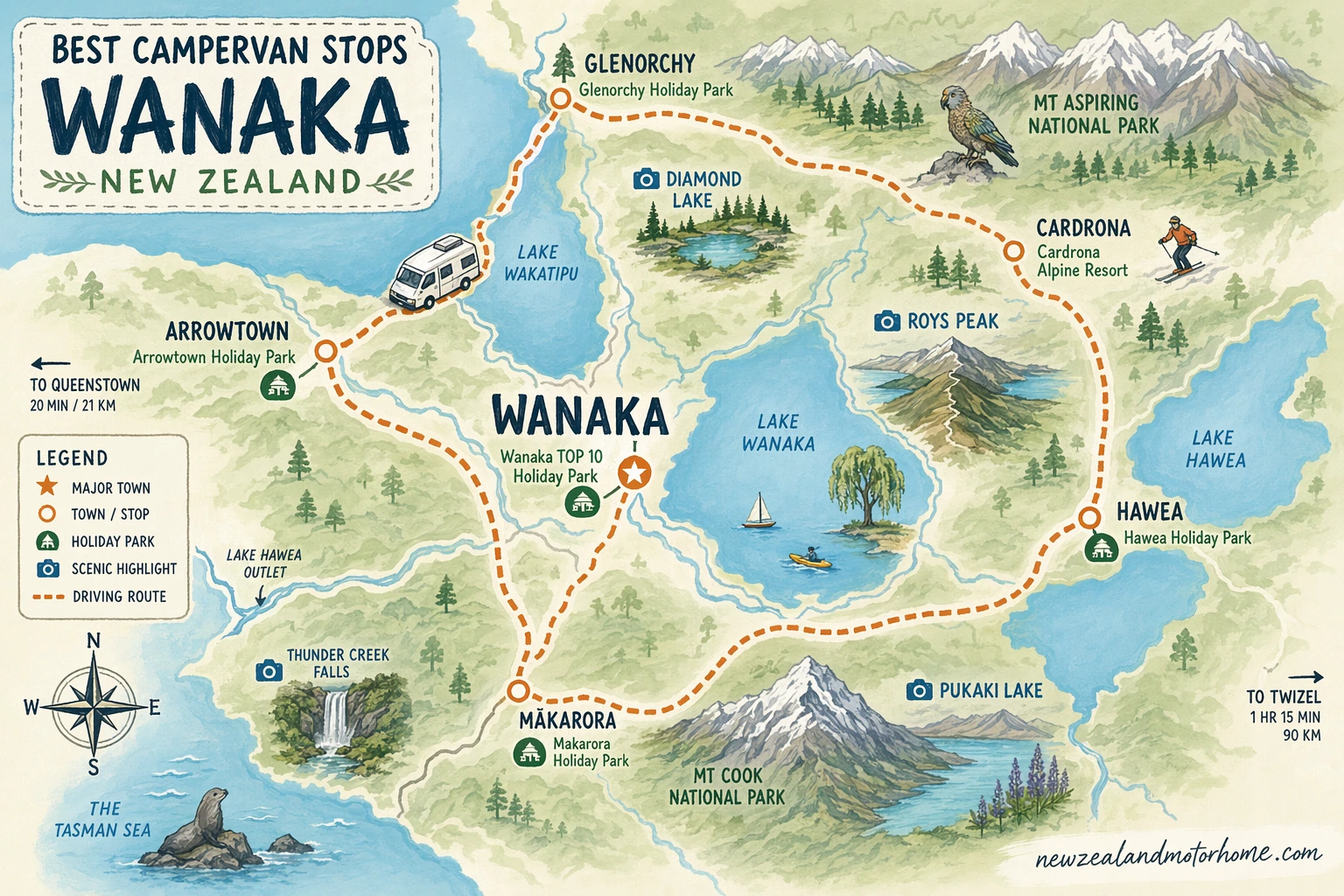
- Best flow: Wanaka lakefront, Mount Iron, Albert Town, Glendhu Bay, then onward to Hawea, Cardrona or Cromwell depending on your route.
Keep planning
Visiting roys peak wanaka by campervan
Read onVisiting puzzling world wanaka by campervan
Read onHoliday parks wanaka
Read onFarmers markets wanaka
Read onCampervan guide wanaka nz
Read onBest time to visit wanaka nz
Read onCommon questions
Can I freedom camp on the Wanaka lakefront in a campervan?
Usually, no. Much of the central Wanaka lakefront and nearby reserves are signed no-camping or restricted, and rules can change by season or bylaw. Use only current signed permitted areas and make sure your campervan meets self-containment requirements.
Where should I stay in Wanaka with a campervan if I want power?
Choose a holiday park or official campground with powered sites in or near town, Albert Town or Glendhu Bay. Powered sites are especially useful in winter, after cloudy days, or if you are running heating, charging devices and using the fridge heavily.
Is Wanaka suitable for a large motorhome?
Yes, but the central lakefront and small scenic pull-ins can be tight in peak periods. Park slightly away from the busiest blocks, avoid narrow dead-end roads unless you can see the turning area, and take extra care on lake-edge and valley roads.
Do I need to book campervan sites in Wanaka?
Booking is wise in summer, school holidays, long weekends and ski season. Wanaka is popular and legal overnight options are limited compared with the number of vans passing through, so leaving it late can mean driving further than planned.
Are there dump stations and fresh-water fills in Wanaka?
Yes, Wanaka has approved campervan service options, and many holiday parks provide facilities for guests. Check current council or campground information before relying on a specific location, and never empty grey water or toilet waste at a scenic stop.
Can I take a hired campervan up the Matukituki Valley?
Take care. Sealed-road sections are straightforward, but further valley roads can involve gravel, narrow sections and fords, which may be excluded by your hire agreement. Check road conditions, weather and your rental terms before continuing beyond standard access points.
Have a planner shape this for your dates
Send a short outline — your dates, party size, and the kind of trip you want. A planner replies with a vehicle recommendation, a paced route, and the realistic budget.