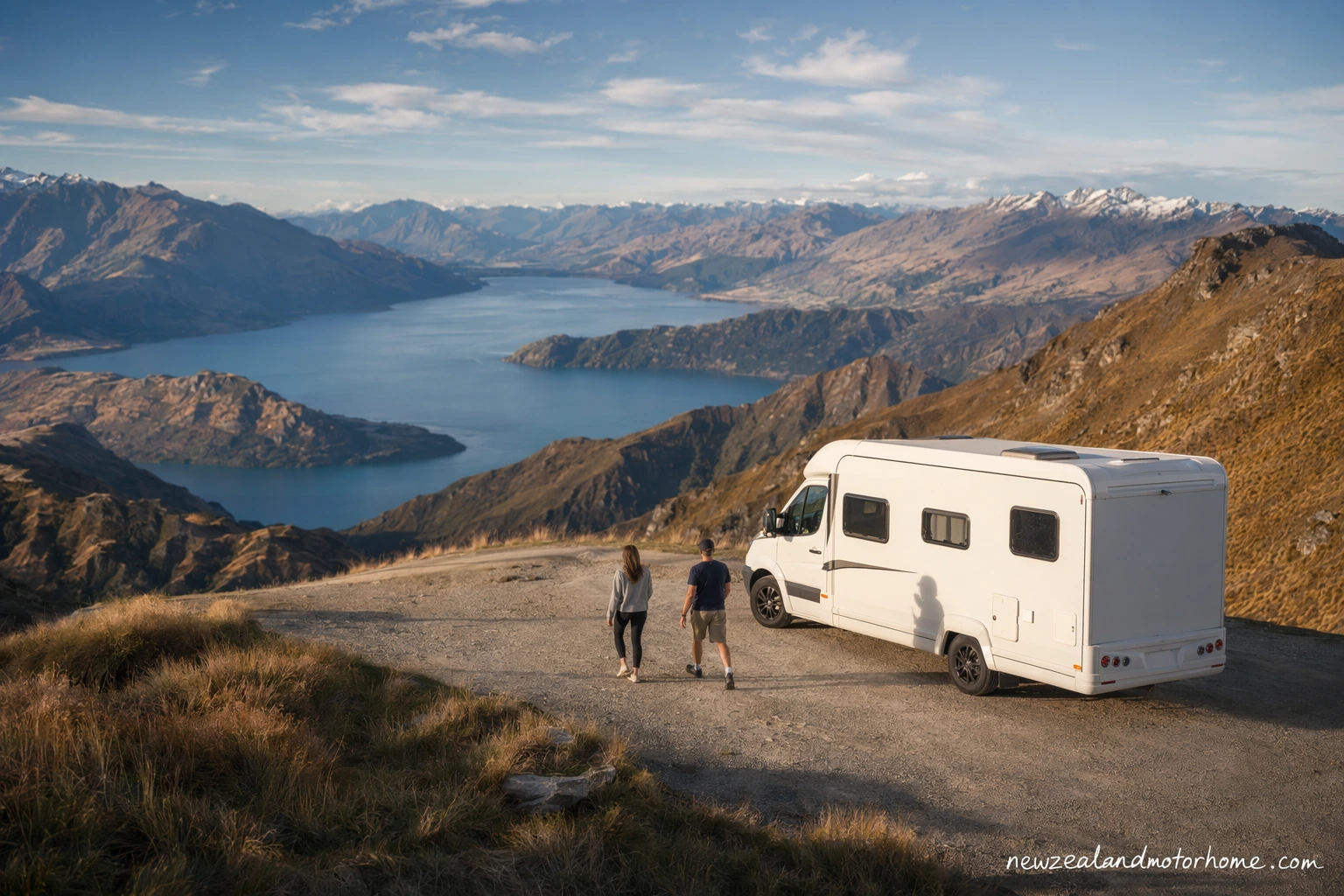
Visiting Roys Peak Wanaka by campervan: parking, campsites and road notes
- Sealed road from Wānaka
- Day parking only at track start
- Allow 5–7 hours for full walk
- Powered sites easiest in Wānaka
- Check seasonal track closure
Roys Peak is one of those Wānaka walks where the logistics matter almost as much as the view. If you are visiting Roys Peak Wanaka by campervan, the main questions are simple: where can you park the van, how early should you arrive, and where should you sleep the night before or after?
This guide is written for self-drive motorhome travellers, not day-trippers in small cars. You will find practical notes on Roys Peak Wanaka campervan parking, the sealed road in from town, nearby powered and unpowered camping options, and where to sort fresh water, LPG and dump-station chores before you point the van towards Mt Aspiring Road.
How to get to Roys Peak Wanaka in a campervan
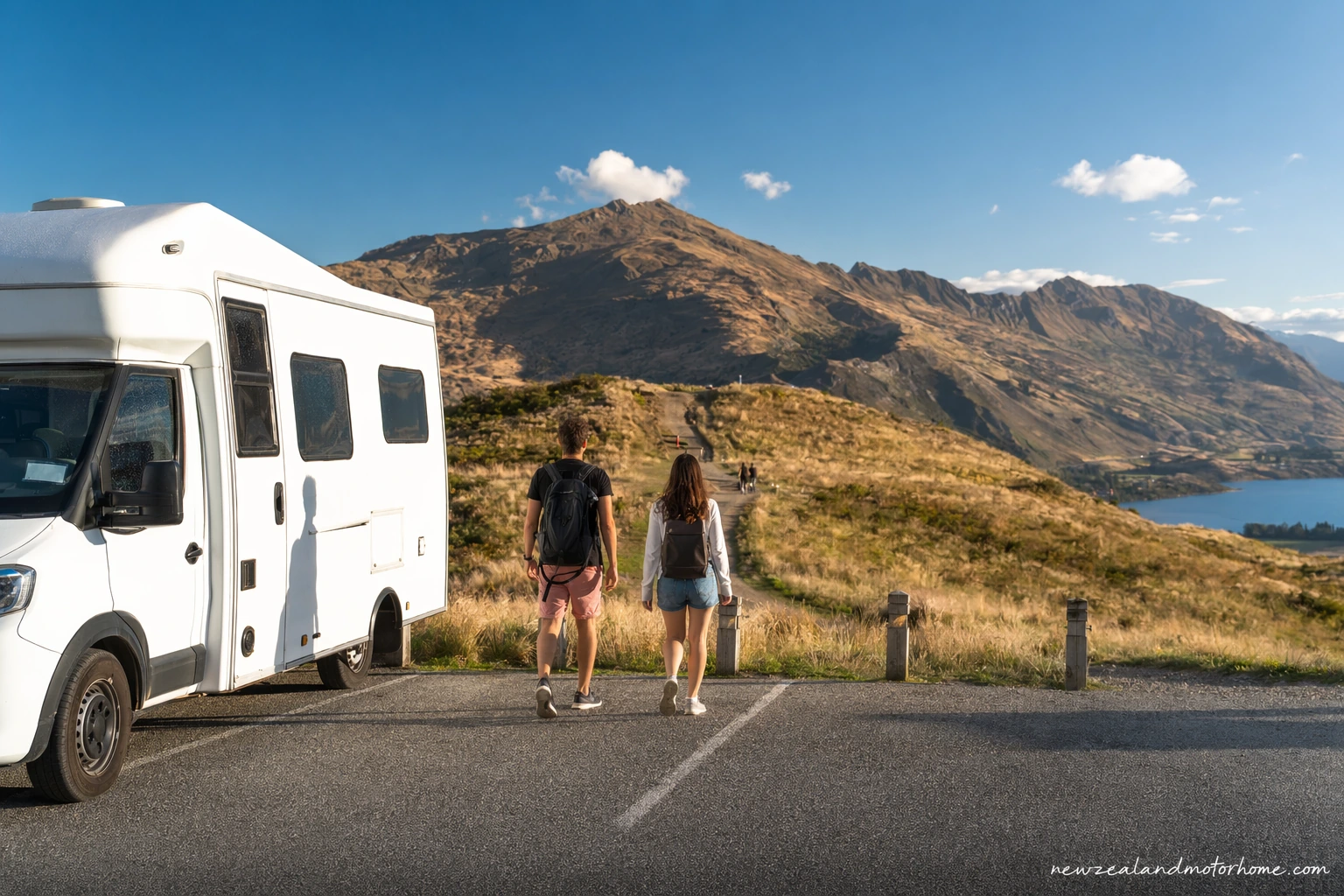
How to get to Roys Peak Wanaka is straightforward: from central Wānaka, follow the lake edge west onto Mt Aspiring Road. The Roys Peak Track car park is only a short drive from town, but it feels noticeably more rural once you leave the main lakefront streets.
The road is sealed to the track start and manageable for standard campervans and motorhomes in settled conditions. The main things to watch are early-morning cyclists, vehicles pulling out from lake viewpoints, and frost or ice in winter shade. Fill fuel, LPG and drinking water in Wānaka before you go; there are no useful van services at the trailhead.
- Allow extra time if you are driving a longer motorhome and want an easy turn into the car park.
- Use dipped headlights at dawn and dusk; the road can be busy with walkers starting early.
- Avoid stopping half-on the carriageway for photos, even if the lake is doing something spectacular.
- Check weather and track status before setting off, especially outside summer.
Roys Peak Wanaka campervan parking: what to expect
Roys Peak Wanaka campervan parking is at the public track car park beside Mt Aspiring Road. It is not a campground, and it is not a place to wait out the night in your van. Treat it as day parking only, arrive ready to walk, and expect it to fill quickly in settled weather.
For campervans, the pressure point is usually length rather than height. A compact van is much easier to tuck into a normal bay; a longer motorhome may need the edge of the parking area and a careful swing to avoid blocking other vehicles. If there is no safe space for the whole vehicle, do not park partly on the road shoulder.
- Arrive very early for sunrise starts or later in the afternoon if you are walking only part of the track.
- Do not leave levelling blocks, chairs or awnings out; this is a track car park, not an overnight site.
- Lock the van, keep valuables out of sight, and take water, layers and sun protection with you.
- Check any temporary signage on the day, as parking controls can change during busy periods.
How long to allow for the walk and your van day
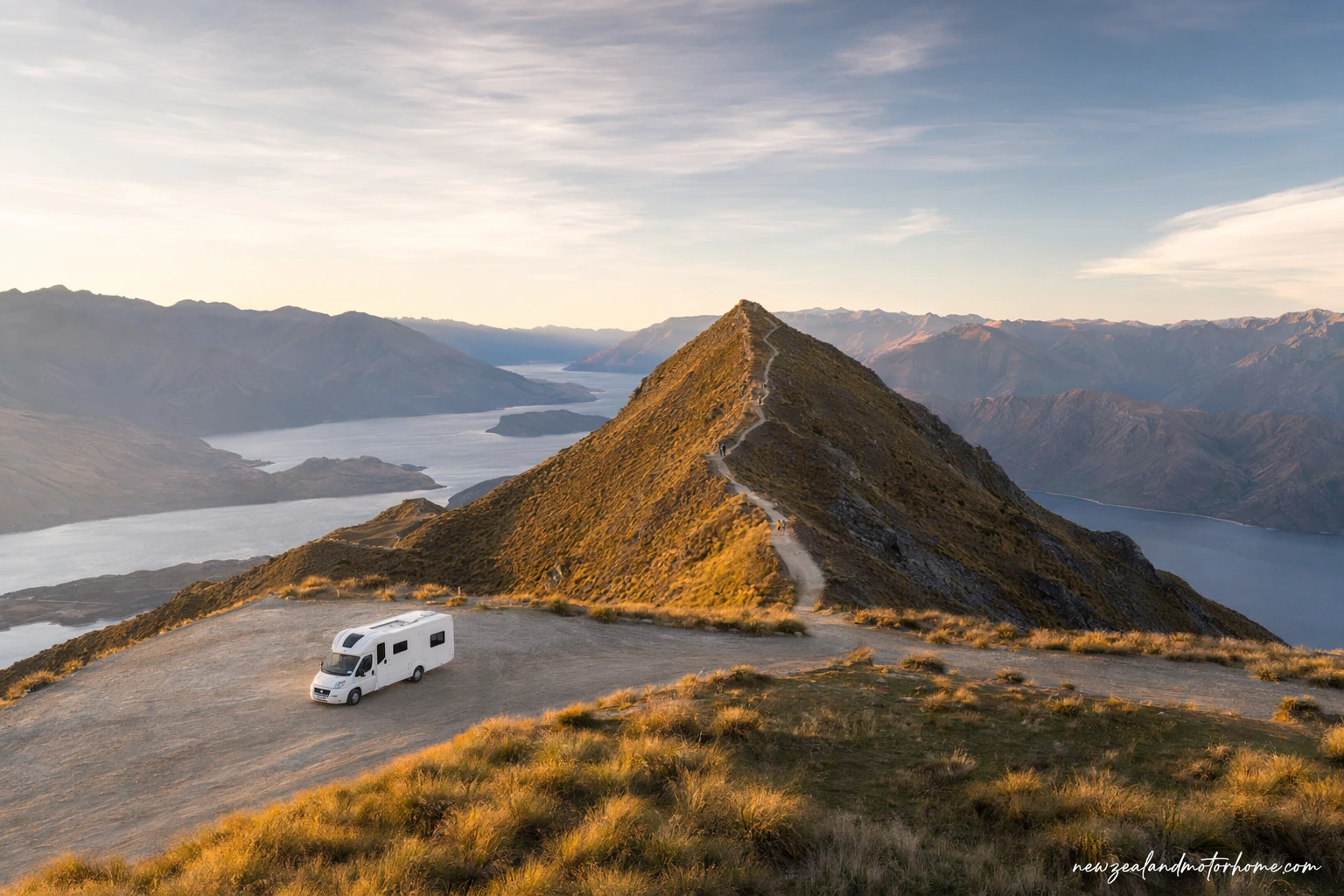
The full Roys Peak Track is a steep return walk that most people plan as a half to full day once you include parking, getting your boots on, walking, photos and the slow descent. Campervan travellers should also allow time afterwards for a shower, a proper meal and a relaxed drive back to an overnight stop.
The track is exposed, with little shade and a big weather difference between the lake edge and the top. Start with more water than you think you need, particularly if your van fridge has tempted you into a late breakfast rather than an alpine start. In winter and shoulder seasons, check for ice, snow, wind and the seasonal lambing closure before building your route around the hike.
- Full walk: commonly planned as 5–7 hours return, depending on fitness and conditions.
- Photo viewpoint only: still a steep climb, so do not treat it as a quick roadside lookout.
- Best campervan rhythm: sleep nearby, walk early, then return to a powered site or lakeside base.
- Leave a dry layer and easy food in the van for when you get back down.
Campsites near Roys Peak Wanaka
The easiest campsites near Roys Peak Wanaka are in and around Wānaka itself, with holiday parks giving you the most practical setup before an early walk: powered sites, showers, laundry, fresh-water fills and dump-station access. Booking ahead is wise in summer, school holidays and ski season, especially if your motorhome needs a longer bay.
Glendhu Bay, further along Mt Aspiring Road, can be a handy lakeside base when open and available, while Wānaka and nearby settlements such as Albert Town or Lake Hāwea give you more choice if town is full. Freedom camping around the district is tightly managed; only use areas where overnight stays are explicitly permitted and make sure your van’s self-containment certification meets the current rules.
- Choose powered sites if you want to recharge batteries, run heating or dry gear after the walk.
- Unpowered sites suit short stays if your house battery, fridge and water supply are in good shape.
- Confirm maximum vehicle length when booking a site for a larger motorhome.
- Use holiday park dump stations and fresh-water points before heading deeper towards Mt Aspiring National Park.
Van services, food stops and nearby places to add on
Wānaka is the sensible place to reset the van. Stock the fridge, top up drinking water, empty the cassette and grey-water tank at an approved dump station, and sort LPG before you drive out to the track. If you are hiring a campervan, check the operator’s instructions for toilet chemicals and grey-water handling before using public facilities.
After the walk, most people keep the day gentle. The lakefront, Glendhu Bay and the drive towards Diamond Lake are easy add-ons, but remember that tired legs and a long vehicle are not a great mix on narrow pull-outs. If you want help fitting Roys Peak into a wider South Island campervan loop, you can talk to us before locking in your overnight stops.
- Do your supermarket run in Wānaka, not from the Roys Peak car park.
- Use approved dump stations only; never drain grey water at roadside reserves or trailheads.
- Keep enough fresh water for cooking, handwashing and a post-hike clean-up.
- Build in a short second night locally if you do not want to drive tired after the descent.
Keep planning
Common questions
Can I park a campervan at the Roys Peak Track car park?
Yes, you can park a campervan for the walk if there is a safe, legal space available. Longer motorhomes may struggle when the car park is busy, so arrive early and avoid blocking bays, entrances or the road shoulder.
Can I stay overnight in my campervan at Roys Peak?
No. The Roys Peak Track car park should be treated as day parking only, not a freedom camping spot. Use a permitted campsite, holiday park or council-approved freedom camping area with the correct self-containment certification.
What are the nearest campsites near Roys Peak Wanaka?
Wānaka holiday parks are the most convenient bases because they offer powered sites, showers, water and dump-station access. Depending on the season and availability, lakeside options around Glendhu Bay or nearby bases such as Albert Town and Lake Hāwea can also work well.
Is the road to Roys Peak suitable for large motorhomes?
The road from Wānaka to the Roys Peak Track is sealed and generally suitable for standard hire motorhomes. The bigger issue is manoeuvring and parking at the track start, so take it slowly and do not attempt tight turns if the car park is already jammed.
Where should I fill water or empty the toilet cassette before Roys Peak?
Do this in Wānaka or at your holiday park before driving to the trailhead. Use approved dump stations for toilet cassettes and grey water, and refill fresh water from designated potable taps only.
Have a planner shape this for your dates
Send a short outline — your dates, party size, and the kind of trip you want. A planner replies with a vehicle recommendation, a paced route, and the realistic budget.