- Best allowed: 2–3 nights
- Book powered sites in peak season
- Freedom camping is tightly restricted
- Crown Range needs winter caution
- Check gravel-road hire conditions
Wanaka is one of those places where the van becomes part of the rhythm: morning coffee with the side door open to the lake, a slow drive to a walking track, then a practical loop for groceries, fresh water and a legal overnight stop. It is beautiful, but it is also busy, tightly managed, and not a place to wing it if you are sleeping in your campervan.
This campervan guide Wanaka NZ is written for self-drive travellers in hired campervans and motorhomes. You will find van-friendly driving notes, where to park during the day, how to think about powered versus unpowered nights, freedom camping rules, dump station planning, and the best things to do Wanaka campervan style without overcommitting your vehicle to roads it should not be on.
Getting into Wanaka by campervan
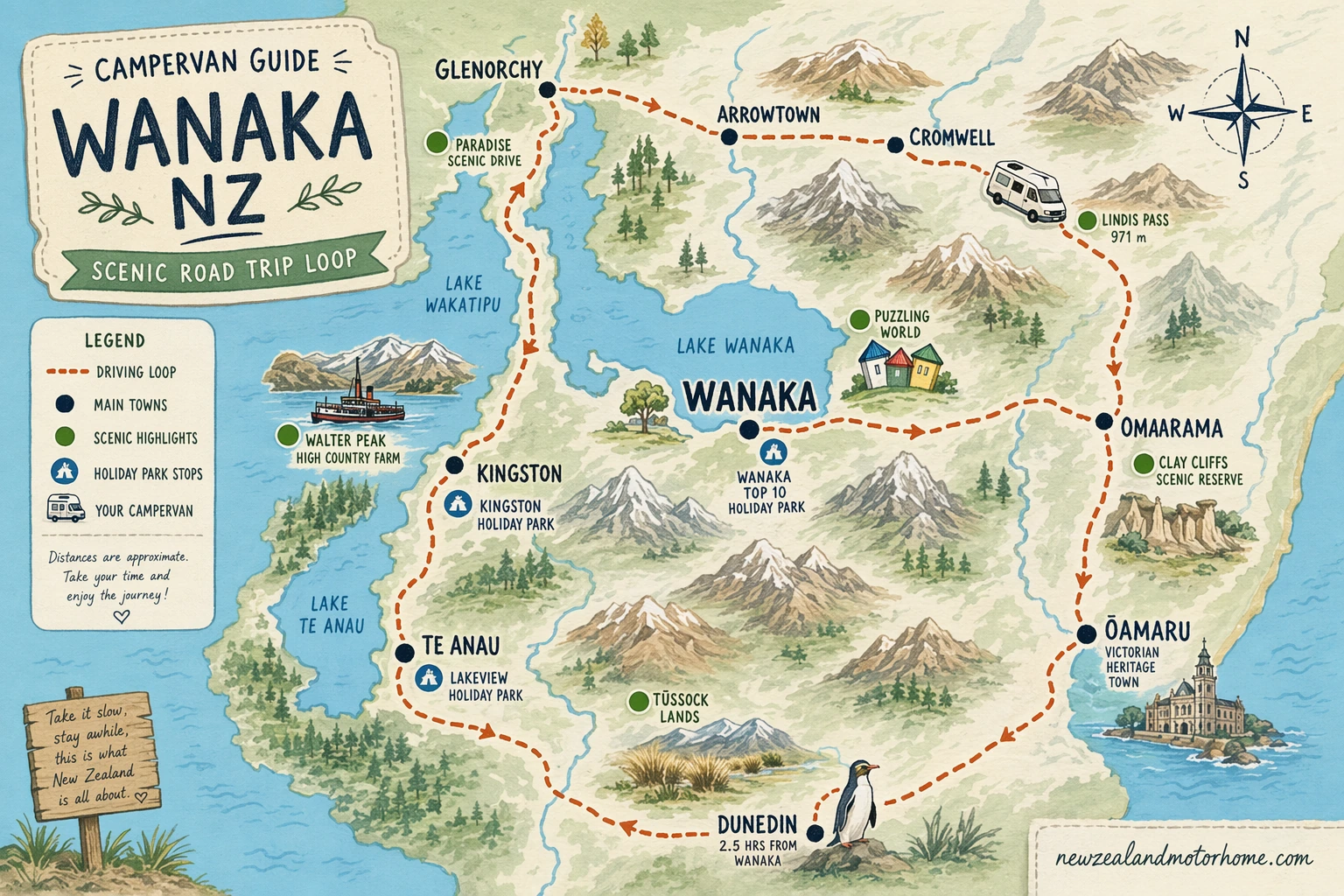
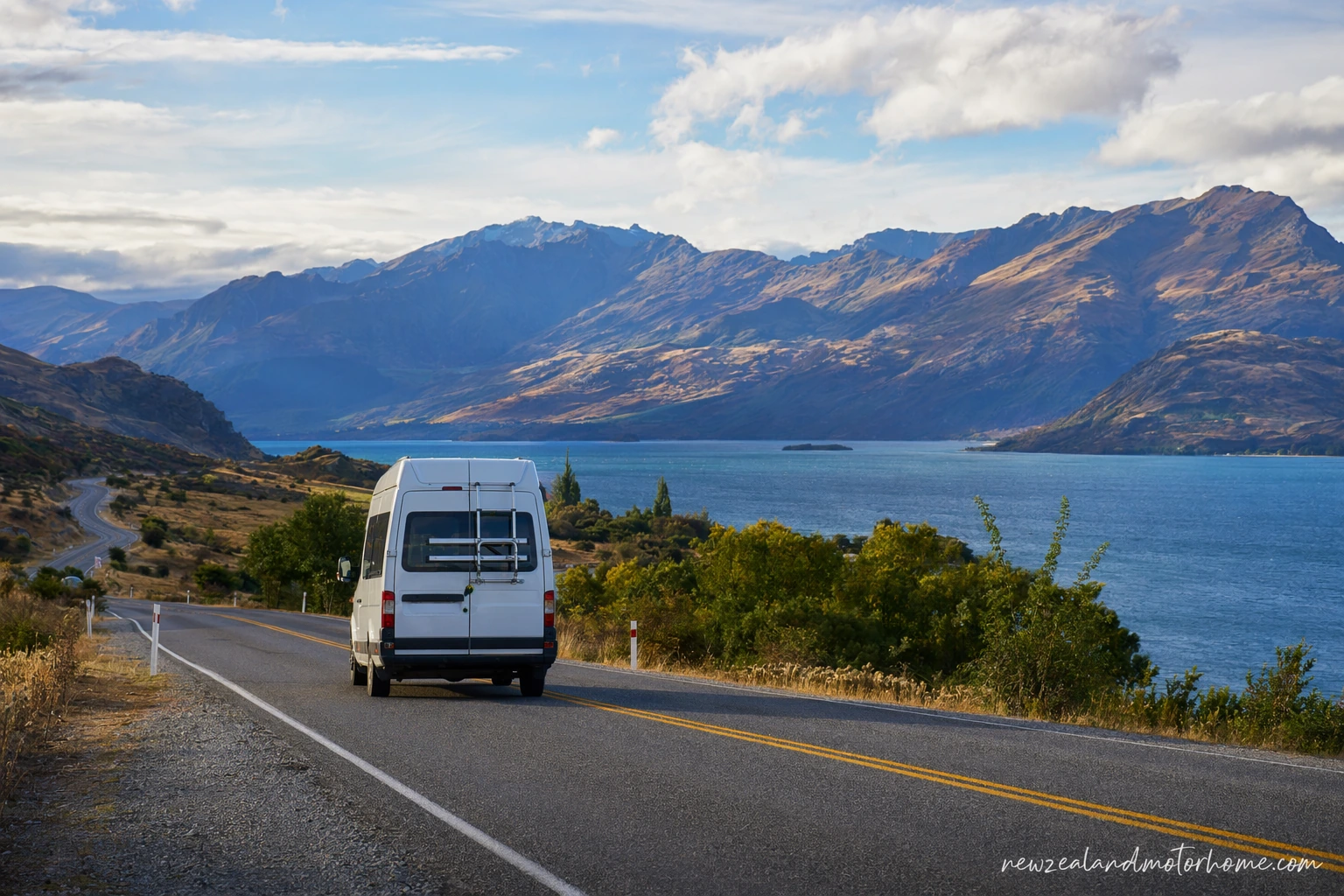
Most Wanaka campervan trips arrive from Queenstown, Cromwell, Haast or Tekapo via the Lindis Pass. All routes are scenic, but they do not drive the same in a high-roof van. Build in time for slower hill climbs, photo stops where you can pull fully off the road, and a careful arrival into town rather than trying to squeeze into lakefront parking at peak hour.
The Crown Range between Queenstown and Wanaka is spectacular but steep, winding and exposed. In winter you may need to carry chains and you should check your hire agreement before choosing it in a larger motorhome. The Cromwell route is longer but generally more forgiving for first-time van drivers, with easier gradients and more places to pause.
- From Queenstown: choose the Crown Range only if you are confident with steep descents and weather conditions are clear.
- From Haast: allow plenty of daylight through Haast Pass, and do not rely on late fuel or food stops once you are away from the main centres.
- From Cromwell: a practical approach if you want easier driving and a chance to fill LPG, fuel and groceries before Wanaka.
- In town: watch for cyclists, pedestrians, narrow side streets and height restrictions in some parking areas.
Where to park the van around Wanaka
Wanaka’s lakefront is not designed for endless rows of motorhomes, especially in summer, school holidays and on clear winter weekends. If you are in a longer van, it is often easier to park a few streets back or at a signed outer parking area, then walk to the waterfront. Avoid taking up two angle parks unless the space is clearly marked for longer vehicles.
For the lakefront, arrive early or later in the afternoon, keep your mirrors tucked in when parked, and read the signs carefully. Day parking is not the same as overnight camping, and many attractive lakeside reserves are specifically no-camping areas. Around the famous Wanaka tree, expect tight traffic and people crossing the road without looking.
- Town centre: best for short stops, cafés, supermarket runs and lake walks; less comfortable for large motorhomes at busy times.
- Eely Point and Bremner Bay area: good for lake access and a quieter picnic feel, but check posted restrictions and avoid blocking boat trailers.
- Roys Peak track: the car park fills early, especially for sunrise walkers; no overnighting unless signs specifically allow it.
- Bike path days: consider parking once and walking or cycling rather than moving the van between small lakefront bays.
Best things to do Wanaka campervan travellers can fit in
The best things to do Wanaka campervan style are the ones that do not turn the day into a parking mission. A lakefront wander, a swim at a sheltered bay, a cycle towards Glendhu Bay, or a half-day walk at Diamond Lake can all work well if you plan where the van will sit before you set off.
Roys Peak is the famous big climb, but it is not casual: the car park is small for demand, there is no shade for the van, and the walk takes most people several hours. Mount Iron is easier to fit around laundry, groceries and a campground check-in. Diamond Lake and Rocky Mountain give big views without driving as far into the mountains.
- Easy van day: lakefront breakfast, Mount Iron walk, supermarket refill, then a powered site for showers and charging.
- Active day: park early for Roys Peak or Diamond Lake, carry water, and return before shifting to your overnight stop.
- Bad weather day: use Wanaka for admin: laundry, battery charge, fresh water, LPG check and a proper rubbish drop.
- Lake day: take camp chairs, but keep awnings and tables for campgrounds rather than public car parks.
Overnight stops: powered, unpowered and freedom camping
Wanaka rewards booking ahead. In peak summer and during ski season, powered sites can disappear quickly, and a motorhome Wanaka stop is much easier when you already know where you are sleeping. If you need to run heating, charge devices, use campground showers or do laundry, choose a powered holiday park night rather than stretching your house battery too far.
Unpowered campground sites work well if your batteries are healthy and you have already filled fresh water and emptied grey water. They are often quieter and more scenic, but you need to be honest about how long your fridge, lights and water pump will last. If you are travelling in a certified self-contained campervan, freedom camping is still tightly restricted around Wanaka and the wider Queenstown Lakes District.
Always follow current council signs and maps, not old app comments. Many lakefront reserves, car parks and residential edges are no-camping zones, even if they look perfect at sunset. If you want help lining up legal nights with realistic drive times, mention your van size and travel dates through the plan-your-trip step and we can shape the route around actual overnight options.
- Powered sites: best after several free or unpowered nights, in winter, or before a long mountain drive.
- Unpowered sites: good for self-contained vans with full water, empty waste tanks and conservative power use.
- Freedom camping: only where permitted, with a valid self-containment certificate, and never where signs prohibit it.
- Late arrivals: risky in Wanaka; aim to be parked for the night before dark.
Dump stations, water, LPG and food supplies
Do the boring jobs before you head out to the lake edges or mountain roads. Wanaka has supermarket supplies, fuel and visitor services, but dump stations and fresh-water taps should be checked on current council or NZMCA-style maps because access can change. Many campgrounds provide dump points and potable water for guests, which is one reason a paid night can reset the whole van.
Do not leave grey water until it is almost full if you are driving towards Haast Pass, Makarora or the Matukituki Valley. Distances get longer, services thin out, and you may not find a legal place to empty tanks when you want one. The same goes for LPG: check the bottle before you commit to several cold nights away from town.
- Fresh water: fill only from marked potable taps, not random lakeside or toilet-block taps.
- Grey and black water: use signed dump stations only; never empty tanks into toilets, drains or bush.
- LPG: top up before a run of cold nights, especially if you use gas for heating, hot water or cooking.
- Rubbish: carry it until you find a proper public bin or campground disposal point.
Road notes for Glendhu Bay, Cardrona and the valleys
The drive west from Wanaka towards Glendhu Bay is one of the region’s best campervan runs, with lake views, picnic spots and access to walking and cycling. It is also popular with bikes, boat trailers and impatient local traffic, so keep left, use slow-vehicle bays where provided, and avoid stopping in unsafe shoulder pull-offs just for a photo.
Beyond the main lake road, be more cautious. Mount Aspiring Road towards the Matukituki Valley includes gravel sections and, further in, fords that can change after rain. Many hired campervans and larger motorhomes are not suited to that road beyond the sealed section, and some hire agreements restrict gravel or ford crossings. If in doubt, park earlier and choose a track that matches the vehicle.
Cardrona Valley is a useful route between Wanaka and Queenstown, but winter conditions can change quickly. Ski traffic, grit, ice and dark descents all make a high-sided van feel heavier than it does on the flat. Give yourself daylight, keep speed down on bends, and do not let a following car pressure you into driving faster than feels safe.
Keep planning
Visiting roys peak wanaka by campervan
Read onVisiting puzzling world wanaka by campervan
Read onHoliday parks wanaka
Read onFarmers markets wanaka
Read onBest time to visit wanaka nz
Read onBest campervan stops wanaka
Read onCommon questions
How many days should I allow for Wanaka in a campervan?
Can I freedom camp beside Lake Wanaka?
Is Wanaka suitable for a large motorhome?
Where should I empty grey water and toilet waste in Wanaka?
Do I need a powered site in Wanaka?
Have a planner shape this for your dates
Send a short outline — your dates, party size, and the kind of trip you want. A planner replies with a vehicle recommendation, a paced route, and the realistic budget.