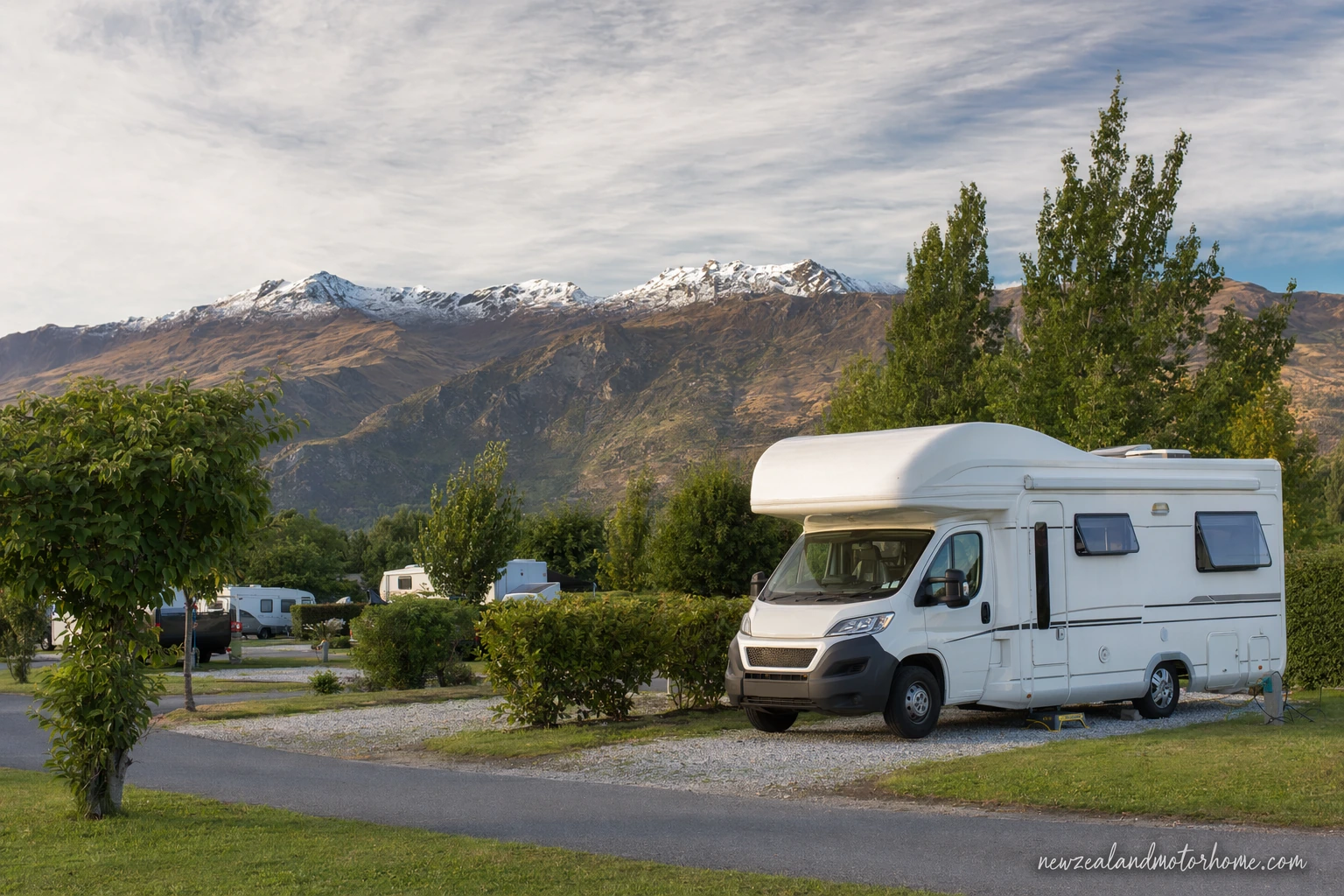
- Best booked early in summer and ski season
- Powered and unpowered campervan sites available
- Strict freedom camping rules apply
- Useful reset before Haast Pass or Queenstown
- Check van length for tight pitches
Wanaka is one of those places where the overnight stop shapes the whole trip. Park the van near the lake and you can wander to coffee, swims and the foreshore; base yourself out towards Glendhu Bay, Hāwea or Albert Town and the mornings feel quieter, with trailheads and big-sky driving closer at hand.
This guide looks at holiday parks Wanaka travellers actually use as self-drive campervan bases: how the campgrounds Wanaka offers are spread out, what to think about with powered and unpowered sites, where dump stations and fresh water fit into the plan, and how local freedom camping rules affect certified self-contained vans.
How Wanaka’s campervan bases are spread out
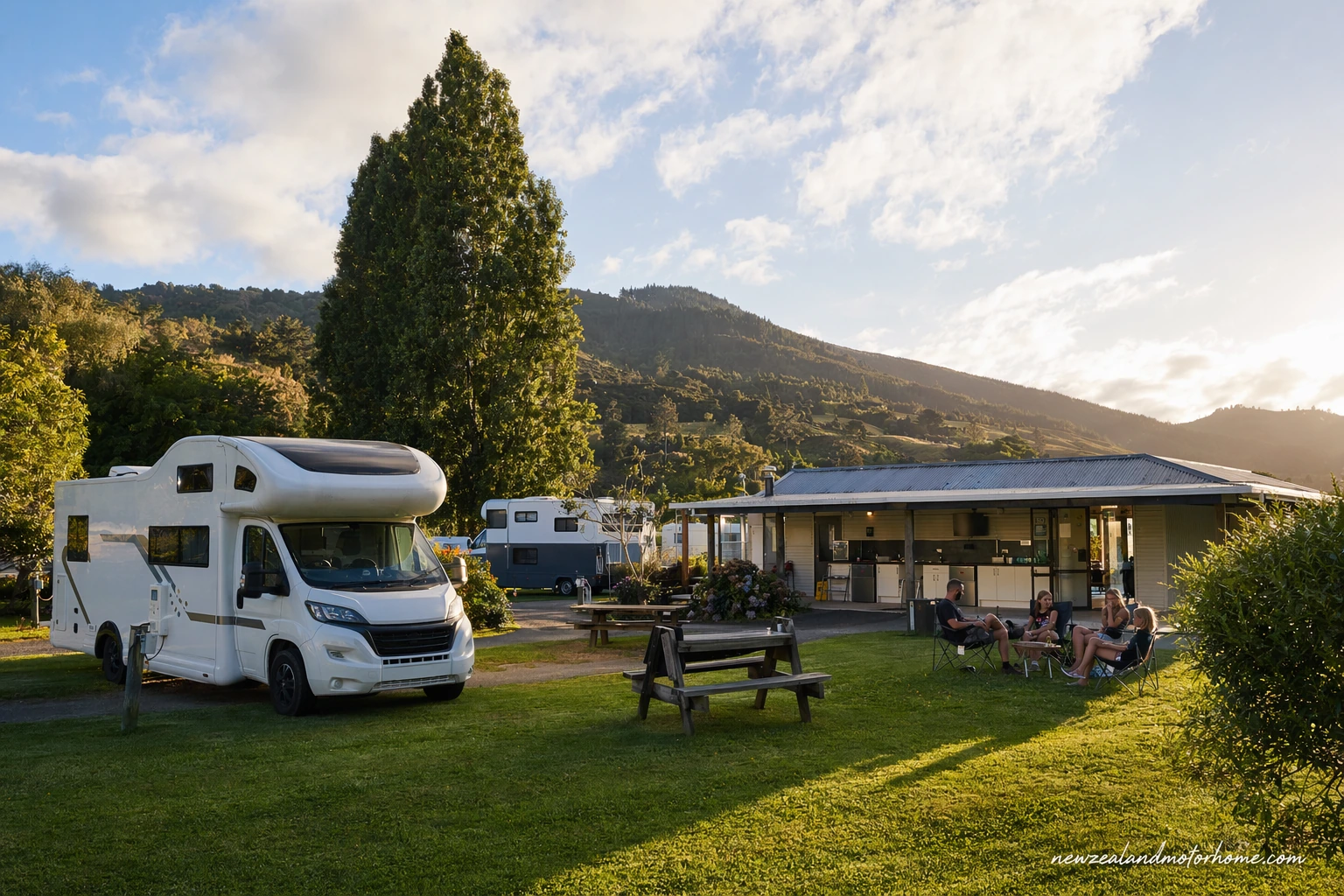
Wanaka is compact, but its campsites are not all trying to do the same job. The central and lake-edge holiday parks suit travellers who want to park once, plug in, and walk to the lakefront, restaurants, bike hire and supermarket supplies. They are also handy if you are arriving late over the Crown Range or down SH6 and want an easy first night with a powered site and facilities close by.
Further out, Albert Town puts you closer to the Clutha River, the Hāwea road and quieter evening walks. Glendhu Bay points you towards Roys Peak, Diamond Lake and the Matukituki Valley, while Lake Hāwea works well for vans travelling north towards Haast Pass or staying a little outside Wanaka’s busiest holiday rhythm.
- Central Wanaka: best for walking to town, lake swims, supplies and short stays.
- Albert Town: good for river trails, a quieter feel and easy access north.
- Glendhu Bay side: handy for day walks, lake views and Mt Aspiring National Park access.
- Lake Hāwea: useful before or after Haast Pass, with a calmer overnight pace.
Powered sites, unpowered sites and choosing the right pitch
Powered sites Wanaka-wide are in high demand in summer, school holidays and ski season. If your van has a fridge, heater, e-bike batteries, camera gear or you simply want a warm reset after a cold alpine day, booking a powered site is worth planning ahead for. In winter, check whether the park recommends power for overnight heating and battery management.
Unpowered sites can be a good fit for certified self-contained motorhomes with decent solar, but Wanaka’s weather can swing quickly. A still, hot afternoon can become a cold southerly evening, and shaded pitches are not always ideal if you are relying on solar recovery. Ask about level ground too; some lake-adjacent campsites Wanaka travellers love have a more natural surface, so levelling ramps can make the night much more comfortable.
If you are driving a larger motorhome, mention your vehicle length when booking rather than assuming every pitch will suit. Some older holiday park lanes, trees and turning areas are easier in a compact campervan than in a long rear-overhang motorhome.
Freedom camping rules around Wanaka
Wanaka sits within a district where freedom camping is tightly managed, particularly around the lakefront, reserves, suburban streets and popular visitor areas. Do not assume that being certified self-contained means you can sleep anywhere. You still need to use places where overnight camping is allowed, follow posted signs, and keep clear of prohibited areas.
For most first-time campervan travellers, a holiday park is the simplest Wanaka base: legal overnight parking, toilets and showers, rubbish disposal, fresh water and usually a dump station or clear direction to one nearby. If you are considering a freedom camping night, check the current council rules before you settle in, because designated areas and restrictions can change.
- Carry and display a valid self-containment certificate if your hire van has one.
- Never drain grey water onto the ground or into stormwater drains.
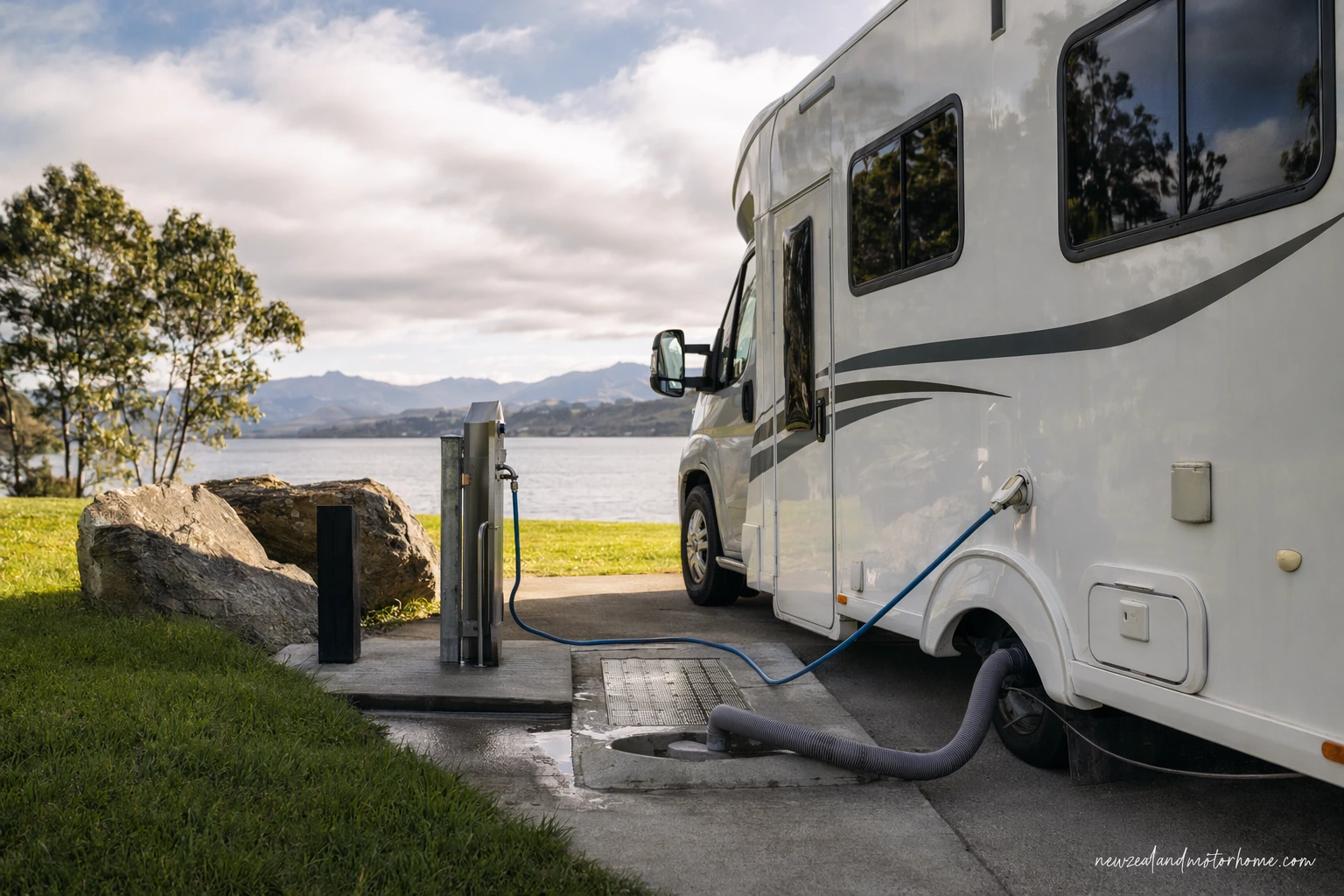
- Use proper dump stations for cassette toilets and waste tanks.
- Arrive early if using a permitted low-cost or freedom camping area; spaces can fill quickly.
Dump stations, fresh water, LPG and supplies
Most established holiday parks in the Wanaka area either provide dump facilities for guests or can point you to the nearest approved dump station. It is wise to empty grey and black water before heading into the Matukituki Valley, over Haast Pass, or onto a run of smaller overnight stops where services are limited.
Fresh-water fills are straightforward when you are staying in a park, but do not fill from random taps at reserves or boat ramps unless they are clearly marked as potable and permitted. In busy periods, fill during the afternoon rather than at the last moment before checkout, when everyone else is doing the same.
Wanaka has fuel, groceries and LPG options, but check whether your hire van uses a swap bottle or a refillable cylinder before you queue up. If you are heading west over Haast Pass, treat Wanaka or Hāwea as your practical reset point: fuel up, top up drinking water, empty waste and make sure the fridge is stocked.
Driving between Wanaka campgrounds and day-trip roads
The driving between campgrounds Wanaka-side is generally short, but the roads around them deserve respect in a motorhome. The lakefront streets can be busy with pedestrians, cyclists and tight parking, so use larger public parking areas where your van can fit without blocking sightlines or overhanging footpaths. Watch for height barriers in smaller car parks.
The Crown Range between Wanaka and Queenstown is sealed and spectacular, but it is steep, winding and can be icy or chain-controlled in winter. If you are in a larger motorhome, new to alpine roads, or travelling in bad weather, compare it with the longer but gentler route via Cromwell. The Matukituki Valley road towards Raspberry Creek becomes unsealed, narrow and weather-affected; check conditions before taking a hire campervan beyond the usual sealed-road comfort zone.
- Allow extra braking distance on lake and mountain roads.
- Secure cupboards before the Crown Range or Haast Pass.
- Check your hire agreement before driving on long unsealed access roads.
- Use passing bays to let faster traffic through when safe.
Which Wanaka base suits your trip?
If you are comparing a top 10 holiday park wanaka list, look past the ranking and match the base to your actual days. Families often like a park with powered sites, laundry, playground space and a safe walk to the lake. Hikers may prefer the west side of town for Roys Peak, Diamond Lake and the Matukituki. Cyclists can do well near Albert Town or the lake outlet trails.
For ski trips, consider how early you want to drive to Cardrona or Treble Cone, whether you need a drying room, and how your van will handle cold nights. For a South Island loop, Wanaka also makes a strong two-night reset between the West Coast, Queenstown, Central Otago and Aoraki/Mount Cook.
If you want help fitting Wanaka into a wider campervan route, you can use the talk-to-us planning step and tell us your van size, travel month and whether you prefer powered holiday parks, DOC-style campsites or a mix.
Keep planning
Visiting roys peak wanaka by campervan
Read onVisiting puzzling world wanaka by campervan
Read onFarmers markets wanaka
Read onCampervan guide wanaka nz
Read onBest time to visit wanaka nz
Read onBest campervan stops wanaka
Read onCommon questions
Do I need to book holiday parks in Wanaka ahead?
Yes, book ahead for summer, long weekends, school holidays and ski season. Powered sites in Wanaka can be the first to fill, especially for larger motorhomes needing a longer, easier-access pitch.
Can I freedom camp beside Lake Wanaka in a certified self-contained van?
Only where overnight camping is specifically permitted. Many lakefront areas, reserves and streets are restricted or prohibited, even for certified self-contained vehicles, so check current council signage and rules before parking up for the night.
Are there dump stations at Wanaka campsites?
Many holiday parks provide dump facilities for guests or direct you to an approved nearby dump station. Empty before heading into more remote areas such as the Matukituki Valley or over Haast Pass, where services are fewer.
Is Wanaka suitable for a large motorhome?
Yes, but choose sites and parking carefully. Tell the holiday park your vehicle length when booking, avoid tight lakefront parking where you might overhang, and take extra care on the Crown Range, narrow access roads and unsealed valleys.
Should I choose Wanaka or Lake Hāwea for an overnight stop?
Choose Wanaka if you want town access, restaurants, lakefront walks and a wider choice of powered sites. Choose Lake Hāwea if you want a quieter base, an easier start towards Haast Pass, or a less busy feel during peak periods.
Have a planner shape this for your dates
Send a short outline — your dates, party size, and the kind of trip you want. A planner replies with a vehicle recommendation, a paced route, and the realistic budget.