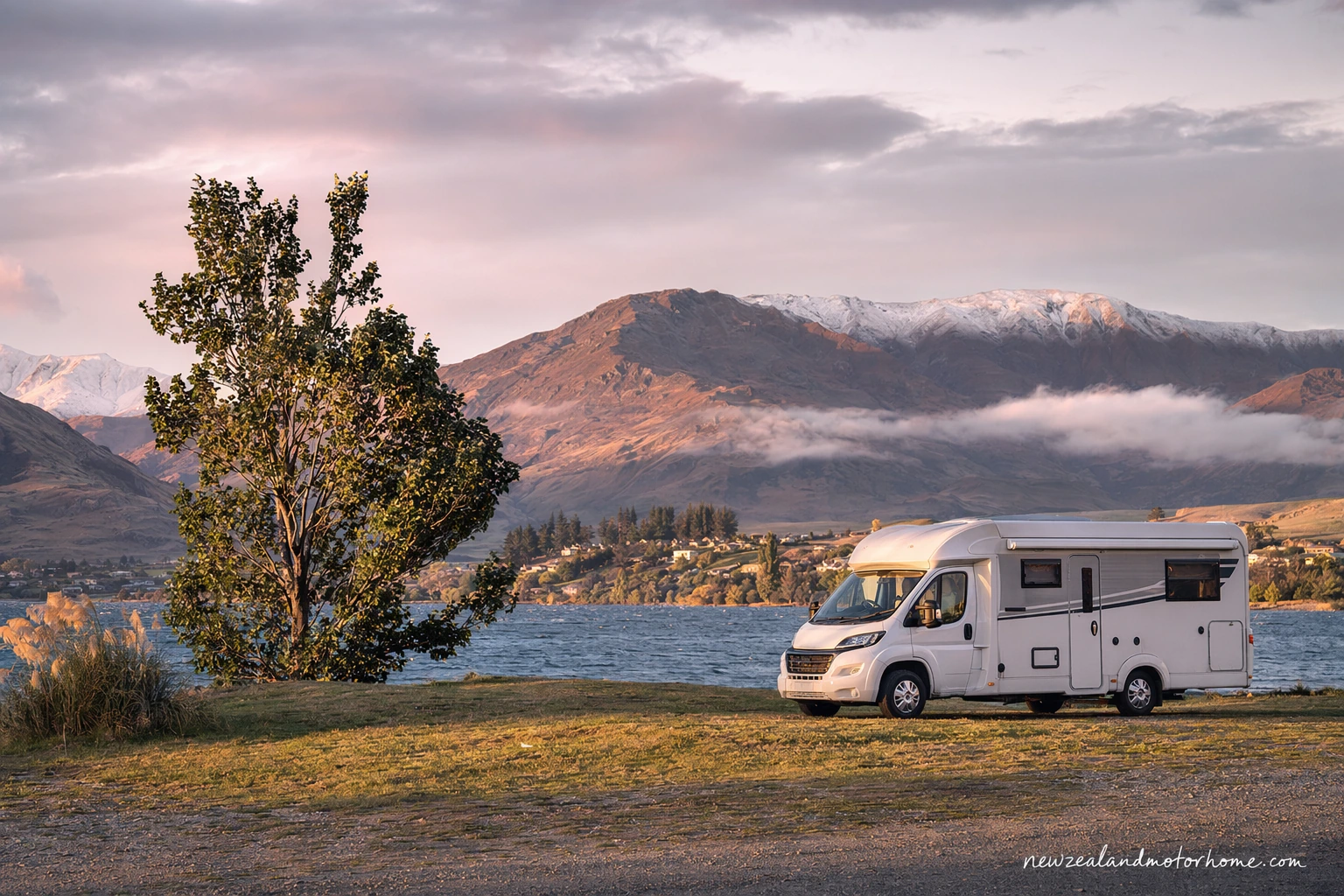
- Best overall: March-April
- Allow 2-3 nights
- Book summer powered sites early
- Check alpine passes in winter
- Freedom camp only where signed
Wānaka changes noticeably with the seasons: blue lake mornings in summer, golden poplars in autumn, snow-dusted passes in winter and fast-changing spring weather. For campervan travellers, the best time to visit Wanaka NZ is not only about sunshine; it is also about where you can park the van overnight, how busy the lakefront gets, and whether the alpine roads suit your vehicle and confidence.
This guide looks at when to visit Wanaka with a self-drive motorhome mindset: weather by month, holiday-park pressure, freedom camping rules, dump stations, LPG and water top-ups, and the road conditions you are most likely to meet on the Crown Range, Haast Pass and Lindis Pass approaches.
The short answer: March to April is the easiest campervan window
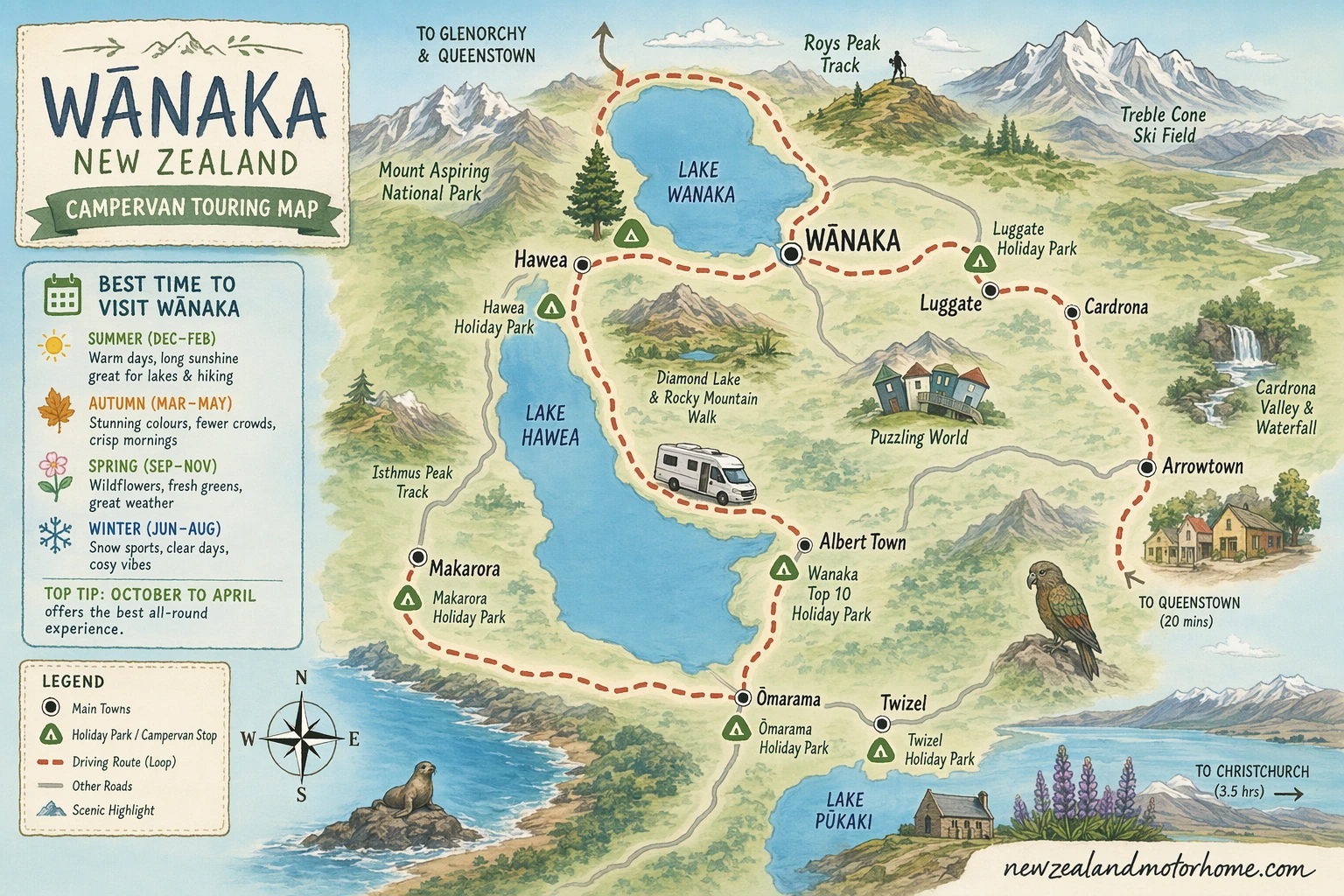
For most hired campervans and motorhomes, March and April are the sweet spot. The hottest school-holiday rush has eased, the lake is still pleasant for sitting outside the van, and autumn colours around Wānaka, Albert Town and Cardrona make even a simple overnight stop feel memorable.
You still need to book powered sites ahead if you want a central holiday park, especially around Easter and long weekends, but there is usually more breathing room than in January. Daytime driving is generally more settled than in spring, and you are less likely to deal with snow-management decisions than in winter.
- Best overall months: March and April for balance of weather, daylight and site availability.
- Best for swimming and long evenings: January and February, if you book early and accept crowds.
- Best for snow scenery: July and August, but only with careful alpine-road planning.
- Best for flexible, quieter touring: May and early November, with cooler nights and fewer vans.
Wanaka weather by month for van life
If you are comparing Wanaka weather by month, think in practical van terms: how much shade you will want, how often you will plug into power, and whether you are comfortable driving a larger vehicle in wind, rain or ice. Wānaka sits inland, so nights can be much colder than the West Coast, even when the afternoon feels warm.
Summer, from December to February, brings the longest daylight and warm lake days. It is also when exposed car parks heat up quickly, so choose a site where you can open vents, run the fridge reliably and avoid parking tight against another large motorhome. Autumn, from March to May, is cooler and often more settled, with crisp mornings that make a powered site useful for heating and battery recovery.
Winter, from June to August, is beautiful but more demanding in a campervan. Expect frosty mornings, limited drying time for gear, and possible snow or ice on routes such as the Crown Range and Lindis Pass. Spring, from September to November, can deliver four seasons in one day, so keep wet-weather layers accessible and avoid arriving at an unfamiliar overnight stop after dark.
- Dec-Feb: warmest, busiest, book powered and unpowered sites early.
- Mar-May: cooler nights, autumn colour, easier parking and good touring light.
- Jun-Aug: cold starts, snow-road checks, more need for powered sites.
- Sep-Nov: changeable weather, quieter campgrounds, be wind-aware on open roads.
Crowds, holiday parks and freedom camping by season
Wānaka is compact around the lakefront, so campervan pressure is obvious in peak season. In late December and January, expect central parking to fill early, especially near the waterfront and popular walking tracks. A smaller van is easier to place in town, but even then you may need to park a few streets back and walk in rather than circle the lakefront in a long motorhome.
Holiday parks are the safest option if you want showers, laundry, rubbish disposal, fresh water and a legal overnight close to town. Powered sites are particularly valuable in winter, when batteries work harder and diesel heaters, lights and device charging all add up. Unpowered sites can work well in autumn or spring if your house battery and solar are healthy.
Freedom camping around Wānaka and the wider Queenstown Lakes District is tightly managed. Do not assume a lakeside car park allows overnighting just because another van is there. Use only places where overnight camping is permitted, follow the signs on site, and make sure your vehicle meets the current certified self-contained requirements before relying on freedom camping.
- Peak booking pressure: Christmas-New Year, January, Easter, ski weekends and major event periods.
- Quieter site hunting: May, June outside ski peaks, September and early November.
- Freedom camping: use designated areas only; lakefront day parks are often not overnight spots.
- Town parking: arrive early, check length restrictions, and avoid blocking residential driveways.
Driving conditions into Wanaka: passes, wind and van size
The road into Wānaka is part of the trip, not just a transfer. From Queenstown, the Crown Range is scenic but steep, winding and exposed, with winter ice risk and summer tourist traffic. Many campervan drivers prefer to use it only in clear weather and daylight; if you are in a larger motorhome or not used to alpine roads, the longer route via Cromwell can feel more relaxed.
From the West Coast, SH6 over Haast Pass is spectacular but narrow in places, with rainforest rain, rockfall risk after storms and limited services between settlements. From the north and east, Lindis Pass can be icy in winter and windy at any time. Always check road conditions before leaving, not after you have already committed the van to a high pass.
Plan your fuel, LPG, fresh water and dump-station stops so you are not arriving in Wānaka late, tired and needing everything at once. Wānaka and nearby service towns have campervan facilities, but opening hours and access vary, so check current details through council information, your camping app and your hire-van manual. If you want help matching your route to the season and vehicle size, you can talk to us before you lock in overnight stops.
- Crown Range: steep and exposed; check winter conditions and rental-vehicle guidance.
- Haast Pass: allow extra time after heavy rain and keep the fuel tank comfortable.
- Lindis Pass: watch for ice, snow warnings and strong crosswinds.
- Large motorhomes: take wider turns, use pull-outs, and avoid rushed arrivals after dark.
What is open: activities, supplies and practical stops
Wānaka is a year-round town, but the rhythm changes. Summer has the broadest choice of lake activities, outdoor dining and long walking days. Winter shifts attention towards ski fields and warm indoor breaks, while shoulder seasons suit cycling, short hikes and slow touring without needing to pack every day.
For campervan logistics, do your practical errands before you chase the postcard view. Top up groceries, drinking water and LPG when you have space to park, and use dump stations before you head into more remote areas such as the Haast road or high-country detours. Central supermarket car parks and service areas can be busy, so avoid peak shopping times if you are in a long or high-roof van.
Some walking-track car parks near Wānaka are not designed for overnight camping or for oversized motorhomes sitting all day. Roys Peak, Mount Iron and lake access points can fill early in good weather. If a car park looks tight, do not force the van into soft verges or across marked bays; choose a legal town park and walk, bike or shuttle where available.
- Before leaving town: empty waste, refill fresh water, check LPG and restock food.
- For day walks: start early and park within marked bays only.
- In winter: keep heating fuel, warm bedding and a torch handy for early sunsets.
- In summer: manage fridge load, ventilation and shaded parking where possible.
Suggested timing for different campervan trips
If Wānaka is one stop on a South Island loop, two nights is the minimum that lets you settle the van, walk the lakefront and have a weather buffer. Three nights is better if you want a day walk, a slow morning by the lake and time for practical chores without feeling like you are always packing up.
For first-time visitors asking when to visit Wanaka, choose the season that matches your driving comfort as much as your wish list. Summer rewards early bookings and patience with busy roads. Autumn is the easiest all-rounder. Winter is rewarding for prepared drivers who respect alpine conditions. Spring suits flexible itineraries, because you can chase the better weather day by day.
- One night: only if passing through; choose a pre-booked legal overnight stop.
- Two nights: good for a lakefront wander, Mount Iron and practical van servicing.
- Three nights: ideal for autumn touring or a weather-flexible shoulder-season stay.
- Four plus nights: useful in winter if skiing, or in summer if you want unhurried lake time.
Keep planning
Visiting roys peak wanaka by campervan
Read onVisiting puzzling world wanaka by campervan
Read onHoliday parks wanaka
Read onFarmers markets wanaka
Read onCampervan guide wanaka nz
Read onBest campervan stops wanaka
Read onCommon questions
What is the best month to visit Wanaka in a campervan?
March is often the easiest single month for a campervan trip: warm enough for outdoor time, cooler for sleeping, and less pressured than January. April is close behind, especially if you like autumn colour and do not mind crisp mornings.
Do I need to book a holiday park in Wanaka?
In summer, Easter, school holidays and winter ski weekends, yes, book ahead if you want a powered site or a central location. Outside peak periods you may find more flexibility, but do not rely on turning up late with a large motorhome and expecting space.
Can I freedom camp beside Lake Wanaka?
Only where overnight camping is specifically permitted and only if your vehicle meets the current self-contained requirements. Many lakefront car parks are day-use only, so always read the signs and check the latest local rules before settling in for the night.
Is winter too cold for a motorhome trip to Wanaka?
No, but it takes more planning. Choose powered sites when you can, keep water and heating systems in mind, and check alpine road conditions daily for routes such as the Crown Range, Lindis Pass and Haast Pass.
Is the Crown Range suitable for campervans?
It can be, in clear conditions and daylight, but it is steep, winding and exposed. If you are driving a longer motorhome, travelling in winter, or feeling unsure, the route via Cromwell is often the calmer choice.
How many days should I allow for Wanaka by campervan?
Allow at least two nights if you can. Three nights gives you time for a walk, a lake day, laundry or dump-station chores, and a weather buffer before heading over a pass.
Have a planner shape this for your dates
Send a short outline — your dates, party size, and the kind of trip you want. A planner replies with a vehicle recommendation, a paced route, and the realistic budget.