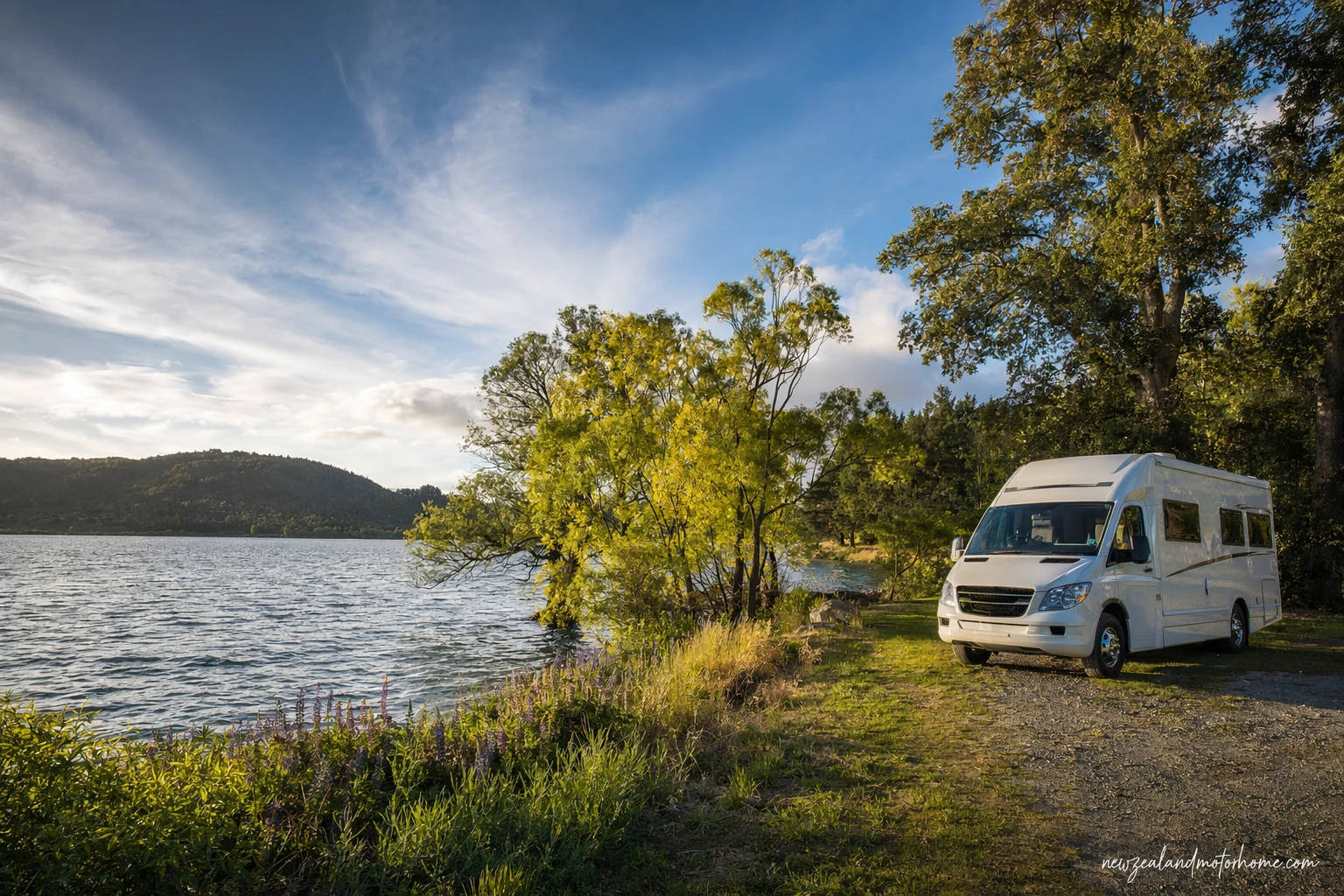
- Best seasons: autumn and spring
- Allow 2–3 nights
- Book powered sites in summer
- Certified self-containment matters
- Watch narrow lake roads
Rotorua is one of those places where your van routine matters as much as the sightseeing: where you can park near the lakefront, whether your towels will dry after a hot pool soak, and how early you need to roll into a holiday park for a powered site. The best time to visit Rotorua NZ depends on whether you want warm lake days, quieter geothermal walks, or a shoulder-season trip with easier campsite availability.
This guide is written for self-drive campervan and motorhome travellers, not day-trippers. You’ll get a practical feel for Rotorua weather by month, seasonal crowds, what stays open, where overnight stops tend to fill, and the road conditions that matter when you’re driving a taller or longer van around the lakes and forest roads.
Quick answer: when to visit Rotorua in a campervan
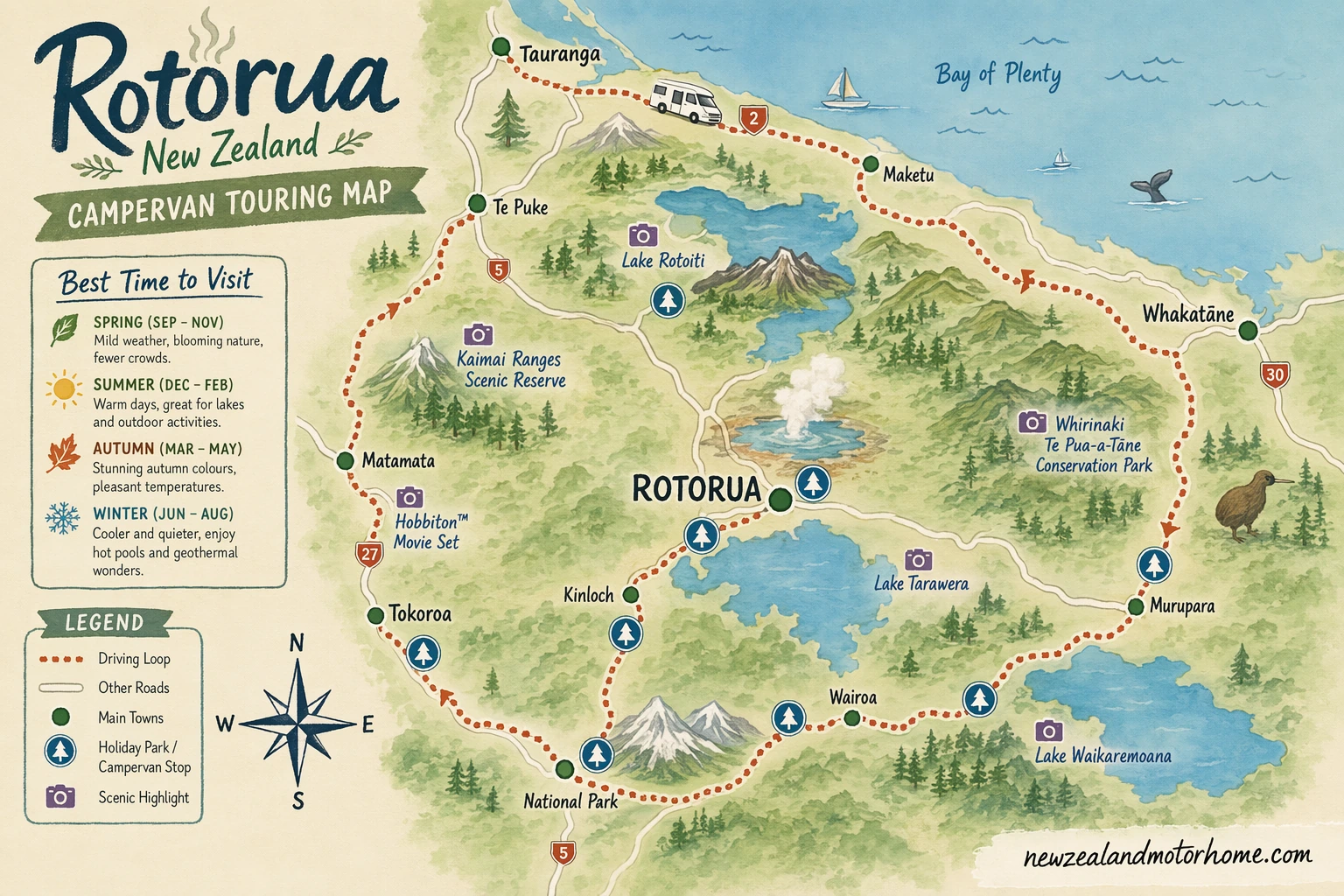
For most campervan travellers, the sweet spot is March to May or September to November. The days are usually mild enough for walking the geothermal parks, riding or strolling in the Redwoods, and sitting outside the van in the evening, but the holiday-park pressure is lower than the peak summer school-holiday weeks.
Summer is excellent if your trip is built around the lakes — Tikitapu/Blue Lake, Tarawera and the Lake Rotorua waterfront all feel properly alive — but book powered sites early and expect central parking to be busier. Winter is quieter and atmospheric, especially with steam rising on cold mornings, though you’ll want a powered site or reliable house battery setup for heating and drying gear.
- Best all-round months: March, April, October and November.
- Warmest lake months: January and February, with the biggest crowds.
- Quietest touring feel: June to August outside event weekends and school holidays.
- Best for campsite choice: shoulder seasons, when powered sites are easier to secure.
Rotorua weather by month, and what it means in the van
Rotorua has a mild inland Bay of Plenty climate, but it can feel damp because of the lakes, geothermal steam and forest shade. Even in settled weather, pack the van so wet towels, muddy shoes and swimwear have somewhere to hang without turning your sleeping area into a laundry.
As a rough campervan planning guide, December to February brings the warmest days and longer evenings. March and April are often settled, with cooler nights that still suit unpowered camping if your battery and bedding are up to it. May to August can be cold overnight, and frosty starts are possible. September to November is changeable but fresh, with spring growth, fewer queues and pleasant driving temperatures.
- December–February: warm, popular, good for lake swims; book holiday parks ahead.
- March–May: mild days, cooler nights, excellent for walking and geothermal stops.
- June–August: cold nights; choose powered sites if you need heating or easy drying.
- September–November: spring showers possible; keep raincoats handy and allow flexible driving days.
If you are asking when to visit Rotorua for the most comfortable van life, choose a month when you can ventilate the camper during the day but still sleep warmly at night. That balance is why autumn and spring suit many motorhome itineraries so well.
Crowds, events and what is open by season
Rotorua’s major geothermal areas, forest walks, lakefront paths and most visitor facilities operate year-round, so winter does not mean the region shuts down. The bigger seasonal difference is how busy the parking areas, hot pools, mountain-bike zones and holiday parks feel once you arrive in a self-contained van.
In summer, drive to popular stops earlier in the day and think about your turning space before committing to small car parks. A long motorhome can feel awkward around busy lake reserves when boat trailers, day visitors and vans are all competing for room. In winter and shoulder months, you’ll usually have more breathing space, though weekends can still be busy around the Redwoods and lakefront.
- Summer school holidays: highest demand for powered sites and lakefront camping areas.
- Long weekends: book ahead, especially if you need power or are travelling in a larger motorhome.
- Winter weekdays: easier parking and quieter geothermal walks.
- Event periods: check Rotorua’s calendar before assuming last-minute campsite availability.
Freedom camping, holiday parks and overnight stops
Rotorua is not a place to assume you can simply pull up anywhere for the night. Freedom camping rules can change by reserve, season and self-containment status, so check current local signage and official council information before you settle in. If your hired campervan is certified self-contained, you may have more options, but that still does not override local restrictions.
Holiday parks are the most straightforward base if you want showers after a hot pool visit, laundry after muddy forest tracks, and a reliable dump station before heading towards Taupō, Tauranga or the Waikato. In summer, powered sites are the first to tighten; in winter, they are also the most comfortable choice because they let you run approved heating and recharge properly.
- Powered sites: best for winter nights, e-bike charging, laundry and longer stays.
- Unpowered sites: fine in mild months if your battery, fridge and water use are well managed.
- Dump stations: plan to empty before leaving Rotorua, especially if you are heading to smaller lakeside stops.
- Fresh water and LPG: easiest to sort in Rotorua city rather than on the quieter lake roads.
If you want help matching your travel month with realistic overnight stops, you can use our talk-to-us planning step and we’ll shape the route around how you actually use the van.
Driving conditions around Rotorua by season
Rotorua is a good motorhome region because the main roads are generally manageable, but the weather and road shape still deserve attention. State Highway approaches from Hamilton, Tauranga and Taupō can be busy, and some lake access roads are narrower and more winding than they look on a map.
In summer, allow extra time around the lakefront, town centre and popular reserves because traffic, pedestrians, bikes and boat trailers all mix together. In winter, watch for mist, wet leaves, low sun and occasional frost on shaded inland roads. Take corners gently in a high-sided campervan, especially if your cupboards are fully loaded and the road surface is damp.
- Large motorhomes: check turning room before entering small scenic pull-offs.
- Height: be careful under trees around reserves and older parking areas.
- Wet weather: use lower gears on descents and avoid rushing lake roads.
- Town parking: arrive early for easier spaces near the lakefront and geothermal city stops.
Keep planning
Wellington to rotorua campervan
Read onVisiting polynesian spa rotorua by campervan
Read onVisiting agrodome rotorua by campervan
Read onTauranga to rotorua campervan
Read onRotorua to whangarei campervan
Read onRotorua to timaru campervan
Read onCommon questions
What is the best month to visit Rotorua NZ in a campervan?
March or April is hard to beat: the weather is usually still mild, lake areas are calmer after summer, and holiday-park sites are easier to find. October and November are also strong choices if you prefer spring conditions and lighter crowds.
Is Rotorua good for campervans in winter?
Yes, Rotorua works well in winter, especially because the geothermal areas feel atmospheric on cold mornings. Choose a powered site if you want reliable heating, battery charging and somewhere easier to dry towels and jackets.
Do I need to book Rotorua campsites in advance?
Book ahead in summer, during school holidays, long weekends and major local events. In shoulder seasons you may have more flexibility, but larger motorhomes and travellers needing powered sites should still plan at least a little ahead.
Can I freedom camp around Rotorua?
Only where local rules allow it, and usually only if your campervan is certified self-contained. Always check current signage and official council guidance before staying overnight, as restrictions can differ between lake reserves, town areas and seasons.
How many days should I allow for Rotorua by motorhome?
Allow two to three nights if you want a relaxed stay with geothermal areas, the Redwoods, a lake stop and time for practical van chores. Add another night if you are using Rotorua as a reset point for laundry, fresh water, LPG or a dump station.
Have a planner shape this for your dates
Send a short outline — your dates, party size, and the kind of trip you want. A planner replies with a vehicle recommendation, a paced route, and the realistic budget.