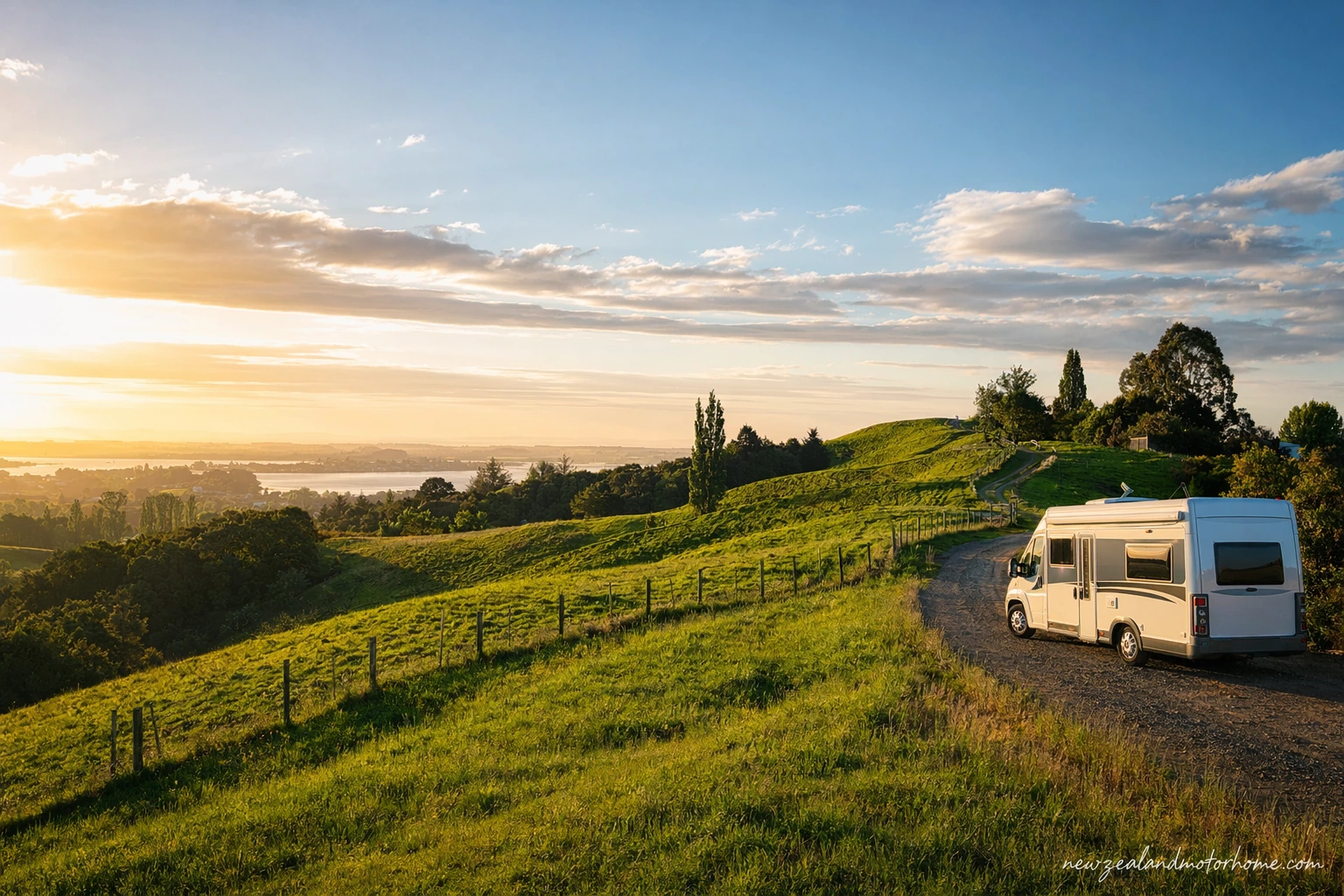
- Best all-round: Mar-Apr and Oct-Nov
- Allow 3-5 days for a Waikato loop
- Book Raglan and powered sites in summer
- Fog and damp ground in winter
- Certified self-contained needed for freedom camping
The Waikato is one of those regions that works well by campervan because the drives are short, the landscapes change quickly, and you can build a relaxed loop around Hamilton, Raglan, Waitomo, Cambridge, Matamata and the river towns without doubling back too much.
The best time to visit Waikato NZ depends on what you want from the trip: warm west-coast evenings at Raglan, misty cave-country mornings around Waitomo, quieter powered sites near the river, or dry road conditions for a larger motorhome. This guide covers Waikato weather by month, seasonal campsite pressure, freedom camping notes, services, and what to expect on the road.
Quick answer: the most comfortable campervan months
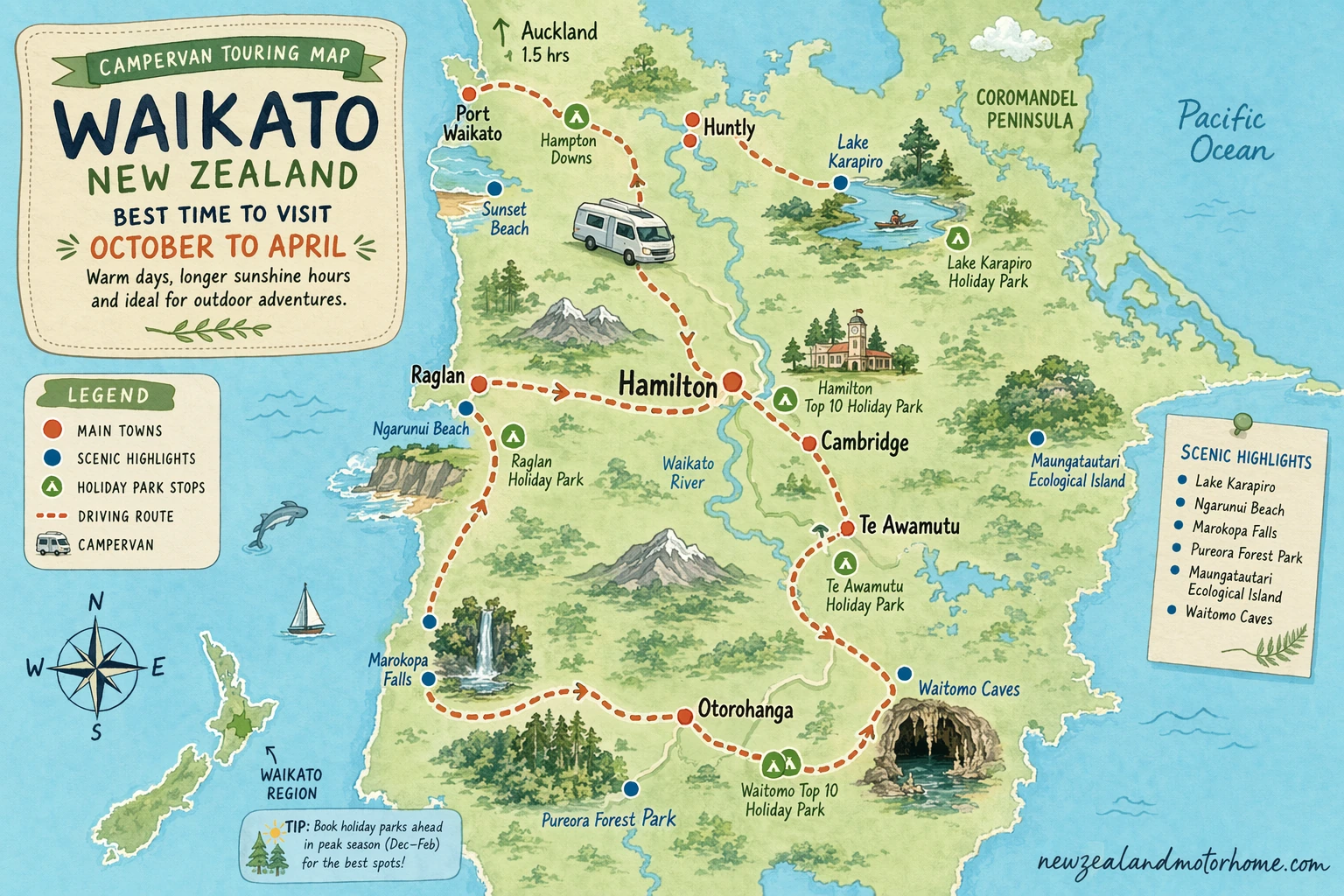
For most self-drive travellers, March to May and September to November are the easiest months to campervan the Waikato. Daylight is still useful, the roads are generally settled, and you usually have more choice between powered and unpowered sites than you do in the summer school holidays.
Summer suits Raglan beaches, Lake Karāpiro stops and longer outdoor evenings, but you need to book ahead in popular holiday parks. Winter can be very workable in a properly set-up motorhome, especially for Waitomo caves, Hamilton gardens and hot-pool stops, though you will want reliable heating and a plan for drying wet gear.
- Best all-round: March, April, October and November.
- Warmest van evenings: January and February, especially near Raglan and Karāpiro.
- Quietest touring feel: May, August and early September, outside event weekends.
- Most care on roads: June to August, when fog, heavy rain and occasional frosts can affect early starts.
Waikato weather by month for van travel
Waikato weather by month is less about extremes and more about moisture, fog and how quickly grassed campsites dry after rain. The region is green for a reason. A sunny Hamilton afternoon can follow a damp Waitomo morning, and the west coast around Raglan can feel windier and saltier than inland Cambridge or Te Awamutu.
In a campervan, think about where you will park overnight, not just the daytime forecast. After wet spells, choose sealed or well-formed sites over soft grass, particularly if your motorhome is long or heavy. In cooler months, powered sites are worth considering for heating, dehumidifying and keeping batteries comfortable.
- December to February: warm, busy and good for swimming, but book Raglan and lake-area holiday parks early.
- March to May: settled autumn touring, often ideal for Waitomo, Cambridge, Hamilton and farm-country drives.
- June to August: cool mornings, fog, more rain and occasional frost inland; allow slower starts.
- September to November: fresh spring conditions, green countryside and increasing demand on weekends as the weather improves.
Campsites, freedom camping and booking pressure
If you are deciding when to visit Waikato, campsite availability matters as much as temperature. The busiest periods are late December through January, long weekends, public holidays, major Hamilton events, and popular weekend windows at Raglan. During those times, book powered sites if you need one, especially if you are travelling in a larger motorhome that cannot squeeze into every small bay.
Freedom camping rules vary between Waikato district areas, Hamilton city, Waitomo, Matamata-Piako and coastal reserves. Do not assume a riverside car park is legal for the night. Use only permitted areas, check current council signage, and make sure your hired van is certified self-contained before relying on freedom camping spots.
- Summer: book ahead for Raglan, Cambridge, Hamilton and lake-adjacent stops.
- Autumn and spring: more flexible, but still reserve weekends if you need power.
- Winter: often easier for availability, but choose sites with firm surfaces and good access after rain.
- Service rhythm: plan dump station, fresh-water and rubbish stops every couple of days rather than leaving them until the cassette or grey tank is full.
Road conditions for campervans and motorhomes
The Waikato is generally straightforward for van touring, with State Highway 1, the Waikato Expressway and good links into Hamilton, Cambridge and Matamata. The slower sections are the ones that make the region interesting: the bends and hills over to Raglan, rural roads around Waitomo, and narrower approaches to some river and reserve parking areas.
In winter and early spring, fog can sit low over farmland and the Waikato River, making early starts less appealing. Give yourself extra following distance on damp rural roads, watch for stock movement and tractors, and avoid pulling a heavy motorhome onto soft roadside shoulders just for a photo.
- Raglan road note: expect winding sections; use slow-vehicle bays when traffic builds behind you.
- Waitomo road note: cave-country roads can be narrow in places, with tour traffic and limited turning space near busy attractions.
- Hamilton parking: use larger signed car parks where possible and avoid tight inner-city bays if your van is long or has an overcab height.
- Wet-weather habit: arrive at overnight stops before dark so you can judge the surface, slope and exit route.
Season-by-season route ideas and practical stops
In summer, a good campervan shape is Hamilton or Cambridge, then Raglan for the coast, with a Waitomo or Matamata leg depending on your interests. In autumn, slow the loop down and add river walks, Karāpiro viewpoints and café stops where you can park the van without squeezing into town-centre spaces. In winter, keep daily drives shorter and make powered holiday parks part of the comfort plan.
For services, Hamilton and the larger towns are the easiest places to top up groceries, LPG, fuel and fresh water. Dump stations are commonly found at holiday parks, some council facilities and selected service areas, but access and fees can change, so confirm before you arrive with full tanks. If you want help matching the season to your van size and route pace, you can talk to us while shaping your Waikato loop.
- Warm-weather overnight style: mix holiday parks with legal freedom camping if your vehicle is certified self-contained.
- Cool-weather overnight style: favour powered sites, hardstand parking and shorter walks from the van.
- Good base towns: Hamilton for services, Cambridge for a gentler stop, Raglan for the coast, Waitomo for caves and rural scenery.
- Van-size tip: if you are in a long motorhome, choose campsites with easy turning and confirm access before heading down narrow rural lanes.
Common questions
What is the best month to campervan around the Waikato?
March and April are often the easiest months: warm enough for comfortable evenings, less crowded than January, and generally good for driving a motorhome between Hamilton, Raglan and Waitomo. October and November are also strong choices if you prefer spring scenery.
Is winter a bad time to visit Waikato in a campervan?
No, but plan for damp ground, foggy mornings and cooler nights. A powered site is useful for heating and battery management, and you should arrive at campsites before dark so you can check the surface and your exit path.
Do I need to book Waikato holiday parks in advance?
Book ahead for summer school holidays, long weekends, Raglan stays and major Hamilton event periods. Outside those times you may have more flexibility, but powered sites for larger motorhomes can still be limited on busy weekends.
Can I freedom camp in the Waikato?
Only in places where local rules allow it, and usually only if your van is certified self-contained. Check the current council signage for the exact district you are in, because Hamilton, Raglan, Waitomo and Matamata-area rules are not all the same.
Are Waikato roads suitable for a large motorhome?
Yes, the main routes are generally suitable, but take care on the winding road to Raglan, rural Waitomo roads and tight town parking areas. If your vehicle is long or high, choose signed larger parks and avoid soft shoulders after rain.
Have a planner shape this for your dates
Send a short outline — your dates, party size, and the kind of trip you want. A planner replies with a vehicle recommendation, a paced route, and the realistic budget.