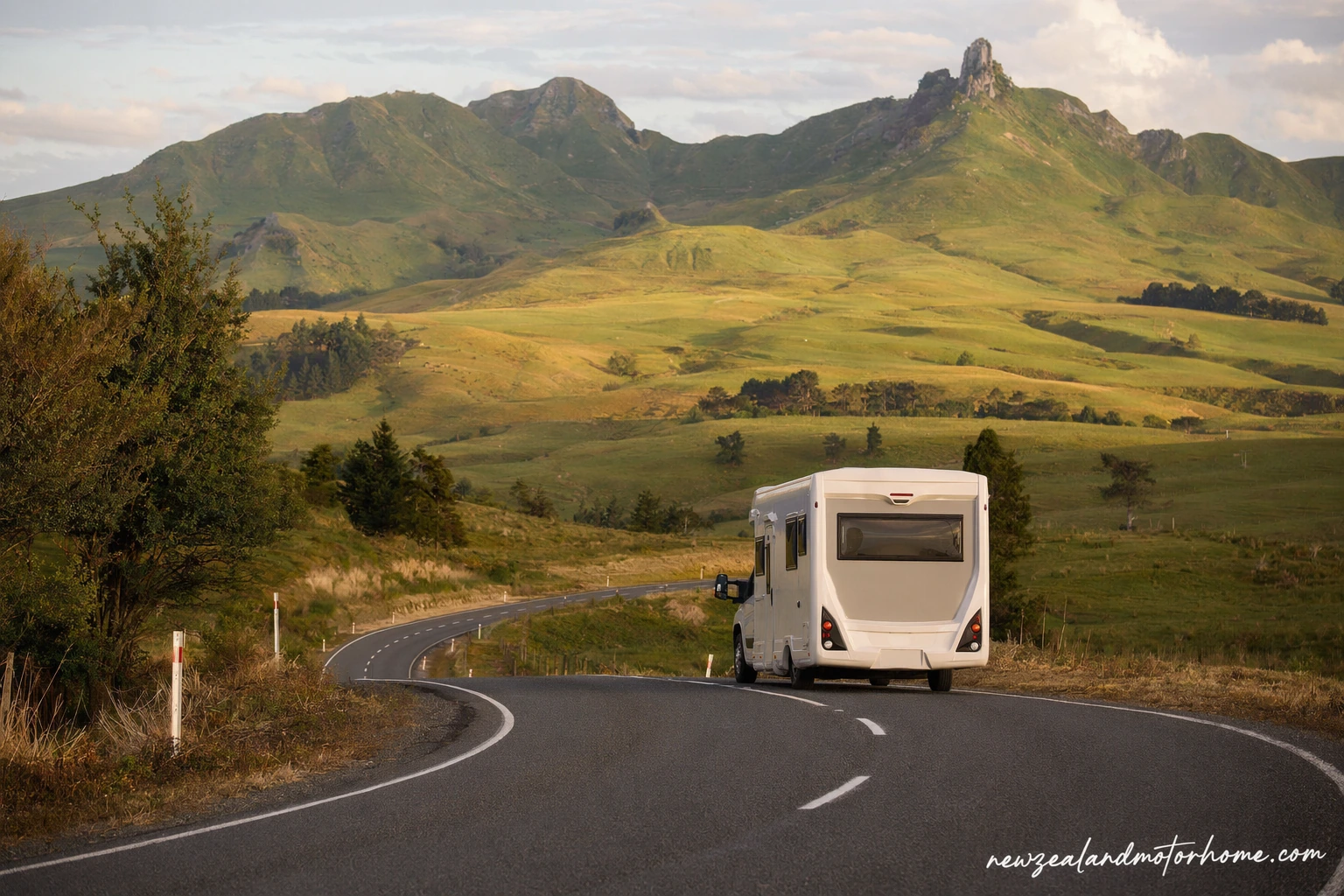
- Best with 3-5 nights
- Powered sites in main towns
- Freedom camping is district-specific
- Winding road to Raglan
- Good services in Hamilton
The Waikato is one of those regions that suits a campervan because the distances are kind, the stops are varied, and you can build a trip that moves from river paths and glowworm caves to surf-town sunsets without spending all day behind the wheel. It is not just a place to pass through on SH1; with a van, you can slow down and make use of the small towns, holiday parks, riverside walks and farm-country roads.
This campervan guide waikato nz is written for travellers driving and sleeping in their own hired motorhome or campervan. You will find route shape, overnight style, road notes, dump station planning, fresh-water and LPG reminders, and the practical bits that matter when your bed, kitchen and luggage are all parked in the same bay.
How many days to allow in a Waikato campervan
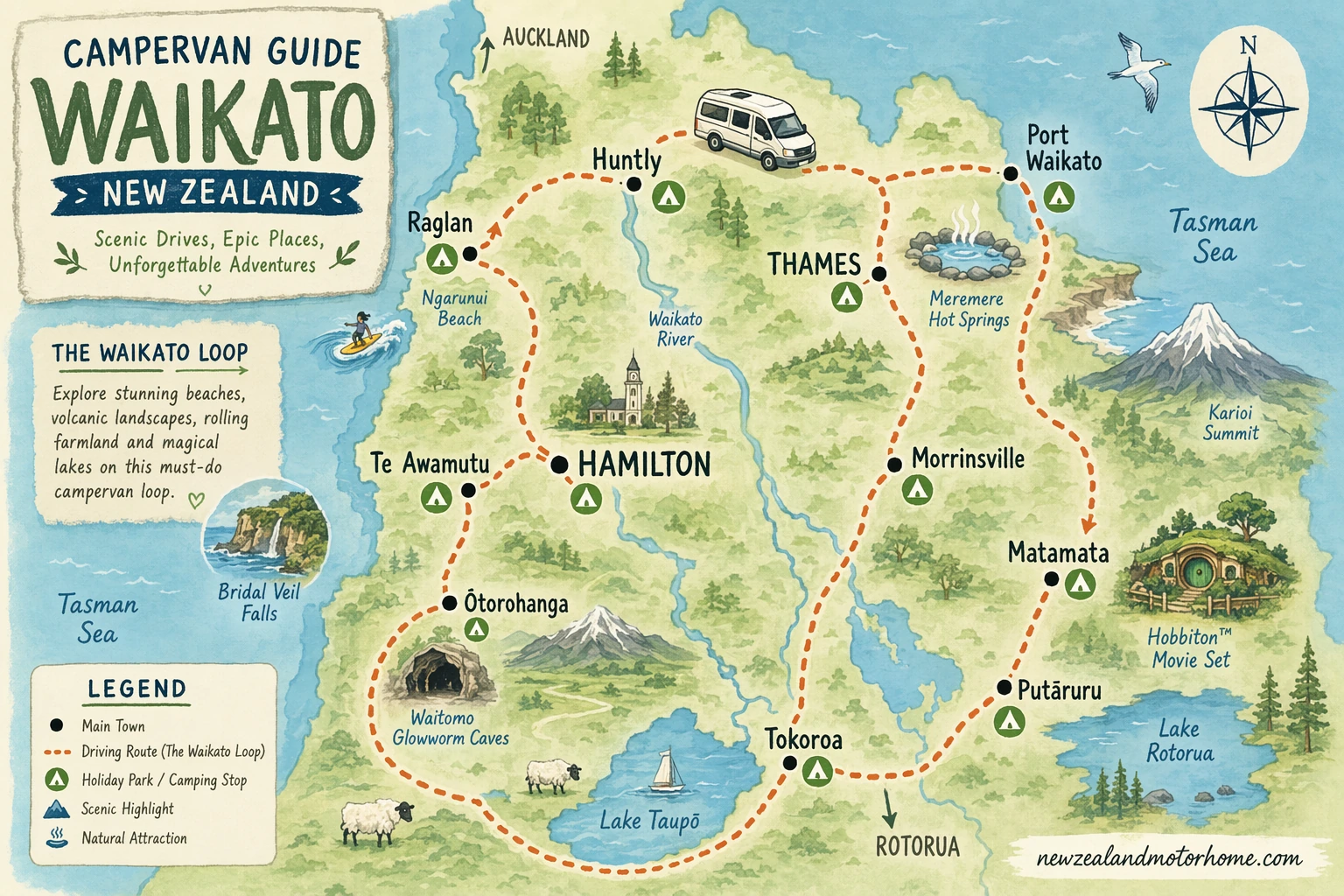
Two nights gives you a useful taste of the Waikato; four to six nights lets the region feel like a proper motorhome Waikato loop rather than a motorway transit. The key is to avoid stretching the day with too many side trips, because some of the best stops here are slow ones: a riverside walk in Hamilton, a cave tour near Waitomo, a long coffee stop in Cambridge, or an evening parked up near Raglan with salt still on the mirrors.
A sensible loop is Hamilton or Cambridge as your first base, Waitomo or Te Awamutu for caves and limestone country, then west to Raglan if you want surf and harbour views. If you are linking Auckland and Rotorua, you can still add Waikato flavour by staying one night around Cambridge or Matamata and one around Waitomo, rather than pushing straight through.
- Quick pass: 1-2 nights for Hamilton, Cambridge or Hobbiton-side countryside.
- Balanced loop: 3-4 nights adding Waitomo and Raglan.
- Unhurried van trip: 5-6 nights with Kāwhia, Te Aroha or Sanctuary Mountain-style nature stops.
- Best driving rhythm: keep most days under 120 kilometres so arrival, parking and camp set-up stay easy.
Best Waikato stops when you are travelling by van
Hamilton is the practical centre of the region, with supermarket options, fuel, LPG swap locations, public toilets and easy access to the Waikato River paths. For daytime parking, look for larger public car parks rather than tight central street bays, especially if you are in a 7-metre motorhome. The Hamilton Gardens area is popular, so arrive earlier in the day and be patient with longer-vehicle parking.
Cambridge is a good small-town stop for a Waikato campervan day because the streets are calmer, the town belt is pleasant for a leg-stretch, and it works well before or after Hobbiton country near Matamata. Around Waitomo, book cave activities ahead and think about where the van will sit while you are underground; dedicated attraction parking is usually more comfortable than trying to tuck a motorhome into a village roadside space.
Raglan changes the mood completely: harbour, surf, black sand and a slower evening pace. In summer weekends, do not assume you will roll in late and find an easy overnight spot. Park the van once, walk the town, and avoid taking a large motorhome down narrow coastal side roads unless you know there is room to turn around.
- Hamilton: river walks, gardens, supplies and an easy reset night.
- Cambridge: relaxed town stop with good access to rural routes.
- Waitomo: caves, limestone landscapes and a strong overnight stop if you have a morning tour.
- Raglan: surf, harbour sunsets and tighter parking demand in peak season.
- Te Aroha or Kāwhia: slower add-ons if you want fewer crowds and shorter driving days.
Where to stay: powered, unpowered and freedom camping
The Waikato has a useful mix of holiday parks, council-managed camping areas, rural stays and limited freedom camping. If it is your first week in a hired campervan, include a powered site early in the route so you can plug in, top up fresh water, empty grey and black water where provided, and get used to the van without rushing. Unpowered sites are fine once you know your battery, fridge and water use.
Freedom camping rules vary between districts, including Hamilton, Waikato District, Waipā, Waitomo and Matamata-Piako. Treat signs as the final word on the day, and only stay where your certified self-contained vehicle is permitted. Some areas allow overnighting only in designated spaces or with time limits; beaches, reserves and town centres can be more restricted than they look on a map.
For a tidy route, use holiday parks or paid campgrounds around Hamilton, Cambridge, Waitomo and Raglan when you want showers, laundry and powered sites. Use freedom camping as a planned option, not a fallback after dark. If you would like help shaping nights around the exact size of your hired van, our plan-your-trip step is the place to ask.
- Powered sites: best for first and last nights, longer stays, cold weather and battery recovery.
- Unpowered sites: good for one or two nights if your house battery and water tanks are coping.
- Freedom camping: check current district rules, signage and self-containment requirements before you settle in.
- Late arrivals: book ahead in Raglan, Waitomo and school holiday periods.
Dump stations, fresh water, LPG and food planning
Do not leave your grey-water and toilet cassette planning until the red light comes on. The bigger Waikato towns generally make van life easier: Hamilton, Cambridge, Te Awamutu, Matamata and Raglan are the kinds of places to check for public dump stations, holiday park facilities, fresh-water fills, fuel and LPG swaps. Availability can change, so confirm on a current council, campground or trusted camping app before you commit to an overnight away from services.
Fresh-water access is not the same as a dump station, and not every tap is drinking water. Use marked potable water points only, keep your own hose handy, and avoid blocking the service bay while you reorganise the whole van. If you are staying at a holiday park, ask at check-in where to fill, dump and recycle before you drive into the site lanes.
For food, Hamilton is the easiest full restock, while Cambridge, Te Awamutu, Matamata and Raglan cover normal grocery needs. If your things to do Waikato campervan list includes Waitomo, Kāwhia or quieter rural roads, arrive with enough water, fuel and simple meals so you are not forced into a long backtrack at dinner time.
- Before Raglan or Waitomo: arrive with water topped up and waste tanks under control.
- Before freedom camping: empty toilet cassette and grey water at an approved dump point.
- LPG: check whether your hire van uses bottle swap or refill and plan around larger towns.
- Rubbish: carry it out until you find proper bins or campground facilities.
Road notes for motorhomes in the Waikato
The Waikato Expressway has made north-south driving smoother, but your best campervan memories are usually off the fast lanes. SH1 is efficient for linking Auckland, Hamilton, Cambridge and Taupō, while SH3 takes you towards Te Awamutu and Waitomo. SH23 to Raglan is sealed and popular, but it is winding in places; give yourself time, use pull-outs when safe, and expect local traffic behind you on surf weekends.
Rural Waikato roads can be narrow with soft shoulders, stock movements, milk tankers and farm entrances. A high-roof motorhome is fine on the main routes, but watch overhanging trees on minor roads and do not trust every scenic shortcut if you are driving a long vehicle. Gravel roads near coastal viewpoints and farm-country lookouts can be slow, dusty and awkward to turn around on.
If you are heading to Bridal Veil Falls, Waitomo side roads, Sanctuary Mountain, or west-coast viewpoints near Raglan and Kāwhia, check the final approach before you commit. Some car parks suit campervans, some are better early in the day, and some are uncomfortable for larger motorhomes once full. In wet weather, avoid grass parking unless it is clearly intended for vehicles; a heavy van sinks faster than you think.
- Main sealed routes: SH1, SH3, SH23, SH26 and SH39 are the usual van-friendly connectors.
- Raglan approach: allow more time than the distance suggests.
- Large motorhomes: be cautious with tight coastal side roads and unsigned gravel.
- Bridge and tree clearance: check height signs and keep left on narrow rural bends.
Common questions
Is the Waikato good for a first campervan trip in New Zealand?
Yes. The driving distances are manageable, towns are frequent, and you can mix powered holiday park nights with quieter unpowered or designated freedom camping stops. It is a forgiving region for learning your van systems before heading into more remote country.
Can I freedom camp in the Waikato in a hired campervan?
Only where local rules and signs allow it, and your vehicle must meet current certified self-contained requirements. Rules differ between districts, so check the exact location rather than assuming one Waikato-wide policy.
Which Waikato roads need extra care in a motorhome?
SH23 to Raglan is sealed but winding, and some coastal or rural side roads can be narrow with limited turning space. Take extra care on gravel approaches, wet grass parking areas, and any road where your navigation app sends you onto a shortcut.
Where should I base the van for Waitomo caves?
Staying near Waitomo or Te Awamutu works well if you have an early cave tour. Book a proper campground or holiday park in peak periods, and check parking arrangements for your activity before driving a long motorhome into a small village area.
How many nights do I need for Hamilton, Waitomo and Raglan?
Three nights is a comfortable minimum: one around Hamilton or Cambridge, one near Waitomo, and one at Raglan. Add a fourth night if you want shorter drives, surf time, laundry, or a powered-site reset.
Have a planner shape this for your dates
Send a short outline — your dates, party size, and the kind of trip you want. A planner replies with a vehicle recommendation, a paced route, and the realistic budget.