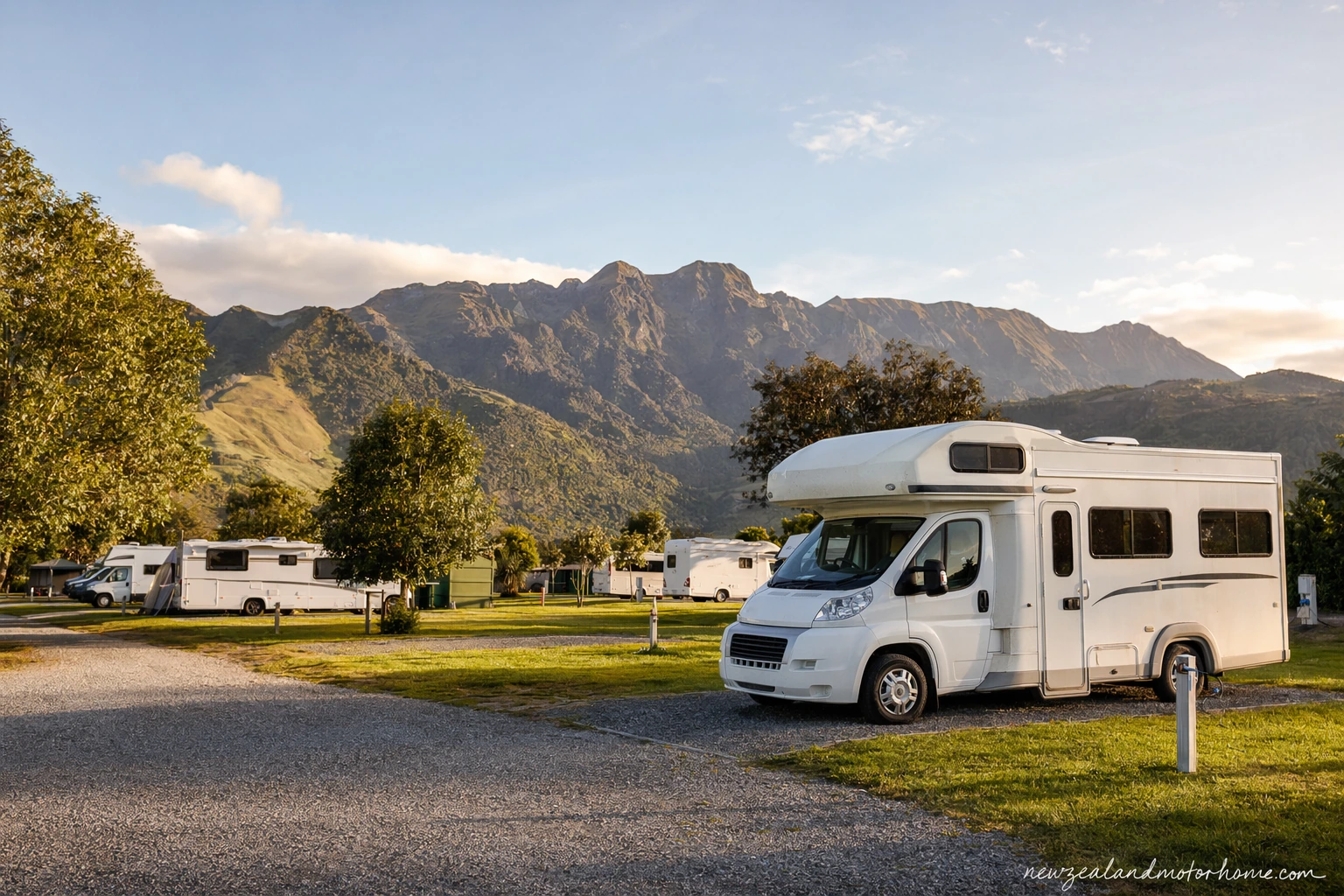
- Best season: spring to autumn, winter quieter
- Allow 2-6 nights for a useful Waikato loop
- Powered and unpowered sites available
- Check self-containment rules before freedom camping
- Watch winding roads to Raglan and Waitomo
The Waikato is an easy region to underestimate from a campervan windscreen. It looks like rolling dairy country and tidy river towns at first, then suddenly you are choosing between a black-sand surf night at Raglan, glowworm country near Waitomo, a lake-edge stop by Taupō, or a quiet powered site close to Cambridge and the Waikato River trails.
This guide is for self-drive travellers sleeping in their own hired van. We are looking at how holiday parks Waikato-wide actually work for a motorhome trip: where the campsites Waikato travellers use are clustered, when to choose powered or unpowered sites, how freedom camping rules vary between councils, and what each overnight base unlocks the next morning.
How Waikato holiday parks are spread out
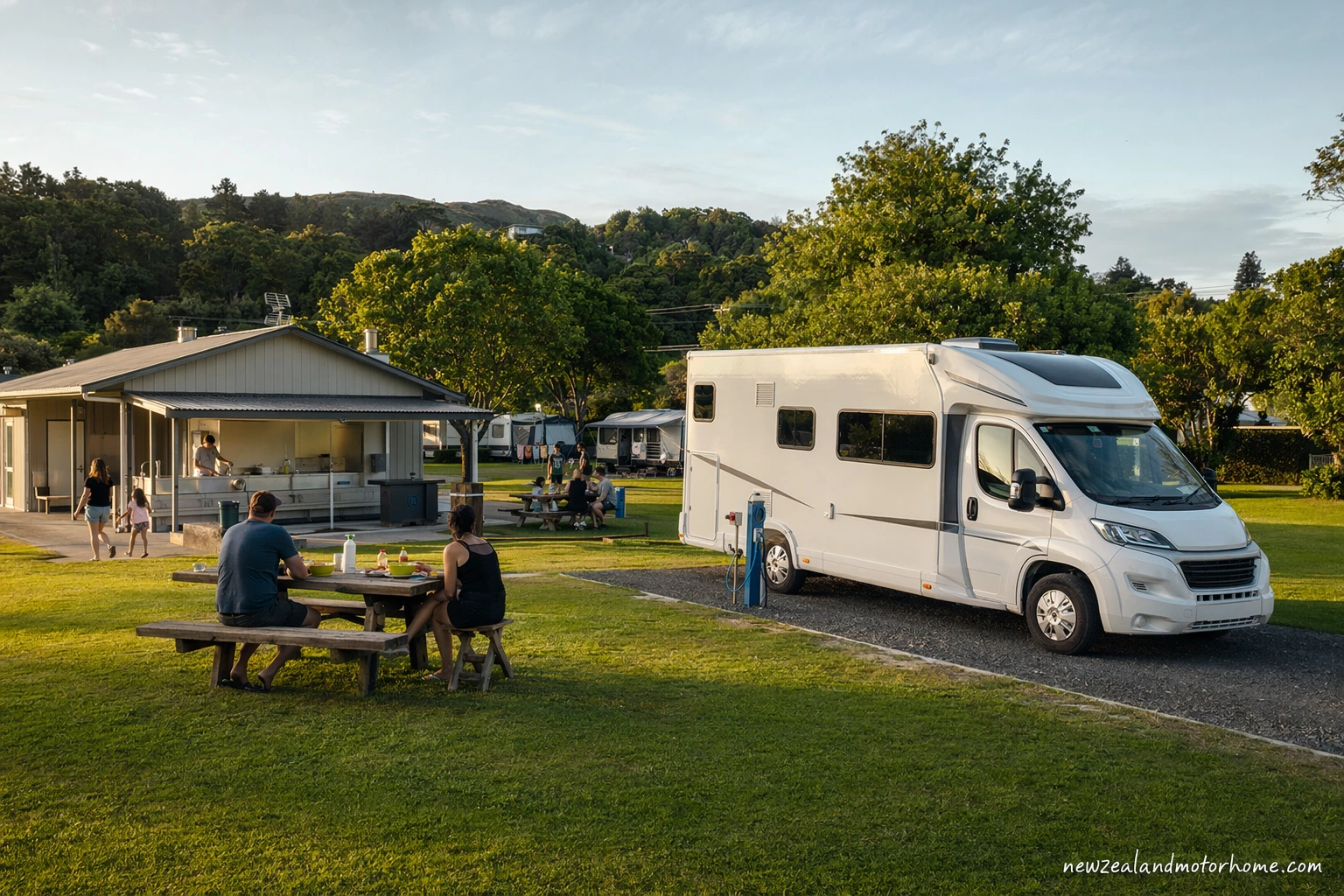
Waikato campgrounds are not all gathered in one neat line. They sit around the main touring pockets: Raglan on the west coast, Hamilton and Cambridge in the centre, Waitomo and Ōtorohanga to the south-west, Matamata and Te Aroha near the Kaimai Range, and Taupō at the southern end of the wider region. That spread is useful in a campervan because you can keep daily driving short instead of using one base for everything.
For most motorhome itineraries, think in bases rather than a single “top 10 holiday park Waikato” ranking. A beach park near Raglan suits surf, harbour walks and a slower start. A Cambridge or Hamilton-area park makes practical sense for laundry, supermarket restocking, LPG swaps and easy river access. A Waitomo base is better if you want an early cave tour without driving rural roads in the dark.
- Raglan: good for coastal nights, black-sand beaches and a relaxed unpowered-site feel if you are not relying on a heater or microwave.
- Hamilton/Cambridge: central for services, dump stations, fresh-water fills and short hops to gardens, river trails and Karapiro.
- Waitomo/Ōtorohanga: handy for glowworm caves, limestone country and quieter rural overnight stops.
- Matamata/Te Aroha: useful between Rotorua, Tauranga and Hamilton, with Kaimai road notes to consider.
- Taupō: busier in summer but strong for lake access, dump stations and onward touring to Ruapehu or Rotorua.
Powered and unpowered sites: choosing the right night
Powered sites Waikato travellers book tend to be most valuable after wet driving days, during winter, or when you need to recharge the house battery properly. If you are using a hired motorhome with electric heating, induction cooking, a fridge running hard, or laptops and cameras to top up, a powered site can reset the van and make the next freedom-camping-style night easier.
Unpowered sites can be lovely in this region, especially near Raglan, lakeside pockets, and more open rural parks where you are using the van’s own solar, gas and water systems. Just be realistic about shade, rain and battery draw. Waikato weather can swing from humid afternoons to cool misty mornings, and a van parked under trees will not recover solar as quickly as one in an open bay.
- Book powered for: winter nights, laundry days, full battery recovery, appliance-heavy vans and longer stays.
- Choose unpowered for: self-contained vans with good battery capacity, short overnight stops, and low-demand summer travel.
- Ask before parking: whether large motorhomes need to reverse into grass sites, whether levelling blocks are useful, and if awnings are allowed on tighter pitches.
- Check height: some older campgrounds Waikato-wide have trees, narrow internal lanes or low branches near amenities blocks.
Freedom camping rules around the Waikato
Freedom camping in the Waikato is not one blanket rule. Different councils manage different places, and signs on the ground matter. In general, expect tighter controls around popular lakefronts, surf spots, reserves, boat ramps and town centres, with overnight stays limited to marked areas and often only for vehicles with current self-containment certification.
A holiday park night is the simpler option when you need showers, laundry, a dump station or certainty after a long drive. It also helps reduce pressure on small communities where informal overnight parking has caused problems. If you do use a legal freedom camping area between holiday park stays, arrive in daylight, keep your van within marked bays, and never drain grey water onto the ground.
- Carry proof: keep your self-containment certification visible and current for your hired campervan.
- Read every sign: time limits, vehicle type rules and no-camping areas can change street by street.
- Use facilities: dump black and grey water only at approved dump stations, not public toilets or drains.
- Plan a backup: have a nearby holiday park or campground in mind if a legal spot is full or unsuitable for your van length.
Driving between Waikato campervan bases
The main Waikato highways are straightforward in a motorhome, but the side trips deserve respect. SH1 and the Waikato Expressway make north-south travel easy around Hamilton and Cambridge. The road to Raglan on SH23 is sealed but winding, with sections where a longer van needs patience and wider cornering. Rural roads near Waitomo can be narrow, and the Kaimai approaches toward Tauranga include steeper grades where engine braking matters.
Do not plan the region like a car trip. A 7-metre motorhome takes longer through small towns, over railway crossings, into supermarket car parks and around tight holiday park lanes. If you are collecting a fresh-water fill, LPG bottle swap or groceries, allow extra time for parking the van somewhere easy rather than squeezing into the first tight bay you see.
- Raglan to Hamilton: allow time for bends and slower traffic; avoid rushing back after sunset in wet weather.
- Hamilton to Waitomo: a manageable drive, but rural side roads can be darker and narrower than the highway.
- Cambridge to Taupō: mostly direct, with plenty of reason to stop before arriving tired at a busy park.
- Matamata to Te Aroha/Tauranga: watch weather over the Kaimai Range and use lower gears on descents.
- Town parking: look for edge-of-centre spaces, supermarket outer bays, or signed long-vehicle parking where available.
Dump stations, water fills and practical van chores
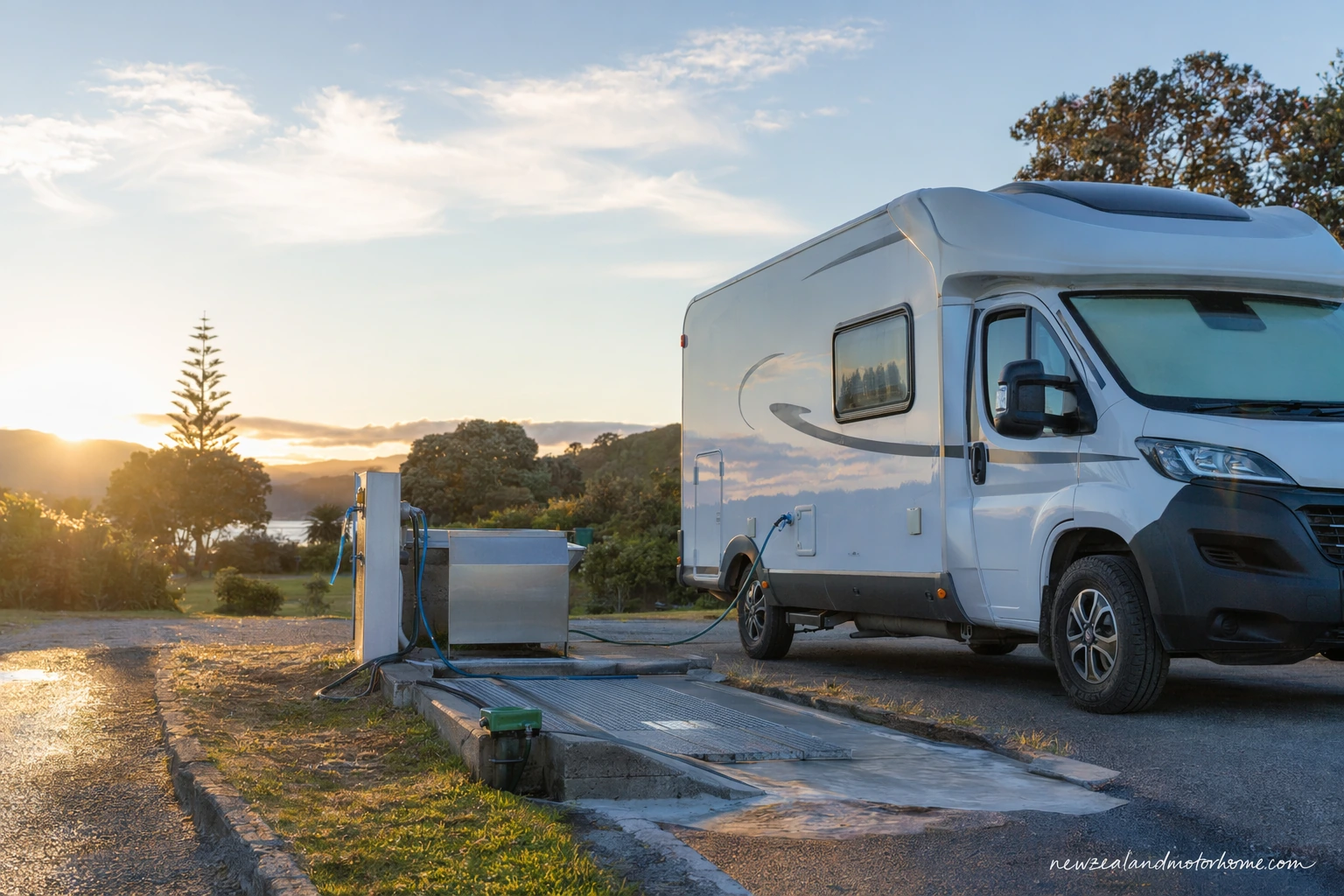
One of the best reasons to mix holiday parks with simpler campsites Waikato has on offer is the chance to reset the van. Many holiday parks provide fresh-water taps, grey-water disposal or access to nearby public dump stations, but facilities vary, so confirm what is available before you arrive with full tanks. Some towns also have public dump stations near service areas or reserves, though access and turning space can differ for larger motorhomes.
Build chores into the route instead of leaving them until warning lights start flashing. Hamilton, Cambridge, Taupō and other larger centres are easier for supermarket restocks, LPG bottle swaps, laundries and vehicle-friendly fuel stops. Smaller coastal or rural bases may be more beautiful, but not always ideal when you need to empty the cassette, refill fresh water and wash damp towels.
- Before a coast night: top up fresh water, check LPG, and empty grey water inland if your next base is basic.
- Before Waitomo: arrive with fuel and water sorted so you are not hunting services after a cave visit.
- Before Taupō weekends: book ahead in peak periods and ask about dump station access for your vehicle size.
- At every park: confirm whether hoses are supplied or if you need your own food-grade hose and fittings.
Matching a Waikato base to your trip style
The right base depends on what you want the van to do overnight. If the campervan is simply a warm bed between big driving days, choose a practical park close to the highway with easy arrival, powered sites and a dump station. If you are slowing down, pick a campground where you can park once, walk to the beach, river or town, and avoid moving the motorhome for a day.
For a first Waikato loop, many travellers do well with two or three nights split across contrasting bases: one coastal, one central, and one southern or lake-side. That gives you the feel of the region without doubling back. If you want help turning those choices into a route with sensible driving days and overnight stops, you can use our plan-your-trip step and tell us your van size, travel month and must-see places.
- Short trip: Hamilton or Cambridge plus Raglan gives services and coast without too much driving.
- Cave-focused trip: stay near Waitomo or Ōtorohanga so you are not arriving late on rural roads.
- Family trip: prioritise powered sites, playground-style facilities, laundry and flat internal roads for bikes or scooters.
- Longer motorhome loop: link Raglan, Cambridge, Waitomo and Taupō with restock days in larger towns.
Common questions
Do I need to book holiday parks in Waikato ahead?
In summer, school holidays, long weekends and around major events, book ahead, especially for powered sites near Raglan, Cambridge, Waitomo and Taupō. Outside peak periods you may have more flexibility, but larger motorhomes should still check availability and site length before arriving late.
Are there many powered sites Waikato campervans can use?
Yes, the main towns and touring areas have powered sites suitable for campervans and motorhomes. Always confirm your vehicle length, whether the site is grass or hardstand, and whether you need a standard NZ caravan power lead supplied with your hire van.
Can I freedom camp instead of using Waikato campgrounds?
Sometimes, but only where local rules allow it and usually only in a currently certified self-contained vehicle. Restrictions vary by council and location, so read signs carefully and use holiday parks when you need certainty, showers, laundry or waste facilities.
Where should I empty grey water and toilet waste in the Waikato?
Use approved dump stations at holiday parks or public facilities in larger towns and service areas. Never empty grey water, toilet cassettes or chemical waste into stormwater drains, public toilets, roadside gutters or onto the ground.
Is Raglan suitable for a large motorhome?
Yes, but take your time on the winding road in and choose parking carefully once you arrive. A longer or taller van may be easier to leave at the holiday park while you walk into town or to the harbour, rather than hunting for a central bay.
How many nights should I allow for Waikato in a campervan?
Two nights gives you a simple taste, usually one central base and one coast or cave stop. Four to six nights is more comfortable if you want Raglan, Waitomo, Cambridge or Hamilton, and Taupō without turning every day into a pack-up-and-drive morning.
Have a planner shape this for your dates
Send a short outline — your dates, party size, and the kind of trip you want. A planner replies with a vehicle recommendation, a paced route, and the realistic budget.