- Best as a 2–3 night loop
- Saturday and Sunday market focus
- Arrive early with longer vans
- Powered sites useful after a big shop
- Self-containment rules apply
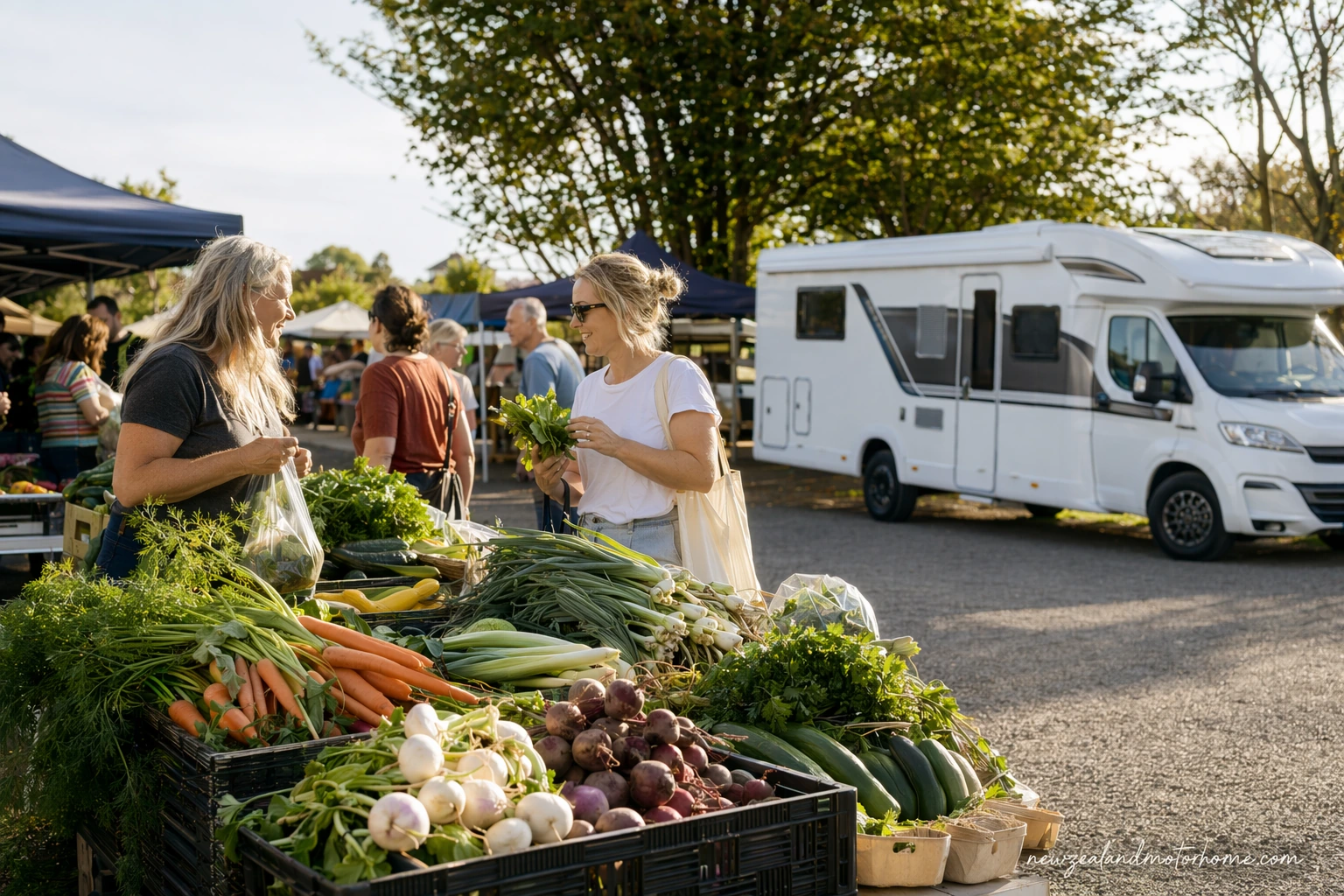
The Waikato is made for a slow self-drive food loop: river flats, dairy country, orchard pockets and small towns close enough that you can shop in the morning, stock the van fridge, then be parked up before dark. The farmers markets Waikato travellers usually build around are friendly, practical stops rather than polished tourist shows.
This guide is written for people travelling and sleeping in a hired campervan or motorhome. You’ll find notes on weekend markets Waikato locals actually use, where to park a longer van, what fresh produce Waikato stalls are known for, and how to link markets with dump stations, LPG, fresh-water fills and sensible overnight stops.
How to shape a Waikato market loop in a campervan
Waikato markets work best as a two or three-night loop rather than a dash from one car park to the next. Hamilton, Cambridge and Tamahere sit close together, so you can keep daily driving short, avoid arriving with a warm fridge, and leave time for a river walk or a lake stop after you’ve done the food shopping.
Market days do change for weather, public holidays and venue events, so check the current market notice before you point the van down the road. As a broad planning pattern, Cambridge is commonly a Saturday morning stop, Hamilton a Sunday morning stop, Tamahere runs on selected monthly Saturdays, and Raglan’s local market is usually a Sunday option.
- Best rhythm: arrive the evening before, overnight legally nearby, then drive to the market early while the car parks are still calm.
- Fridge note: shop for chilled cheese, meat, eggs or milk last, then get the van back into shade or onto power if you’re staying put.
- Van size: a 6–7 metre campervan is manageable in most towns; larger motorhomes should favour edge-of-town parking and walk in.
- Plan help: if you want this stitched into a full route with overnight stops, use the talk to us step before you book campsites.
Hamilton and Cambridge: the easy first food stops
Hamilton is the practical hub for farmers markets Waikato road trips because it has supermarkets, fuel, LPG bottle swaps or fills in the wider city, tyre help and more choice if you need a powered site after a few days off-grid. The Sunday farmers market is the one many campervan travellers aim for: bread, eggs, greens, honey, preserves, coffee and seasonal produce can all go straight into the van pantry.
For parking, avoid nosing a long motorhome into tight inner-city spaces at peak time. Use larger public parking areas where permitted, arrive early, and walk the last few minutes with reusable bags. Do not assume you can overnight in a market car park; Hamilton’s freedom camping rules are specific and enforcement is not the place to test a grey area.
- Hamilton approach: use the Waikato Expressway exits with care; keep left early and allow time for lane changes in a taller van.
- Cambridge feel: Saturday mornings around the town centre can be busy, so larger vans are better parked just off the main retail strip.
- Good pairing: Cambridge market in the morning, Lake Te Koo Utu or the river trails afterwards, then a legal campsite before dark.
- Restock chores: dump stations, fresh water and LPG are easier to sort in Hamilton or Cambridge than in smaller village market stops.
Tamahere and the rural market stops
Tamahere gives you the country-market version of the Waikato: baking tables, preserves, seedlings, flowers, local produce and that useful mix of breakfast now and supplies for later. It is close to Hamilton and Cambridge, so it slots neatly into a Saturday route without adding much driving.
The campervan catch is parking surface. Rural markets may use grass or paddock-style areas, which are fine in dry weather and awkward after rain, especially for heavy rear-wheel-drive motorhomes. If the ground looks soft, choose a firm sealed edge where parking is allowed and walk in rather than leaving wheel ruts or needing a tow.
- Arrival time: early is better for a long van; late morning can mean tighter turning and more pedestrians.
- Ground check: avoid wet grass if your hired van has low clearance, a long rear overhang or road tyres.
- Neighbour respect: keep gateways clear, do not block rural driveways, and fold mirrors in on narrow roadside parking.
- Seasonal buys: spring asparagus, summer berries, eggs, sourdough, honey, seedlings and pickles are common Waikato van-kitchen wins.
Raglan as a west-coast market detour
Raglan is not a big-box food shop; it is a slow Sunday-style stop with local produce, baking, coffee, crafts and beach-town energy. For a food markets Waikato campervan loop, it works best after Hamilton: stock the fridge in town, then head west for market browsing, harbour views and a relaxed overnight.
The drive on SH23 is sealed but winding, with enough hills and bends to make a heavy motorhome feel different from a small van. Let faster traffic pass where safe, use lower gears on descents, and avoid arriving right on market opening if you are nervous about narrow streets and busy pedestrian areas.
- Parking plan: central Raglan streets fill quickly; look for legal larger-vehicle parking away from the tightest village lanes and walk in.
- Overnighting: use a holiday park or council-permitted freedom camping area if your vehicle is certified self-contained and the bylaw allows it.
- Waste and water: sort toilet cassette, grey water and fresh water before or after Raglan rather than assuming the market area has facilities.
- Weather note: west-coast rain and wind can arrive fast, so secure awnings and keep wet market bags out of the bedding area.
Overnight stops, dump stations and keeping produce fresh
The difference between a good market weekend and a cramped one is doing the van chores before the fridge is full. Waikato’s larger towns are the sensible places to handle dump stations, potable-water fills, rubbish, recycling and LPG. Smaller markets are for shopping and wandering, not for trying to empty grey water or refill tanks.
Choose overnight stops based on your power needs. A powered site is useful after buying chilled meat, cheese or dairy, especially in summer. Unpowered sites are fine if your house battery is healthy, the fridge has been pre-cooled, and you are not running extra appliances while parked in the shade.
- Powered sites: best after a big shop, on hot nights, or when you need to recharge devices and the house battery.
- Unpowered sites: good for shorter stays if you have enough battery and water, and you are comfortable managing the cassette toilet.
- Freedom camping: only use permitted areas, follow the local council bylaw, and make sure your self-containment certification is current.
- Food storage: keep leafy greens in cloth or paper, crack a roof vent when parked, and avoid leaving bread or fruit on the sunny dashboard.
Common questions
Which Waikato farmers markets are easiest with a campervan?
Can I sleep overnight in a market car park in the Waikato?
What should I buy first at Waikato food markets when travelling by van?
Are Waikato market roads suitable for a large motorhome?
Do Waikato markets run all year?
Have a planner shape this for your dates
Send a short outline — your dates, party size, and the kind of trip you want. A planner replies with a vehicle recommendation, a paced route, and the realistic budget.