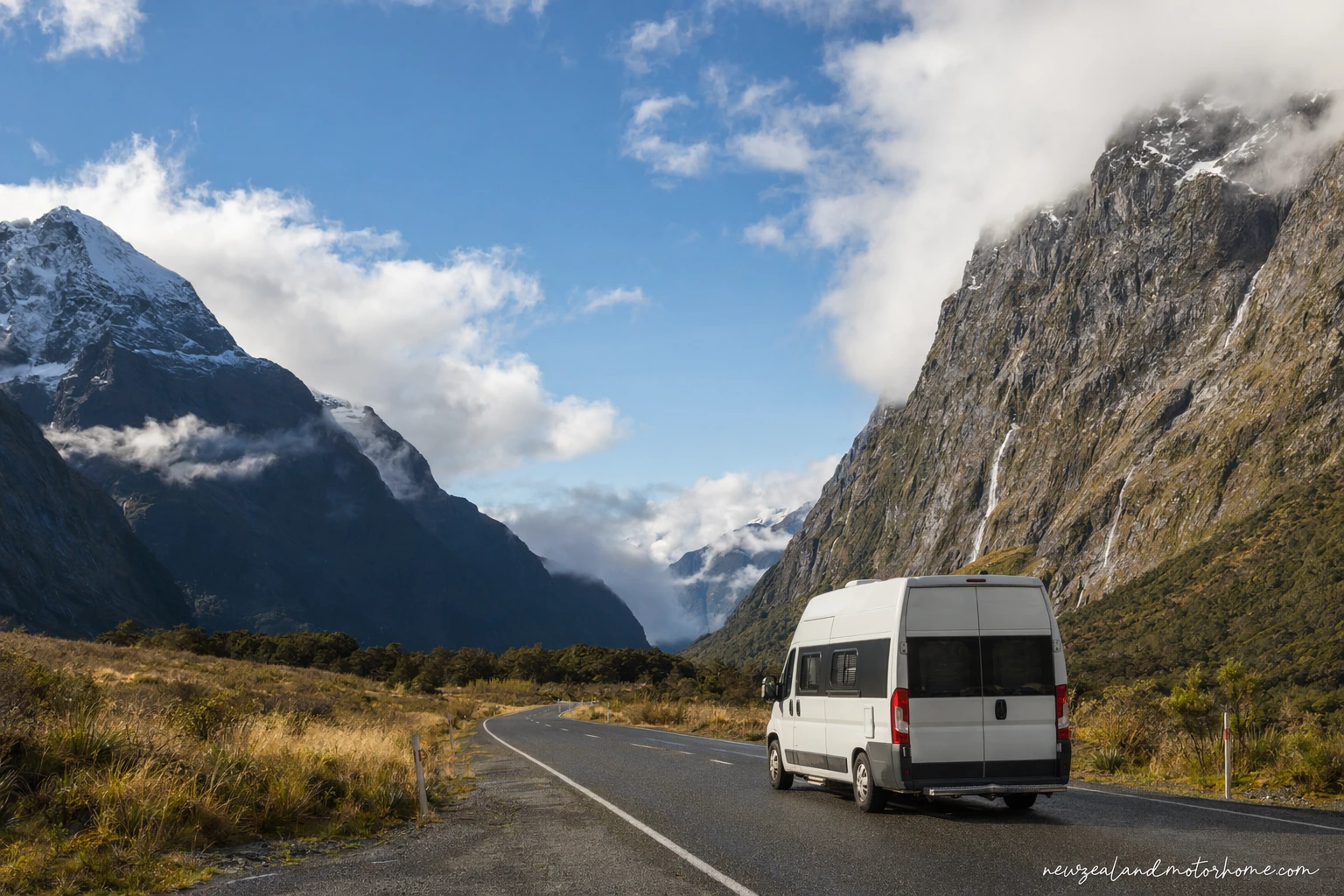
- Best base: Te Anau
- Road type: sealed alpine SH94
- Overnight: designated sites only
- Services: fill and dump before driving
- Van note: allow extra parking time
Milford Road is one of those New Zealand drives that asks you to slow down before you even reach the mountains. For a self-drive campervan traveller, it is not just a road to Milford Sound/Piopiotahi — it is a full day of lake edges, beech forest, alpine pull-ins, weather changes and practical van decisions.
This milford road campervan guide covers the things that matter when your vehicle is also your bed: where to park the van, where you can legally stay overnight, what to sort in Te Anau before you go, and how to drive SH94 without rushing the Homer Tunnel section. It is written for hired campervans and motorhomes, including longer vehicles that need a little more room at scenic stops.
Getting to Milford Road in a campervan
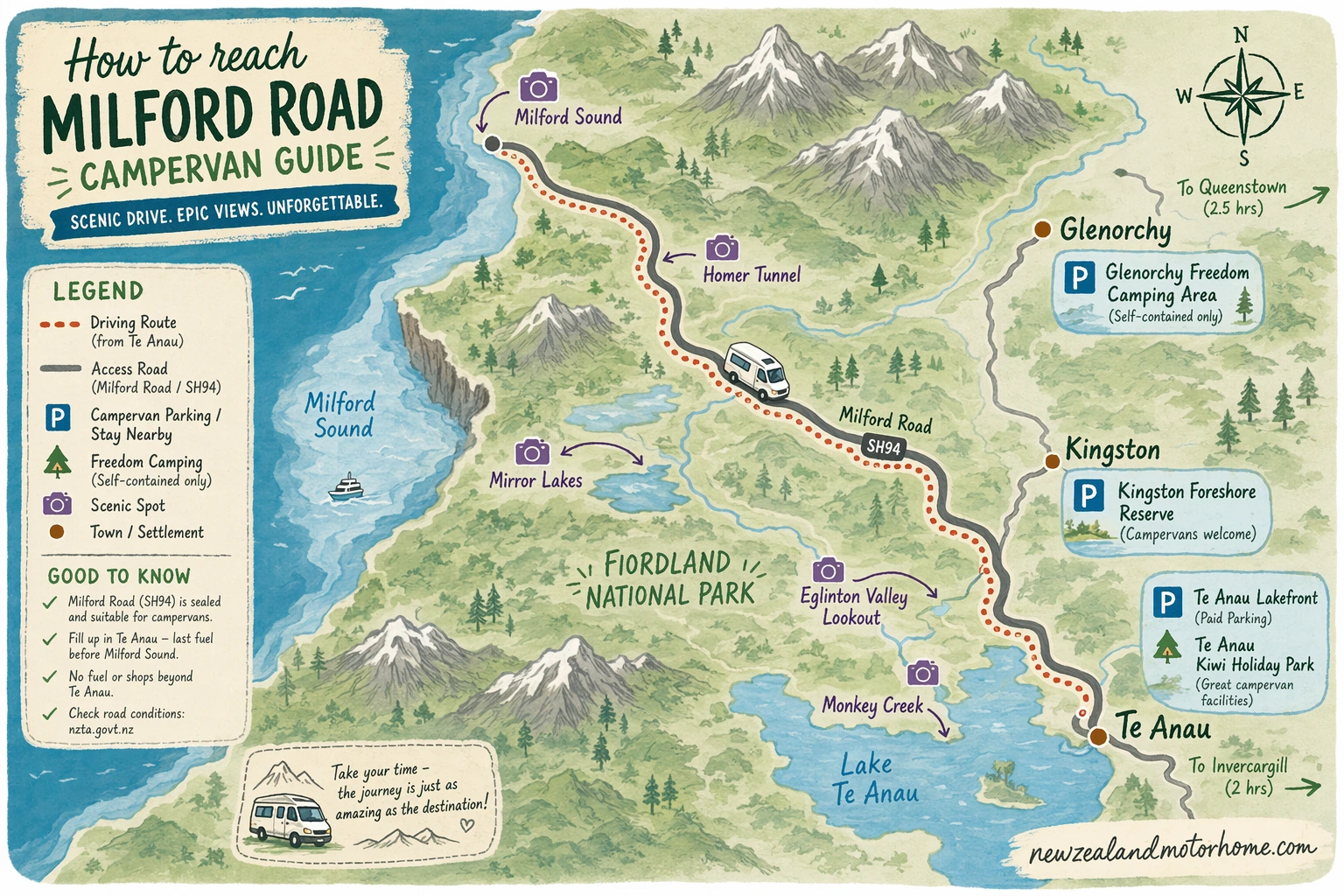
Milford Road is State Highway 94, running from Te Anau through Fiordland National Park to Milford Sound/Piopiotahi. Te Anau is the practical base for most campervan Milford Road trips because it is the last proper place to sort fuel, groceries, fresh water, LPG and waste before the national park drive.
From Te Anau, allow far more than the bare driving time. The road is roughly 120 kilometres each way, but a motorhome Milford Road day usually becomes longer once you include photo stops, short walks, weather delays and cruise check-in times at Milford Sound. If you are booked onto an early activity, staying the previous night closer to the road can remove a lot of dawn driving.
- Last major services: Te Anau for fuel, supermarket supplies, LPG, potable water and dump stations.
- Mobile coverage: patchy to non-existent for much of the road, so download maps and booking details first.
- Driving style: use low gears on long descents, let faster vehicles pass at safe pull-outs, and keep an eye on mirrors in narrow valley sections.
- Weather: rain, fog, ice and sudden snow are all possible in Fiordland, especially around the Homer Tunnel and higher road sections.
Road notes for larger vans and motorhomes
SH94 is sealed and commonly driven by campervans, but it is still an alpine road rather than an easy town-to-town highway. Longer motorhomes should take extra care at tight pull-ins, bridge approaches, the Homer Tunnel area and any place where people are stepping out for photos.
In winter and during cold snaps, snow chains may be required and the road can close due to avalanche risk or ice. Check the latest road conditions before leaving Te Anau, and check your hire agreement so you know what is expected if chains are needed. Do not assume you can simply push on because your van feels heavy and stable.
The Homer Tunnel section is steep, narrow in feel, and often wet. Keep headlights on, leave space, avoid stopping where it is not permitted, and watch for kea near car parks. They are curious birds and can be surprisingly interested in rubber seals, wiper blades and loose items around the van.
Where to park the van on Milford Road
Scenic stops along Milford Road vary from wide, easy car parks to smaller gravel pull-outs where a 7-metre motorhome can quickly feel awkward. If a pull-in looks tight or already crowded, keep going to the next safe stop rather than forcing the van half off the seal.
Popular stopping areas include the Eglinton Valley, Mirror Lakes, Lake Gunn, The Divide, Monkey Creek and the Homer Tunnel viewpoints when conditions allow. At Milford Sound/Piopiotahi itself, use the designated visitor parking areas and allow walking time from the van to the terminal or foreshore. Do not park on road edges, bus bays, boat ramps or signed no-stopping areas.
- Arrive early: car parks can fill when cruise departures cluster in the middle of the day.
- Reverse with a spotter: useful at gravel pull-outs where rental vans and tour traffic mix.
- Keep doors tight: Fiordland wind gusts can catch high van doors suddenly.
- Respect signs: avalanche zones, no-stopping areas and wildlife protection signs are there for a reason.
Camping near Milford Road and overnight options
Camping near Milford Road needs planning because freedom camping is tightly controlled in Fiordland National Park. In general, do not treat lay-bys, scenic car parks or trailhead parking as overnight spots, even if your van is certified self-contained. Use designated campsites or commercial holiday park-style sites instead.
For a simple base with powered sites, showers, laundry and dump station access, Te Anau is the easiest choice. It works well if you want to empty grey water, top up fresh water and then drive the road as a long day trip. Te Anau Downs can also suit travellers wanting to be slightly closer to the national park section, depending on what sites are operating for the season.
Along Milford Road, DOC-style campsites such as Henry Creek, Lake Gunn and Cascade Creek are the classic low-key options for self-contained campervans. Expect unpowered sites, basic toilets, no dump station and no powered hook-up; always check current opening, booking and vehicle access rules before you rely on them. At Milford Sound/Piopiotahi, overnight campervan options are very limited, so book ahead if you plan to sleep there rather than drive back out.
Water, waste, LPG and supplies before you go
Treat Te Anau as your reset point before driving a campervan Milford Road route. Fill the fresh-water tank, empty the toilet cassette and grey water at an approved dump station, check LPG levels, and top up food before you leave town. Once you are on the road, services are minimal and the environment is too sensitive for shortcuts.
DOC campsites and scenic stops are not places to drain grey water, rinse cassettes, wash dishes in streams or leave food scraps. Sandflies are part of the Fiordland experience, but poor waste habits make campsites unpleasant for everyone and can attract wildlife around vans.
- Fresh water: fill in Te Anau rather than assuming you will find potable water on the road.
- Dump stations: use approved facilities before and after the Milford Road drive.
- LPG: check your bottle level if you are planning unpowered nights.
- Rubbish: carry it back out; bins are limited and may not suit campervan trip waste.
How Milford Road fits into a wider motorhome route
Milford Road is best treated as a Fiordland chapter, not a quick detour to squeeze between long driving days. Many motorhome travellers spend a night or two in Te Anau, drive Milford Road with an overnight at a designated campsite or a very early start, then return to Te Anau before continuing towards Queenstown, the Catlins or Central Otago.
If your hire van is larger, build in margin. A relaxed plan gives you time to wait out poor visibility, stop for short walks, and avoid driving back through the Eglinton and Homer Tunnel sections tired after a full day. If you would like help fitting Milford Road into a realistic self-drive loop, you can use our plan-your-trip step and we will shape it around van size, seasons and overnight stops.
Common questions
Can I freedom camp on Milford Road in a certified self-contained campervan?
Do not assume you can freedom camp on Milford Road just because your van is certified self-contained. Fiordland National Park has strict overnight rules, and roadside pull-outs and scenic car parks are generally not legal campsites. Use designated DOC campsites or booked campervan sites instead.
Is Milford Road suitable for a large motorhome?
Yes, many larger motorhomes drive Milford Road, but it requires patient alpine-road driving. Watch your speed on descents, use proper pull-outs, and take care around the Homer Tunnel, narrow car parks and busy photo stops. In winter, check road conditions and your hire company’s chain requirements before leaving Te Anau.
Where should I stay before driving to Milford Sound/Piopiotahi?
Te Anau is the most practical overnight base because it has powered sites, dump stations, water, fuel, groceries and LPG. If you prefer a more outdoorsy night, check designated campsites along Milford Road, but expect unpowered facilities and limited services.
Are there dump stations or fresh-water fills at Milford Sound?
Do not rely on Milford Sound/Piopiotahi for campervan servicing. Empty grey water and the toilet cassette, and fill fresh water in Te Anau before you drive in. Treat the Milford Road as a low-service national park road.
How much time should I allow for a campervan Milford Road day?
Allow a full day from Te Anau, especially if you are joining a cruise or want to stop for short walks. The distance is not huge, but the road is scenic, weather can slow travel, and parking a campervan takes more time than pulling in with a small car.
Have a planner shape this for your dates
Send a short outline — your dates, party size, and the kind of trip you want. A planner replies with a vehicle recommendation, a paced route, and the realistic budget.