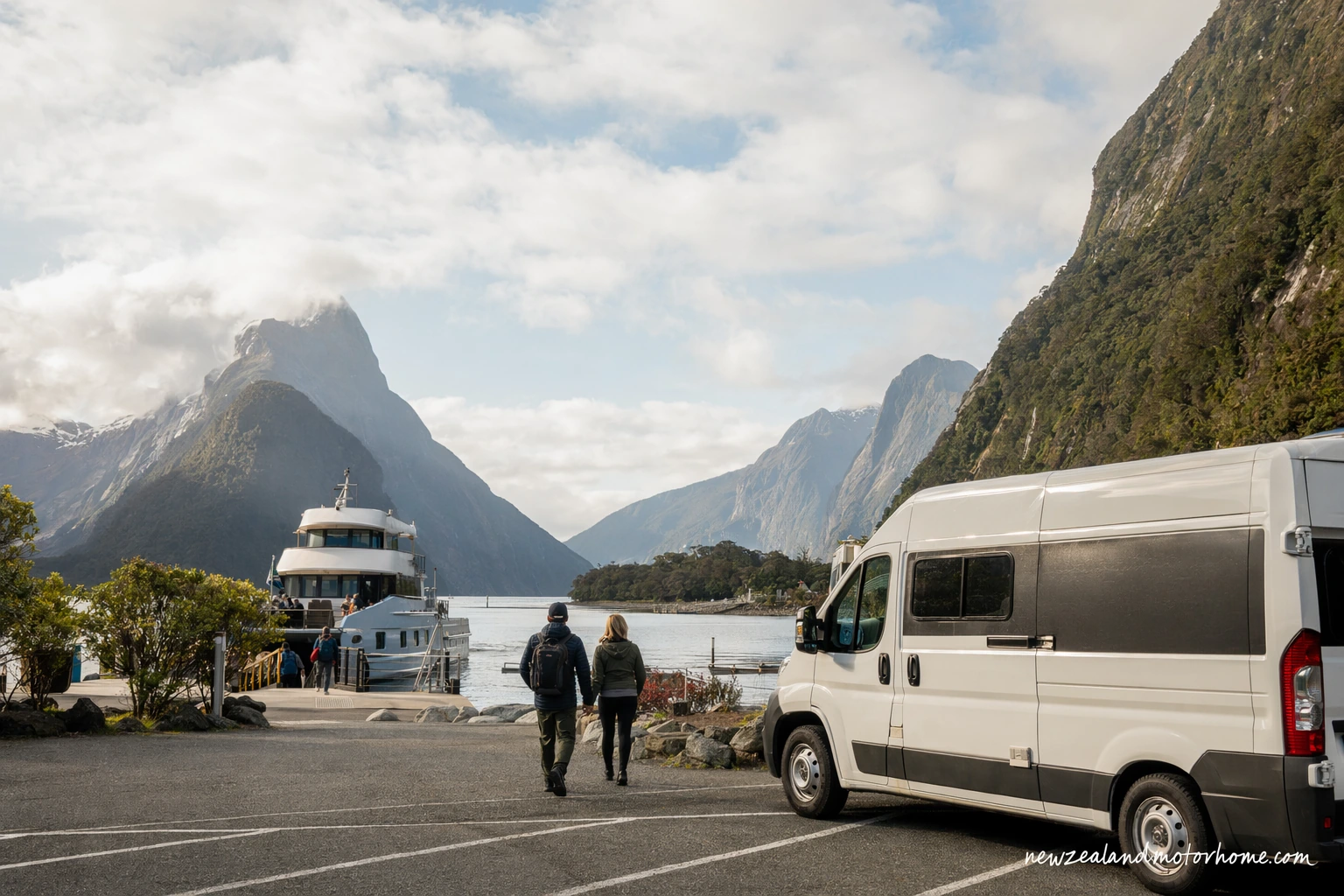
Visiting milford sound cruise by campervan: parking, road and campsites
- Allow a full day from Te Anau
- No overnighting in cruise car parks
- Closest sites book out early
- Fuel and dump in Te Anau
- Check Milford Road conditions
Milford Sound Piopiotahi is one of those places where the drive is part of the day, especially when your bed, kitchen and wet-weather gear are all in the van. Visiting milford sound cruise by campervan is very doable, but it rewards a tidy plan: where to park, when to leave Te Anau, and where you are legally sleeping before and after.
This guide is written for self-drive motorhome travellers, not day-coach passengers. You will find practical notes on milford sound cruise campervan parking, the Milford Road, nearby overnight options, dump stations, fresh water, LPG, and the small decisions that make cruise day feel relaxed rather than rushed.
Parking the campervan for your Milford Sound cruise
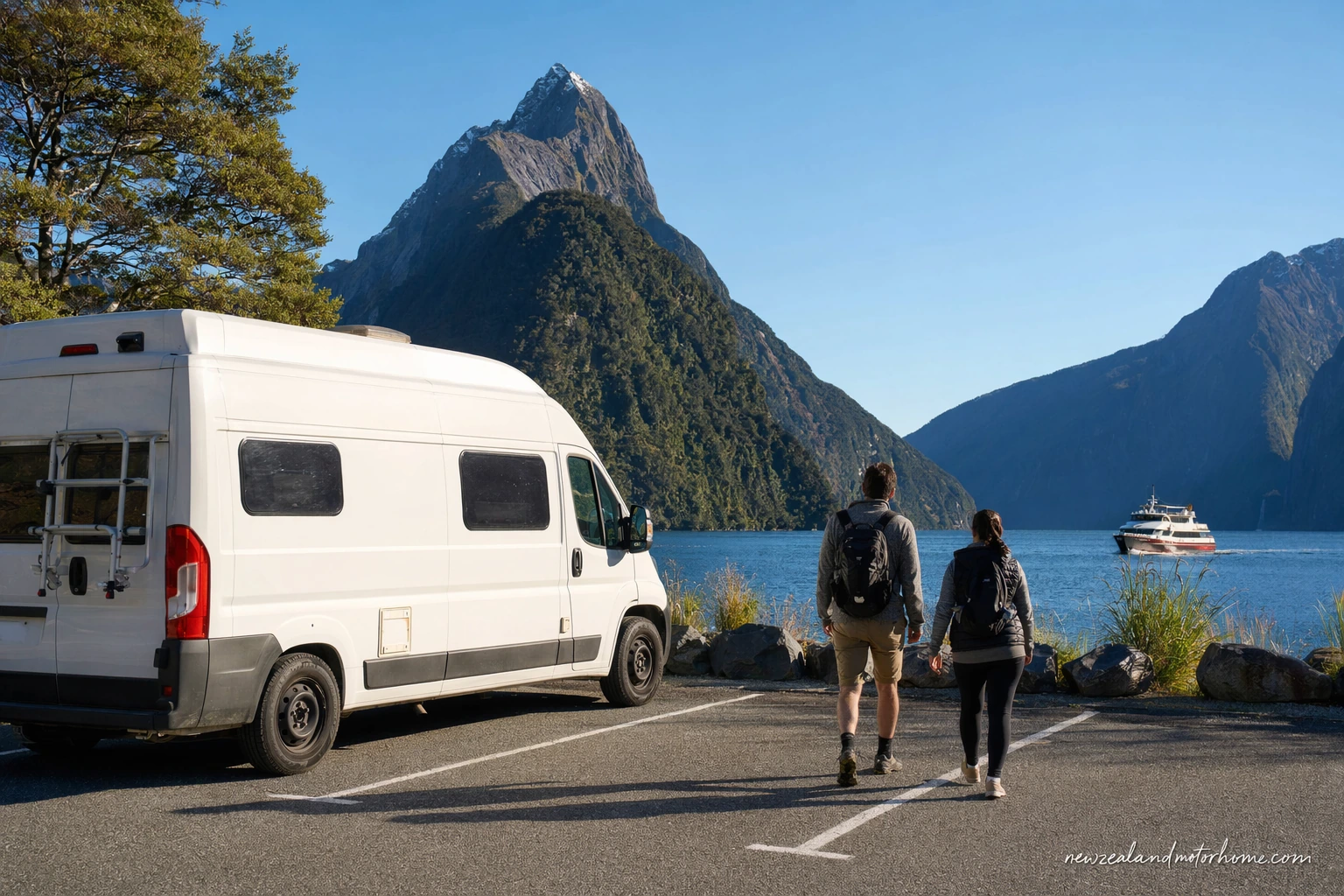
Cruise parking is at Milford Sound Piopiotahi near the visitor terminal, with signed visitor car parks and pedestrian paths towards the wharf. Campervans and motorhomes should follow the current signs for visitor and oversized vehicle parking rather than squeezing into car-sized spaces or stopping on road shoulders.
Milford sound cruise campervan parking is busiest from late morning through early afternoon, when coaches, day visitors and multiple sailings overlap. If you are driving a longer van or a high-roof motorhome, arrive earlier than you think you need to and allow time to walk from the car park to check-in.
- Do not plan to overnight in the cruise car park; Milford Sound has strict no-camping rules outside approved sites.
- Keep mirrors tucked where practical and leave room for larger vehicles to swing through.
- Have wet-weather layers ready in the living area before you park, as rain can be heavy and sudden.
- Pay attention to any current parking instructions on arrival; layouts and charges can change.
As a simple rule, treat the terminal area as a day-use stop only: park, lock the van, take valuables with you, cruise, then move on to your booked overnight site.
How to get to Milford Sound cruise from Te Anau
If you are asking how to get to milford sound cruise by campervan, the usual base is Te Anau. The Milford Road is about 118 kilometres from Te Anau to Milford Sound, but it is not a road to rush: there are narrow sections, one-way bridges, steep grades, avalanche areas in winter, and plenty of scenic pull-offs that can fill quickly.
Allow at least 2.5 to 3 hours of driving time each way from Te Anau in fair conditions, and longer if you want to stop at Eglinton Valley, Mirror Lakes, Lake Gunn or viewpoints before Homer Tunnel. In a motorhome, use lower gears on long descents, keep well left, and let faster traffic pass when a safe bay appears.
- Fuel up in Te Anau; do not rely on finding normal campervan services in Milford Sound.
- Check road status before leaving, especially in winter, heavy rain or avalanche season.
- Expect traffic lights and a wait at Homer Tunnel during busy periods.
- Carry warm clothing even in summer; conditions change quickly past the Divide.
The road is suitable for most hired campervans and motorhomes when open, but drivers of longer vehicles should be patient through the tighter corners and avoid stopping in unsafe places just for photos.
Campsites near Milford Sound cruise
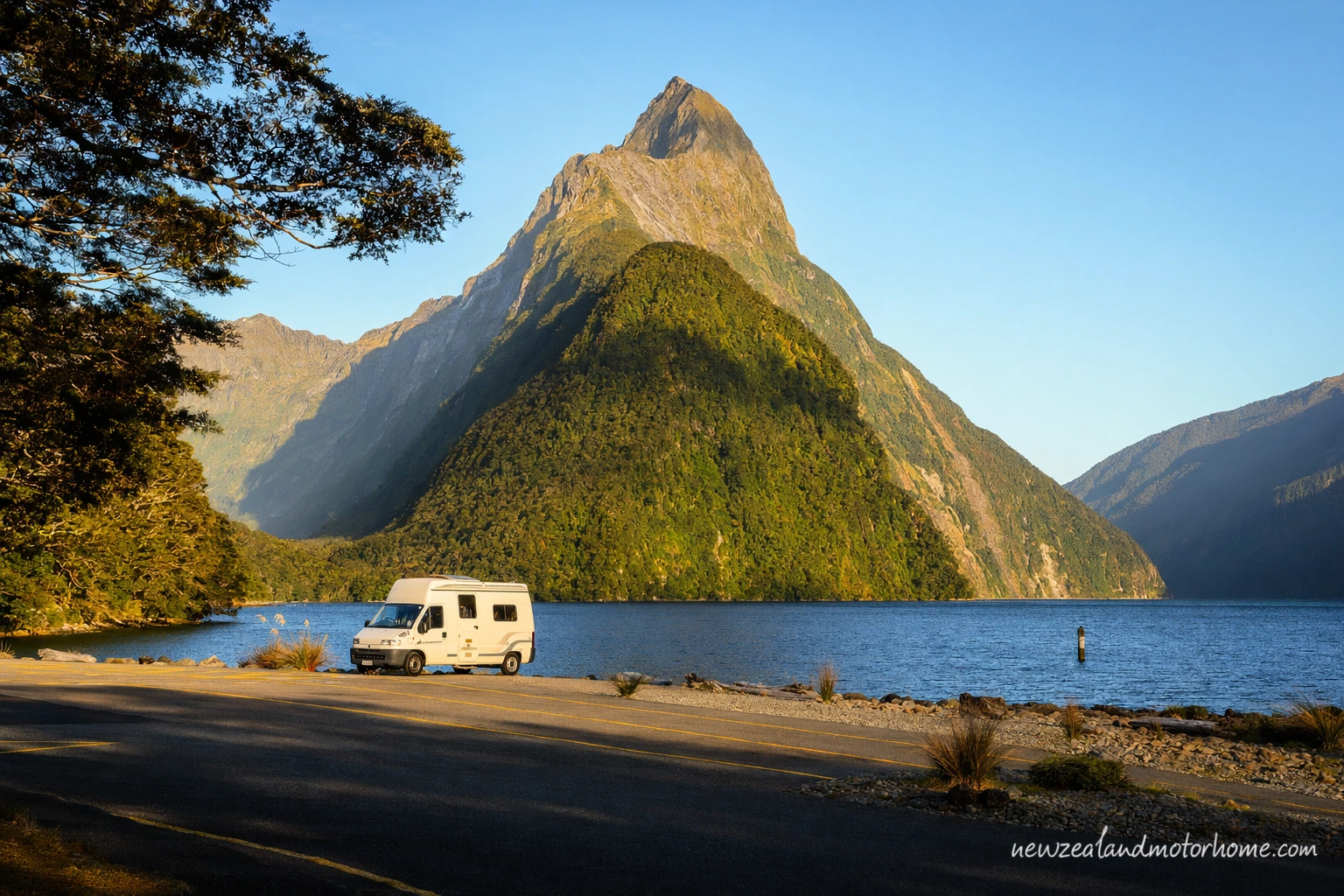
There are very limited places to sleep legally at Milford Sound itself. The main campervan option close to the wharf is the local lodge campground area, where powered and unpowered campervan sites can book out well ahead in peak months. If you want the easiest morning start for an early cruise, this is the closest overnight choice.
Many self-drive travellers stay on the Milford Road instead, using Department of Conservation-style campsites such as those around the Eglinton and Lake Gunn areas. These are typically unpowered, basic sites with toilets and no dump station, so they suit self-contained vans that have enough battery, fresh water and grey-water capacity for the night.
- For powered sites, laundry, showers, dump stations and easier grocery top-ups, base yourself in Te Anau.
- For a wilder unpowered night, choose a legal campsite on the Milford Road and arrive before dark.
- For the shortest cruise-day drive, book the Milford Sound overnight option early and confirm your van length.
When comparing campsites near milford sound cruise, check whether your vehicle length is accepted, whether you need to be certified self-contained, and whether fresh-water filling or grey-water disposal is available on site.
How long to allow on cruise day
A Milford Sound cruise is usually a compact activity once you are there, but the campervan logistics make it a full-day outing if you are starting and finishing in Te Anau. The sailing itself may be around a couple of hours, yet you also need road time, parking time, check-in time, food stops, photo stops and a weather buffer.
For a relaxed day, leave Te Anau early, aim to be parked well before your check-in time, and avoid planning a long onward drive after returning to the wharf. If you are staying unpowered on the Milford Road afterwards, reach camp with daylight left so you can choose a level bay and set up without disturbing other campers.
- From Te Anau and back: treat it as a full day in the van.
- From a Milford Road campsite: allow extra time for slow scenic driving and tunnel delays.
- From Milford Sound itself: still arrive at the terminal early, as parking and check-in take time.
If you are unsure whether to book a morning or afternoon sailing around your van itinerary, you can sketch your route with us via talk to us and we will help you avoid an over-stretched day.
Campervan services before you go
Milford Sound is not the place to discover your LPG bottle is low or your grey-water tank is nearly full. Te Anau is the practical service town for this drive, with fuel, supermarkets, holiday parks, dump stations, fresh-water fills and LPG options depending on where you are staying and what your van requires.
Before heading up the Milford Road, empty the toilet cassette and grey water at an approved dump station, top up fresh water, charge devices, and make sure your house battery is healthy if you are using an unpowered campsite. Do not discharge grey water at road-end car parks or DOC-style campsites unless an approved facility is provided.
- Fill fuel in Te Anau before the drive.
- Carry drinking water in the van as well as your main tank supply.
- Check gas levels if you rely on LPG for cooking, hot water or heating.
- Pack rubbish out until you reach proper bins or your next holiday park.
Self-containment certification helps with legal camping choices, but it does not allow you to camp anywhere you like. Always follow local signs, booking rules and any site-specific restrictions along the Milford Road.
Nearby stops that suit a motorhome
The Milford Road is lined with short walks and viewpoints, but not every lay-by is comfortable in a larger motorhome. Choose proper pull-offs, avoid soft verges after rain, and never block a coach bay, bridge approach or emergency access track just because the view opens up.
Good van-friendly stops often include the wider Eglinton Valley pull-offs, Mirror Lakes when parking is not full, Lake Gunn Nature Walk, and marked lookouts on the way towards Homer Tunnel. The Chasm area is also a well-known stop when access is open, but always follow current signs and closures.
- Use marked car parks rather than roadside edges on blind corners.
- Lock the van before short walks and keep passports, wallets and cameras out of sight.
- Sandflies can be fierce, so close the van door quickly at damp, sheltered stops.
- Leave extra space when parking beside rental motorhomes with wide side doors.
A good Milford day is not about ticking off every stop. Pick two or three that suit your van size, the weather and your cruise time, then leave enough energy for the return drive.
Keep planning
Common questions
Can I park a campervan at the Milford Sound cruise terminal?
Yes, campervans can use the signed visitor parking areas at Milford Sound, but space for larger vehicles can be limited at busy times. Arrive early, follow oversized-vehicle signs, and allow a walk to the terminal.
Can I freedom camp at Milford Sound after my cruise?
No. The cruise car parks and surrounding road-end areas are not freedom camping spots, even if your van is certified self-contained. Use an approved campground, lodge campervan site, DOC campsite, or return to Te Anau.
Where is the nearest powered campsite to Milford Sound cruise?
The closest powered campervan sites are in the Milford Sound accommodation area, subject to availability and vehicle-size rules. These sites are limited, so book early if you want to stay close to the wharf.
Is the Milford Road suitable for a large motorhome?
When the road is open, most hired motorhomes can drive it, but it needs care. Expect steep sections, narrow parts, one-way bridges and Homer Tunnel; use low gears downhill and give yourself more time than a car would need.
Do I need to book my cruise before driving in?
Booking ahead is wise, especially in summer, school holidays and on days with several cruise-ship or coach movements. It also helps you choose an overnight stop that matches your sailing time rather than driving the Milford Road under pressure.
Are there dump stations or fresh-water fills at Milford Sound?
Do not count on full campervan servicing at Milford Sound. Sort your dump station, fresh water, fuel and LPG needs in Te Anau or at a serviced holiday park before heading into Fiordland National Park.
Have a planner shape this for your dates
Send a short outline — your dates, party size, and the kind of trip you want. A planner replies with a vehicle recommendation, a paced route, and the realistic budget.