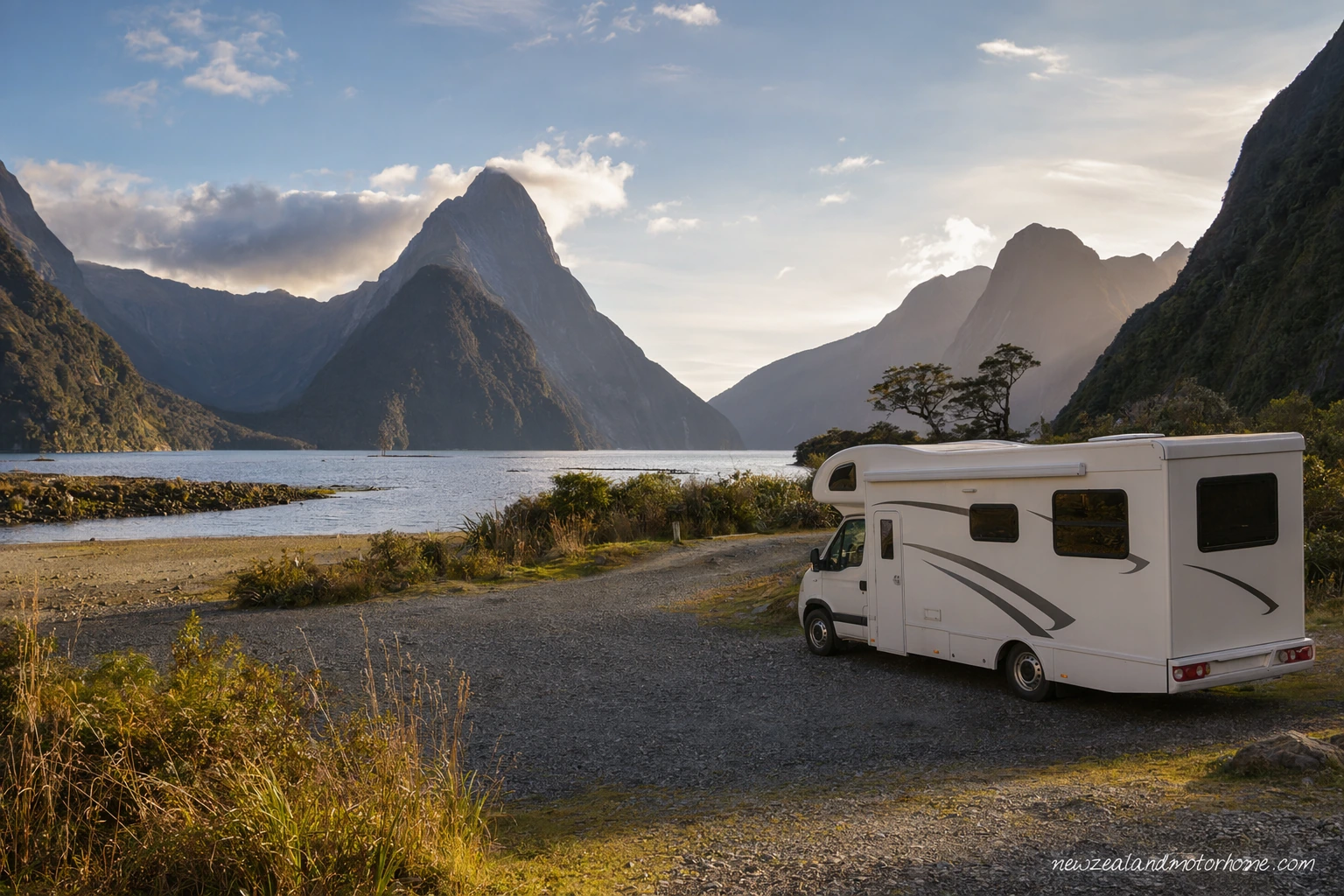
- Best base: Te Anau
- Book Milford sites early
- Use Te Anau dump station
- Alpine road conditions
- Powered sites recommended
Milford Sound is one of New Zealand’s great campervan drives, but it is not a place where you can simply roll in late and expect a powered site beside the fiord. Overnight options are limited, services are sparse, and the Milford Road rewards drivers who plan their fuel, water, parking and timing before leaving Te Anau.
This guide is for self-drive motorhome travellers looking at holiday parks Milford Sound and nearby bases. We’ll cover where to park a campervan for the day, what to expect from powered and unpowered sites, how to handle dump stations and fresh water, and how to enjoy the scenery without feeling rushed in a large vehicle.
Can you stay overnight in a campervan at Milford Sound?
There are very few places to sleep in a campervan at Milford Sound itself. The main bookable campervan option is usually a lodge-style campground with limited van sites in the rainforest, and those sites can fill well ahead in summer. Do not treat Milford village as a normal holiday-park town with several drive-up choices.
If you are searching for a milford sound top 10 holiday park, it is worth knowing there is not a TOP 10-branded holiday park right at the fiord. Most travellers either book the small Milford Sound campervan area if they want to wake up near the water, or base themselves in Te Anau or Manapouri where there are more powered sites, dump stations and town services.
- Book ahead: especially from late spring to early autumn, and around school holidays.
- Check site length: tell the campground your campervan length, including bike racks or rear storage if fitted.
- Expect sandflies: keep insect screens shut, especially at dusk.
- No overnighting in day car parks: freedom camping around Milford Sound is tightly restricted.
Te Anau and Manapouri as practical holiday park bases
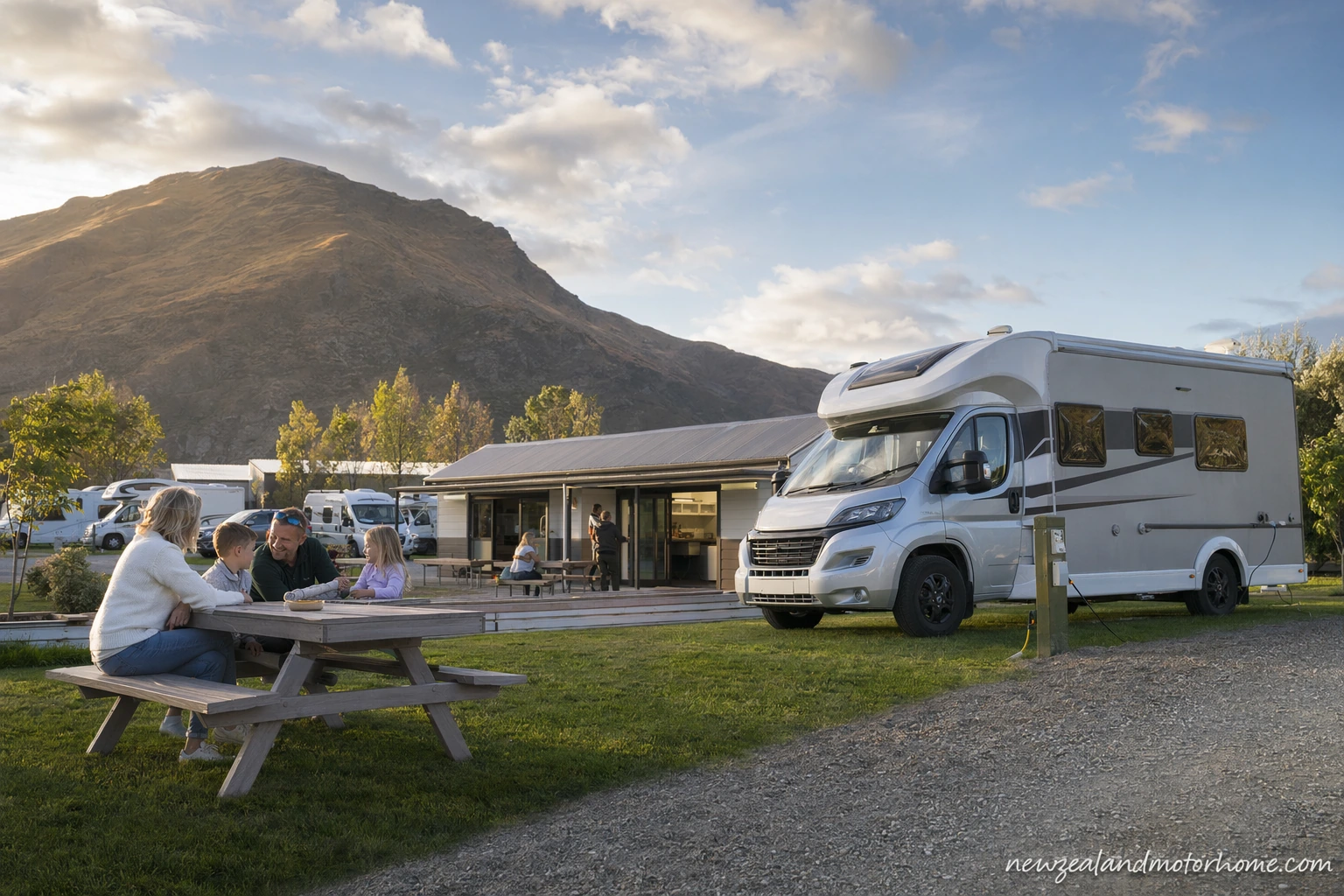
For many motorhome travellers, Te Anau is the most practical base for camping Milford Sound. It has several holiday-park style options, supermarket supplies, fuel, LPG bottle swaps or fills depending on provider, fresh water and public dump-station access. From there, the Milford Road is about 118 kilometres one way, but it is slow driving once you add photo stops, traffic, weather and the Homer Tunnel.
Manapouri is quieter and scenic, with holiday-park options that suit travellers who want a softer Fiordland pace. It adds extra driving to Milford Sound, so it works best if you are staying more than one night and not trying to squeeze the full road, a cruise and the return drive into a short winter day.
- Powered sites: useful for recharging house batteries, running heaters responsibly, and drying wet gear after Fiordland rain.
- Unpowered sites: fine for self-contained vans, but shade and wet weather can reduce solar gain.
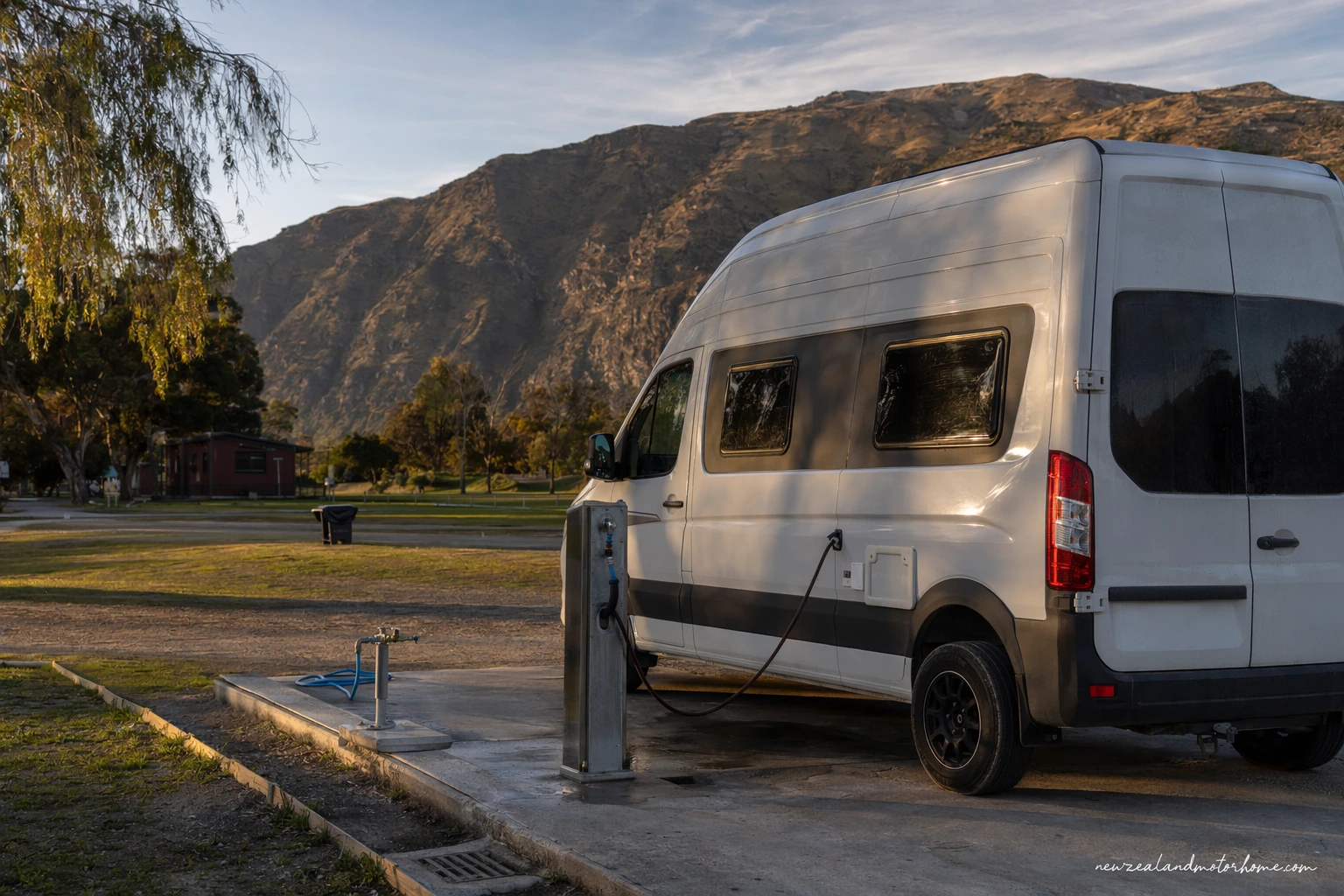
- Dump and water: use Te Anau as your last reliable service point before the Milford Road.
- Food and fuel: stock up before you leave town; do not rely on finding full motorhome services at Milford.
Driving the Milford Road in a motorhome
The Milford Road is sealed and commonly driven by rental campervans, but it deserves respect. It climbs through beech forest, open valley, avalanche country and the Homer Tunnel before dropping steeply towards the fiord. In a larger motorhome, use low gear on descents, leave space behind buses and cars, and pull over only where there is a proper bay with room for your full vehicle.
Weather changes quickly here. In winter and during cold snaps, snow, ice and chain requirements can affect travel. In heavy rain, waterfalls pour down the cliffs and visibility can be poor, so allow extra time rather than trying to match a tight cruise check-in.
- Last reliable services: fuel, LPG, dump station and fresh water are best handled in Te Anau.
- Homer Tunnel: follow signals, keep headlights on, and expect a slow, narrow-feeling passage in a tall van.
- Avalanche zones: obey no-stopping signs, even if the view is tempting.
- Timing: the drive can take two hours without stops, but most campervan travellers should allow much longer.
If you would like someone to sanity-check your overnight plan, driving days and site choices before you commit, you can talk to us and we’ll help shape it around a real campervan pace.
Where to park a campervan at Milford Sound
For daytime visits, campervans use the signed visitor parking areas near Milford Sound. Parking arrangements can change, so follow the current signs as you enter the village and allow time to walk from the car park to the cruise terminal. Large vehicles should avoid squeezing into car-sized gaps; use marked spaces or areas where your overhang will not block traffic.
If you are wondering where to park campervan Milford Sound for a cruise, arrive earlier than you would in a car. You need time to park, lock the van, gather wet-weather gear, and walk to the terminal. Milford can be calm and clear one hour, then wet and windy the next, so do not leave roof vents open while you are away from the vehicle.
- No overnight parking: day visitor car parks are not a campground.
- Height: most parking is open-air, but still watch signs, branches and service areas.
- Security: take valuables with you or keep them out of sight, as you would anywhere.
- After your cruise: check traffic and weather before starting back over the pass.
Scenery, stops and things to do near Milford Sound
The best part of this trip is often the road itself. Mirror Lakes, the Eglinton Valley, Lake Gunn, the Hollyford area, Monkey Creek, the Homer Tunnel approach and the Cleddau Valley all offer classic Fiordland scenery. In a campervan, the trick is to choose fewer stops and use proper pull-outs rather than trying to brake for every waterfall.
Things to do near Milford Sound include a fiord cruise, kayaking in settled conditions, short foreshore walks, photography from the harbour edge, and scenic stops along the Milford Road. Some tracks and viewing areas may close after storms or maintenance, so check local updates before relying on a specific walk.
- Good short stops: wide, signed pull-outs are best for motorhomes.
- Wet-weather gear: keep raincoats near the sliding door, not buried under the bed.
- Sandfly plan: repellent and closed screens make evenings much more pleasant.
- Rubbish: carry it back to your holiday park; bins are limited in sensitive areas.
Freedom camping and self-containment around Milford
Milford Sound and the Milford Road sit in a sensitive national park environment, so freedom camping is limited and enforcement is real. A certified self-contained campervan does not automatically give you the right to sleep anywhere. Always check current district and conservation rules before choosing an overnight stop.
For a smoother trip, use a booked holiday park or approved campsite, empty your toilet cassette before heading into the corridor, and carry enough fresh water for delays. Fiordland rain can make the landscape feel wild and remote very quickly, which is part of the magic — but it is not the place to discover your grey-water tank is full.
- Self-containment: carry proof of certification if your hire van has it.
- Toilet cassette: empty at an approved dump station, not roadside toilets.
- Grey water: keep it contained until you reach a legal dump point.
- Plan B: have a Te Anau or Manapouri overnight option if Milford sites are full.
Keep planning
Visiting milford sound cruise by campervan
Read onMilford sound campervan guide
Read onMilford road campervan guide
Read onDoubtful sound campervan guide
Read onHoliday parks milford road
Read onHoliday parks doubtful sound
Read onCommon questions
Is there a holiday park right in Milford Sound for campervans?
There are very limited campervan sites at Milford Sound, and they should be booked ahead. It is not a town with multiple holiday parks, so many travellers stay in Te Anau or Manapouri and visit Milford Sound as a long day trip.
Can I freedom camp near Milford Sound if my van is self-contained?
Do not assume so. Milford Sound and the Milford Road are tightly managed, and self-containment certification does not override local no-camping rules. Use approved campsites or booked holiday park sites.
Where should I empty the toilet cassette before driving to Milford?
Te Anau is the safest place to plan your dump-station stop and fresh-water fill before the Milford Road. Services at Milford Sound are limited, and any campground facilities are generally for guests only.
Is the Milford Road suitable for a large motorhome?
Yes, rental motorhomes commonly drive it, but the road is alpine, narrow in places and weather-prone. Use low gear on descents, allow plenty of time, and check conditions in winter or after heavy rain.
Should I choose a powered or unpowered site near Milford Sound?
A powered site is useful in Fiordland because rain, shade and cool evenings can drain batteries faster than expected. Unpowered can work for a well-equipped self-contained van, but arrive with full water, empty waste tanks and a realistic battery plan.
How early should I park for a Milford Sound cruise?
Arrive well before check-in, especially in a campervan. You may need to use a larger vehicle area, walk to the terminal, and sort wet-weather gear before boarding.
Have a planner shape this for your dates
Send a short outline — your dates, party size, and the kind of trip you want. A planner replies with a vehicle recommendation, a paced route, and the realistic budget.