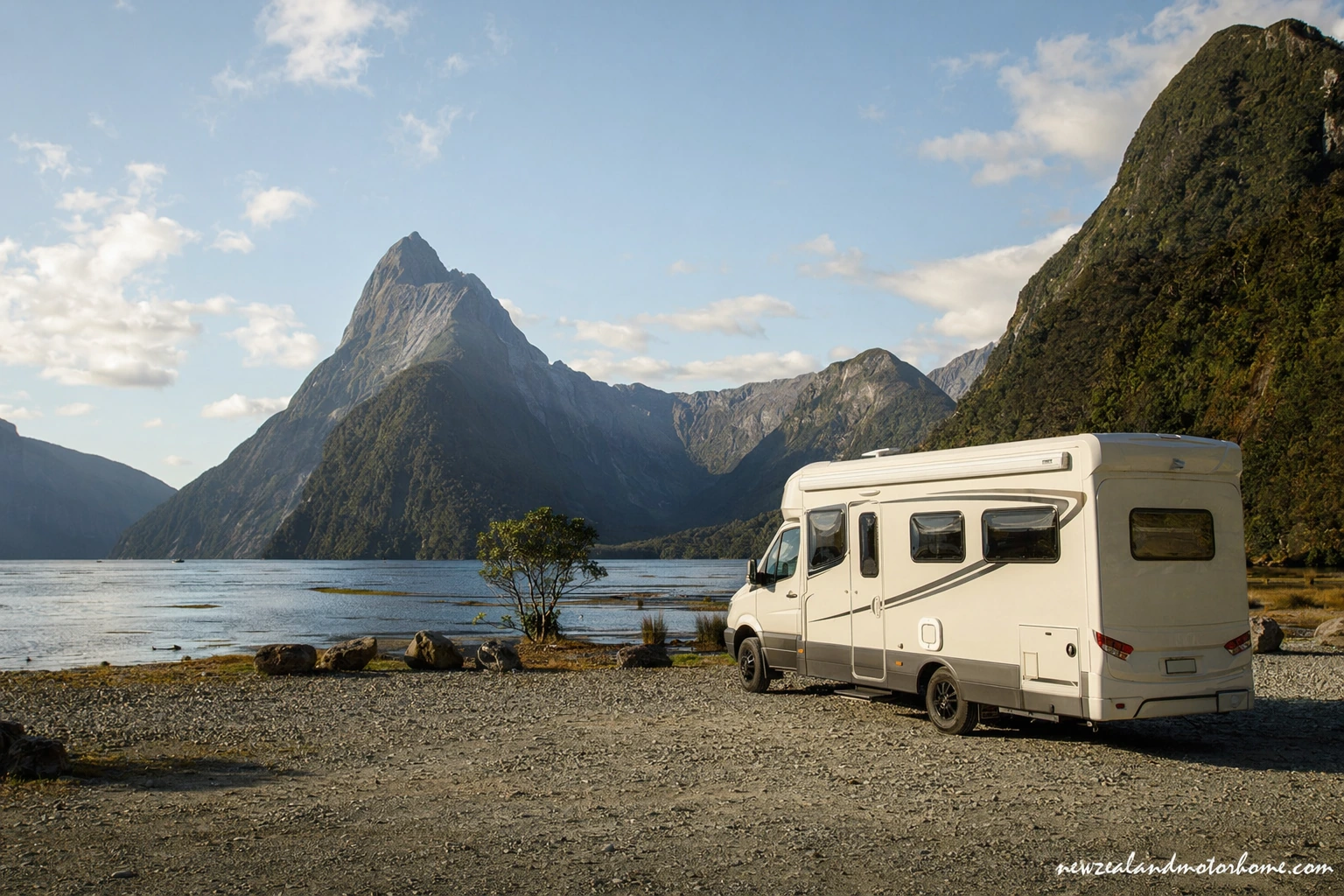
- Best base: Te Anau
- Allow 2 nights minimum
- Road: sealed alpine SH94
- Overnight: booked or designated sites
- Services: fill and dump before driving in
Piopiotahi Milford Sound is one of those places that feels remote before you even arrive. For a self-drive campervan traveller, the journey down the Milford Road is a big part of it: beech forest, river flats, avalanche country, the Homer Tunnel, then the steep drop into the fiord.
This guide is written for people driving and sleeping in their own hired van. You’ll find practical notes on where to park the van, whether to overnight at Milford or back along the road, what services to sort in Te Anau, and how to fit a campervan Milford Sound visit into a wider South Island route.
Driving the Milford Road in a campervan
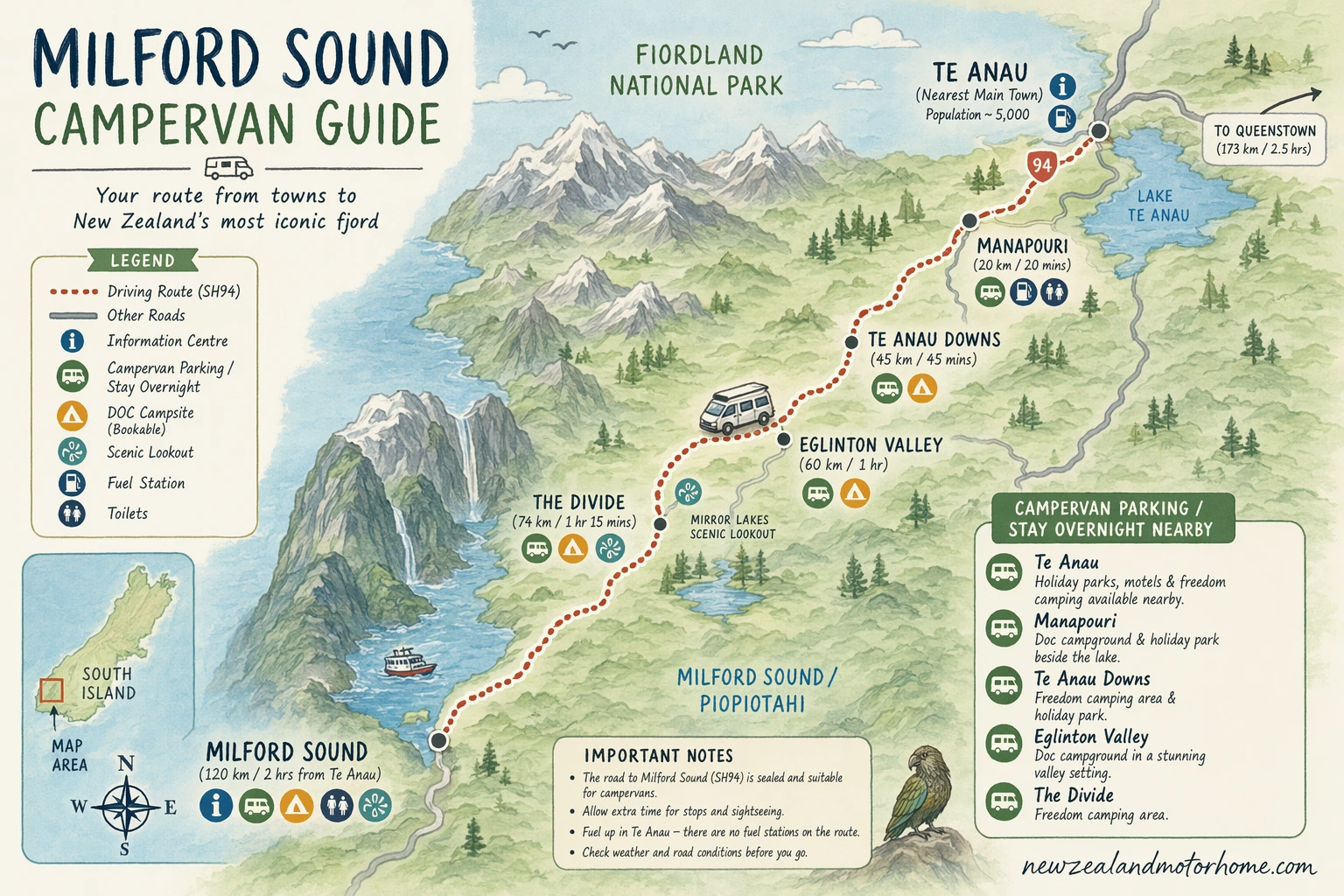
The Milford Road is State Highway 94, running from Te Anau to Milford Sound through Fiordland National Park. It is sealed all the way, but it is still mountain driving: narrow shoulders, frequent photo stops, changing weather and sections where you do not want to rush a heavier motorhome.
From Te Anau, allow a generous half day if you want to stop at the Eglinton Valley, Mirror Lakes, Lake Gunn, the Hollyford viewpoint and The Chasm area when open. The drive can be done faster, but in a campervan the better plan is to leave space for slower vehicles, roadworks, kea distractions and the weather turning.
- Fill fuel before you leave Te Anau; do not rely on getting fuel at Milford Sound.
- Check the Milford Road status before departure, especially in winter and after heavy rain.
- Carry snow chains in the colder months if your hire agreement or road conditions require them.
- Use low gear on long descents, particularly after the Homer Tunnel.
- Do not stop in avalanche zones or inside the tunnel; use marked pull-offs only.
Parking the van at Milford Sound
Parking at Milford Sound is limited and managed closely because most visitors are heading for boat departures in the same small window. Arrive early, follow the signs for visitor parking, and avoid coach bays, service areas and turning spaces that look tempting when the main car park is busy.
For a motorhome Milford Sound visit, build in a walking buffer between parking the van and reaching the cruise terminal. A longer van may mean parking further from the wharf, and rain can make the short walk feel longer than it looks on a map.
- Use designated visitor parking and campervan-suitable spaces only.
- Do not leave the van in roadside pull-offs while you go on a cruise.
- Allow extra time if your van is long, high or awkward to reverse.
- Keep valuables out of sight; you may be away from the vehicle for several hours.
- Check current parking instructions before you travel, as management can change seasonally.
Where to stay overnight near Milford Sound
There is very little legal overnight parking right at Milford Sound. In practice, most campervan travellers either book a campervan site at the accommodation area in Milford itself, stay at a DOC-style campsite along the Milford Road, or base themselves in Te Anau and drive in for the day.
If you are looking for camping near Milford Sound, the key thing is to separate powered, bookable sites from simple unpowered road-end camping. The campsites along the Milford Road are scenic and useful, but they are basic: expect toilets, limited facilities, no powered hook-up and no dump station. In peak season they can fill early, and in poor weather they feel a long way from town.
- Milford Sound: closest for early cruises, but campervan sites are limited and should be booked well ahead.
- Milford Road campsites: good for a quieter forest or lakeside night, usually unpowered and simple.
- Te Anau: best for powered sites, laundry, groceries, fuel, fresh water and dump-station access.
- Freedom camping: heavily restricted in Fiordland; self-containment certification does not mean you can sleep anywhere.
Water, dump stations, LPG and van services
Sort the van before you leave Te Anau. The Milford Road is not the place to discover your fresh-water tank is low, your grey-water tank is nearly full, or your LPG bottle is getting light. Services become sparse once you are inside the national park corridor.
Te Anau is the practical service hub for a campervan Milford Sound trip. Use it for groceries, rubbish disposal where provided, fuel, LPG, fresh-water fills and dump-station planning. If you are staying at an unpowered campsite on the road, arrive with batteries charged and enough water for cooking, washing and a wet-weather night inside the van.
- Empty grey and toilet waste at an approved dump station before heading in.
- Refill fresh water in Te Anau or at a confirmed potable supply.
- Top up LPG before a cold Fiordland night if you are using gas heating or cooking.
- Bring insect repellent; sandflies are part of the Milford experience.
- Pack wet-weather layers somewhere easy to reach, not buried under bedding.
What to do once the van is parked
Most campervan travellers come for a cruise on the fiord, and it is worth timing your drive around that booking. Morning departures can mean quieter light and a very early start from Te Anau; afternoon departures give you more time on the road but can make the return drive feel long, especially in rain or winter dusk.
There are also short walks and viewpoints around the Milford area, with conditions changing quickly after heavy rain. If you are staying overnight nearby, the best moments are often outside the busiest cruise windows: mist lifting off the cliffs, waterfalls appearing after rain, and the car park finally calming down.
- Book activities with enough margin for road delays and parking time.
- Keep your van keys and wet-weather gear with you, not locked deep in storage.
- Do not feed kea or leave doors open around them; they are clever and destructive.
- Stay on marked tracks and respect closures after storms or slips.
How Milford Sound fits a wider motorhome route
Milford works best as a deliberate side trip rather than a rushed detour. A common rhythm is Queenstown to Te Anau, overnight there, then Te Anau to Milford Sound with either a night in Milford or at a road campsite before returning to Te Anau. Trying to drive from Queenstown to Milford, cruise, and return in one day is tiring in a campervan and leaves little margin.
If you are building a South Island loop, Milford pairs naturally with Te Anau, Manapouri, the Southern Scenic Route, Central Otago or a slower run back towards Queenstown and Wānaka. For help matching driving days, overnight stops and van size to your travel dates, you can use our plan-your-trip step and we’ll shape the route around how you actually like to travel.
- Allow at least two nights around Te Anau or Milford for a calmer visit.
- Keep one flexible weather window if Milford is a must-do for your trip.
- Do not schedule a long drive after a late cruise unless you are confident driving mountain roads in low light.
- Use Te Anau as your reset point before continuing deeper into the south.
Keep planning
Visiting milford sound cruise by campervan
Read onHoliday parks milford sound
Read onHoliday parks milford road
Read onHoliday parks doubtful sound
Read onMilford road campervan guide
Read onDoubtful sound campervan guide
Read onCommon questions
Can I freedom camp at Milford Sound in a self-contained campervan?
Generally, no. Freedom camping is tightly controlled around Milford Sound and along the Milford Road, and self-containment certification does not override local restrictions. Use designated campsites or booked campervan sites instead.
Is the Milford Road suitable for a large motorhome?
Yes, many motorhomes drive the Milford Road, but it deserves respect. Expect winding sections, one-lane tunnel control, steep descents and limited turning space at busy stops. Drive to the conditions and allow more time than the map suggests.
Where should I fill water and empty waste before Milford Sound?
Te Anau is the best place to reset the van before the drive. Plan your fresh-water fill, toilet cassette and grey-water dump there, because services are limited once you are on the Milford Road and basic campsites will not usually have dump facilities.
Should I stay in Te Anau or camp closer to Milford Sound?
Stay in Te Anau if you want powered sites, shops, laundry and easier van servicing. Camp closer to Milford Sound if you want a shorter morning drive and are comfortable with basic unpowered facilities. In peak season, book or arrive early where bookings are not available.
How many days do I need for Milford Sound by campervan?
Two nights is a sensible minimum: one in Te Anau before the drive and one either near Milford or back in Te Anau afterwards. That gives you room for the road, a cruise or walk, and Fiordland weather without turning the visit into a long driving chore.
Have a planner shape this for your dates
Send a short outline — your dates, party size, and the kind of trip you want. A planner replies with a vehicle recommendation, a paced route, and the realistic budget.