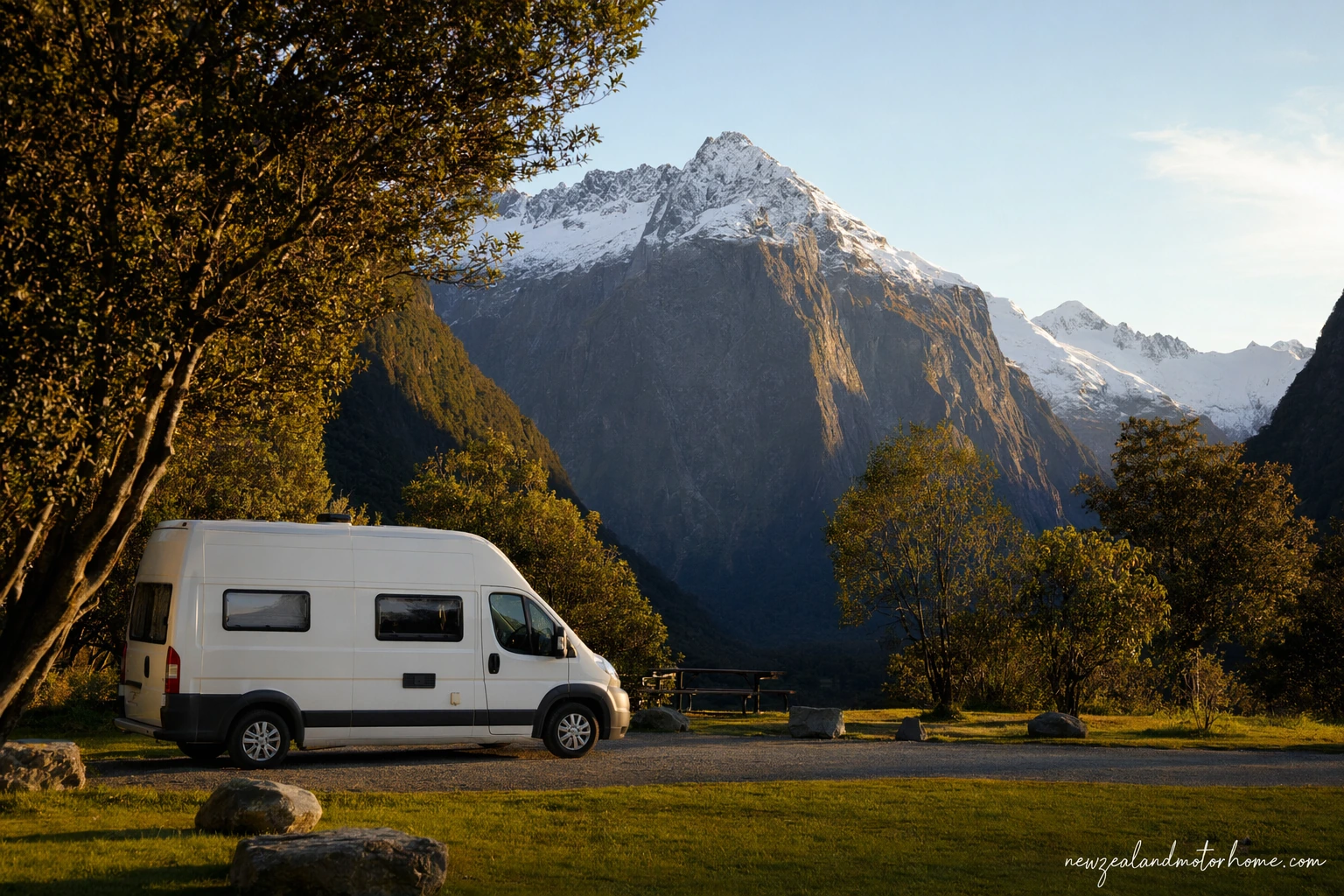
- Best base: Te Anau
- Route: SH94 to Milford Sound
- Site types: powered, unpowered and basic
- Van note: check winter road conditions
- Services: dump and refill before the road
Milford Road is not a place to wing it in a campervan. The drive from Te Anau to Milford Sound is one of New Zealand’s great motorhome routes, but it runs through Fiordland National Park, where overnight parking is tightly controlled and services are sparse once you leave town.
This guide is for self-drive travellers looking at holiday parks Milford Road and nearby camping options: where to base the van, how powered and unpowered sites work here, where to dump and refill, and what to know before taking a larger motorhome through the Homer Tunnel.
Start with Te Anau: the practical campervan base
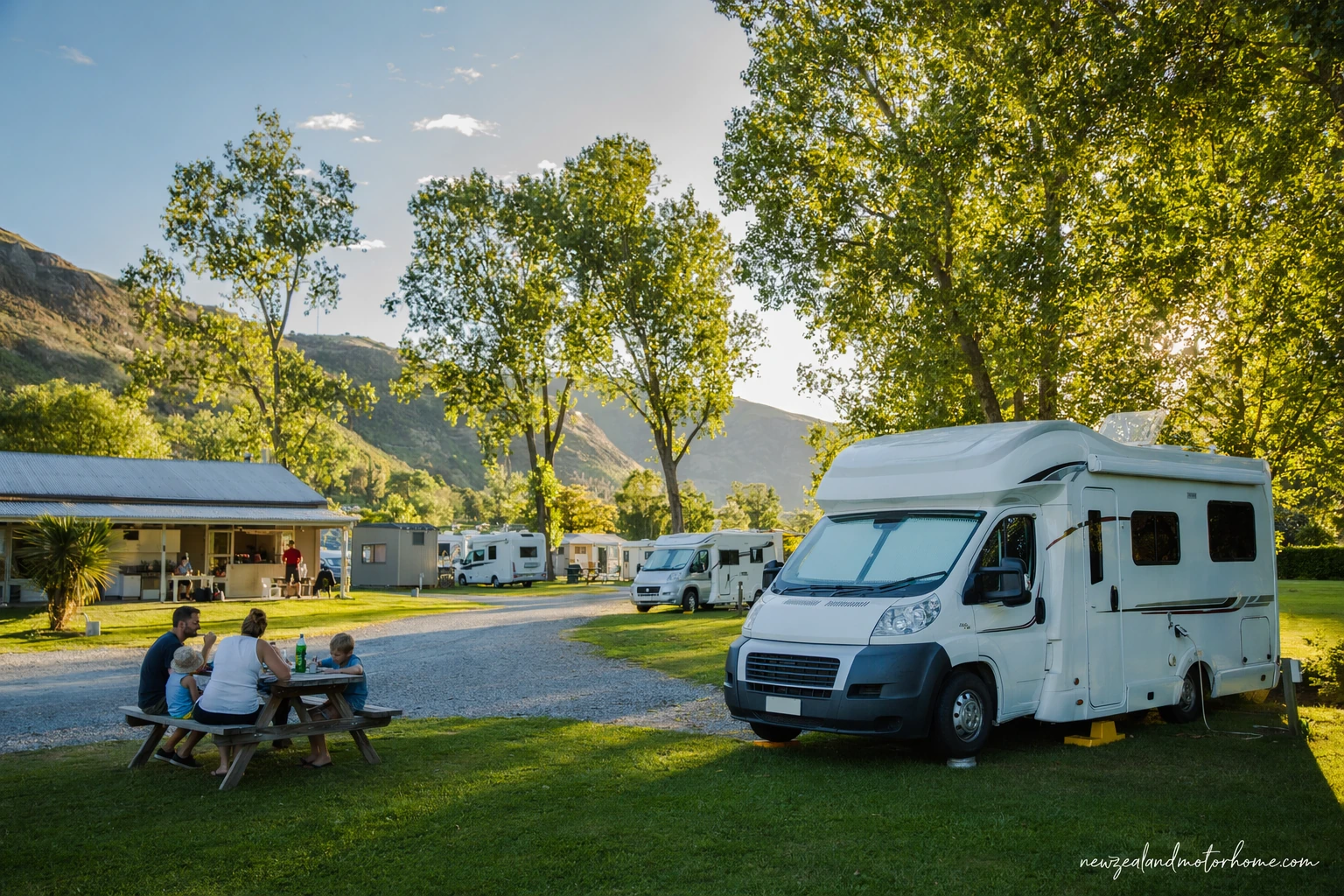
For most campervan travellers, the sensible base for Milford Road is Te Anau. This is where you will find the broadest choice of holiday parks with powered sites, unpowered sites, hot showers, laundries, dump stations and fresh-water fills before you head into the mountains.
If you are searching for a milford road top 10 holiday park, you are usually looking at Te Anau rather than the remote national park section of the road. From town, it is about 120 kilometres to Milford Sound, but the drive deserves much more time than the map suggests.
- Use Te Anau for LPG, groceries, fuel, waste dumping and topping up fresh water.
- Book powered sites ahead in summer, school holidays and around fine-weather windows.
- Leave town with empty grey and black-water tanks; do not expect full services on the road.
- Choose a holiday park within easy walking distance of town if you do not want to move the van for dinner or supplies.
Te Anau also gives you a weather buffer. If heavy rain, snow, avalanche control or road works affect Milford Road, it is much easier to wait it out from a powered site than from a remote basic campsite.
Camping Milford Road without freedom-camping trouble
Camping Milford Road is mostly about using designated sites. Fiordland National Park is not a casual pull-over-and-sleep area, even if your campervan is self-contained. Overnighting in lay-bys, scenic stops or track car parks can lead to fines and creates problems for everyone travelling by van.
There are basic conservation-style campsites along or near the road, and they suit self-contained campervans that can cope without power. Facilities are simple compared with a holiday park: think toilets, limited water that may need treating, no powered hook-up and no place to dump wastewater.
- Use holiday parks in Te Anau when you need power, showers, laundry and a proper service stop.
- Use designated basic campsites only if your van is self-contained and you have enough water, gas and battery.
- Do not drain grey water on the ground, even at remote campsites.
- Check road and campsite conditions before committing, especially after heavy rain.
If you are unsure whether your van set-up suits a night out on the road, add your route notes when you talk to us and we can help shape a realistic overnight plan around your vehicle and driving style.
Driving a motorhome on Milford Road
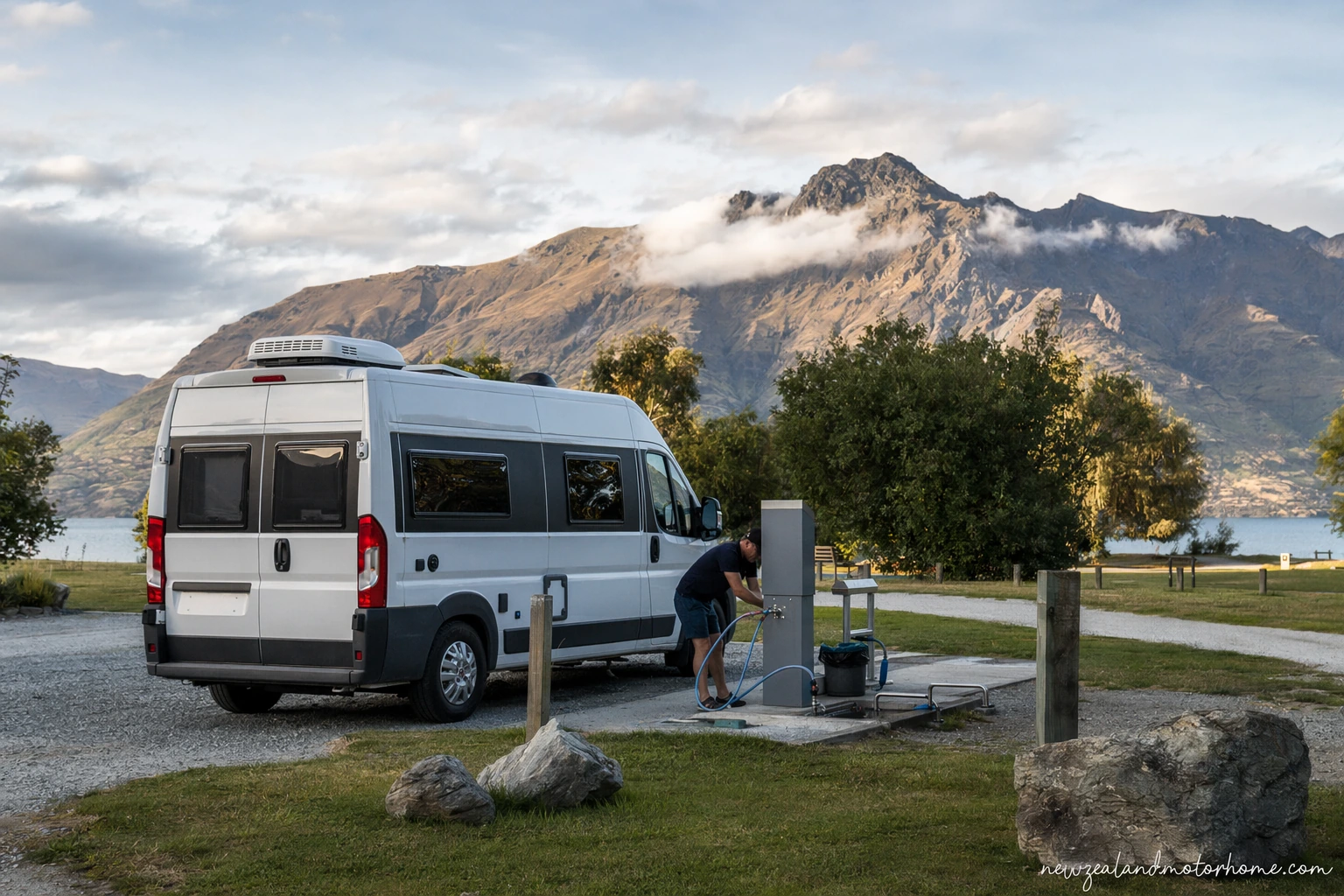
Milford Road is sealed, spectacular and fully driveable in a campervan, but it asks for patience. The road passes open valley floors, beech forest, alpine faces and the Homer Tunnel before dropping towards Milford Sound. In a larger motorhome, allow for slower climbing, engine braking on descents and frequent scenic pull-ins.
Winter changes the feel of the drive. Snow, ice, avalanche areas and chain requirements can affect travel, and the Homer Tunnel section can feel tight if you are new to driving a tall van. Always check current road conditions before leaving Te Anau, and do not enter closed or controlled sections.
- Fill fuel in Te Anau and avoid relying on services at Milford Sound.
- Use lower gears on long downhill sections rather than riding the brakes.
- Watch for rental vans, buses, cyclists and photo stops near narrow shoulders.
- Respect no-stopping avalanche zones and never stop inside the Homer Tunnel.
In peak season, leave earlier than you think you need to. A campervan trip on Milford Road is not just transport to a cruise terminal; the road itself is the experience, and rushed driving makes parking harder at every stop.
Where to park a campervan at Milford Road stops
The common question is where to park campervan Milford Road stops without blocking traffic or getting boxed in. The answer is to use formed pull-outs, marked car parks and signed roadside bays only. Many photo spots look tempting from behind the wheel, but the shoulders can be soft, narrow or unsuitable for a heavy van.
Mirror Lakes, Eglinton Valley, Lake Gunn, The Divide, Lake Marian and the Chasm area all have popular stopping points, but space can fill quickly. If your motorhome is long, park nose-out where you can and avoid squeezing into a space that requires a tight reverse onto the highway.
- Arrive early for small walk car parks such as Lake Marian or The Divide.
- Use larger signed pull-outs for quick photo stops in the Eglinton Valley.
- Do not park over vegetation or across turning areas used by other vans.
- At Milford Sound, follow current signs for visitor parking and allow time to walk to the terminal.
Rain is normal here, and wet days can mean steamy windows, muddy shoes and busy shelter points. Keep a towel near the sliding door and leave room in the van for wet jackets before you head out on short walks.
Services: dump stations, water, LPG and power
The service pattern around Milford Road is simple: sort the van in Te Anau, then treat the road as remote. Holiday parks in town are the easiest place to recharge on a powered site, dump waste, fill fresh water and reset before or after the drive.
Once you are on the road, do not assume you can find LPG, a dump station or potable water when you want it. Basic campsites may have toilets and untreated water, but they are not a substitute for a holiday park service bay. Milford Sound has limited space and services, and availability can change with weather and maintenance.
- Empty toilet cassette and grey-water tanks before leaving Te Anau.
- Carry enough drinking water for the drive, walks, cooking and an unexpected delay.
- Check gas before heading in; cold, wet evenings use more LPG than you expect.
- Choose a powered site before and after Milford Road if your house battery is modest.
A good rhythm is to stay in Te Anau, drive Milford Road with a light, serviced van, then return to a holiday park for showers, laundry and battery recovery after the wet gear comes out.
Things to do near Milford Road from your van
The best things to do near Milford Road are often short, van-friendly stops rather than big detours. The Eglinton Valley is made for a slow pull-in and a cup of tea with the side door open, while Mirror Lakes is a quick boardwalk stop that works well before the midday traffic builds.
If you have more time, Lake Gunn, the Lake Marian track, The Divide and the road-end at Milford Sound all reward an unhurried schedule. Choose walks according to weather, daylight and where you can park the campervan safely; Fiordland rain can turn a casual plan into a very wet afternoon.
- Short scenic stops: Eglinton Valley, Mirror Lakes, river viewpoints and signed lookouts.
- Walk options: Lake Gunn nature walk, sections near The Divide and longer alpine tracks in settled weather.
- Milford Sound: allow time for parking, walking to the waterfront and returning to the van.
- Te Anau: use the lakefront and town paths on days when the road weather is poor.
Build slack into the day. The scenery is close to the road, but parking, weather layers, lunch in the van and photo stops all take longer in a motorhome than they do in a small car.
Common questions
Are there holiday parks directly on Milford Road?
Most full-service holiday parks are in Te Anau, which is the practical campervan base for Milford Road. Along the road itself, options are generally more basic and may not offer power, dump stations or full facilities.
Can I freedom camp on Milford Road in a self-contained campervan?
Do not assume you can freedom camp just because your van is certified self-contained. Much of the route is within Fiordland National Park or controlled areas, so use designated campsites or holiday parks and follow current local signage.
Where should I dump waste before driving to Milford Sound?
Dump and refill in Te Anau before you leave. Holiday parks and town facilities are the reliable place to empty grey water and toilet cassettes; do not count on finding a convenient dump station once you are deep on Milford Road.
Is Milford Road suitable for a large motorhome?
Yes, many motorhomes drive Milford Road, but take it slowly and check conditions first. The Homer Tunnel, alpine weather, steep sections and busy scenic stops require confident driving and careful parking.
Should I stay powered or unpowered before Milford Road?
A powered site in Te Anau is the comfortable choice before and after the drive, especially in cold or wet weather. Unpowered basic camping can work if your house battery, water, LPG and self-containment set-up are all in good order.
How long should I allow for Milford Road in a campervan?
Allow a full day for a return drive from Te Anau, even though the distance looks manageable. Scenic stops, slower van driving, parking at Milford Sound and weather delays can easily stretch the day.
Have a planner shape this for your dates
Send a short outline — your dates, party size, and the kind of trip you want. A planner replies with a vehicle recommendation, a paced route, and the realistic budget.