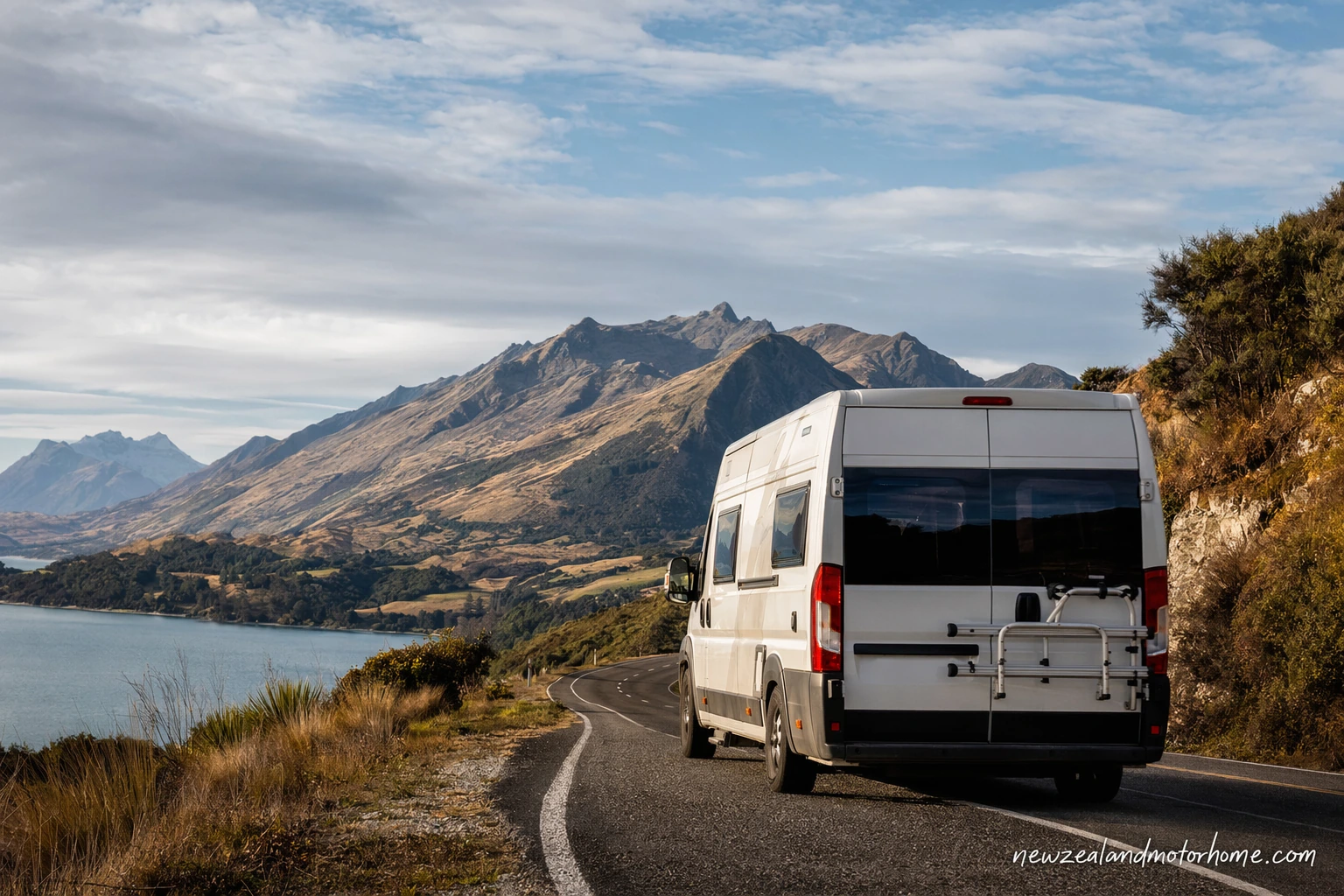
Your campervan guide Rotorua NZ: thermal lakes, parking and overnights
- Best stay: 2–3 nights
- Good for powered sites and van servicing
- Freedom camping only where signed
- Watch tight lake and forest car parks
- Handy hub for Taupō, Tauranga and East Coast routes
Rotorua is one of the easiest North Island bases for a self-drive campervan trip: short hops between geothermal valleys, lake swims, forest walks and hot pools, with enough van services in town to reset before the next leg. The trick is not trying to park a long motorhome everywhere at once — pick a base, use the bigger car parks early, and keep lake roads unhurried.
This campervan guide Rotorua NZ is written for travellers sleeping in their own hired van. You’ll find practical notes on where to park the van, powered and unpowered overnight options, freedom camping rules, dump stations, water and LPG, plus road notes for getting in and out without making your day harder than it needs to be.
How many days to allow in a Rotorua campervan itinerary
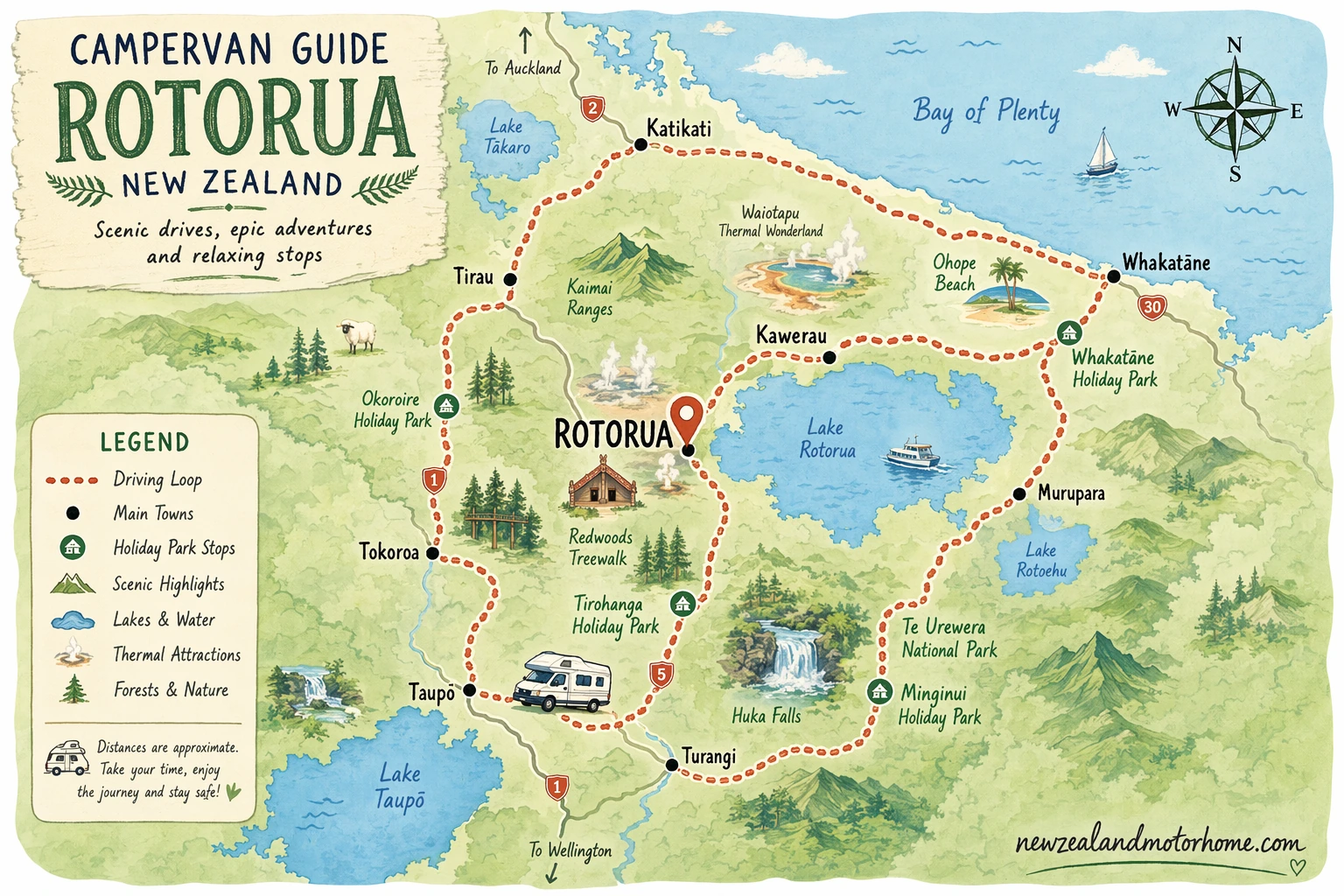
Two nights is the comfortable minimum for a Rotorua campervan stay: one day for geothermal sights and town, and one day for the lakes or the Redwoods. Three nights gives you breathing room for hot pools, a slower lake circuit, and a proper service stop for fresh water, grey water and groceries.
If you are driving a larger motorhome Rotorua works best as a hub rather than a place to keep shifting camp every night. Base yourself somewhere legal, then make short daytime drives to Wai-O-Tapu, Waimangu, Lake Tikitapu, Lake Tarawera or Okere Falls.
- 1 night: possible if you only want one major geothermal stop and a soak, but you will feel rushed.
- 2 nights: ideal for most hired campervans on a North Island loop.
- 3 nights: best if you want forest riding or walking, lake time and a no-stress laundry/service reset.
If you are stitching Rotorua into a longer route with Taupō, Tauranga or the Coromandel, you can talk to us and we’ll help shape the driving days around realistic van stops rather than just map distance.
Driving in, out and around the lakes
Rotorua sits on main highways, so getting there in a campervan is straightforward, but the last 30–60 kilometres can still be winding depending on your approach. SH5 from Taupō is a common motorhome route with passing lanes and rolling farmland; SH5 from the Waikato side crosses hill country near Mamaku; SH36 from Tauranga is useful but can be busy with commuter and freight traffic.
Once you leave town for the lakes, expect narrower roads, shaded corners and plenty of people pulling in for photos. Tarawera Road and the roads around Lake Tikitapu and Lake Okareka are fine for most hired vans, but they reward patience. Avoid squeezing onto soft verges after rain — a heavy van can sink quickly near lake edges.
- Keep extra following distance on sulphur-steam days or in winter fog.
- Use lower gears on long descents rather than riding the brakes in a loaded motorhome.
- Check height bars at lakeside and forest car parks before committing.
- Do not take a large van onto unsigned forestry tracks, even if a mapping app suggests a shortcut.
Where to park the van for town, geothermal stops and forest walks
Central Rotorua has a mix of angled street parks and larger public car parks, but a long wheelbase campervan is far easier in the bigger areas around the lakefront, Kuirau Park and the Government Gardens side of town. Arrive early if you want a tidy park, especially on weekends, school holidays or event days.
For paid geothermal attractions, most have room for larger vehicles, but do not assume every car park bay suits a seven-metre motorhome. Look for signed oversize or bus parking, park squarely, and avoid leaving vents or gas lockers over garden edging where steam, heat or soft ground may be an issue.
For the Redwoods and Whakarewarewa Forest, the main visitor car parks fill quickly. If you are in a taller or longer van, go early in the morning or later in the afternoon and avoid peak riding times. These are some of the best things to do Rotorua campervan travellers can enjoy without a long drive, but parking discipline matters.
- Do not sleep in day-use car parks unless overnight camping is clearly permitted.
- Use the van’s side door away from traffic when loading bikes or wet towels.
- Lock valuables out of sight before heading into forest or geothermal walks.
Overnight stays: powered sites, unpowered sites and freedom camping
Rotorua has a good spread of holiday parks and campgrounds, from full-service powered sites near town to quieter unpowered lake-style camping. A powered site is worth considering if you have been freedom camping for a few nights, need to run heating in winter, charge e-bike batteries, or do laundry before heading towards the East Coast or Waikato.
Freedom camping around Rotorua is controlled by local rules and signage. In general, you should only plan on freedom camping if your hire van is certified self-contained and you are in a place where overnight stays are specifically allowed. Lakefront reserves can look tempting, but many are day-use only or have limits on vehicle numbers, length of stay and where you may park.
- Powered holiday park site: easiest for first-night arrivals, winter stays, showers, laundry and dump station access.
- Unpowered campground site: good for self-contained vans wanting a cheaper, quieter night while still staying legal.
- Designated freedom camping: suitable only when signage allows it and your self-containment certificate is current.
- DOC-style lake camping: often more basic, with toilets but no power; check access and booking requirements before driving out.
Book ahead in summer, during mountain biking events, and over long weekends. Rotorua is a popular motorhome stop, and the best van-friendly sites can fill before late afternoon.
Dump stations, fresh water, LPG and resupply
Treat Rotorua as a practical service point. Before heading to the lakes or towards more rural overnight stops, empty grey and black water, top up fresh water, check your toilet chemicals, and confirm your LPG bottle level. Holiday parks usually provide dump facilities for guests, while public dump station locations should be checked on current council or camping apps before you rely on them.
Supermarkets, fuel stops and general supplies are easy around town, and LPG bottle swap or refill options are commonly found on main routes through Rotorua. If you are in a hired van, check whether your bottle is a swap style or refill style before queueing, and make sure the gas locker is shut and latched properly before driving away.
- Dump before a lake overnight rather than assuming there will be facilities nearby.
- Use potable water taps only for filling your fresh tank; do not fill from bathroom basins or lake taps unless clearly marked.
- Keep a short hose and tap adaptor handy, as not every fill point is set up the same way.
- Restock food in Rotorua before driving east towards more spread-out services.
Easy campervan day loops from Rotorua
A good Rotorua day in a campervan does not need huge mileage. One simple loop is town to Lake Tikitapu, Lake Tarawera and back for a swim, view stops and a picnic. Another is a geothermal day south of town, pairing one paid thermal valley with a relaxed hot pool stop and an early return before evening traffic.
Okere Falls is a good short outing if you are heading towards the Bay of Plenty or want a river walk without committing to a long drive. Parking can be tight, so treat it as a short walk stop rather than somewhere to spread out chairs and awnings.
- Lakes loop: best in calm weather; take swim gear and keep the van off soft grass.
- Geothermal loop: allow time for steam, boardwalks and slower car park exits.
- Forest loop: ideal for walking or biking, but arrive early with a larger motorhome.
- Hot-pool evening: choose a legal overnight base first so you are not hunting for a site after dark.
Keep planning
Wellington to rotorua campervan
Read onVisiting polynesian spa rotorua by campervan
Read onVisiting agrodome rotorua by campervan
Read onTauranga to rotorua campervan
Read onRotorua to whangarei campervan
Read onRotorua to timaru campervan
Read onCommon questions
Can I freedom camp in a campervan in Rotorua?
Only in places where Rotorua’s current local rules and on-site signs allow it, and generally only with a certified self-contained van. Do not assume a lakefront reserve or town car park permits overnight stays just because other vans are parked there.
Is Rotorua suitable for a large motorhome?
Yes, but use it as a hub and choose larger car parks, holiday parks and main roads where possible. Some lake and forest car parks are tight when busy, so go early and avoid narrow unsigned side roads.
Where should I stay first night in Rotorua with a hired van?
A powered holiday park site is the easiest first-night option, especially if you are still learning the van’s power, water, gas and toilet systems. It also gives you a simple way to dump waste and fill fresh water before exploring further.
Do I need to book campervan sites in Rotorua?
In summer, school holidays, public holidays and during major biking or sporting events, booking is strongly recommended. Outside peak times you may have more flexibility, but arriving before late afternoon still gives you better site choices.
Are the Rotorua lakes roads okay in a campervan?
Most main lake roads are manageable in standard hired campervans and motorhomes, but they can be narrow, shaded and busy. Drive slowly, avoid soft verges, and check signs before entering small boat-ramp or picnic car parks.
Have a planner shape this for your dates
Send a short outline — your dates, party size, and the kind of trip you want. A planner replies with a vehicle recommendation, a paced route, and the realistic budget.