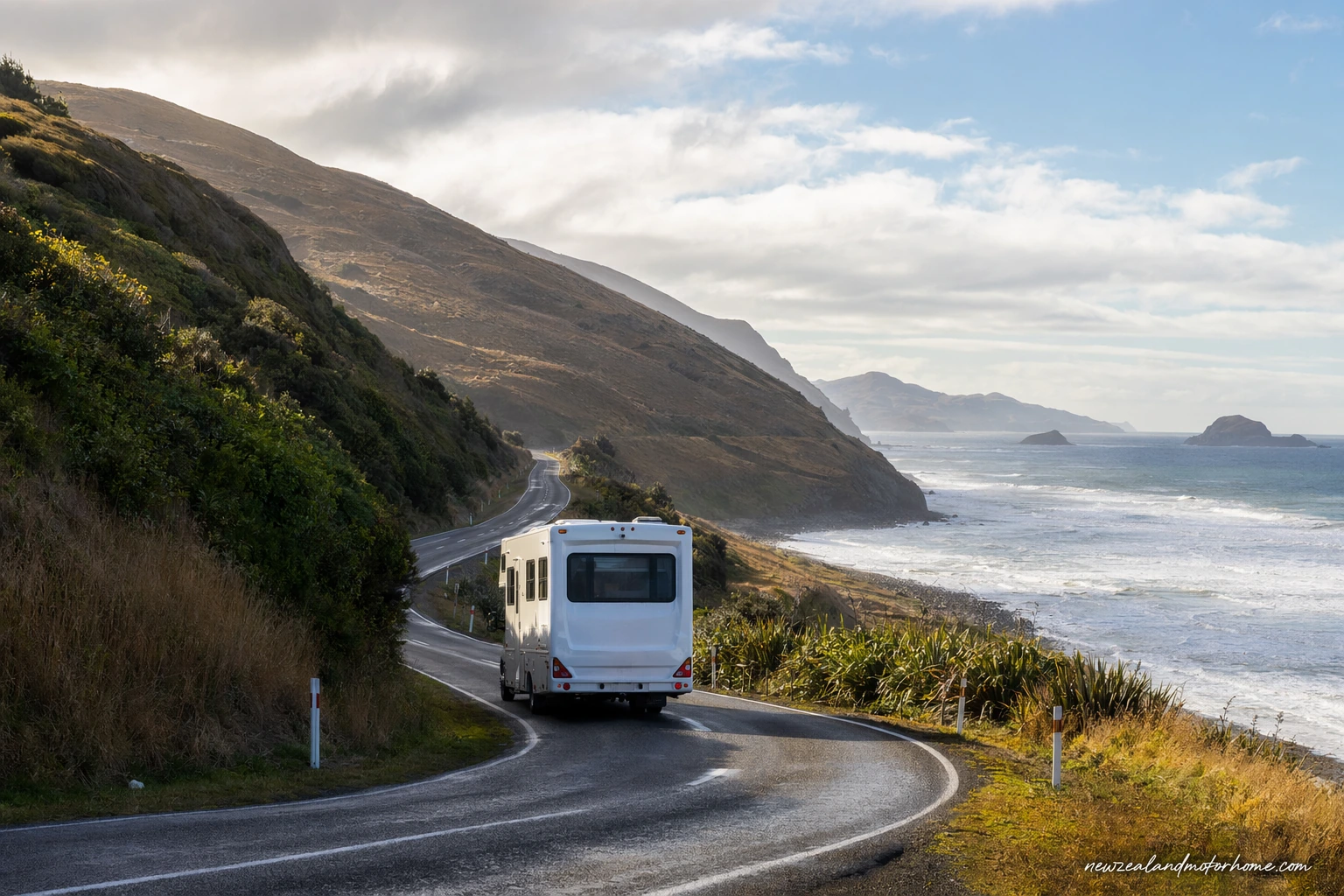
Dunedin to Palmerston North campervan route: coast, ferry and Manawatū
- Best in 5–7 days
- Includes Cook Strait ferry
- SH1 plus Kāpiti and Manawatū roads
- Powered sites useful before ferry
- Check freedom camping bylaws
A Dunedin to Palmerston North campervan trip is a proper two-island move: Otago hills, the long Canterbury run, the Kaikōura coast, a Cook Strait ferry crossing, then the drive up through Kāpiti and Horowhenua into the Manawatū. It is not a route to rush in a big van, especially if you want time for easy parking, late check-ins, laundry, dump stations and a calm ferry day.
This guide is written for self-drive campervan and motorhome travellers sleeping in the vehicle. You will find sensible legs, van-friendly overnight ideas, road notes for longer vehicles, and practical places to think about fresh water, LPG, rubbish and cassette stops along the way.
Route overview: how many days to allow
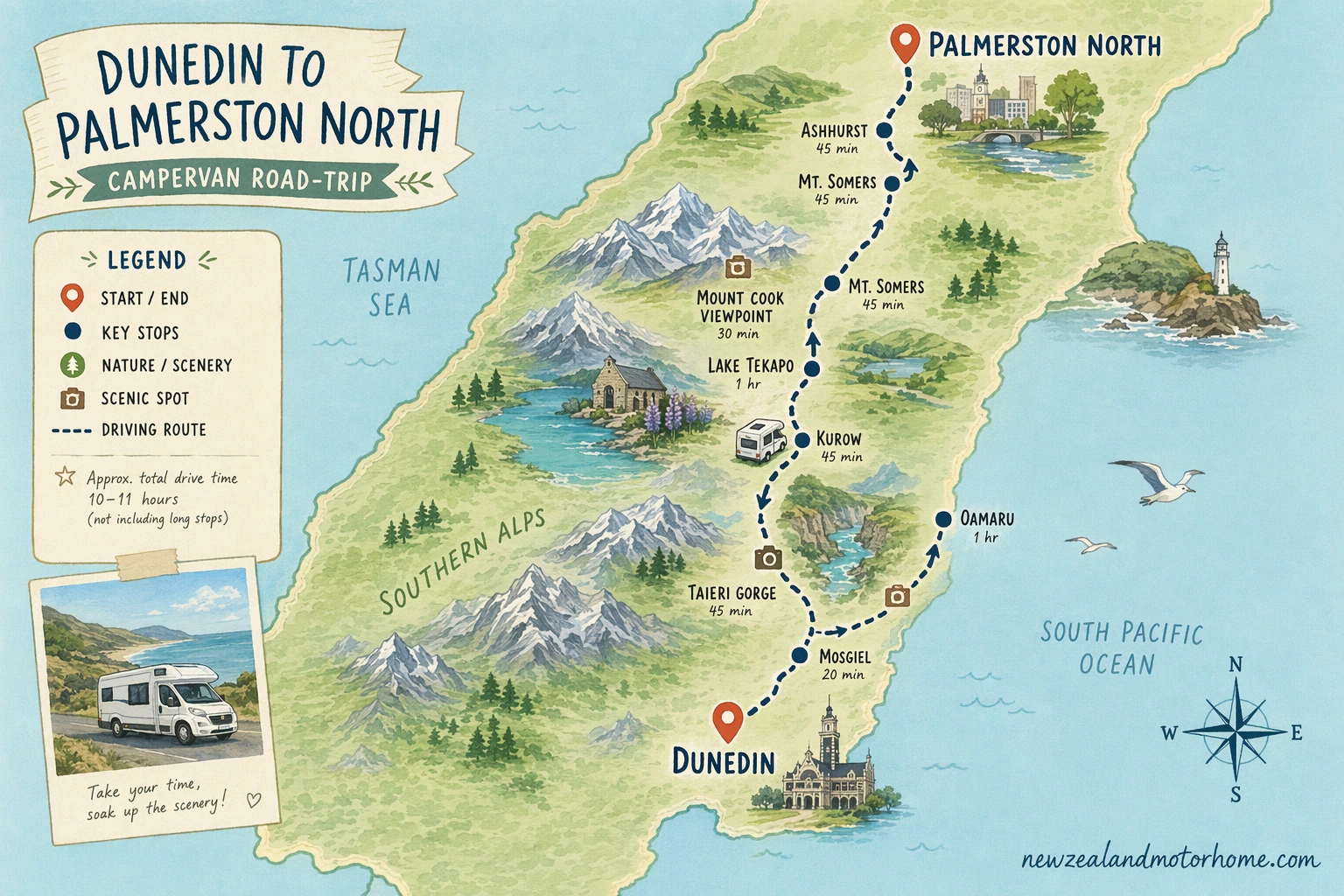
The direct Dunedin to Palmerston North drive uses State Highway 1 north through Oamaru, Timaru, Christchurch, Kaikōura and Blenheim/Picton, then the Cook Strait ferry to Wellington, before continuing north via SH1 and the Manawatū approach roads. It is a long relocation-style route, and the ferry makes timing more important than on a normal one-island drive.
For most campervan travellers, four days is the firm minimum if you already have your ferry booked and do not mind covering ground. Five to seven days is much kinder, giving you time to stop the van before dark, plug into powered sites every few nights, and avoid arriving at the Picton ferry in a rush.
- Fast but workable: Dunedin to Timaru or Christchurch, then Kaikōura, then Picton/Wellington, then Palmerston North.
- More relaxed: Dunedin, Oamaru or Timaru, Christchurch, Kaikōura, Picton, Wellington or Kāpiti, Palmerston North.
- Best for first-time motorhome drivers: plan shorter days around Kaikōura and the ferry so you are not handling coastal roadworks or Wellington traffic while tired.
Dunedin to Christchurch: Otago, Waitaki and the Canterbury plains
Leaving Dunedin in a larger campervan, take your time on the northern exit and the hill sections around the city. The road opens out past Waikouaiti and Palmerston, with good daylight stops at Moeraki, Oamaru and Timaru. In popular photo spots, use marked parking and avoid squeezing a long van into short car spaces; reversing out into tourist traffic is never worth it.
Oamaru and Timaru both work well as overnight breaks, especially if you want an easier first day rather than pushing to Christchurch. Look for holiday parks or council campgrounds with powered and unpowered sites, and check whether late arrival is possible if you are travelling outside summer. If you are freedom camping, only use signed permitted areas and make sure your vehicle meets current self-containment requirements.
Christchurch is useful for practical chores: groceries, laundry, LPG bottle swaps or refills where available, fresh-water top-ups and dump stations. Edge-of-city holiday parks are usually easier than trying to park a tall motorhome in the central city, and they give you a calmer start for the Kaikōura road next morning.
Christchurch to Kaikōura and Picton: coastal driving in a van
The Christchurch to Picton leg is the part of the Dunedin to Palmerston North motorhome road trip where you will feel your vehicle size most. North of Christchurch the road is generally straightforward, but the Kaikōura coast has tunnels, rail crossings, sea walls, narrow shoulders and occasional roadworks. Keep your speed comfortable, pull over only in proper bays, and let faster traffic pass when it is safe.
Kaikōura is a good overnight stop before Picton, particularly if you are booked on a morning or midday ferry the following day. Choose a proper campground or holiday park if you need a powered site, showers, laundry or a dump point before the crossing. Coastal freedom camping rules can be tight here, so do not assume a scenic lay-by is legal overnight parking.
Between Kaikōura, Blenheim and Picton, top up fuel early and keep an eye on wind. Blenheim is handy for supermarket parking, LPG and waste chores before the final short run to Picton. In Picton, leave plenty of time for ferry check-in, because boarding a campervan is not the same as walking on with a backpack.
The Cook Strait ferry with a campervan
Your ferry booking needs to match the campervan or motorhome you are actually driving, including length, height and any bike rack or rear box. If you are hiring, confirm the exact dimensions before booking. On sailing day, turn off gas as instructed, secure cupboards and fridge contents, and keep valuables and wet-weather gear with you because you generally cannot return to the vehicle deck during the crossing.
Picton ferry queues can include large motorhomes, freight and cars, so arrive early and keep your booking details handy. If you have a longer vehicle, take turns wide in the marshalling lanes and follow crew directions rather than trying to correct late. A calm ferry day makes the whole Dunedin to Palmerston North drive feel easier.
- Book the ferry before locking in tight campsite nights either side.
- Allow time for weather delays, especially in shoulder seasons and winter.
- Use a powered site the night before if you want batteries, devices and the fridge well sorted.
- Empty the toilet cassette before sailing if you can, rather than carrying it into Wellington full.
Wellington to Palmerston North: Kāpiti, Horowhenua and the Manawatū
After the ferry, Wellington traffic can feel busy in a high-sided van, especially if the wind is up. If you arrive late in the day, consider staying in Wellington, Porirua, the Hutt Valley or Kāpiti rather than pushing straight through. A powered site after the ferry is a good reset: plug in, refill water, empty waste and start fresh in the morning.
The usual northbound run follows SH1 through the Wellington region and Kāpiti Coast towards Levin, then across to Palmerston North via the signposted state highways. Watch for crosswinds, merging traffic and changing speed limits around towns. The old Manawatū Gorge route is no longer the through-road many older maps remember, so follow current signage and navigation rather than relying on memory.
Palmerston North itself is easier if you choose your overnight stop before driving into the centre. Central street parking can be short and busy for a long motorhome, while riverside and edge-of-town areas are often simpler for daytime stops. Check local signs carefully: freedom camping permissions vary by site, and some areas are day-use only.
Overnight stops, dump stations and trip-planning checks
On this route, the easiest pattern is to use a powered holiday park every second or third night and fill the gaps with unpowered or permitted freedom camping only where the local bylaw allows it. Powered sites are worth it before the ferry, after bad weather, or whenever you need heat, device charging, laundry and a reliable shower. Unpowered sites suit mild nights if your house battery and water supply are in good shape.
Public dump stations are commonly found in or near larger towns on this route, including Dunedin, Oamaru, Timaru, Christchurch, Kaikōura, Blenheim/Picton, Wellington, Levin and Palmerston North, but always check an up-to-date camping app or council listing before you count on one. Fresh water is not guaranteed at every dump point, and some taps are for rinsing only, not drinking.
If you want help turning this into a day-by-day plan with ferry timing, van size and campsite style matched to your hire vehicle, you can talk to us before you lock everything in. It is much easier to adjust the route on paper than to discover at 6 pm that your chosen stop does not allow overnight campervans.
Keep planning
Holiday parks palmerston north
Read onCampervan supplies palmerston north
Read onCampervan hire palmerston north
Read onWellington to palmerston north campervan
Read onRotorua to palmerston north campervan
Read onQueenstown to palmerston north campervan
Read onCommon questions
How long does the Dunedin to Palmerston North campervan route take?
Allow at least four days including the Cook Strait ferry, but five to seven days is more comfortable in a campervan. That gives you time for shorter driving legs, campsite check-ins, dump stations and weather delays around the ferry.
Can I freedom camp the whole way from Dunedin to Palmerston North?
Not realistically without careful planning. Freedom camping rules change by council area, and many scenic coastal spots are restricted or day-use only. Use only signed permitted sites, and make sure your campervan has current self-containment certification.
Is the Kaikōura coast suitable for a large motorhome?
Yes, it is a main highway route used by large vehicles, but it needs patient driving. Expect tunnels, roadworks at times, narrow shoulders and limited places to stop safely. Use marked pull-outs and avoid stopping on the roadside for photos.
Where should I overnight before the Picton ferry?
Kaikōura, Blenheim and Picton all work, depending on your sailing time. For an early ferry, staying close to Picton is simplest; for a later sailing, Kaikōura can be a pleasant break if you do not mind the morning drive north.
Do I need to book powered sites in advance?
In summer, school holidays and long weekends, book key powered sites ahead, especially around Kaikōura, Picton and Wellington. Outside peak periods you may have more flexibility, but arriving late in a big van without a confirmed site can be stressful.
What should I check before booking the Cook Strait ferry?
Confirm your campervan length, height and any rear-mounted gear before booking. Also check gas rules, arrival time, cancellation conditions and whether your planned campsites either side still work if the sailing is delayed.
Have a planner shape this for your dates
Send a short outline — your dates, party size, and the kind of trip you want. A planner replies with a vehicle recommendation, a paced route, and the realistic budget.