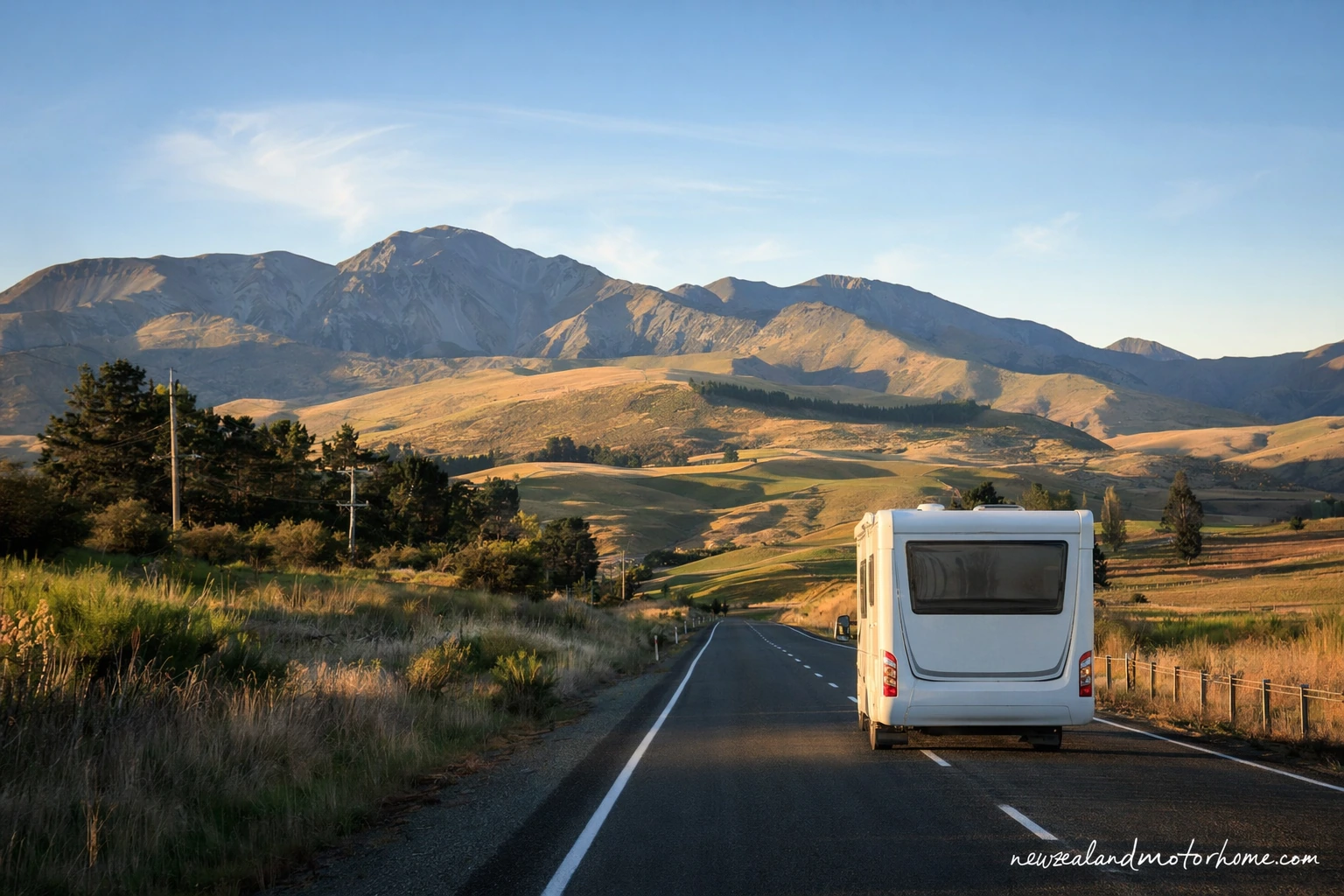
Hamilton to Palmerston North campervan route for self-drive vans
- Allow 2–4 days
- Approx. 390–420 km via SH3
- Winding sections near Awakino and Mt Messenger
- Best with powered stops in New Plymouth or Whanganui
- Self-contained only for freedom camping
The Hamilton to Palmerston North campervan route is one of those North Island drives where the direct line is not always the best use of your van. You can run it in two long days, but the more comfortable plan is to follow SH3 through King Country, the Awakino coast, Taranaki and Whanganui, giving yourself time to park up, plug in, refill fresh water and actually enjoy the west coast.
This guide is written for travellers driving and sleeping in their hired campervan or motorhome. You will find practical leg lengths, road notes for larger vehicles, overnight stop ideas, dump station planning, and where to be careful with freedom camping rules on the Hamilton to Palmerston North drive.
Route overview: SH3 through King Country and Taranaki
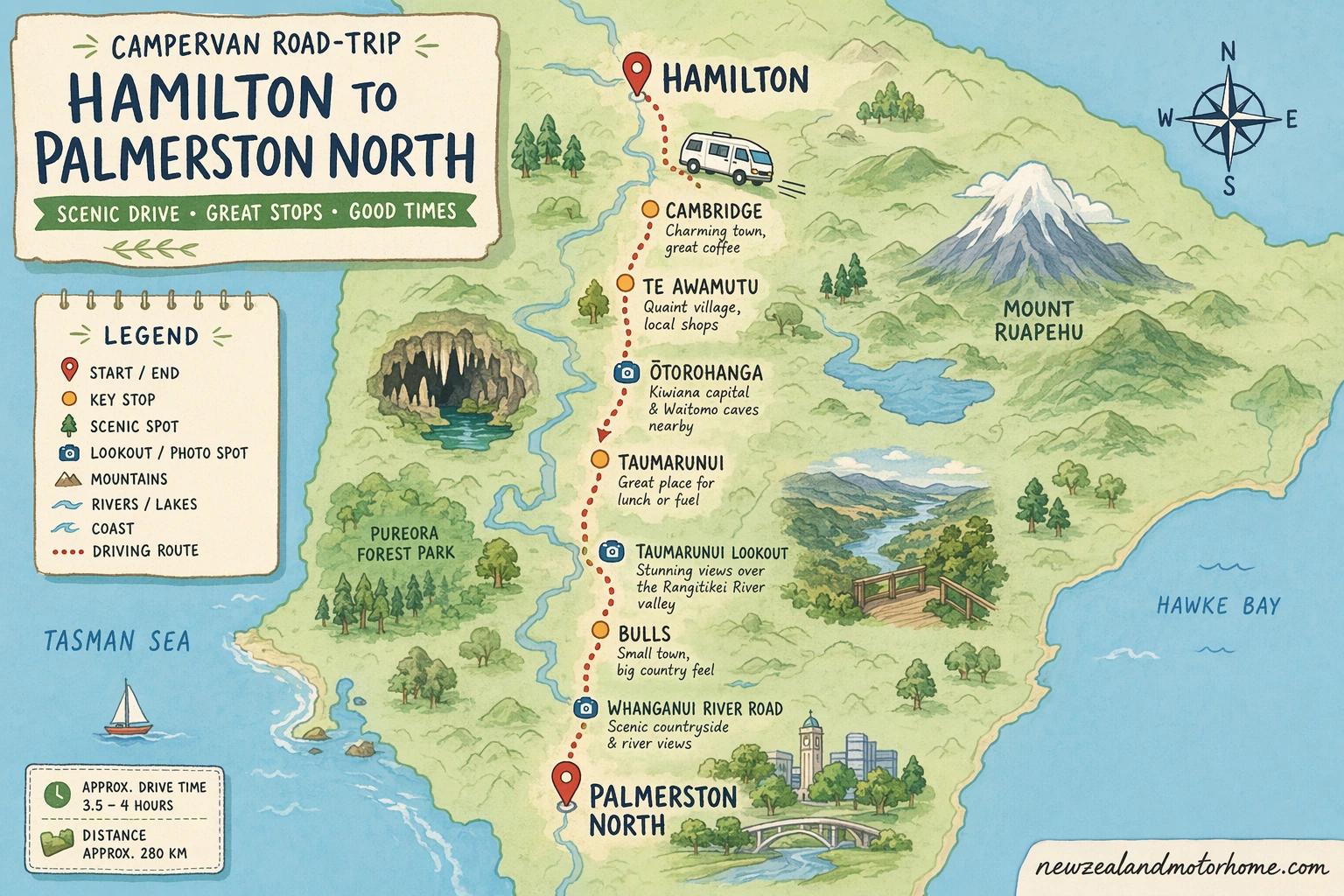
The most rewarding Hamilton to Palmerston North motorhome road trip follows SH3 south from Hamilton through Otorohanga, Te Kuiti, Awakino, New Plymouth, Hawera and Whanganui before rolling into Palmerston North. It is roughly 390–420 kilometres depending on detours, with about six to seven hours of wheel time before stops.
In a campervan, the west coast route makes more sense as a relaxed two to four day trip rather than a single push. SH3 has winding sections, especially south of Te Kuiti and around Awakino and Mt Messenger, so your average speed will be lower than in a car. If the weather is foul or there are roadworks, check current highway conditions before committing, as delays can be more tiring in a larger van.
- Fast-but-full: Hamilton to New Plymouth, then New Plymouth to Palmerston North.
- Comfortable: Hamilton to Waitomo or Te Kuiti, then New Plymouth, then Whanganui, then Palmerston North.
- Scenic: add time for Mokau, the Taranaki coast, Whanganui and a slower final morning into Manawatū.
Leg 1: Hamilton to Waitomo or Te Kuiti
Leave Hamilton with your fresh-water tank topped up, grey-water tank empty, LPG checked and groceries sorted. Once you are south of the city, services become more spaced out, and it is easier to deal with van jobs before you are looking for a level site in the dark.
The first leg is short and easy: Hamilton to Waitomo is about 75 kilometres, while Te Kuiti is only a little further. Otorohanga and Te Kuiti are sensible places to pause, use public toilets, buy food, and check whether your next overnight stop has powered or unpowered availability. If you are visiting Waitomo, arrive early enough to find long-vehicle parking and avoid blocking smaller bays with an overhanging rear.
- Overnight style: holiday park or campground near Waitomo or Te Kuiti if you want power after your first day.
- Van chores: plan to use official dump stations in Hamilton or Te Kuiti rather than relying on rural stops.
- Parking note: cave and village car parks can be busy; fold mirrors in tight bays and watch for pedestrians stepping behind the van.
Leg 2: Te Kuiti to Mokau and New Plymouth
This is the most memorable driving section and the one where you will feel the size of the campervan. SH3 drops through King Country and the Awakino Gorge towards the coast, with bends, narrow shoulders and regular heavy vehicles. Keep left, use slow-vehicle bays when you can, and do not let local traffic hurry you through corners.
Mokau is a good lunch pause if conditions are calm. Park only where signs allow, keep clear of boat ramps and beach access, and remember that coastal wind can tug at high-sided motorhomes when you open the door. From there, continue towards New Plymouth, where you have the best spread of powered sites, supermarkets, fuel, LPG bottle swaps and fresh-water options on this route.
- Best overnight base: New Plymouth or a signed coastal campground nearby, especially if you need showers, laundry or a powered site.
- Freedom camping: only use designated areas and only if your van has current self-containment certification; Taranaki councils actively signpost where overnighting is allowed.
- Road note: check for Mt Messenger or Awakino roadworks before leaving, and avoid this stretch late at night in bad weather.
Leg 3: New Plymouth to Hawera and Whanganui
From New Plymouth, SH3 runs past the mountain side of Taranaki, through Stratford and Hawera, then follows open rural country towards Patea and Whanganui. It is not technically difficult in a standard campervan, but wind, rain and passing trucks can make the drive feel busier than the map suggests.
Take your time leaving New Plymouth if you want to walk the Coastal Walkway or visit the waterfront; larger vans are easier to park at the edges of busy areas than right in the centre. Hawera is a practical mid-leg stop for fuel, food and toilets, and it is a sensible place to reassess weather before the run south.
- Dump and water planning: New Plymouth, Hawera and Whanganui are the logical service towns; confirm official dump station locations locally on the day.
- Overnight style: Whanganui works well for a powered site near town or a signed self-contained stop if you prefer a low-key night.
- Driving tip: keep an eye on your fuel range; do not assume every small settlement has easy LPG or late-opening services.
Leg 4: Whanganui to Palmerston North
The final leg to Palmerston North is comparatively straightforward, usually around 75–90 kilometres depending on your exact route and stops. SH3 and connecting roads through the Manawatū are generally van-friendly, with gentler gradients than the King Country section, but watch for crosswinds on open farmland.
If you have time, do not rush out of Whanganui. It is an easy place to reset the van: empty grey water at an official dump station, refill fresh water if available, charge devices on a powered site, and start the last morning with clean tanks. Once in Palmerston North, expect more urban parking pressure, so choose signed long-vehicle spaces or park slightly out from the centre and walk in.
- Arrival night: a holiday park or campground is the simplest option if you are handing the van over soon or need a final tidy-up.
- Freedom camping: Palmerston North and nearby districts have specific rules; do not assume a quiet street or reserve is legal overnight.
- Road caution: the old Manawatū Gorge road is not a through-route; use current signed routes if you detour east.
How many days to allow and when to adjust the plan
Two days is workable if your priority is getting from Hamilton to Palmerston North efficiently, but three days is the sweet spot for most campervan travellers. Four days gives you breathing room for Waitomo, the Taranaki coast and Whanganui without arriving at each overnight stop tired and late.
Winter brings shorter daylight and more rain on the western side of the island, so book or choose overnight stops earlier in the day. In summer, popular coastal campgrounds and designated freedom camping areas can fill quickly, especially for longer motorhomes that need level ground and turning space.
If you would like this route matched to your hire van size, travel dates and preferred mix of powered sites and self-contained stops, you can talk to us before you lock it in.
- 2 days: best for confident drivers with an early start and pre-planned overnight stop.
- 3 days: best balance of driving, van servicing and sightseeing.
- 4 days: best if you want Waitomo, New Plymouth and Whanganui to feel unhurried.
Keep planning
Holiday parks palmerston north
Read onCampervan supplies palmerston north
Read onCampervan hire palmerston north
Read onWellington to palmerston north campervan
Read onRotorua to palmerston north campervan
Read onQueenstown to palmerston north campervan
Read onCommon questions
Can I drive from Hamilton to Palmerston North in one day in a campervan?
You can, but it makes for a long and fairly tiring day once you include food stops, fuel, roadworks and slower winding sections. In a motorhome, two days is much more comfortable, and three days lets you stop overnight in Taranaki or Whanganui without rushing.
Is SH3 suitable for larger motorhomes?
Yes, SH3 is used by large vehicles, but some sections are narrow and winding, particularly around Awakino and Mt Messenger. Drive to the conditions, use slow-vehicle bays, and check current road alerts before leaving Te Kuiti or New Plymouth.
Where should I overnight between Hamilton and Palmerston North?
Good overnight bases include Waitomo or Te Kuiti, New Plymouth, and Whanganui. Choose powered sites when you need heating, charging or laundry, and only use freedom camping areas where signs allow self-contained campervans.
Are there dump stations on this route?
Yes, but plan them around the larger towns rather than leaving it to chance. Hamilton, Te Kuiti, New Plymouth, Hawera, Whanganui and Palmerston North are the practical places to check for official dump stations and fresh-water fills.
Do I need to book campsites ahead?
In summer, school holidays and long weekends, booking powered sites ahead is wise, especially around New Plymouth and the coast. Outside peak periods you may have more flexibility, but longer motorhomes still need sites with enough length and turning room.
Can I freedom camp on the Taranaki or Whanganui coast?
Only in designated places and only if your campervan has current self-containment certification. Rules differ by district, so read the signs at each site and do not rely on another van being parked there as proof that overnighting is allowed.
Have a planner shape this for your dates
Send a short outline — your dates, party size, and the kind of trip you want. A planner replies with a vehicle recommendation, a paced route, and the realistic budget.