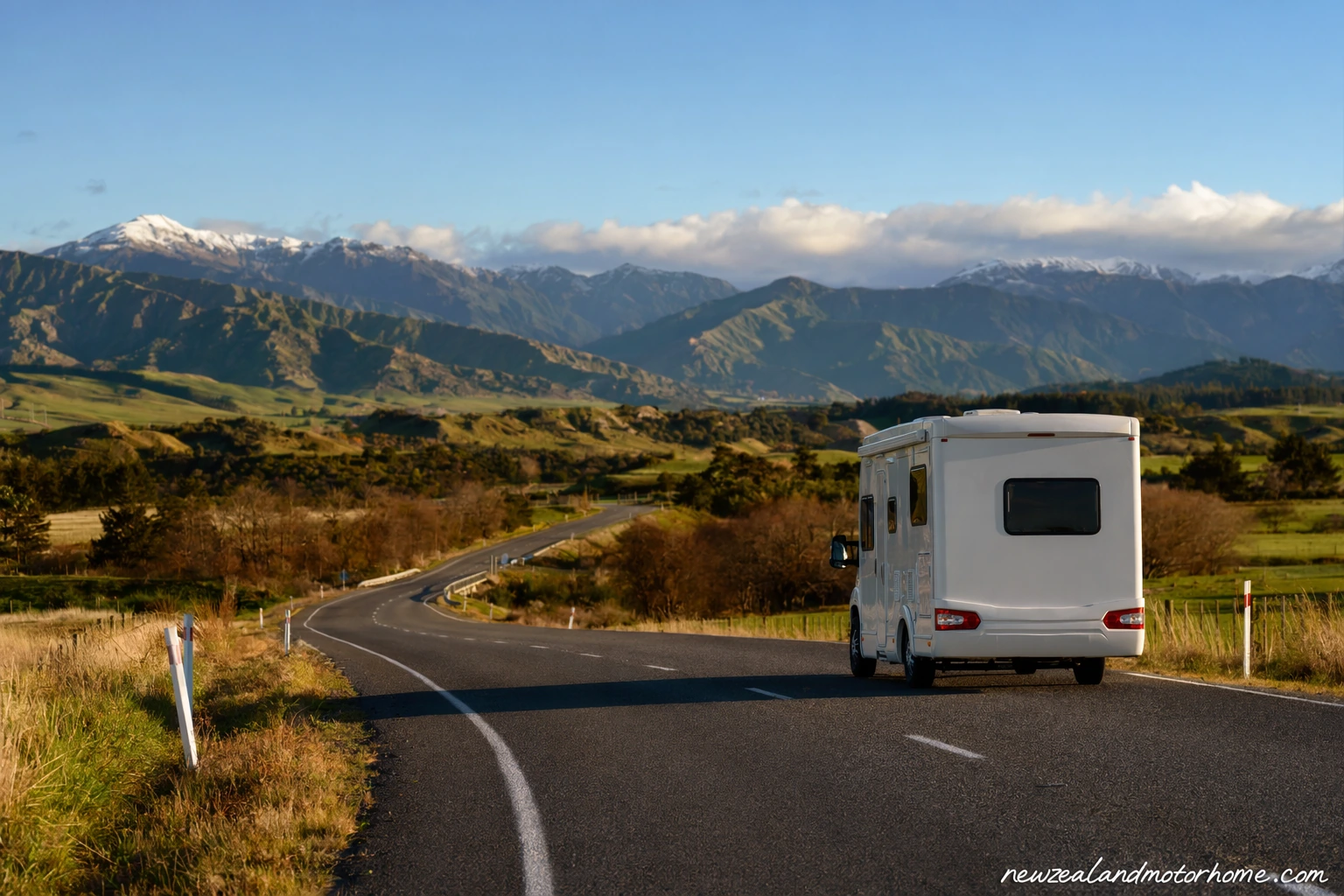
- Approx. 235 km via SH3
- Best over 2–3 days
- Powered sites in main towns
- Freedom camping only where permitted
- Good for certified self-contained vans
The New Plymouth to Palmerston North campervan route is a west-coast-to-inland run with just enough distance to feel like a proper road trip, without forcing long days behind the wheel. You can drive it in a single push, but it is much better in a hired campervan when you slow down through South Taranaki, spend a night by the Whanganui River, and arrive in Palmerston North with empty waste tanks and full water.
This guide is written for self-drive motorhome travellers: where the road feels easy in a longer van, where to park without blocking locals, how to think about powered and unpowered overnight stops, and where to plan dump station, fresh-water and LPG top-ups. It also folds in the practical bits that make a new plymouth to palmerston north drive smoother, especially if you are new to New Zealand roads.
Route overview: how long to allow in a campervan
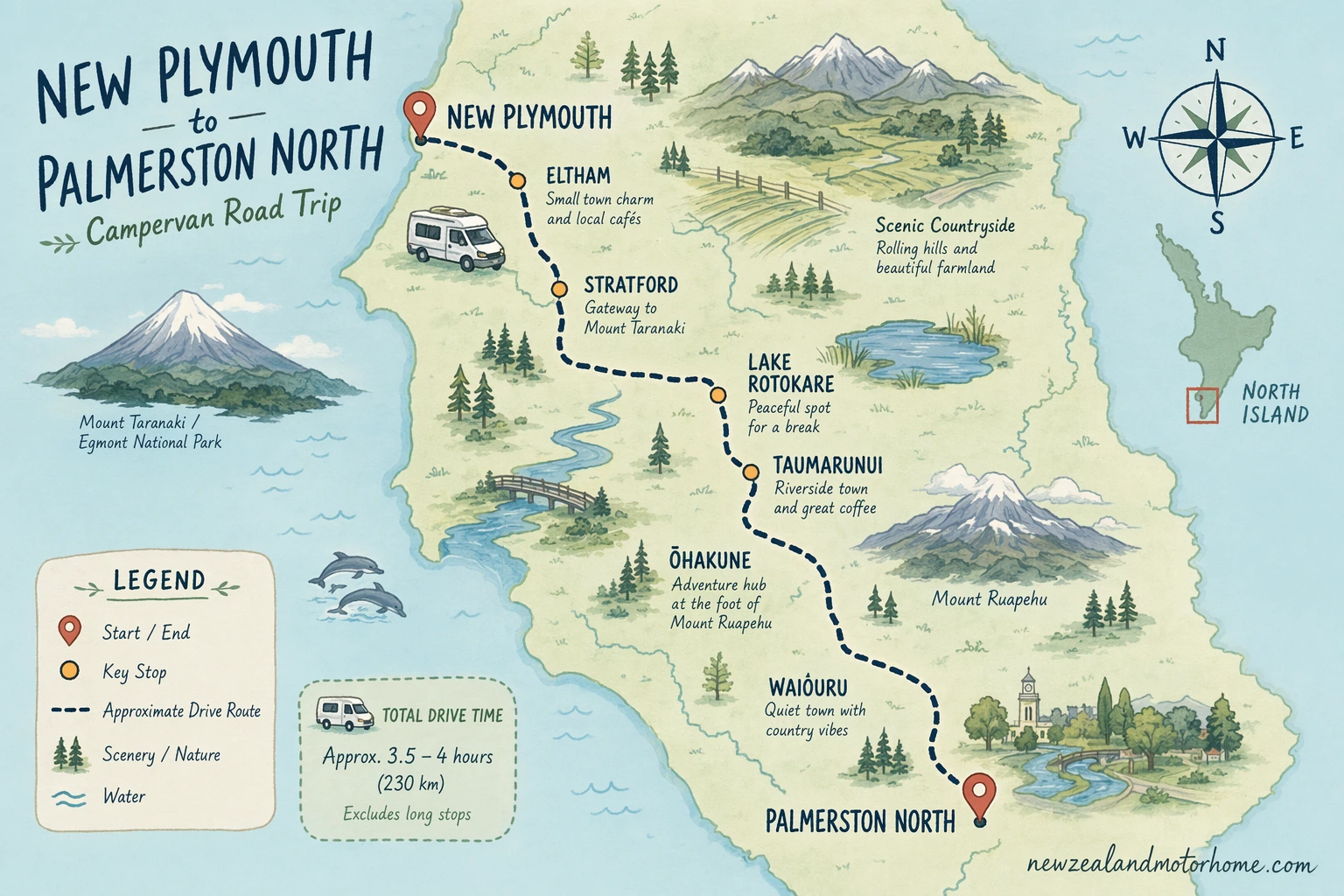
The direct New Plymouth to Palmerston North motorhome road trip follows State Highway 3 through Hāwera, Pātea, Whanganui, Bulls and Sanson before rolling into Palmerston North. It is roughly 235 kilometres, and while the actual driving can be done in around three and a half to four hours in good conditions, most campervan travellers will enjoy it more over two or three days.
A compact van can move easily through the towns on this route, but a larger 6-berth motorhome still needs ordinary New Zealand patience: leave extra room at rural intersections, watch for stock trucks, and do not rush narrow bridge approaches. The road is sealed the whole way on the main route.
- Fast but sensible: one long travel day, with a lunch stop and a dump/fresh-water plan before arrival.
- Easy campervan pace: two days, overnighting around Whanganui.
- Better holiday pace: three days, adding Surf Highway 45 or extra time in South Taranaki.
If you want this route shaped around your van size, arrival time and whether you prefer powered sites or freedom camping, you can talk to us before you lock the nights in.
Leg 1: New Plymouth to Hāwera via the coast or SH3
Leaving New Plymouth, top up groceries and fuel before you get too settled into the coast. The city is the easiest place on the route for supermarket parking, LPG bottle swaps or refills, and a pre-departure fresh-water fill if your hire depot or overnight park allows it. Central car parks can be tight for long vans, so use end spaces where your rear overhang will not sit across a footpath or traffic lane.
The quickest line south is SH3 through Inglewood, Stratford and Eltham to Hāwera. It is a practical, sealed route with regular towns, good for a wet day or if you are carrying a taller motorhome and want fewer side-road surprises. For a more scenic start, Surf Highway 45 loops around the coast through Ōakura, Ōpunake and the Cape Egmont area before rejoining inland roads towards Hāwera.
- SH3 option: best for a straightforward travel day, easier fuel stops, and fewer slow coastal bends.
- Surf Highway 45 option: better for beaches and mountain views, but slower in a larger van.
- Parking note: beach access roads can be narrow or exposed; avoid unsealed or soft-sand areas unless clearly suitable for your vehicle.
Hāwera is a useful reset town. It has supermarkets, service stations and van-friendly street parking if you choose carefully, plus local attractions where you can usually park a campervan more comfortably than in a dense city centre.
Leg 2: Hāwera to Whanganui, with a proper break at Pātea
South of Hāwera, SH3 runs through open farmland and small settlements before reaching Pātea and the coast near the river mouth. This part of the New Plymouth to Palmerston North campervan journey is not difficult, but it can be windy, and passing lanes are not constant. Let faster traffic go when safe, especially if you are still getting used to the width of a hired motorhome.
Pātea makes a good coffee, lunch or leg-stretch stop. In a longer van, look for street or reserve parking where you can drive in and out without reversing across busy traffic. Keep clear of boat ramps, private access and any areas signed for short vehicles only.
- Good pause points: Hāwera for supplies, Pātea for the river and coast, Waitōtara for a short roadside reset.
- Driving note: crosswinds can be noticeable on open sections; reduce speed rather than correcting sharply.
- Campervan habit: use this leg to check grey-water levels before deciding whether to overnight in Whanganui.
Arriving in Whanganui, the riverfront is lovely but not every central space suits a high-roof van. Avoid multi-storey parking and look for open-air public parking where there is no height barrier, no market-day restriction, and enough room for your doors to open without leaning into traffic.
Whanganui overnight: powered sites, freedom camping and river time
Whanganui is the natural overnight stop on this route. It breaks the drive almost perfectly, has enough services for a motorhome, and gives you a real evening outside the van rather than just a late arrival at a campsite. If you want showers, laundry, charging and an easy water routine, book a powered site at a holiday park or campground.
Certified self-contained campervans may have limited freedom camping options in the wider Whanganui district, but these can change with council bylaws, seasonal pressure and event days. Always check the current council information and signs on the ground before you settle in. If a spot feels cramped or residential, move on rather than squeezing a motorhome into a place that will annoy locals.
- Powered site: best for battery charging, hot showers and an easy morning departure.
- Unpowered site: fine if your house battery is healthy and you are not running heaters or heavy appliances.
- Freedom camping: only for compliant, certified self-contained vehicles and only where permitted.
Use Whanganui as a practical service stop too. Plan to empty toilet and grey-water tanks at a signposted dump station, and refill drinking water only from taps marked potable. If you need LPG, sort it here or in Palmerston North rather than banking on a small rural stop having exactly what you need.
Leg 3: Whanganui to Palmerston North through Bulls and Sanson
The final leg leaves Whanganui on SH3 and works through rolling rural country towards Turakina, Bulls, Sanson and Palmerston North. It is an easy enough drive in a campervan, but it is still a working freight route, so expect trucks, wind, and changing speed limits through towns. Keep your speed steady and avoid pulling partly onto soft shoulders unless there is a proper lay-by.
Bulls and Sanson are useful short-stop towns rather than long-stay campervan bases. They can work well for fuel, bakery food or a driver swap, but choose parking with a clean exit line. A long motorhome angled across small-town kerb parking can block traffic quickly.
- Before leaving Whanganui: empty waste if tanks are near full, especially if your next night is unpowered.
- On the road: watch for speed changes, school traffic and trucks entering from side roads.
- Arriving in Palmerston North: use open-air parking near parks or wider streets rather than height-restricted buildings.
In Palmerston North, the Esplanade and river areas are good places to stretch after the drive, provided you park considerately and check signs. If you are staying overnight, a powered campground site is the easiest option after a travel day, particularly if you need laundry, a long shower, or a battery reset.
Campervan services and road notes for the whole route
This is a forgiving route for a first-time campervan traveller because you are never far from a decent town, but it still pays to run the van like a small home on wheels. Do not wait until the toilet cassette is full or the fresh tank is low; plan services around New Plymouth, Hāwera, Whanganui and Palmerston North.
Dump stations are generally found in the larger towns and at many holiday parks, but access rules vary. Some are public, some are for guests, and some require you to bring your own hose or key arrangement. Use only designated dump points for toilet and grey water, and never drain grey water at a roadside stop or beach car park.
- Fresh water: fill from potable taps only; if a tap is unmarked, ask before using it.
- LPG: sort bottles or refills in larger centres rather than at the end of the day.
- Tyres and fuel: check pressures and range before taking the coastal detour.
- Vehicle size: know your height before entering service stations, covered parking or tree-lined campground lanes.
Weather is the main variable. Taranaki and the lower west coast can deliver rain, salt wind and sudden bright sun in the same morning. In a high-sided motorhome, slow down before exposed bridges and open farmland, and give yourself permission to stop early if the drive stops feeling relaxed.
Keep planning
Holiday parks palmerston north
Read onCampervan supplies palmerston north
Read onCampervan hire palmerston north
Read onWellington to palmerston north campervan
Read onRotorua to palmerston north campervan
Read onQueenstown to palmerston north campervan
Read onCommon questions
Can I drive from New Plymouth to Palmerston North in one day by campervan?
Is Surf Highway 45 suitable for a motorhome?
Where should I overnight between New Plymouth and Palmerston North?
Are there freedom camping options on this route?
Where can I empty waste and refill water?
Is the road difficult for a first-time campervan driver?
Have a planner shape this for your dates
Send a short outline — your dates, party size, and the kind of trip you want. A planner replies with a vehicle recommendation, a paced route, and the realistic budget.