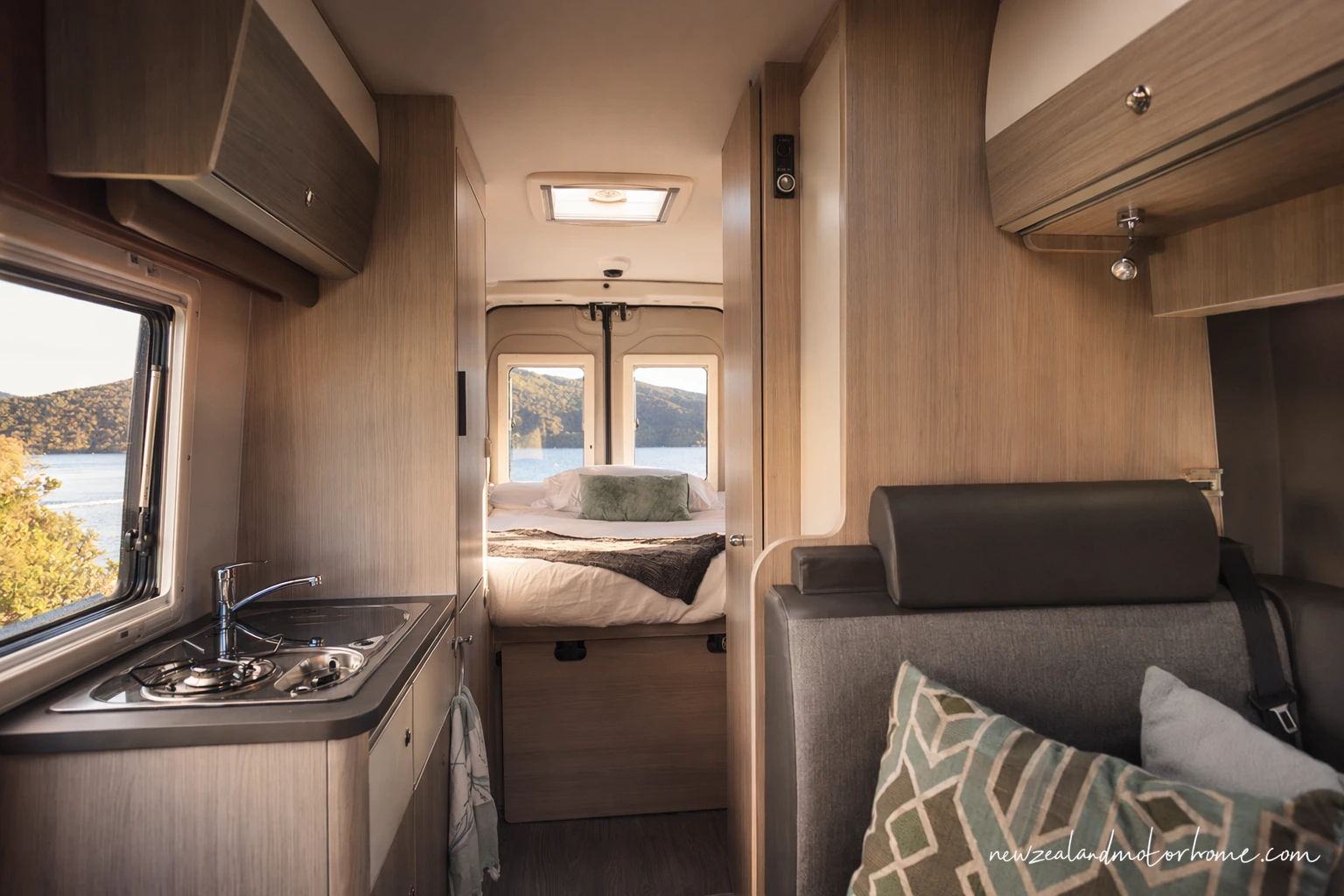
- Best for 1–2 adults
- Fits most powered sites
- Check self-containment status
- Easy parking versus larger motorhomes
- Plan water, waste and LPG stops
A 2 berth van is the classic New Zealand road-trip size: small enough for supermarket car parks and winding coastal roads, but with your bed, galley and luggage all travelling with you. If you are comparing 2 berth campervan hire nz options, the important questions are not just how it looks in photos — it is how easily you can cook when it rains, where the bed goes, how much water it carries, and whether it suits the kind of campsites you want to use.
This guide is written for self-drive travellers sleeping in their hired van. We look at the usual 2 berth layouts, what a 2 berth motorhome nz feels like to drive, how powered and unpowered sites work, and the everyday habits that make a small van trip smoother: topping up fresh water, finding dump stations, managing LPG, and choosing sensible overnight stops.
Who a 2 berth van suits best
A 2 berth camper is usually best for one or two adults who want a flexible, lower-fuss way to tour New Zealand. It suits couples, close friends, solo travellers who like extra space, and anyone who would rather fit into compact holiday park sites than manoeuvre a large motorhome through every small town stop.
Most 2 berth vehicles are easier to park than larger 4 or 6 berth motorhomes. You can usually pull into standard sightseeing car parks, café lay-bys and trailhead parking areas with less stress, although you still need to watch for height barriers, soft grass verges and narrow turning areas.
- Best for: one or two travellers packing light to moderately.
- Less suited to: families, heavy luggage, or travellers who need a fixed bed and separate dining area at all times.
- Trip style: frequent one or two-night stops, scenic driving days, and a mix of holiday parks and approved freedom camping areas.
Layouts, bed space and living inside a small van
A 2 berth camper New Zealand travellers hire often comes in one of two broad styles: a compact campervan with a rear or side dinette that converts into a bed, or a slightly taller 2 berth motorhome with more standing room, a small bathroom, and more storage. The first is nimble and simple; the second feels more self-contained but may be wider, taller and heavier on fuel.
Think carefully about the bed. Some convert from the dining seats each night, while others stay made up at the rear. A convertible bed gives you daytime living space, but you will be moving cushions, bedding and bags more often. A fixed or semi-fixed bed is easier after a long drive, but you may lose indoor seating.
- Cooking: expect a compact galley with a small fridge, sink and gas hob or portable cooker, depending on the vehicle.
- Storage: soft bags are easier than hard suitcases, especially if the bed converts each night.
- Wet weather: a taller van or motorhome gives you more comfort when cooking and changing inside during West Coast rain or alpine cold snaps.
Driving and parking a 2 berth camper on New Zealand roads
The big advantage of a 2 berth is confidence on the road. New Zealand has plenty of narrow bridges, tight township streets, steep holiday park driveways and single-lane access roads to beaches and DOC areas. A smaller van makes these moments simpler, though it still needs to be driven like a loaded camper rather than a car.
Allow more time than the map suggests, especially on routes such as the Coromandel coast, Takaka Hill, the road to Milford Sound, and sections of the West Coast where you will want photo stops. Use designated pull-offs rather than stopping on the road shoulder, and check that the parking area is firm and level before committing the van.
- Height: check your vehicle height before entering covered car parks, supermarket basement parking or areas with barrier arms.
- Length: even compact campers can overhang small spaces; park at the edge of a row where possible.
- Wind: slow down on exposed bridges and open plains, especially in Canterbury, Southland and around alpine passes.
Powered sites, unpowered sites and freedom camping
A 2 berth van fits most powered and unpowered holiday park sites easily, which is helpful in busy places such as Queenstown, Wānaka, Rotorua, Nelson and the Bay of Islands. Powered sites let you plug into 230V mains power, recharge house batteries, run approved appliances and use campground facilities without worrying as much about battery levels.
Unpowered sites are fine for shorter stays if your fridge, lights and water pump run from the house battery and you drive regularly enough to recharge. If you are staying two nights without power, be conservative with lights, heating and device charging. In colder months, a powered site can be worth it just for comfort and battery management.
Freedom camping rules vary by council and location. To use many approved freedom camping areas, your vehicle must meet the current self-containment requirements and display the correct certification. Always check local signage on arrival, avoid camping in day-use-only car parks, and leave the site cleaner than you found it.
Water, waste, LPG and the small-van routine
The rhythm of a good 2 berth campervan hire nz trip is simple: fill fresh water before it gets low, empty grey water and toilet waste at proper dump stations, and keep an eye on LPG if your cooking, hot water or heating uses gas. Small vehicles may have smaller tanks, so it pays to build these stops into your driving day rather than leaving them until dark.
Holiday parks usually make this easy with fresh-water taps, dump stations and rubbish facilities. Public dump stations are also found in many towns, often near i-SITE areas, reserves or service centres, but access and hose fittings can vary. Never empty grey water onto the ground, even if you are parked somewhere remote.
- Fresh water: refill from designated potable water taps only.
- Grey water: empty at a dump station before tanks are full, especially before long scenic detours.
- Toilet cassette: use dump stations and rinse facilities correctly; do not use public toilets for cassette waste unless explicitly set up for it.
- LPG: check whether your bottle is swap or refill style before heading into more remote regions.
Planning a route around a 2 berth camper
A compact van gives you room to be spontaneous, but the best trips still have a loose structure. In summer, book powered sites ahead in high-demand towns and keep one or two shorter driving days between longer legs. In shoulder seasons, you can often mix booked holiday parks with approved low-cost or freedom camping stops, provided your van is certified and the weather suits it.
When choosing overnight stops, think about what you need the next morning: a dump station, drinking water, a supermarket, LPG, laundry, or simply an easy exit back onto the highway. A 2 berth van can tuck into many places, but that does not mean every place is legal or sensible for sleeping.
If you want help matching a van size to a route, use the talk-to-us step and tell us how you like to travel — powered sites every night, a few freedom camping nights, or a mix. That makes it easier to plan realistic driving days and overnight stops for the vehicle you actually hire.
Common questions
Is a 2 berth campervan big enough for two people in New Zealand?
Yes, for most couples or two close travelling companions, a 2 berth campervan is enough if you pack sensibly. Choose soft bags, keep the bed area organised, and be realistic about indoor space on wet days.
Can a 2 berth camper use powered sites?
Most 2 berth campervans and motorhomes can use powered sites if they have the correct external power connection. A powered site is useful for recharging batteries, running approved appliances and staying comfortable on colder nights.
Do I need a self-contained 2 berth van for freedom camping?
For many freedom camping areas, yes. Your vehicle must meet the current self-containment rules and display the required certification, and you still need to follow local council signs and restrictions.
Is a 2 berth motorhome nz easier to drive than a larger motorhome?
Generally, yes. A 2 berth vehicle is usually shorter and easier to park, which helps on narrow roads, in town centres and at busy scenic stops, though you still need to allow for height, width and braking distance.
How often will I need to empty waste or refill water?
It depends on tank size and how carefully you use water, but small vans often need more regular servicing than larger motorhomes. Build fresh-water fills and dump station stops into your route every few days, or more often if you are freedom camping.
Should I choose a campervan or a 2 berth motorhome?
Choose a compact campervan if easy parking and simple travel matter most. Choose a 2 berth motorhome if you want more standing room, better indoor comfort and possibly a bathroom, while accepting a larger vehicle footprint.
Have a planner shape this for your dates
Send a short outline — your dates, party size, and the kind of trip you want. A planner replies with a vehicle recommendation, a paced route, and the realistic budget.