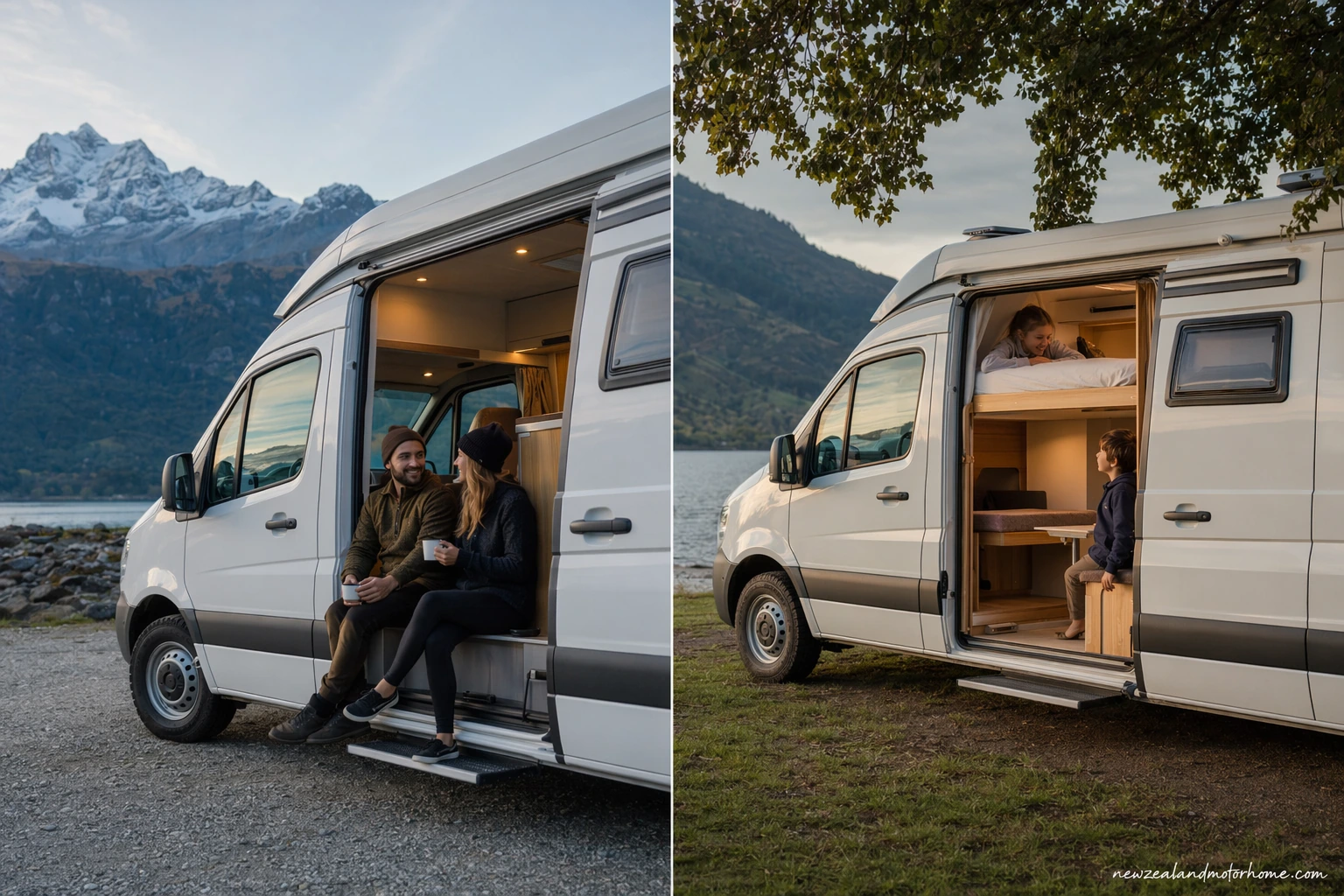
- Best for 1–2 travellers: 2 berth
- Best for families: 4 berth
- Check self-containment before freedom camping
- Powered sites help in winter
- Larger vans need longer, flatter sites
Choosing between a 2 berth and a 4 berth campervan is not just about how many people are travelling. In New Zealand, the size of your van affects where you can park, which overnight sites feel easy, how often you need to plug in, and whether a rainy West Coast evening feels cosy or cramped.
This guide compares the real self-drive trade-offs: driving narrow roads, fitting into holiday park sites, using dump stations, carrying fresh water, storing luggage, and staying eligible for freedom camping where it is allowed. Think of it as the practical conversation you would have before picking up the keys.
The quick answer: who each van size suits
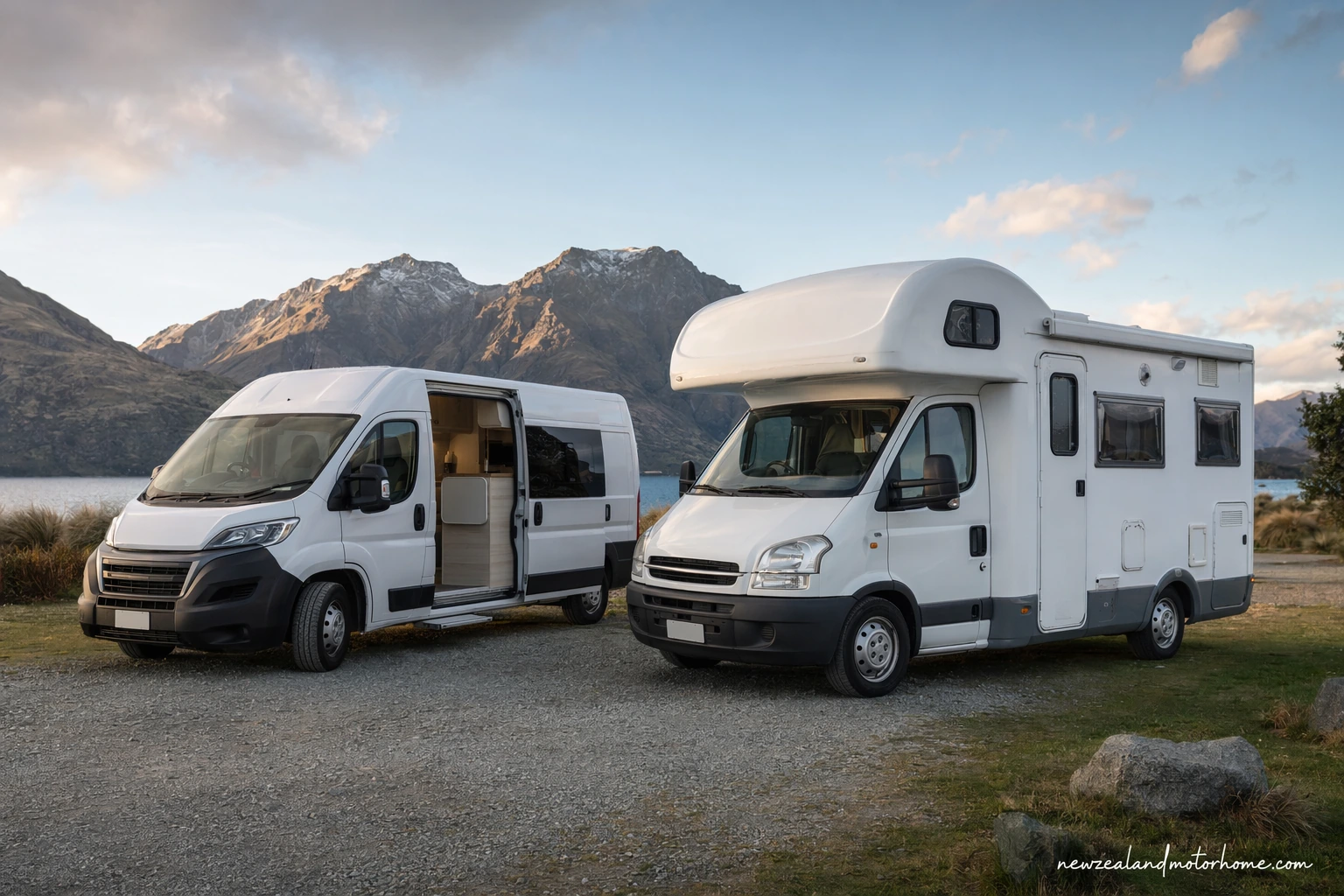
A 2 berth campervan usually suits one or two travellers who want an easier drive, simpler parking, and a lower-fuss setup for short stops. It is often the more relaxed choice for town visits, scenic pull-ins, and routes with tight bends or older holiday parks.
A 4 berth campervan suits families, two couples, or two travellers who value a made-up bed, indoor living space, and more onboard storage. The extra room can be a big comfort in shoulder seasons, but you are driving a longer and often taller vehicle every day.
- Choose 2 berth if you will move often, stay in smaller towns, and spend plenty of time outside the van.
- Choose 4 berth if you need separate sleeping spaces, more shelter in bad weather, or room for children’s gear.
- Check certification before you book: freedom camping eligibility depends on the vehicle’s current self-containment certification and local rules, not simply the number of berths.
Driving, parking and road feel
On the road, the biggest difference is confidence. A 2 berth van is generally easier to place on narrow lanes, in supermarket car parks, and at roadside viewpoints where the bay markings were not designed with a long motorhome in mind. You still need to watch height clearances and take corners wide, but the learning curve is usually gentler.
A 4 berth gives you more living space, but it asks for more planning. Allow extra room when turning into fuel stations, reverse into campsites slowly, and be careful with overhanging trees at older holiday parks and DOC-style campgrounds. On windy open roads, especially across plains, coastal causeways, and exposed lake edges, a taller van can move around more than a compact one.
New Zealand roads can change character quickly: a wide state highway can become a twisting gorge road, then a gravel access road to a basic campsite. If you are nervous about vehicle size, a 2 berth will usually feel less demanding. If you choose a 4 berth, plan shorter driving days and arrive before dark so you can pick a level site without rushing.
Campsites, powered sites and freedom camping
Both 2 berth and 4 berth vans can use holiday parks, commercial campgrounds, many DOC campsites, and approved council overnight areas, but the experience is different. A compact 2 berth can often fit more easily into unpowered grass sites, older powered bays, and tighter corners. A 4 berth may need a longer, flatter site and a little more space to open doors, windows, awnings, and external lockers.
Powered sites matter more if you are running a larger fridge, charging several devices, using a heater fan, or travelling in winter. Many 2 berth travellers can manage unpowered nights more comfortably if they drive most days and are careful with lights and charging. In a 4 berth, especially with children or extra devices, plugging in every few nights can make the trip smoother.
Freedom camping is not automatic. Your van needs the correct self-containment certification for the places you want to stay, and each council or land manager can set its own rules. Some 2 berth vans have full facilities, while others are more basic; many 4 berth motorhomes have fixed toilets and larger tanks, but you still need to check the certificate, signage, and the current local bylaw before you settle in for the night.
Living space, beds, storage and wet-weather comfort
This is where a 4 berth earns its keep. Having a separate dining area, extra headroom, and a bed that can stay made up can change the mood of a trip, especially after a wet walk or a long drive. There is usually more space for soft bags, food boxes, jackets, child seats, and muddy shoes.
A 2 berth works beautifully when you pack lightly and stay organised. The trade-off is that one space often does several jobs: lounge, bed, kitchen, and gear storage. If the bed has to be converted each morning and night, factor that into how you travel. For some couples it becomes a quick routine; for others it becomes the thing they wish they had avoided.
Think about inside days, not just sunny brochure days. Can both of you sit comfortably while it rains? Is there room to cook without climbing over bags? Can you stand up in the van if you need to? These small daily details matter more than an extra cupboard you never use.
Water, waste, LPG and dump station rhythm
The larger the van, the more forgiving the tanks tend to be, though layouts vary. A 4 berth usually carries more fresh water and grey water, which means fewer fills and dumps if everyone uses water carefully. A 2 berth may need more frequent stops for fresh water, grey-water disposal, and toilet cassette emptying.
Plan your route around services, not just scenery. Before heading into quieter regions, check where you can fill potable water, use a dump station, and swap or refill LPG if your cooking, hot water, or heating depends on it. Holiday parks often make this easy; remote overnight stops may not.
- Empty grey water and toilet waste only at approved dump stations.
- Top up fresh water before long DOC-camp or freedom-camping stretches.
- Check LPG levels before cold nights or multi-day detours.
- Do not assume every scenic overnight stop has bins, water, or toilets.
Cost, comfort and the best value choice
A 2 berth is often cheaper to hire and can use less fuel, but the lowest headline cost is not always the best value. If you end up booking powered holiday park sites every night because the van is too cramped or under-equipped, the savings can shrink. If you are travelling light and happy with simple cooking, it can be excellent value.
A 4 berth usually costs more to hire and may cost more on fuel and ferry crossings because of length or height, but it can reduce stress for families and longer trips. More onboard comfort can also make it easier to stay put for two nights, cook in the van, and ride out bad weather without feeling trapped.
The best choice comes from matching the van to your route, season, and travel style. If you are still weighing up space against driveability, sketch your stops first, then choose the vehicle. You can also use our talk-to-us trip planning step if you want a route sense-check before locking in a 2 berth vs 4 berth campervan.
Common questions
Can two people hire a 4 berth campervan in New Zealand?
Yes. Many couples choose a 4 berth for the extra room, a fixed bed, or more comfortable wet-weather living. Just remember you will be driving and parking a larger vehicle, so plan slightly easier days and check site lengths when booking.
Is a 2 berth campervan easier for freedom camping?
It can be easier to park and fit into small designated bays, but freedom camping depends on current self-containment certification and local rules. Do not assume a 2 berth is eligible; check the certificate, onboard toilet setup, and signs at the overnight area.
Do 4 berth campervans need powered sites every night?
Not necessarily. Battery, solar, fridge size, heating use, and how many devices you charge all affect how long you can stay unpowered. Many travellers plug in every few nights to reset batteries, refill water, empty waste, and do laundry.
Which is better for South Island mountain roads?
A 2 berth generally feels easier on narrow, winding roads and in small alpine town car parks. A 4 berth is still manageable if you drive patiently, use pull-outs to let faster traffic pass, and arrive at overnight stops before dark.
Can a family of four manage in a 2 berth campervan?
No, not for sleeping legally and safely. Berths need to match the number of people sleeping in the vehicle, and everyone needs an approved seatbelt while driving. A family of four should look at a 4 berth or larger motorhome.
Have a planner shape this for your dates
Send a short outline — your dates, party size, and the kind of trip you want. A planner replies with a vehicle recommendation, a paced route, and the realistic budget.