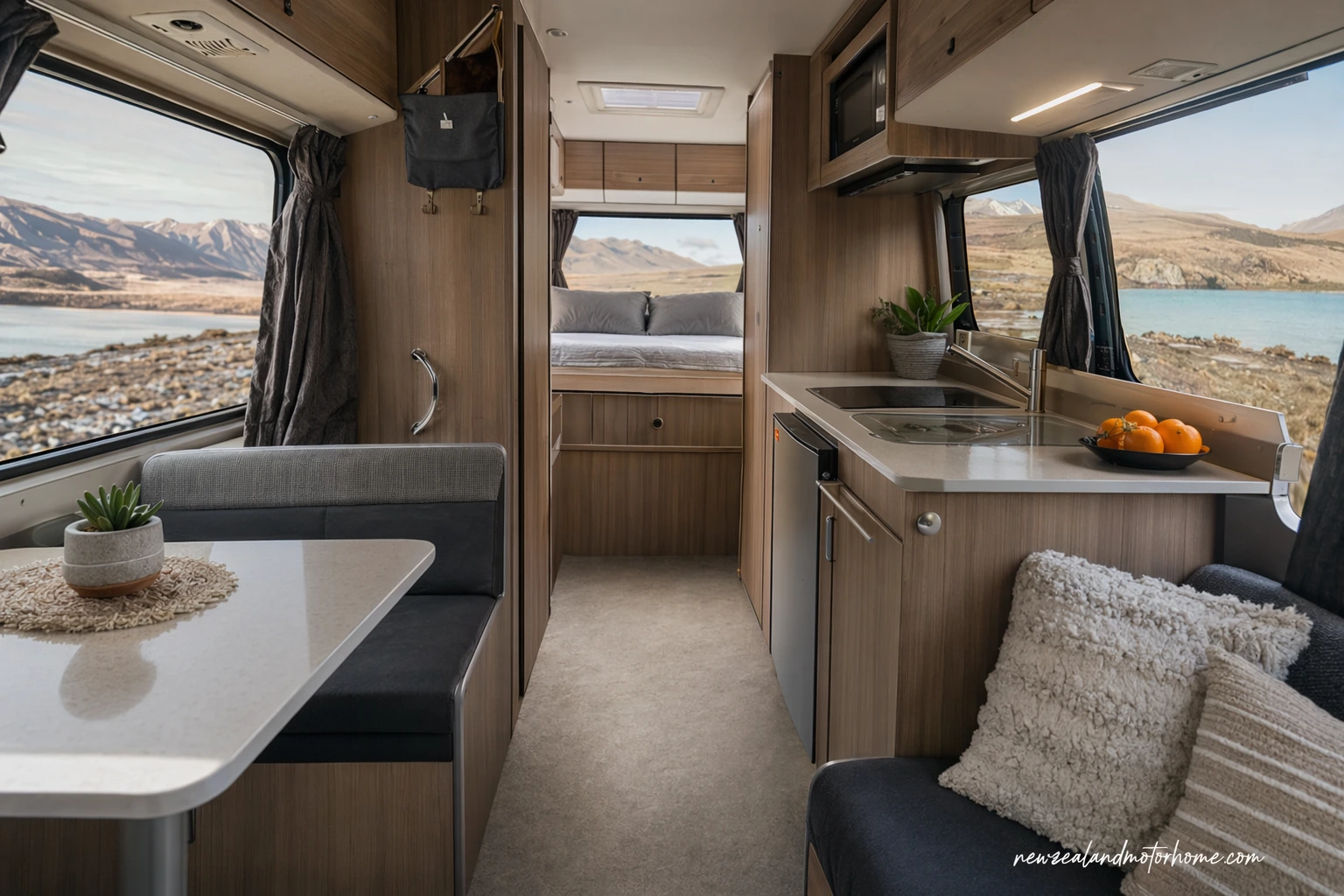
- Best for 2 adults plus kids
- Fits most powered sites
- Check height and length
- Self-containment rules apply
- Plan LPG, water and dump stops
Choosing 4 berth campervan hire NZ usually means you want proper beds, a real inside table, and enough living space for wet jackets, food bags and a couple of tired travellers at the end of the day. It is the sweet spot for many self-drive trips: more comfortable than a compact camper, but still manageable on New Zealand’s winding roads and small-town streets.
This guide looks at how a 4 berth motorhome NZ layout actually works once you are living in it: where everyone sleeps, how the kitchen and bathroom fit in, what to expect at powered and unpowered sites, and how to think about fuel, LPG, fresh water and dump stations before you set off.
Who a 4 berth camper suits best
A 4 berth camper New Zealand hire is usually best for two adults who want extra room, a family with one or two children, or two friends who prefer separate beds. It can work for four adults, especially on a shorter trip, but you will want to be honest about luggage, privacy and how much time you will spend inside during rain.
The big advantage is that you are not remaking the whole van every time someone wants a cup of tea. Many 4 berth layouts give you a dining area, a compact kitchen, an onboard toilet and shower, plus two sleeping zones. That makes overnight stops easier when the weather turns or when you arrive late at a holiday park.
- Best fit: families, couples wanting space, or travellers carrying outdoor gear.
- Check before booking: certified seatbelts for every passenger, child-seat compatibility, and whether beds are fixed or made up each night.
- Think about storage: soft bags are much easier than hard suitcases in a motorhome locker.
Common layouts and sleeping space
Most 4 berth campervans and motorhomes in NZ use one of two layouts: a rear bed plus an over-cab bed, or a rear lounge/dinette that converts into a bed plus an over-cab sleeping area. The over-cab bed keeps the floor clear, but it does involve climbing up and down, so it is not ideal for every traveller.
Rear fixed beds are convenient because you can leave bedding in place and keep the living area usable. Convertible beds give you more daytime seating, but they add a small daily job at bedtime. If you are travelling with children, decide who sleeps where before you book; it saves a lot of shuffling on the first night in a campground.
- Over-cab bed: good use of space, but check headroom and ladder access.
- Convertible lounge bed: flexible by day, more effort at night.
- Bathroom onboard: useful for remote stops, but the cassette and grey-water tank still need regular emptying.
- Kitchen space: expect a compact fridge, hob and sink rather than a full kitchen bench.
Driving and parking a van this size in New Zealand
A 4 berth motorhome NZ vehicle is noticeably bigger than a small campervan. It may be wider, longer and taller, with more rear overhang, so allow extra room when turning into fuel stations, scenic car parks and supermarket spaces. Always check the height sticker before driving under motel awnings, trees, covered parking or ferry decks.
On the open road, plan for slower travel than the map suggests. New Zealand roads can be narrow, hilly and winding, with one-lane bridges, gravel access roads to some lakes, and tight coastal corners. Use slow-vehicle bays when traffic builds behind you, and park in the longer bays at viewpoints rather than squeezing into a standard car space.
- In towns: use the outside edge of supermarket car parks and walk a little further.
- At lookouts: avoid blocking turning circles or bus spaces, even for a quick photo stop.
- On gravel roads: check your hire agreement first; some roads may be restricted.
- On alpine routes: leave early, watch weather forecasts, and carry chains if required by the hire operator in winter.
Powered, unpowered and freedom camping stops
A 4 berth campervan will fit most holiday park powered sites, but it is still worth giving the operator your approximate vehicle length when you book, especially in summer, school holidays, or on smaller coastal sites. Powered sites are the easiest choice if you are running heating, charging devices, using the microwave if fitted, or staying more than one night.
Unpowered sites can work well for short stays, particularly if your house battery is healthy and you are careful with lights, fridge use and device charging. DOC-style campsites and simpler private campgrounds may have beautiful settings but fewer services, so arrive with fresh water onboard and empty waste tanks where possible.
Freedom camping is not simply parking wherever there is a view. You need to follow local council rules, respect no-camping signs, and use a vehicle that meets current self-containment certification requirements where they apply. If you want help matching overnight stops to your route and van size, you can use our plan-your-trip step before locking in the itinerary.
- Powered sites: best for longer stays, winter travel and easy battery charging.
- Unpowered sites: good for one or two nights if you manage water and power carefully.
- Freedom camping: only where permitted, and only with the right self-containment setup.
- Arrival tip: reach smaller camps before dark so you can level the van and find the facilities.
Fuel, LPG, fresh water and dump stations
Before you leave the depot, ask where the fuel filler, LPG bottle, fresh-water inlet, grey-water outlet and toilet cassette are located. It sounds basic, but it is much easier to learn while parked on level ground than when you are tired, it is raining, and the dump station queue is building behind you.
Fuel use varies with vehicle size, wind, hills and driving style. A 4 berth campervan is heavier than a small van, so smooth driving makes a difference: keep your speed steady, avoid hard braking where possible, and do not plan fuel stops too far apart in remote areas. In the South Island, top up before long stretches through the Mackenzie Basin, the West Coast or alpine passes.
LPG commonly runs cooking, hot water and sometimes heating. Fresh water and grey water need regular attention, especially with four people showering or washing dishes. Make dump stations part of your route planning rather than an afterthought; many holiday parks have them, and some towns provide public facilities for certified self-contained vehicles.
- Fuel: top up before remote roads and check whether the van uses petrol or diesel.
- LPG: monitor the bottle level before cold nights or multi-day campground stays.
- Fresh water: refill from marked potable taps only.
- Dump stations: empty grey water and toilet waste only at approved points.
Packing and living comfortably in a 4 berth
The difference between a tidy 4 berth and a frustrating one is usually packing. Use soft bags, keep shoes near the door, and give every person a small storage zone. Wet-weather gear needs a plan too; New Zealand can deliver sunshine, southerlies and sideways rain in the same week.
Cook simple meals on travel days and save bigger cook-ups for nights when you are plugged into power and settled early. If you are travelling with children, a small torch each, easy snacks and a clear bedtime routine make the van feel less cramped. For two couples, agree on bathroom use, bed setup and morning coffee expectations before the first night.
- Bring soft luggage: it fits lockers and under-seat spaces better than hard cases.
- Use packing cubes: they stop cupboards becoming a jumble on bumpy roads.
- Keep a day bag handy: raincoat, swimwear, chargers and snacks should be easy to reach.
- Ventilate: crack roof vents when safe to reduce condensation overnight.
Common questions
Is a 4 berth campervan big enough for four adults?
It can be, but it depends on the layout and trip length. Four adults will need to be organised with luggage and comfortable with less privacy, so for longer journeys many travellers prefer using a 4 berth for two or three people instead.
Can a 4 berth motorhome fit in normal campsites?
Most 4 berth motorhomes fit standard powered sites at holiday parks, but always check the vehicle length when booking. Smaller campgrounds, bush sites and tight coastal parks may have limited level spaces or narrow access lanes.
Do I need a powered site every night?
No, but powered sites make life easier for battery charging, heating and longer stays. Unpowered nights are fine if you arrive with charged batteries, enough fresh water, and a plan for the next dump station or refill point.
Can I freedom camp in a 4 berth campervan in New Zealand?
Only where local rules allow it, and usually only if the vehicle has the correct self-containment certification. Always check signs, council guidance and any conditions around maximum stay, waste disposal and parking areas.
Is a 4 berth campervan hard to drive on NZ roads?
It is manageable for confident drivers, but it needs more space and patience than a car. Take corners slower, watch height clearances, use pull-over bays, and allow extra time on winding roads and mountain passes.
How often will we need to empty waste or refill water?
With two people, tanks may last longer; with four people, expect to manage water and waste more often. Plan dump stations and potable water fills every couple of days, or sooner if you are showering onboard.
Have a planner shape this for your dates
Send a short outline — your dates, party size, and the kind of trip you want. A planner replies with a vehicle recommendation, a paced route, and the realistic budget.