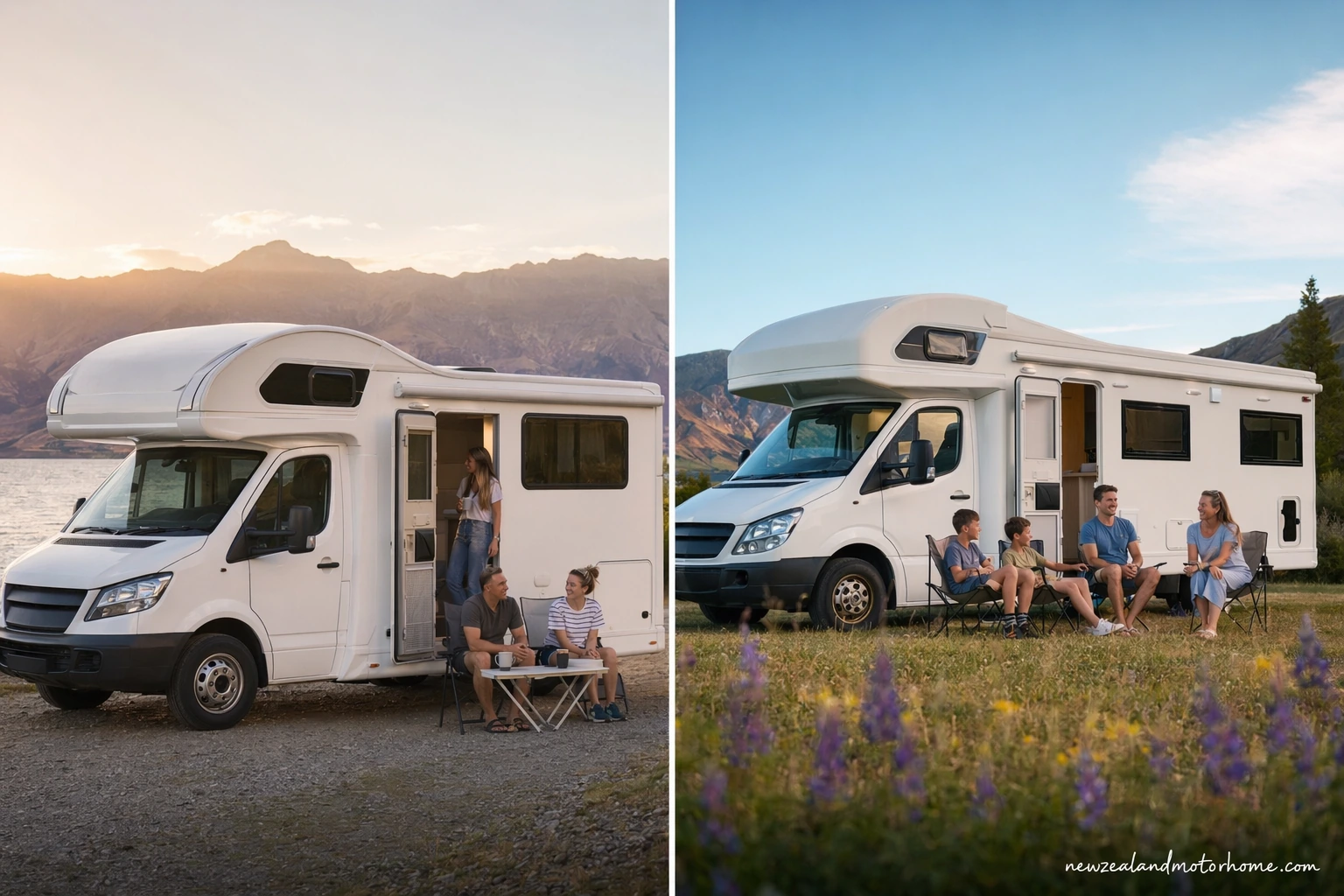
- 4 berth: easier parking
- 6 berth: more indoor space
- Check self-containment
- Book larger powered sites
- Plan dump stations often
Choosing between a 4 berth and 6 berth motorhome is not just about how many people can sleep inside. In New Zealand, the extra length, height and weight can change where you park the van, which powered sites feel easy, how often you need to use dump stations, and whether a rainy evening feels cosy or cramped.
This comparison is written for self-drive travellers hiring and sleeping in their own van. We’ll look at comfort, campsite fit, freedom camping, road handling, storage, kitchen use and the small daily jobs — fresh water, LPG, rubbish and wastewater — that make or break a motorhome trip.
The short answer: who should choose which van?
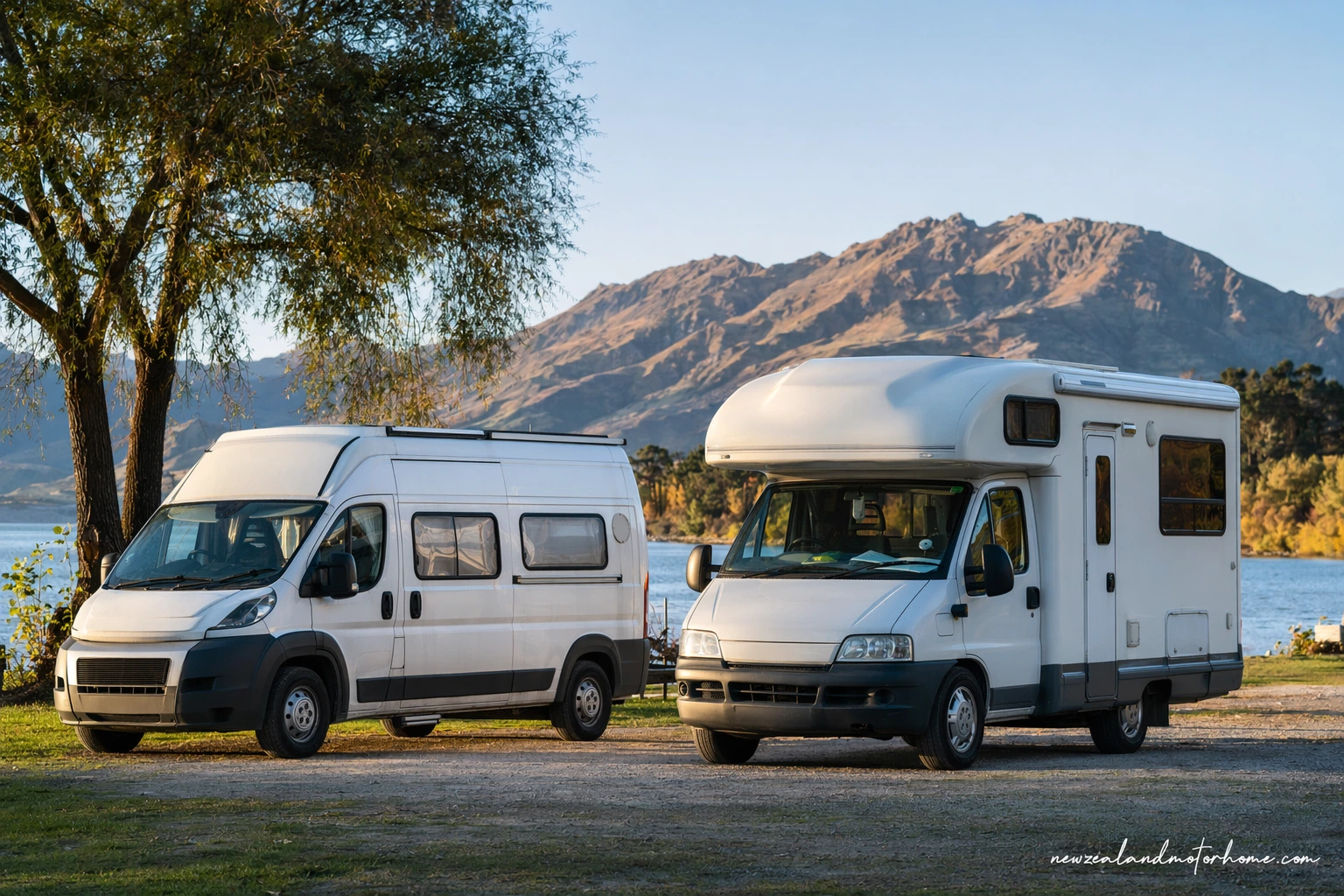
A 4 berth motorhome usually suits couples who want extra space, small families, or two friends who would rather not convert beds every night. It is often easier to park at supermarket car parks, scenic pull-offs and older holiday parks where the powered sites were laid out before large motorhomes became common.
A 6 berth motorhome makes sense when you genuinely need the sleeping positions, are travelling with children, or want a separate dining area to remain set up while someone is resting. The trade-off is a bigger footprint: more care at fuel stops, tighter reversing into campsites, and fewer casual roadside parks where you can simply swing in without thinking.
- Choose 4 berth if you value easier driving, simpler parking and fewer campsite squeeze moments.
- Choose 6 berth if indoor living space and fixed beds matter more than manoeuvrability.
- Do not choose by beds alone — check the layout, luggage storage, child restraint positions and whether the beds suit adult-sized travellers.
Parking, roads and everyday driving in New Zealand
New Zealand roads can be narrow, winding and shoulderless, especially around the Coromandel, West Coast, Banks Peninsula, Northland and the alpine passes. A 4 berth generally feels more forgiving on these roads. You still need to watch your mirrors and leave room for cyclists, but the van is usually less tiring to place through tight bends and small town centres.
A 6 berth motorhome is perfectly workable on main touring routes, but you will feel its size. Allow more time, pull over when safe to let traffic pass, and be cautious with gravel access roads to beaches, DOC areas and lakeside reserves. Height is also worth checking before you drive under trees, into supermarket car parks, beside motel-style awnings at holiday parks, or near low branches at freedom camping areas.
- Use larger supermarket car parks rather than tight angle parks on main streets.
- Reverse into campsites slowly and use a spotter if travelling with another adult.
- Check vehicle length before booking ferry crossings or compact holiday park sites.
- Take extra care at one-lane bridges, rural fuel stops and scenic lookouts with short turning bays.
Campsites, powered sites and freedom camping eligibility
Both 4 berth and 6 berth motorhomes can be self-contained, but do not assume every vehicle is certified for freedom camping. In New Zealand, your van needs current self-containment certification if you want to use many freedom camping areas legally. Always check the certificate, the number of certified occupants, and the local council rules for the specific overnight stop.
At holiday parks, a 4 berth is usually easier to fit onto standard powered sites, particularly in older parks with hedges, trees or tight internal lanes. A 6 berth may need a larger powered site, and it is worth mentioning your approximate vehicle length when booking. On unpowered sites, the larger van gives you more living space, but you will rely more on battery management, LPG for cooking and heating, and sensible use of lights and charging.
Freedom camping can feel more exposed in a 6 berth because you may have fewer suitable spaces and less room to turn around if a site is full. A 4 berth gives you a little more flexibility, but you still need to arrive early in busy places, park only where overnight stays are allowed, and leave enough space for other vans rather than spreading into picnic or boat-ramp areas.
Comfort inside: beds, bathrooms, cooking and wet-weather days
The big advantage of a 6 berth motorhome is separation. Families often appreciate having a made-up bed, a dinette for meals or schoolwork, and a little more floor space when rain pins everyone inside at Milford Sound, Lake Taupō or the West Coast. The larger fridge and storage can also help if you are cooking in the van for several days between larger towns.
A 4 berth can still be comfortable, especially for two people using the extra bed area for bags or as a lounge. For four adults, though, check the bed dimensions and the nightly routine. If every evening involves shifting bags, folding tables and climbing over one another to reach the bathroom, the smaller van may stop feeling clever after a week.
- Bathrooms: More people means the toilet cassette and grey-water tank fill faster, so plan dump station stops.
- Cooking: A bigger group uses more LPG, fridge space and fresh water, especially when making breakfast and hot drinks in the van.
- Drying gear: Six damp rain jackets take up a surprising amount of space; use holiday park laundry and drying rooms when you can.
- Sleep quality: Fixed or semi-fixed beds are worth prioritising over a layout that looks spacious only in daytime mode.
Costs beyond the hire rate
The hire rate is only one part of the 4 berth vs 6 berth motorhome decision. A larger van may use more fuel, may cost more on ferries, and may push you towards powered holiday park sites more often because it is carrying more people using lights, heating, chargers, water and the toilet. We will not invent prices here, because they shift by season, route and operator, but the pattern is easy to understand: bigger vans usually cost more to run.
That said, a 6 berth can be economical when it replaces two smaller vehicles or lets a family cook and sleep together in one self-contained unit. For couples, a 6 berth is often more space than you need, and the extra size can become a daily inconvenience rather than a luxury. If you are unsure, map your first few overnight stops, check whether they are powered or unpowered, and think about how often you want to plug in, dump waste and refill fresh water.
If you want a second set of eyes on the route before you book, use the talk-to-us trip planning step and share your group size, season and must-see places. A practical route often makes the van choice much clearer.
A practical way to decide before you book
Start with the people, then test the route. Two adults travelling for three weeks through both islands may prefer a 4 berth for easier parking and lower driving stress. Two adults with three children heading around the South Island in winter may find a 6 berth more comfortable because evenings are longer, gear is bulkier and powered sites are more appealing.
Also think about your travel rhythm. If you plan to move most days, stop for short walks, shop in town centres and use scenic picnic areas, the smaller van will usually feel calmer. If you plan slower stays at holiday parks, cook most meals inside, and need room for children to spread out after a long drive, the larger van earns its keep.
- Write down who sleeps where, not just how many berths are advertised.
- Check self-containment certification for the number of travellers in your group.
- Confirm child restraint positions if travelling with young children.
- Book powered sites early in summer, school holidays and around major events.
- Plan dump stations and fresh-water fills every few days, more often with a full 6 berth.
Common questions
Is a 6 berth motorhome hard to drive in New Zealand?
It is manageable on the main touring routes, but it needs more patience than a 4 berth. Expect wider turns, slower hill climbs, more mirror checking and fewer easy parking spots in small towns or busy scenic areas.
Can both 4 berth and 6 berth motorhomes freedom camp?
Only if the vehicle has current self-containment certification and the local rules allow overnight stays in that location. Check the certificate, the certified occupant number, signage at the site, and council restrictions before settling in for the night.
Is a 4 berth big enough for four adults?
Sometimes, but inspect the layout carefully. Four adults in a 4 berth can mean limited bag storage, more bed conversion and a faster-filling toilet cassette and grey-water tank, so it works best for shorter trips or travellers who pack lightly.
Will a 6 berth fit on normal powered campsites?
Often yes, but not always comfortably. Older holiday parks, tree-lined sites and tight internal roads can be awkward, so tell the campground your vehicle length when booking and ask for a suitable powered site.
Which is better for winter motorhome travel?
A 6 berth gives more indoor space for wet gear and longer evenings, but it also uses more power, LPG and water with a full group. A 4 berth is easier on winding roads and simpler to park, so the better choice depends on your group size and whether you will use powered sites regularly.
Have a planner shape this for your dates
Send a short outline — your dates, party size, and the kind of trip you want. A planner replies with a vehicle recommendation, a paced route, and the realistic budget.