- Best for 1–2 travellers
- Certified self-contained options
- Fits most powered sites
- Needs dump station routine
- Compact but bathroom-equipped
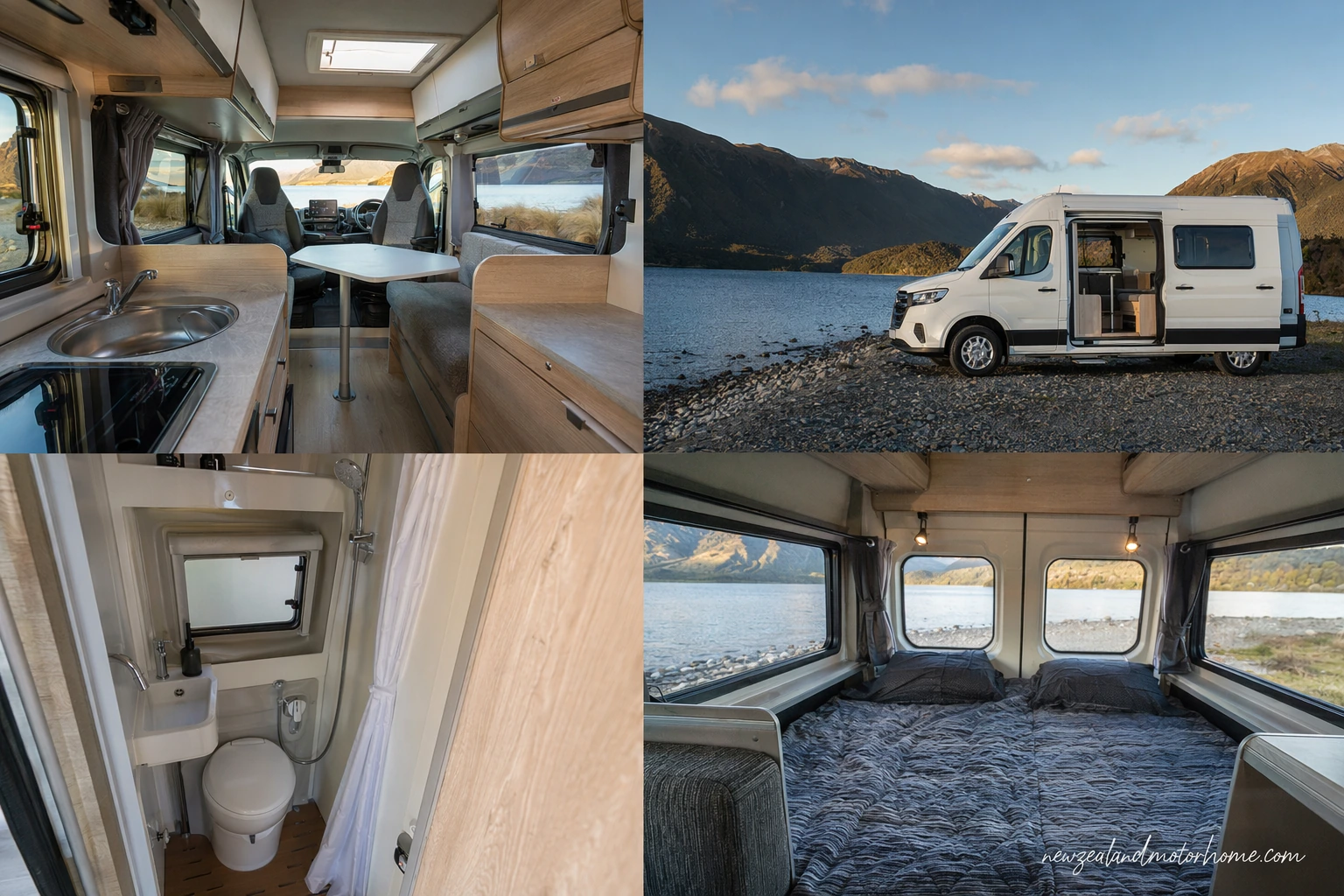
A 2 berth with toilet campervan is the easy middle ground for travellers who want a compact van, but do not want to rely on campground facilities every night. You still get the nimble feel of a smaller hire camper, with the practical comfort of an onboard toilet for roadside stops, wet-weather nights and more flexible overnight planning.
This page is for self-drive travellers comparing 2 berth with toilet campervan hire nz options before locking in a route. We’ll cover who this van size suits, how the living space works, what to expect at powered and unpowered sites, and the road-and-service details that matter once you are actually driving around New Zealand.
Who a 2 berth with toilet campervan suits
A 2 berth with toilet camper is usually best for one traveller or a couple who want a simple, self-contained setup without moving into a full-sized motorhome. It suits North Island loops, South Island road trips, shoulder-season travel and shorter holidays where you want to park easily in towns but still have your own bathroom onboard.
The big advantage is flexibility. With a certified self-contained vehicle, you can use more designated freedom camping areas than you could in a non-toilet sleeper van, provided you follow the local council signs and the conditions of your certification. It also makes early starts, remote picnic stops and rainy nights much easier.
- Good for couples who pack light and want a compact driving experience.
- Useful for travellers planning a mix of holiday parks, DOC-style camps and approved freedom camping.
- Often easier to park than larger 4 or 6 berth motorhomes in supermarket and waterfront car parks.
- Less suited to travellers needing a fixed bed plus a separate dining space at all times.
Layout, toilet and day-to-night living space
Most 2 berth with toilet motorhome nz layouts use the rear or side lounge as a dining area during the day, then convert it into a double bed at night. Some models have a compact wet-room style toilet and shower; others have a toilet cubicle only. Check the exact layout before booking, because “with toilet” does not always mean the same bathroom setup.
The living space is compact, so your daily rhythm matters. Keep soft bags rather than hard suitcases where possible, use campground kitchens when you want room to spread out, and make the bed before it gets too dark if you are staying somewhere without much lighting. In colder months, a powered site can make a small van feel much more comfortable overnight.
- Look for easy access to the toilet when the bed is made up.
- Check whether the bed is a permanent double or a lounge conversion.
- Ask about interior standing height if you are tall.
- Confirm fridge size, heating type and whether hot water requires LPG, mains power or engine heat.
Driving and parking a compact self-contained van in New Zealand
A 2 berth with toilet camper New Zealand trip is generally less stressful on the road than driving a larger motorhome, but it is still taller, heavier and slower to stop than a car. Allow extra space on winding roads, pull over safely when traffic builds behind you, and watch for low branches at lakeside reserves and older holiday park sites.
In towns, you will usually fit more easily into standard parking than a long motorhome, but always check height bars, overhangs and signs. Supermarkets, i-SITE areas and beach car parks can be busy in summer, so park the van where you can drive out forwards rather than needing a tight reverse in front of pedestrians.
- Use lower gears on long descents, especially with a full fresh-water tank.
- Check vehicle height before entering covered car parks or ferry terminals.
- On gravel access roads, slow down and secure cupboards before driving in.
- Plan shorter driving days on routes such as the West Coast, Coromandel and Milford Road approaches.
Powered sites, unpowered sites and overnight stops
A small toilet-equipped campervan fits comfortably on most powered sites, including older holiday parks where larger motorhomes can feel squeezed. Powered sites are useful when you want to run mains appliances, recharge devices, use electric heating where permitted, or reset the house battery after a few nights away from mains power.
Unpowered sites can work well for short stays if your battery, water and toilet cassette are managed carefully. Before choosing a remote overnight stop, check whether it allows certified self-contained vehicles, whether there is a time limit, and whether the ground is firm enough if rain is forecast. Do not assume a scenic car park is an overnight stop; in New Zealand the sign at the site is what counts.
If you would like help matching this van size to realistic overnight stops, you can use the talk-to-us step and share your travel dates, driving comfort and whether you prefer holiday parks, DOC-style camps or more basic self-contained stops.
Toilet cassette, fresh water, grey water and dump stations
The onboard toilet is the reason many travellers choose this berth size, but it comes with a bit of routine. You will need to empty the toilet cassette at approved dump stations only, not into campground toilets unless the site specifically allows it. Grey water from the sink or shower also needs to be disposed of at a dump point, never on the ground.
Fresh-water tanks in 2 berth vans are usually smaller than in big motorhomes, so top up when it is easy rather than waiting until you are remote. Many holiday parks have fresh-water taps and dump stations; some public dump stations also have potable water, but not all. Keep a simple service pattern: fill fresh water, empty grey water, empty the cassette, then reset your supplies before the next scenic stretch.
- Carry drinking water inside the van for days when the tank runs low.
- Empty the cassette before long ferry crossings or remote road sections.
- Use only approved dump stations for toilet and grey-water waste.
- Check your hire briefing for the correct cassette chemical and toilet process.
Fuel, LPG and packing for a small van
Fuel use varies by model, load, weather and road style, so avoid planning your budget on a single promised number. A compact 2 berth will usually be easier on fuel than a large motorhome, but hills, headwinds and stop-start scenic driving still make a difference. Refill before remote stretches such as parts of the West Coast, East Cape, Central Otago and the road towards Milford Sound.
LPG is commonly used for cooking, hot water or heating, depending on the vehicle. Your hire handover should show you where the bottle or fixed tank is, how to check the level, and where it can be refilled or swapped. In a small van, pack light: layered clothing, soft bags, quick-dry towels and a small food shop every few days will make the living space work better than carrying everything from day one.
Keep planning
Common questions
Can I freedom camp in a 2 berth campervan with a toilet?
Only where freedom camping is permitted, and usually only if the vehicle is certified self-contained. Always check local signs and council rules at the specific stop, because restrictions can change from one town, lakefront or reserve to the next.
Is a 2 berth with toilet campervan comfortable for two people?
Yes, for many couples it is a practical size, especially if you travel light and use holiday park facilities every few nights. The compromise is space: the bed may need to be made up from the lounge, and the bathroom will be compact.
Do I need powered sites every night?
No, not necessarily. You can mix powered and unpowered sites, but powered nights are helpful for recharging, heating, longer showers where the vehicle allows, and resetting the van after time off-grid.
Where do I empty the toilet in New Zealand?
Use approved dump stations only. Many holiday parks have them, and there are public dump stations around the country, but check access and potable water availability before relying on a remote one.
Is this size easy to drive on South Island roads?
Generally, yes, compared with larger motorhomes. You still need to allow for the vehicle’s height, weight and longer stopping distance, particularly on alpine passes, narrow bridges and winding coastal roads.
What should I check before booking a 2 berth with toilet motorhome in NZ?
Confirm the bathroom layout, bed type, self-containment certification, heating, fridge size, luggage storage, fuel type and LPG setup. Also check whether linen, toilet chemicals and camping chairs are included or need to be added.
Have a planner shape this for your dates
Send a short outline — your dates, party size, and the kind of trip you want. A planner replies with a vehicle recommendation, a paced route, and the realistic budget.