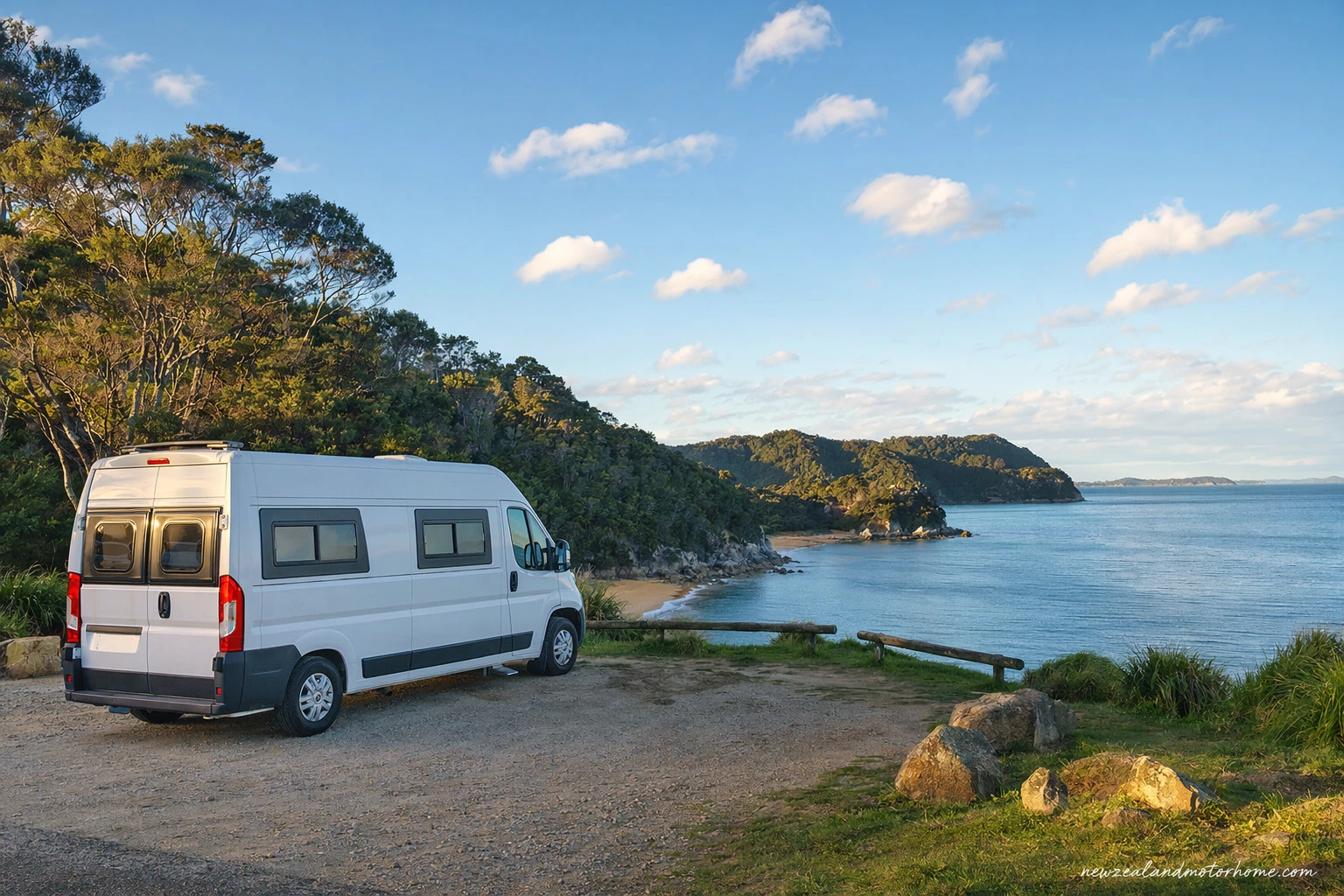
- Best season: October to April
- Allow: 3 to 5 nights by campervan
- Site style: holiday parks, DOC camping, limited freedom camping
- Van note: narrow beach roads and Tākaka Hill bends
- Must-have: valid self-containment for freedom sites
Abel Tasman is a brilliant campervan region, but it is not a place to wing it in a big van at the end of a summer afternoon. The coast roads pinch, beach car parks fill early, and the national park itself has firm rules around where you can sleep.
This guide picks out the best campervan stops Abel Tasman travellers can actually use: scenic pull-ins, day-parking bases, holiday park areas, DOC-style overnight options, and the practical service stops you need for fresh water, LPG, rubbish and dump stations. It is written for people driving and sleeping in their hired campervan, not just passing through in a car.
Motueka and Riwaka: the sensible first campervan stop
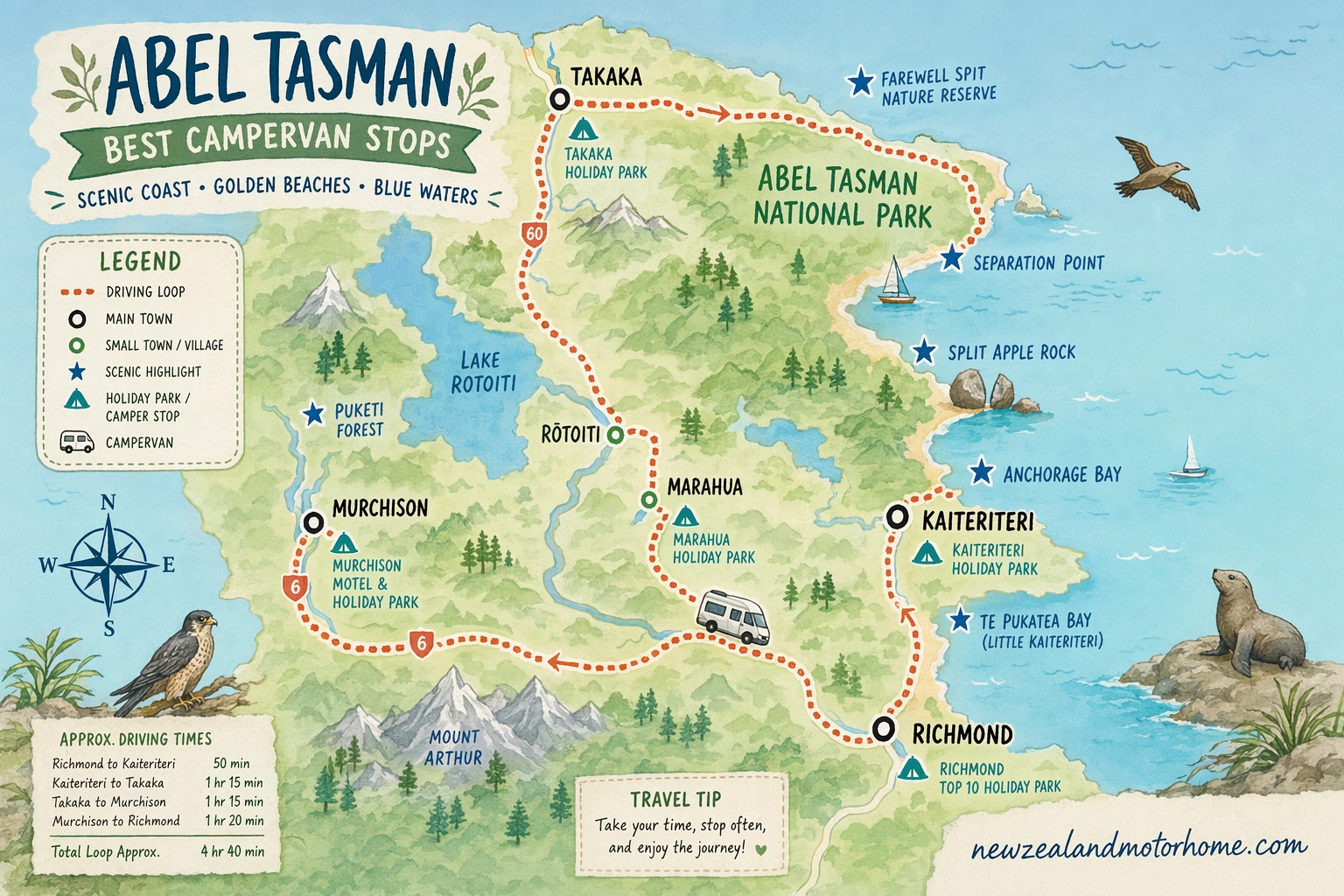
Motueka is the place to get the van organised before you nose into the beach roads. It has supermarkets, fuel, LPG swap or refill options, laundries and public services close enough together that you are not hunting around with a half-full grey-water tank.
If you are wondering where to stay campervan Abel Tasman style without squeezing into the busiest beachfront parks straight away, Motueka and nearby Riwaka make an easy first night. Look for established holiday parks or clearly signed certified self-contained sites, and check local signage because freedom camping rules can change street by street.
- Good for: stocking up, dump station stops, fresh-water fills and an easy first night.
- Van note: parking is generally easier here than at Kaiteriteri or Mārahau, especially for longer motorhomes.
- Scenic detour: Riwaka Resurgence has a formed car park and a short bush walk; take it slowly on the approach road and avoid blocking the turn-around area.
Before leaving Motueka, empty the toilet cassette, top up fresh water and buy enough food for at least a couple of nights. Once you are in the smaller coastal settlements, you have fewer easy chances to reset the van.
Kaiteriteri and Little Kaiteriteri: beach time with early parking
Kaiteriteri is one of the classic Abel Tasman beach stops, with golden sand, water taxis and a busy holiday feel. For campervans, the trick is to arrive early, park once, and avoid circling the beachfront in peak season when pedestrians, boat trailers and day visitors are all moving at once.
Overnighting here generally means booking into a proper holiday park or other permitted accommodation; do not assume the beach car park is available for sleeping. Freedom camping Abel Tasman visitors often get caught out around high-profile beaches because the signs are strict and enforcement is active in summer.
- Best use of the stop: park the van for the day, walk the beach, join a water taxi, or ride/walk local tracks.
- Van fit: compact and mid-sized campervans cope best; larger motorhomes should avoid tight residential streets unless they know where they are turning around.
- Road note: the approach has bends and short climbs, so keep speed down and give cyclists plenty of room.
Little Kaiteriteri is lovely for a quieter look, but its streets and parking are not forgiving for big vans. If the main car parks are full, it is usually better to retreat to a legal base than to wedge the camper somewhere marginal.
Mārahau: the easiest base for the Abel Tasman Coast Track
Mārahau is the southern gateway to Abel Tasman National Park and one of the most useful overnight bases for campervan travellers. You can leave the van at your booked accommodation, walk onto the Coast Track, or use a water taxi connection without relocating the vehicle every few hours.
Choose a holiday park or permitted campground if you want to sleep in the van here. Powered sites are handy if you are recharging camera batteries, e-bikes or a fridge after several warm beach days, while unpowered sites suit self-contained vans with a good house battery and sensible water use.
- Stay type: holiday park-style powered and unpowered sites are the practical choice.
- Day parking: use signed visitor parking for walks and water taxis; do not leave the van in a way that blocks shuttle, boat or local traffic.
- Self-containment: carry proof of certification and use proper toilets and dump stations rather than relying on the bush.
The road beyond the settlement gets narrow in places, so treat Mārahau as a park-up-and-explore base rather than a place to keep shuttling a long motorhome around. If you want help matching your van size, walking plans and overnight stops, our plan-your-trip step is a good place to sense-check the route.
Tākaka Hill and Golden Bay: views, bends and a slower rhythm
The drive over Tākaka Hill is memorable, but it asks for patience in a campervan. Expect steady climbing, tight bends, slow vehicle bays and changing weather; pull over only where it is safe and fully off the lane, not on a blind corner for a photo.
Once over the hill, Tākaka and the Golden Bay side open up more room for campervan travel. This is a useful area for groceries, fuel, cafés, rubbish disposal and checking where your next legal overnight stop will be before heading towards Pōhara, Wainui or Tōtaranui.
- Good stops: signed lookouts on Tākaka Hill, Tākaka township services, and beach bases around Golden Bay where overnighting is permitted.
- Van note: use low gear on long descents and let faster traffic pass at proper pull-outs.
- Freedom camping: only use designated legal areas if your van is certified self-contained, and always read the local bylaw signs on the day.
Golden Bay is often the calmer answer to where to stay campervan Abel Tasman travellers ask after a busy night near Kaiteriteri. It still needs planning, but the pace is gentler and the distances between beaches, walks and service stops feel more comfortable in a van.
Tōtaranui and Wainui: wild northern gateways for prepared vans
Tōtaranui is one of the great campervan stops near Abel Tasman, but it is not a casual late-night arrival. The access is longer and more remote, with sections where you need to drive defensively, keep your dust down on unsealed stretches and be ready for slower traffic.
The DOC campground at Tōtaranui is the main overnight option in this northern gateway area, with bookings required in busy periods and facilities that are more basic than a full-service holiday park. Treat it as an off-grid stay: arrive with full fresh water, an empty toilet cassette, empty grey-water storage and enough food.
- Best for: beach time, Coast Track access, kayaking plans and a quieter national-park edge.
- Site style: generally unpowered camping; do not expect the convenience of a town holiday park.
- Van size: larger motorhomes should check current road and campground advice before committing, especially after heavy rain.
Wainui is another northern access point, better suited to day walks and careful parking than assuming an easy overnight. Keep clear of beach access, farm gates and turning areas, and move on to a booked or signed legal site before dark.
A simple way to string the stops together
A relaxed campervan loop works best if you do not try to sleep in a different beach car park every night. Use towns for services, holiday parks or DOC campgrounds for legal overnighting, and beach car parks for daytime exploring only where signs allow.
For a first Abel Tasman van trip, allow at least three nights: one around Motueka or Riwaka to stock and settle in, one or two around Kaiteriteri or Mārahau for the southern beaches and Coast Track access, then a slower move over Tākaka Hill if you want Golden Bay and the northern end.
- Night 1: Motueka or Riwaka for groceries, fuel, water and dump station use.
- Night 2: Kaiteriteri or Mārahau in a booked holiday park or permitted campground.
- Night 3: Golden Bay, Wainui area or Tōtaranui if you are prepared, booked and self-sufficient.
This approach keeps the best campervan stops Abel Tasman offers within easy driving distance while reducing the two big hassles: hunting for a legal sleep spot after dark and taking a long van down roads that are better explored on foot.
Keep planning
Holiday parks abel tasman park
Read onHoliday parks abel tasman
Read onFarmers markets abel tasman
Read onAbel tasman park campervan guide
Read onCampervan guide abel tasman nz
Read onBest time to visit abel tasman nz
Read onCommon questions
Can I freedom camp in Abel Tasman in a campervan?
Freedom camping Abel Tasman options are limited and tightly controlled, especially near beaches and within or beside the national park. Use only clearly designated sites, make sure your campervan is certified self-contained, and check current Tasman District signage before settling in for the night.
Where is the best place to base a campervan for the Abel Tasman Coast Track?
Mārahau is the easiest southern base because you can park the van at booked accommodation and walk or take a water taxi from nearby. Kaiteriteri also works well if you want beach time and boat access, but book ahead in summer.
Do I need to book campervan sites around Abel Tasman?
Yes, in peak summer, school holidays and long weekends you should book holiday parks and DOC campgrounds ahead. The area has limited legal overnight space for campervans, and arriving late without a plan often means driving back towards Motueka or Tākaka.
Are the roads suitable for large motorhomes?
Most main approaches are manageable with careful driving, but Tākaka Hill, beach access roads and northern routes to Wainui or Tōtaranui can be narrow, winding or unsealed in places. If your motorhome is long or high, check current road conditions and avoid tight side roads where turning around is uncertain.
Where should I empty the toilet and fill fresh water?
Use dump stations and potable water points in service towns such as Motueka or Tākaka, or facilities at the holiday park where you are staying. Do this before heading to more remote beach bases, where services may be limited or unavailable.
Have a planner shape this for your dates
Send a short outline — your dates, party size, and the kind of trip you want. A planner replies with a vehicle recommendation, a paced route, and the realistic budget.