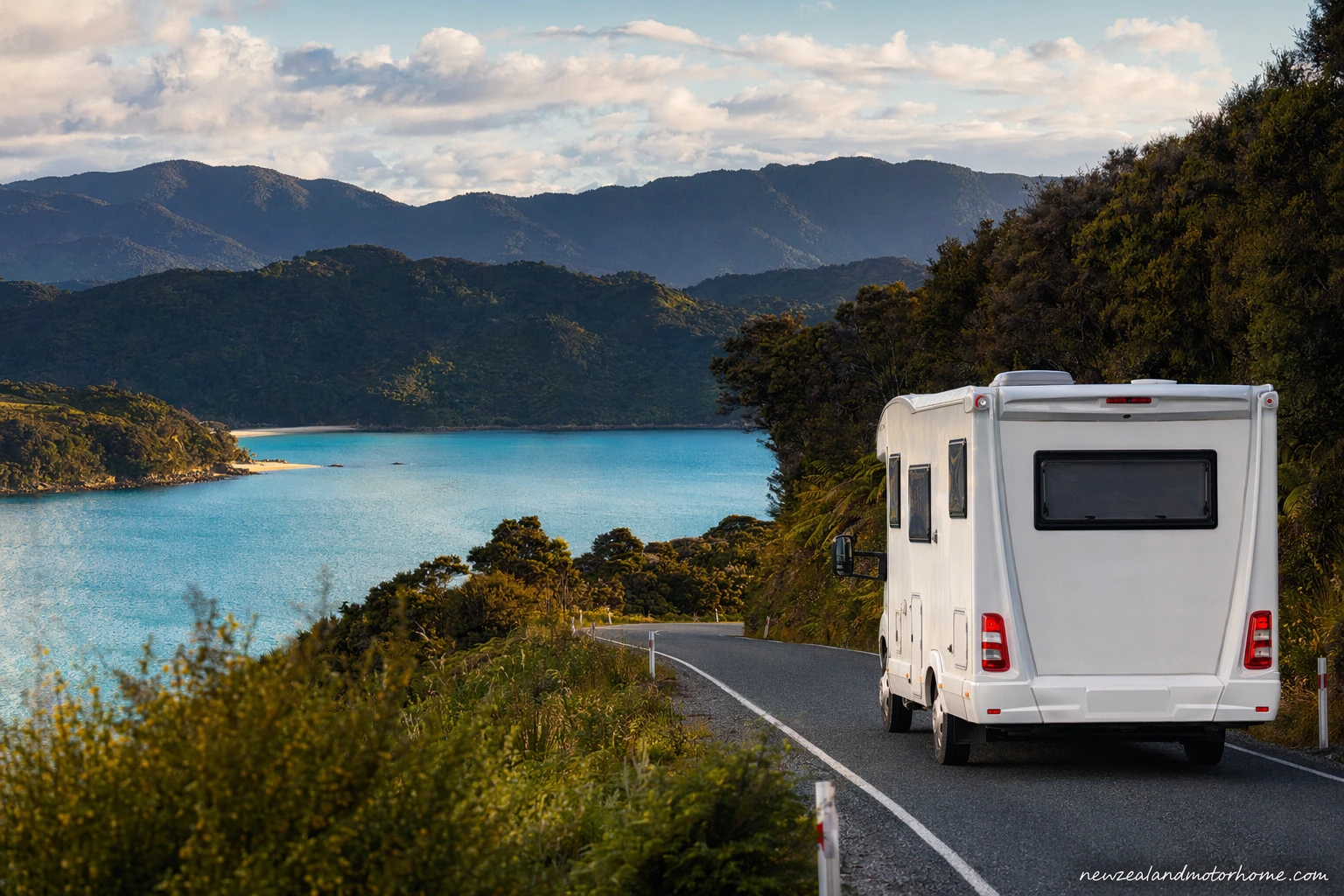
- Best base: Motueka, Kaiteriteri or Mārahau
- Allow 3–4 nights; 5–7 with Golden Bay
- Tākaka Hill is steep and winding
- Book powered sites in summer
- Freedom camp only where permitted
Abel Tasman is one of those New Zealand regions that looks simple on a map and needs a little care in a campervan. The coastline is broken up by estuaries, golden beaches and national park tracks, so you’ll mostly use your van as a comfortable base at Motueka, Kaiteriteri, Mārahau, Tākaka or Pōhara, then walk, paddle or take a water taxi into the park.
This campervan guide Abel Tasman NZ page is written for travellers sleeping in their hired van: where to park without blocking a beach access, when powered sites are worth booking, which roads feel tight in a longer motorhome, and how to keep on top of fresh water, LPG, rubbish and dump station stops.
How Abel Tasman works in a campervan
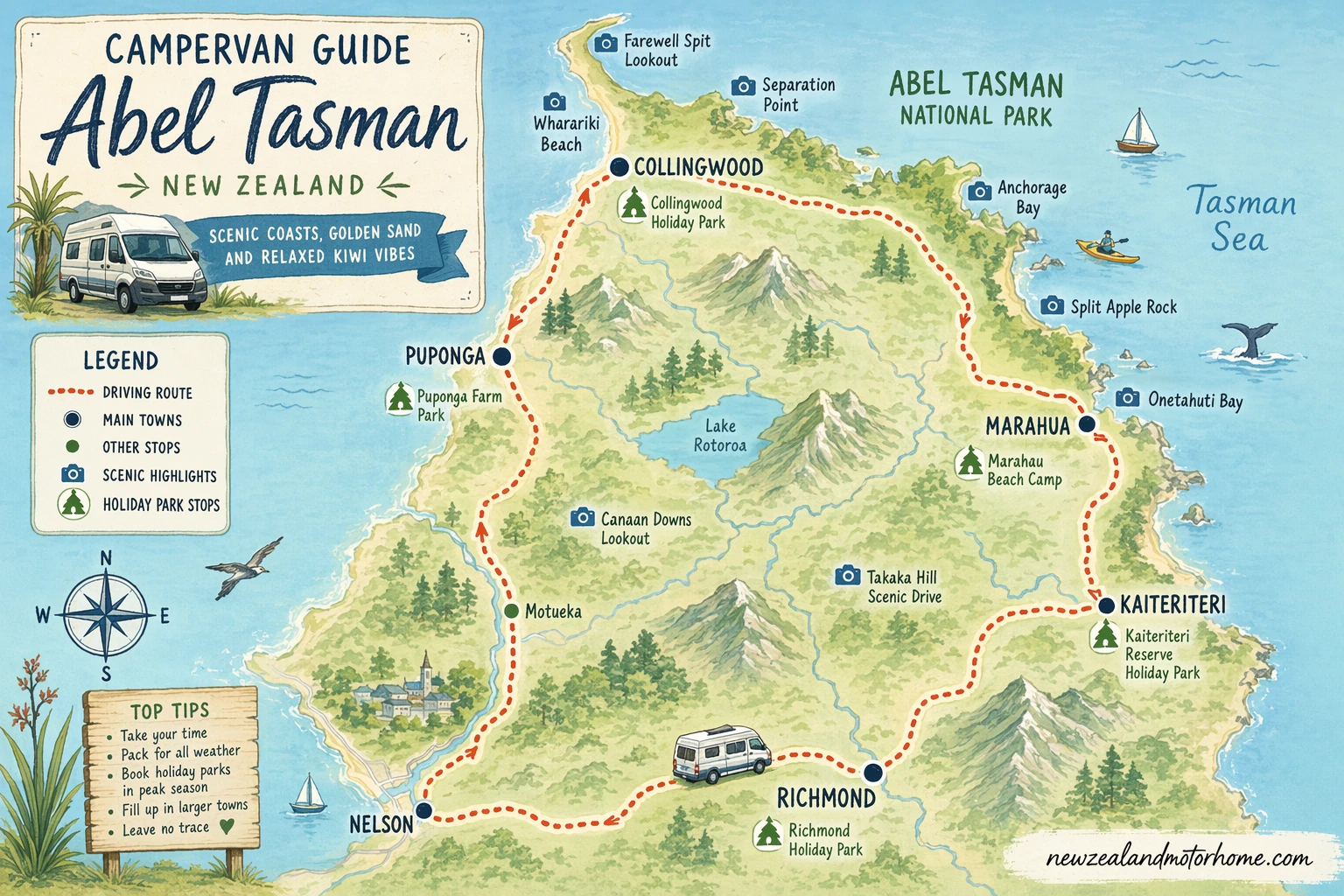
The main thing to know is that you do not drive right through Abel Tasman National Park. Most abel tasman campervan trips approach from the south via Motueka, Kaiteriteri and Mārahau, or from the north via Tākaka, Pōhara and Wainui. Between them sits coast, bush and walking track rather than a through-road.
For most vans, Mārahau is the easiest southern base for the Coast Track and water taxis, while Kaiteriteri suits beach time and organised kayak or boat departures. Motueka is less postcard-pretty but very practical: supermarkets, fuel, LPG swaps/fills depending on outlet, fresh-water options, laundries and dump facilities are easier here than right at the park edge.
- Best first base: Motueka if you need supplies, Kaiteriteri or Mārahau if you want to wake close to the water.
- Best northern base: Tākaka or Pōhara for Golden Bay, then Wainui or Tōtaranui only if your van size and road confidence suit.
- Do not rely on beach parking: many small reserves have time limits, tight turning, no overnighting or soft edges after rain.
Driving notes: Motueka, Mārahau and Tākaka Hill
From Nelson or Picton, most motorhome Abel Tasman routes run through Richmond and Motueka on State Highway 60. This is sealed and straightforward, but summer traffic can be slow through fruit-growing country, with cyclists, roadside stalls and plenty of vehicles turning into orchards, beaches and campgrounds.
The road from Motueka to Kaiteriteri and Mārahau is also sealed, but it narrows and winds as you get closer to the coast. In a longer van, take the corners wide only when you can see clearly, expect shuttle buses and boat trailers, and avoid trying to squeeze into small roadside pull-offs if the rear overhang will sit near the live lane.
Tākaka Hill is the bigger decision. It is sealed, steep and very winding, with slow climbs, tight bends and weather that can change quickly. Use lower gears on the descent, let faster traffic pass at proper pull-outs, and do not plan it as a rushed end-of-day drive after a long ferry or flight pick-up.
- Van length note: 6–7 metre vans are common here, but the road rewards patient driving.
- Height note: trees and cliff edges can make lanes feel tighter than they are; keep left but do not ride the edge.
- Fuel note: top up around Motueka or Tākaka rather than assuming every beach settlement has what you need.
Where to stay: powered, unpowered and freedom camping
In summer, book a proper campground or holiday park rather than winging it. Powered sites around Motueka, Kaiteriteri, Mārahau, Tākaka and Pōhara are useful if you are running a fridge hard in hot weather, charging e-bikes or camera gear, or arriving with grey-water and toilet tanks that need a reset.
Unpowered sites can be lovely in this region, especially if your van has solar and you are moving every couple of days. Just remember that shade from coastal trees can reduce solar input, and some beachside sites are small; tell the campground your vehicle length when booking, especially for larger motorhomes or vans with bike racks.
Freedom camping is controlled by local bylaws and signs change by reserve, season and self-containment status. Use only designated places where certified self-contained vehicles are permitted, and do not treat a pretty beach car park as an overnight stop unless signs clearly allow it. Abel Tasman is closely watched because small coastal communities carry the pressure when visitors get it wrong.
- Powered comfort: Motueka, Kaiteriteri, Mārahau, Tākaka and Pōhara have the most practical options.
- DOC-style stay: Tōtaranui is a memorable base, but access is long, winding and partly unsealed; check suitability for your van before committing.
- Freedom camping: only with current self-containment certification and only where signs or council maps permit.
Dump stations, water, rubbish and LPG
Plan your service stops before you tuck into the smaller coastal roads. Motueka is the easiest southern-side place to empty waste, refill groceries and sort fuel, while Tākaka performs the same practical role once you are over the hill in Golden Bay. Some holiday parks and campgrounds provide dump points and potable water for guests, which can be a good reason to book a paid night mid-trip.
Do not leave grey water, food scraps or rubbish at beach reserves or track-end car parks. Estuaries around Abel Tasman are shallow and tidal, and waste issues become obvious quickly. Keep a spare rubbish bag in the van, empty the toilet cassette before it is urgent, and refill fresh water when you know the tap is marked potable.
- Southern service hub: Motueka for dump station access, supermarkets, fuel and general van errands.
- Golden Bay service hub: Tākaka, with additional options around larger campgrounds further north.
- LPG: sort bottles in main towns rather than expecting swaps or fills at small beach settlements.
- Fresh water: use marked potable taps only; campground water is often the simplest and most reliable.
Things to do with the van parked up
The best things to do Abel Tasman campervan-style start by leaving the van somewhere sensible for the day. In Mārahau, use designated day parking or your campground parking for Coast Track walks and water taxi pick-ups. In Kaiteriteri, arrive early in peak season because beach parking fills with boat trailers, day visitors and shuttle traffic.
Good low-stress options include walking a section of the Abel Tasman Coast Track, taking a water taxi one way and walking back, kayaking from Kaiteriteri or Mārahau, swimming at sheltered beaches, visiting Split Apple Rock/Tokatā from the appropriate access, or heading inland to Te Waikoropupū Springs on the Golden Bay side. Always check whether your day plan returns to the same bay or a different one — it matters when your bed is parked at the start.
If you want help matching walking days, campground nights and van servicing into a tidy loop, you can talk to us before you lock in dates. It is especially useful if you are mixing Abel Tasman with Nelson Lakes, the West Coast or a ferry crossing.
- Easy half-day: Mārahau foreshore walk, café stop and beach time with the van nearby.
- Classic day: water taxi into the park, walk one Coast Track section, return to the same base.
- Golden Bay add-on: Pōhara, Wainui and Tākaka for beaches, springs and a slower camp rhythm.
How many days to allow
Two nights is enough for a taste if you are passing through: one practical night around Motueka or Kaiteriteri, then a day walk or boat trip from Mārahau before moving on. It will feel quick, though, and you will spend a higher share of time parking, checking in and servicing the van.
Three to four nights is the sweet spot for many campervan travellers. You can stock up in Motueka, stay near the beach, spend a full day inside the national park without shifting the van, and still have time for a slower morning or a weather shuffle. Add another two or three nights if you plan to cross Tākaka Hill and include Golden Bay.
- Quick pass: 2 nights, best if weather is settled and sites are booked.
- Comfortable Abel Tasman: 3–4 nights, with one full no-driving day.
- Abel Tasman plus Golden Bay: 5–7 nights, allowing for Tākaka Hill and slower coastal roads.
Keep planning
Holiday parks abel tasman park
Read onHoliday parks abel tasman
Read onFarmers markets abel tasman
Read onAbel tasman park campervan guide
Read onBest time to visit abel tasman nz
Read onBest campervan stops abel tasman
Read onCommon questions
Can I drive my campervan into Abel Tasman National Park?
You can drive to access points such as Mārahau, Kaiteriteri, Wainui and Tōtaranui, but there is no road through the national park coastline. Most travellers park the van and use walking tracks, kayaks or water taxis.
Is Tākaka Hill suitable for a motorhome?
Yes, many motorhomes cross Tākaka Hill, but it is steep, winding and slow. Use lower gears, allow plenty of time, avoid tired driving, and check conditions if heavy rain or high winds are forecast.
Do I need to book campsites in Abel Tasman?
In peak summer, school holidays and long weekends, booking is strongly recommended for powered and unpowered sites near Kaiteriteri, Mārahau, Pōhara and Tākaka. Outside peak times you may have more flexibility, but popular beach bases can still fill.
Can I freedom camp near Abel Tasman beaches?
Only where local signs or council information allow it, and usually only in a certified self-contained vehicle. Many beach car parks and reserves have restrictions, so check before settling in for the night.
Where should I empty the toilet cassette and grey water?
Use public or campground dump stations around service towns such as Motueka and Tākaka, or facilities provided by your campground. Do not empty grey water, toilet waste or food scraps at beach reserves, roadside drains or track-end car parks.
Have a planner shape this for your dates
Send a short outline — your dates, party size, and the kind of trip you want. A planner replies with a vehicle recommendation, a paced route, and the realistic budget.