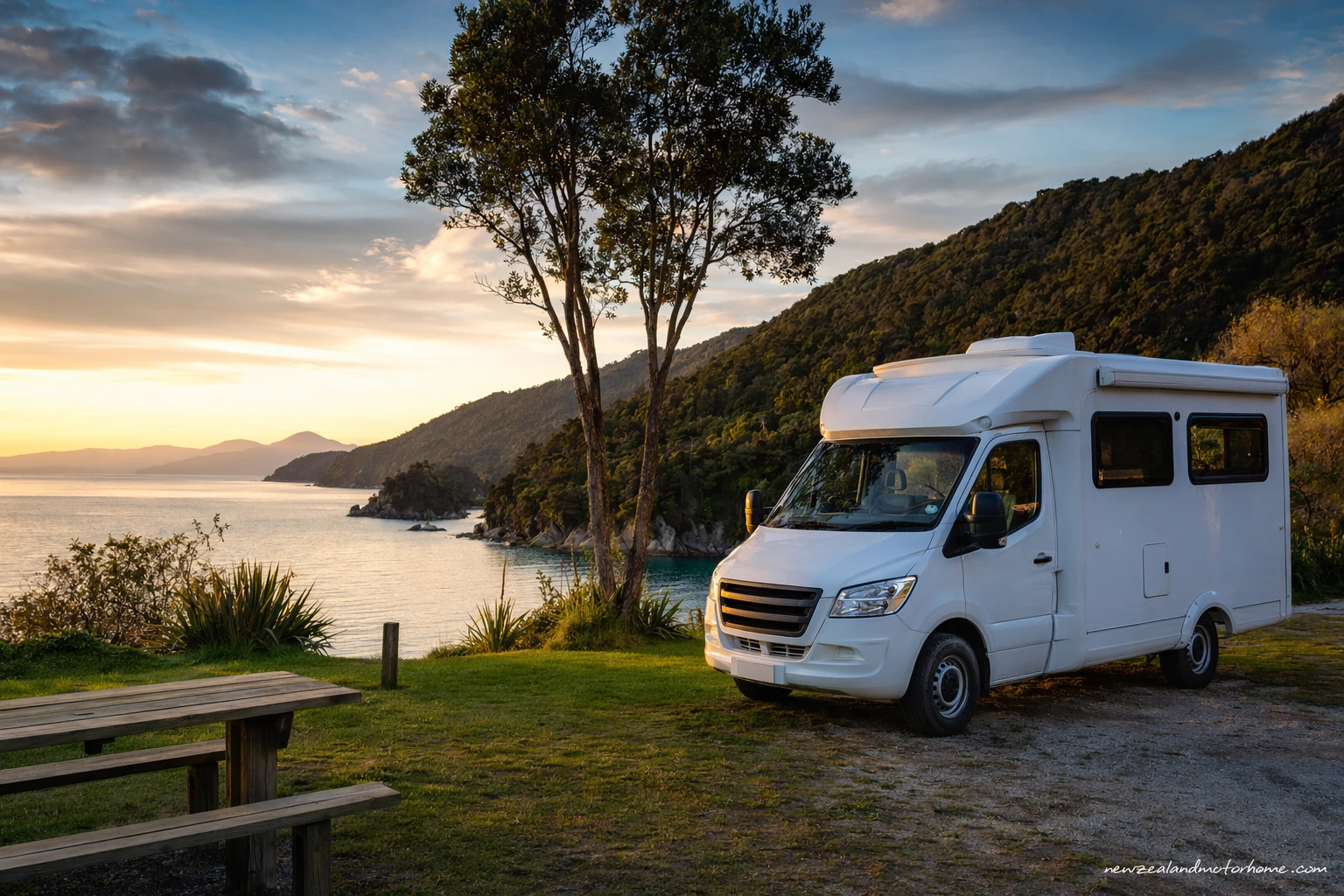
- Best season: Oct–Apr
- Allow 2–3 nights
- Book powered sites in summer
- Check 7 m-plus van fit
- Use approved dump stations
Abel Tasman is one of the easiest national parks to enjoy from a campervan, as long as you choose your base carefully. The park itself is mostly boat-and-walk country, so your holiday park choice matters: you want somewhere you can park the van securely, plug into power if needed, fill fresh water, empty grey waste, and get to the beach or water taxi without awkward shuffling.
This guide looks at holiday parks abel tasman park travellers commonly use around Mārahau, Kaiteriteri, Motueka and over the hill towards Golden Bay. It is written for self-drive motorhome travellers, with road notes, parking angles, dump-station thinking, and nearby scenery rather than generic accommodation advice.
Best campervan bases around Abel Tasman
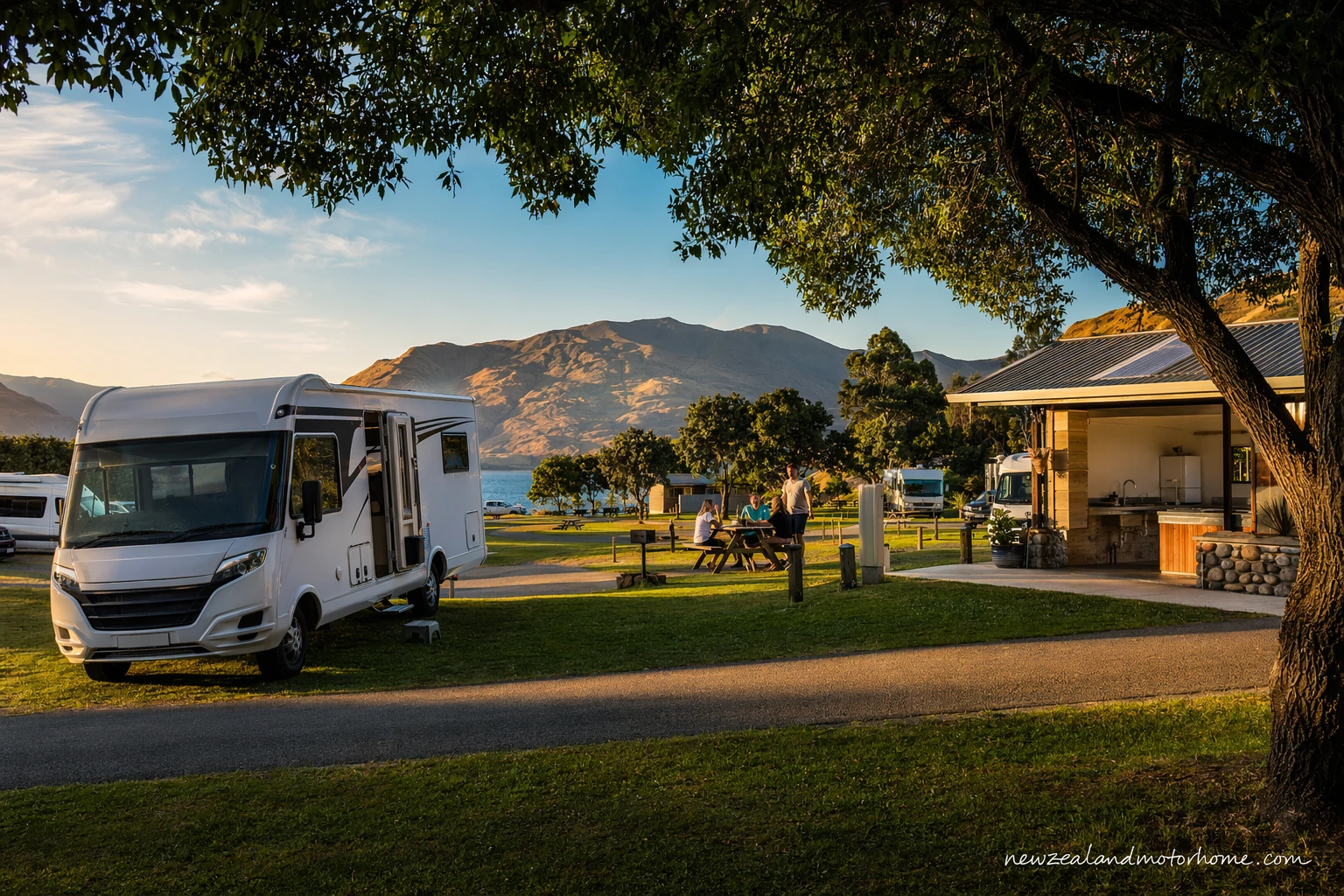
The main campervan bases for camping Abel Tasman Park sit just outside the national park boundary. Mārahau is the classic southern gateway, with beach access, water taxis, kayak departures and the start of the Abel Tasman Coast Track close enough that you may be able to leave the van on site for the day. Kaiteriteri is a little more developed and suits travellers who want a beach-resort feel, with good access to boat trips and day walks.
Motueka is not right on the park edge, but it is practical if you need supermarkets, fuel, LPG, tyre help, laundry or a wider choice of powered sites. On the Golden Bay side, Tākaka and Pōhara work well if your route includes Wainui, Totaranui or the northern end of the Coast Track, but allow time for the slow drive over Tākaka Hill.
- Mārahau: best for walking into the park, kayak trips and reducing day-parking stress.
- Kaiteriteri: handy for beaches, water taxis and a more serviced holiday-park style stay.
- Motueka: good resupply base with easier access to dump stations, LPG and groceries.
- Pōhara or Tākaka: useful for Golden Bay, Wainui Bay and northern Abel Tasman access.
Driving in by van: roads, hills and timing
Most campervans approach from Nelson or Richmond via Motueka, then turn towards Riwaka and Mārahau or Kaiteriteri. The road is sealed, but it narrows and bends as you get closer to the coast, so take it steady in a high-roof motorhome and let locals pass where it is safe. In summer, expect busy beach traffic and people looking for parking near boat departures.
If you are heading to Golden Bay, Tākaka Hill is the big driving note. It is a sealed state highway, but it is steep, winding and slow in a heavier van. Check your mirrors often, use low gear on descents, and do not plan it as a quick hop after a long ferry or airport pick-up day.
- Van size: large motorhomes can do the route, but tighter holiday-park manoeuvring is common near the coast.
- Arrive in daylight: easier for finding your site, spotting low branches and avoiding beach-day traffic.
- Fuel: fill before heading into smaller coastal settlements, especially if crossing to Golden Bay.
- Weather: heavy rain can make shaded access roads slippery and can affect boat schedules.
Powered, unpowered and self-contained site choices
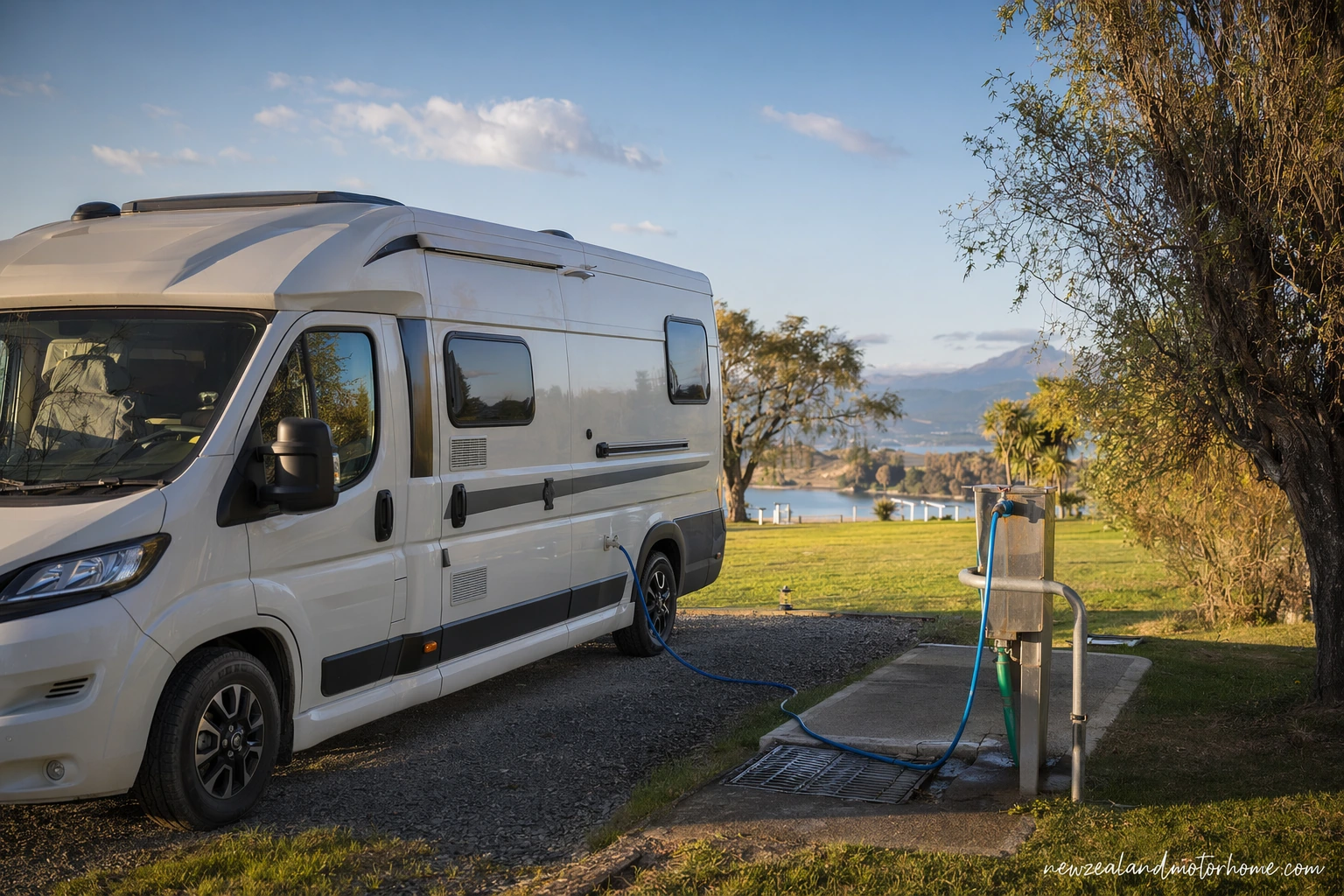
Holiday parks near Abel Tasman usually offer a mix of powered and unpowered campervan sites, with communal kitchens, showers and laundry. Powered sites are worth booking if you are running a fridge, charging devices for track days, or travelling in cooler shoulder-season weather. Unpowered sites can be lovely under trees or closer to open grass, but check whether your solar will actually see the sun.
When people search for an abel tasman park top 10 holiday park, they are often looking for dependable facilities rather than a specific patch of ground. For motorhome travellers, the practical questions are: can your vehicle fit, is the site level, are there dump-station facilities, and can you walk to your activity pick-up without moving the van?
- Ask site dimensions: especially for 7 m-plus motorhomes, bike racks or rear storage boxes.
- Check surface: grass is common and pleasant, but after rain a heavier van may need care.
- Confirm dump access: some parks have an on-site dump station; others direct you to a nearby public facility.
- Use your self-containment properly: even in a holiday park, grey water and toilet waste must go to approved points.
Where to park the campervan for beaches and water taxis
Where to park campervan Abel Tasman Park depends on what you are doing that day. If you are taking a water taxi, kayaking or starting a day walk from Mārahau or Kaiteriteri, the easiest option is often to stay at a nearby holiday park and leave the van on your site or in the park’s guest parking area if permitted. That removes the worry of fitting a tall van into busy beach parking during peak season.
Day parking near the main beaches can fill early in summer, and some areas are better suited to cars than long-wheelbase vans. Do not assume you can leave a campervan overnight at a trailhead or beach reserve unless signage explicitly allows it and you meet the self-containment rules. Tasman District has restrictions, and freedom camping around popular coastal spots is tightly managed.
- For early water taxis: stay close the night before and walk to check-in if possible.
- For day walks: ask your holiday park about safe guest parking while you are on the track.
- For beach stops: arrive early, park within marked bays, and avoid soft verges.
- For overnighting: use booked holiday parks, DOC camps where suitable, or legal self-contained sites only.
Water, waste, LPG and keeping the coast tidy
Abel Tasman’s appeal is the clean edge between bush, estuary and golden sand, so good van habits matter. Treat your holiday park as your service hub: top up fresh water, empty grey water and cassette toilets at approved dump stations, charge batteries, and plan your food waste before heading into quieter bays. In peak season, do these jobs before check-out time rather than waiting until you are already late for a boat.
For longer loops, Motueka and Richmond are sensible places to sort groceries, fuel, LPG bottle swaps or refills, and any vehicle bits before you head into the smaller coastal settlements. Over in Golden Bay, Tākaka is the main service town. If you want help matching your route with realistic service stops, you can use the soft planning step at /talk-to-us/ before locking in nights.
- Fresh water: fill at your holiday park unless a public potable-water point is clearly signed.
- Grey waste: never drain onto grass, gravel, roadside or dunes.
- Toilet cassette: use dump stations only, and carry gloves and rinse water.
- LPG: top up in larger towns rather than leaving it until you are parked beside the beach.
Things to do near Abel Tasman Park from your site
The best things to do near Abel Tasman Park are simple to build around a campervan base: a half-day paddle, a water taxi to a beach walk, a swim at Kaiteriteri, or a slow morning around the Mārahau estuary. Because you are sleeping in the van, you can keep wet gear outside, cook early, and avoid driving after a long day in the sun.
Give yourself at least two nights if you can. One-night stays work for a quick look, but a two- or three-night holiday-park stop lets you use the dump station, dry towels, charge batteries, and take a weather window for the coast. If you are crossing to Golden Bay, add another night so Tākaka Hill is not squeezed into the same day as a boat trip.
- Coast Track day walk: take a water taxi one way and walk back on a section that suits your fitness.
- Kayaking: choose a guided or independent option that fits the tide, wind and your return transport.
- Kaiteriteri and Little Kaiteriteri: good beach time, but park early in a campervan.
- Riwaka Resurgence: a short inland detour; check parking space before committing a large van.
Keep planning
Abel tasman park campervan guide
Read onHoliday parks abel tasman
Read onFarmers markets abel tasman
Read onCampervan guide abel tasman nz
Read onBest time to visit abel tasman nz
Read onBest campervan stops abel tasman
Read onCommon questions
Can I freedom camp near Abel Tasman National Park in a campervan?
Only where it is legally allowed and only if your campervan meets the required self-containment rules. Popular beach and reserve areas around Abel Tasman are closely managed, so do not rely on finding an informal overnight spot. A booked holiday park is the simplest option near Mārahau, Kaiteriteri and Motueka.
Is Mārahau or Kaiteriteri better for a motorhome stay?
Mārahau is usually better if your priority is walking into Abel Tasman or joining kayak and water taxi trips without moving the van. Kaiteriteri suits travellers wanting a livelier beach base and easy boat access. In both places, check site size and parking arrangements before booking a larger motorhome.
Do holiday parks near Abel Tasman have dump stations?
Many campervan-friendly holiday parks in the area provide dump-station access, but facilities vary, so confirm when booking. Motueka is also a practical service stop for waste, water, fuel and groceries. Never empty grey water or toilet waste at beach reserves or roadside drains.
Can a large campervan drive over Tākaka Hill?
Yes, large campervans regularly cross Tākaka Hill, but it is steep, winding and slower than the distance suggests. Use lower gears on descents, pull over safely when traffic builds behind you, and avoid doing it tired or in poor weather if you can.
How many nights should I book at a holiday park for Abel Tasman?
Two nights is a good minimum for a campervan stay, giving you one full day for a walk, kayak or water taxi without packing up. Three nights is more relaxed if you want to manage laundry, recharge batteries, dry gear and choose the best weather window.
Have a planner shape this for your dates
Send a short outline — your dates, party size, and the kind of trip you want. A planner replies with a vehicle recommendation, a paced route, and the realistic budget.