- Best balance: March to April
- Allow 2 to 4 nights by campervan
- Book powered sites in summer
- Self-containment rules are enforced
- Tākaka Hill is winding and slow
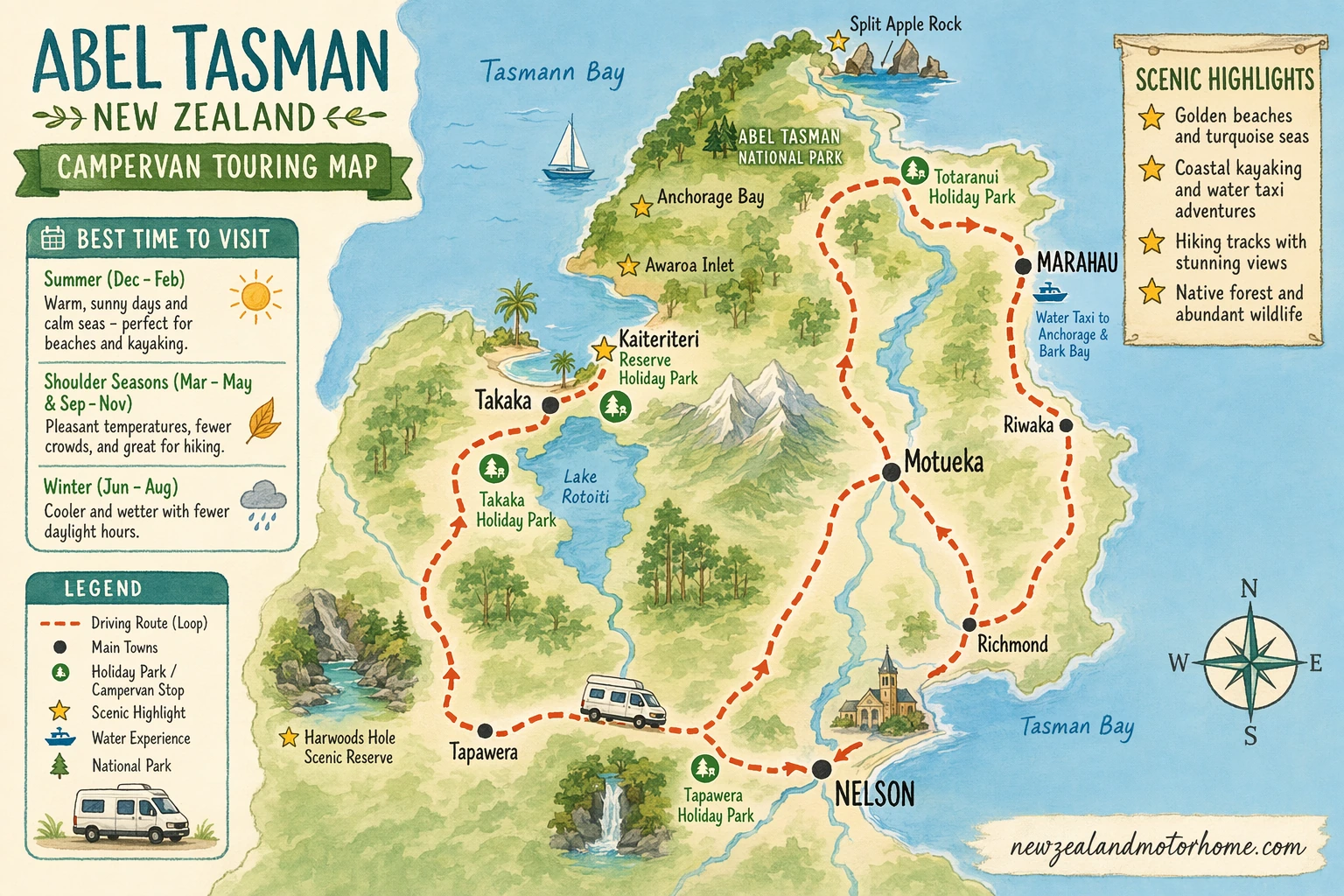
Abel Tasman is one of the easiest national parks to enjoy from a campervan, but it is not a place where you simply drive into the bush and pull up beside the beach. Most van travellers base themselves at Marahau, Kaiteriteri, Motueka, Tākaka or Tōtaranui, then walk, paddle or catch a water taxi into the golden-sand bays.
The best time to visit Abel Tasman NZ depends on what matters most to you: warm swimming weather, quieter campsites, reliable water-taxi links, or easier parking for a larger motorhome. This guide breaks down Abel Tasman weather by month, seasonal crowds, campsite availability, freedom-camping realities and the driving conditions that matter when your bed is also your vehicle.
Best overall months for a campervan trip
For most self-drive travellers, late February through April is the sweet spot. The sea is still warm enough for swims, the main walking tracks and water taxis are running, and the worst of the summer holiday crush has eased. It is also a nicer time to find a powered site without feeling you need to plan every overnight stop months ahead.
March is especially good if you are travelling in a hired motorhome and want settled weather without the tightest summer parking. Mornings are often calm for kayaking or water taxis, and evenings are mild enough to cook outside the van at Marahau or Kaiteriteri.
- Best balance: March to early April for warmth, daylight and easier bookings.
- Warmest beach weather: January and February, but expect full holiday parks and busy car parks.
- Quietest touring: May to September, with cooler nights and fewer services.
- Good pre-summer option: November into early December, before the Christmas peak.
Abel Tasman weather by month for van travellers
Abel Tasman has a mild coastal climate, but a campervan trip still feels very different from month to month. Summer days can be hot in the sun, while winter evenings cool quickly once you are back at the van. Rain can arrive in any season, and heavy falls may affect tracks, tidal crossings and smaller access roads.
As a practical guide, January and February are the warmest months, often suited to swimming, kayaking and long beach days. March remains warm and is usually one of the nicest months for a motorhome itinerary. April is settled and softer, with cooler nights that make a powered site useful if you want heating.
May is quieter and still workable for walking sections of the Coast Track, though you will want warmer bedding. June and July bring short days and chilly mornings, especially if you overnight away from the coast. August and September can be changeable, with spring fronts and wind, while October and November gradually bring longer days, greener bush and more comfortable evenings outside the van.
Crowds, campsite bookings and where to park the van
In peak summer, the pressure points are not just beaches and walking tracks; they are van-sized parks, dump-station queues and holiday-park sites. Marahau track-end parking can fill early, Kaiteriteri is lively from breakfast onward, and Motueka becomes a practical resupply base for fuel, groceries, LPG and fresh water.
If you are staying near the southern end of the park, book powered or unpowered sites at Marahau, Kaiteriteri or Motueka well ahead for late December, January and public holidays. Outside peak season, you usually have more flexibility, but it is still worth checking ahead if you need power for heating, medical equipment, e-bike charging or a larger motorhome bay.
- Marahau: best for Coast Track access and water taxis, but parking is tighter in summer.
- Kaiteriteri: handy for beach time and boat departures, with busy holiday-season traffic.
- Motueka: practical base for dump stations, supermarkets, fuel, LPG and laundry.
- Tākaka and Golden Bay: useful for the northern side, including Wainui and Tōtaranui access.
Freedom camping and self-containment around Abel Tasman
Freedom camping around Abel Tasman is restricted and actively managed, so do not assume you can pull up beside any beach because your van is self-contained. Tasman District rules, seasonal restrictions and local signage matter, and some scenic car parks are day-use only. A certified self-contained vehicle gives you more options, but it is not a free pass to camp anywhere.
For a smoother trip, treat freedom camping as a bonus rather than the backbone of your Abel Tasman plan. In summer, book proper overnight sites and use holiday parks or designated camping areas for showers, rubbish, water and dump-station access. In shoulder seasons, you may find more space, but you should still arrive in daylight and check signs carefully before setting up for the night.
If you want help matching your route to legal overnight stops, fresh-water fills and dump points, you can use the /talk-to-us/ planning step before you lock in dates. It is especially useful if you are travelling in a longer van or need a mix of powered sites and self-contained nights.
Driving conditions: Marahau, Kaiteriteri, Tākaka Hill and Tōtaranui
The roads into Abel Tasman are scenic rather than fast. The approaches to Marahau and Kaiteriteri are sealed but winding in places, with summer traffic, cyclists and pedestrians near beaches and campgrounds. In a wide motorhome, give yourself time rather than following car-based drive times too closely.
The Tākaka Hill road to Golden Bay is a memorable drive in a campervan: sealed, steep and twisty, with slow-vehicle bays and superb views when the weather is clear. It is manageable for most hired vans in normal conditions, but it is tiring if you are new to left-side driving or carrying a longer vehicle. Take the bays, watch your downhill speed and avoid pushing on late in the day.
Access towards Tōtaranui is more remote, with narrow sections and parts that may be slower after rain or maintenance. Check current road conditions, your hire agreement and DOC campground access notes before taking a large motorhome in. If the forecast is rough, basing yourself at Motueka, Marahau or Kaiteriteri and using water transport can be the easier choice.
Choosing your season: what is open and what to plan ahead
When to visit Abel Tasman also depends on how much you want open around you. In high summer, you will find the fullest range of water taxis, kayak trips, cafés and holiday-park services, but you trade that for crowds and the need to book. In winter, the park feels peaceful, yet some operators reduce schedules and some campgrounds or facilities may run limited services.
Shoulder seasons are kinder to campervan travellers because you can still access the main gateways while keeping your itinerary breathable. You can walk one section of the Coast Track, return by boat, then spend the night plugged into power rather than chasing a late free-camping spot. For many vans, that is the difference between a relaxed Abel Tasman stay and a rushed one.
- Summer: book campsites, water taxis and kayak days early; start driving and parking early.
- Autumn: excellent for flexible touring, warm afternoons and quieter powered sites.
- Winter: bring warm bedding, check reduced services and allow for shorter daylight.
- Spring: watch wind and rain forecasts, but enjoy fresh bush and lighter crowds.
Keep planning
Holiday parks abel tasman park
Read onHoliday parks abel tasman
Read onFarmers markets abel tasman
Read onAbel tasman park campervan guide
Read onCampervan guide abel tasman nz
Read onBest campervan stops abel tasman
Read onCommon questions
What is the best month to visit Abel Tasman in a campervan?
March is often the best single month for a campervan trip: warm water, settled weather, long enough days and fewer peak-holiday crowds. Late February and April are also strong choices if you can travel outside school holidays.
Can I freedom camp near Abel Tasman National Park?
Only in places where local rules and signage allow it, and you will usually need a certified self-contained vehicle. Many beach and track-end car parks are not overnight spots, so plan legal campsites or holiday parks rather than relying on last-minute freedom camping.
Do I need to book campervan sites in summer?
Yes, for late December, January, long weekends and school holidays you should book ahead, especially if you need a powered site or have a larger motorhome. Marahau, Kaiteriteri and Motueka can all fill quickly in warm weather.
Is Tākaka Hill suitable for a motorhome?
In normal conditions, most hired campervans and motorhomes can drive Tākaka Hill, but it is steep, winding and slower than it looks on a map. Use slow-vehicle bays, avoid rushing the descent, and check weather or road alerts before crossing.
Where should I fill water, dump waste and get LPG?
Motueka and Tākaka are the most practical service bases on either side of the park, with fuel, groceries and usual campervan servicing options nearby. Holiday parks may also offer water and dump facilities for guests, but check before depending on them.
Is winter worth it in Abel Tasman by campervan?
Winter can be lovely if you like quiet tracks and do not mind cold nights. Choose powered sites for heating, check water-taxi schedules, and keep your days shorter so you are parked up before dark.
Have a planner shape this for your dates
Send a short outline — your dates, party size, and the kind of trip you want. A planner replies with a vehicle recommendation, a paced route, and the realistic budget.