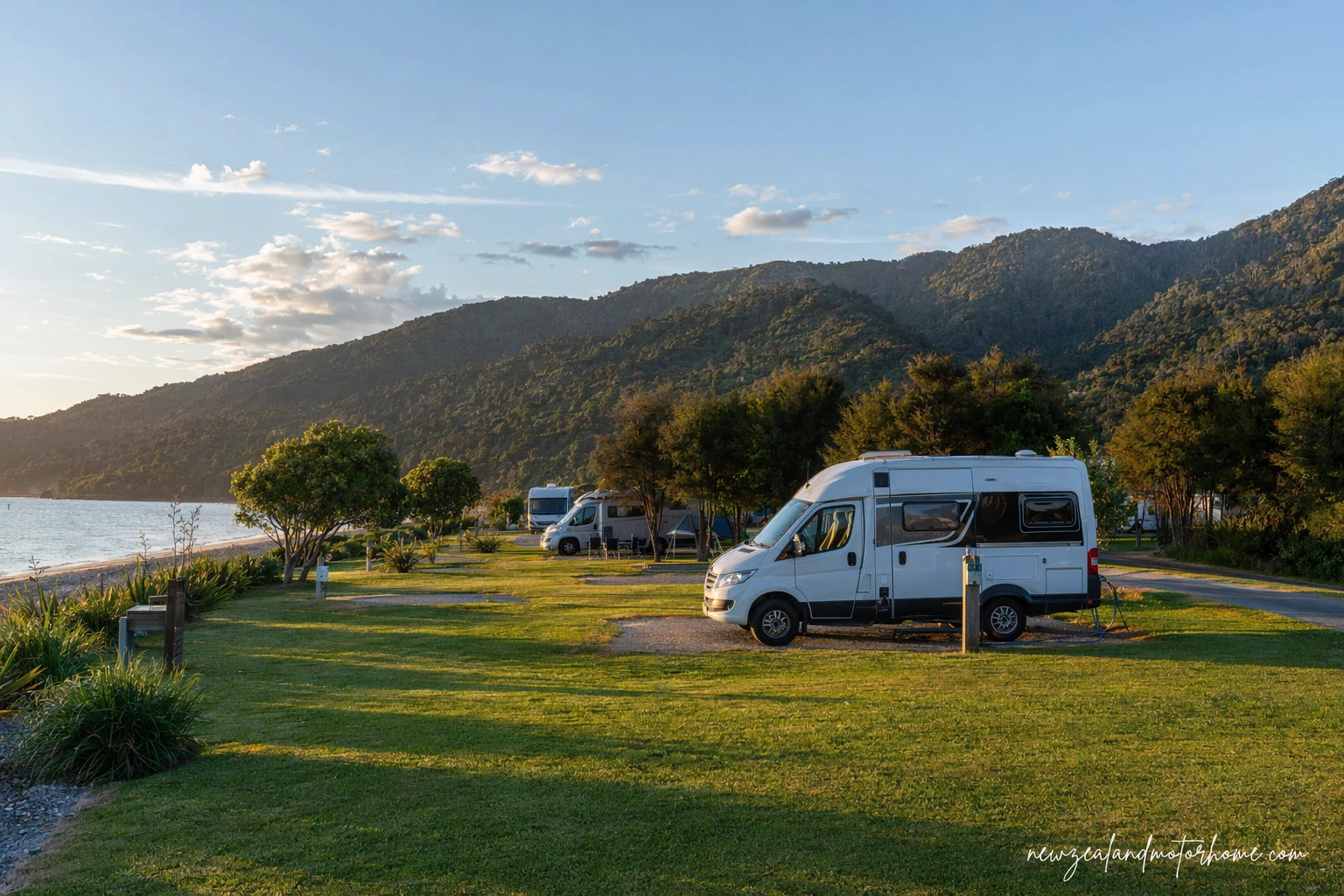
- Best season: spring to autumn
- Allow 2–4 nights
- Book powered sites in summer
- Tākaka Hill is winding
- Self-contained rules apply
Holiday parks Abel Tasman sit around the edges of the national park rather than inside it, which is useful to know before you point the van at the coast. Your main campervan bases are Motueka, Kaiteriteri, Marahau and, over Tākaka Hill, the Golden Bay side around Tākaka and Pōhara.
This guide is written for self-drive campervan travellers choosing where to sleep, plug in, fill water, empty the toilet cassette and park for beach days or track access. We’ll cover the spread of campsites Abel Tasman travellers actually use, how freedom camping works here, and what each base unlocks without pretending there is a single “best” campground for every van.
How the Abel Tasman holiday park map works for a van
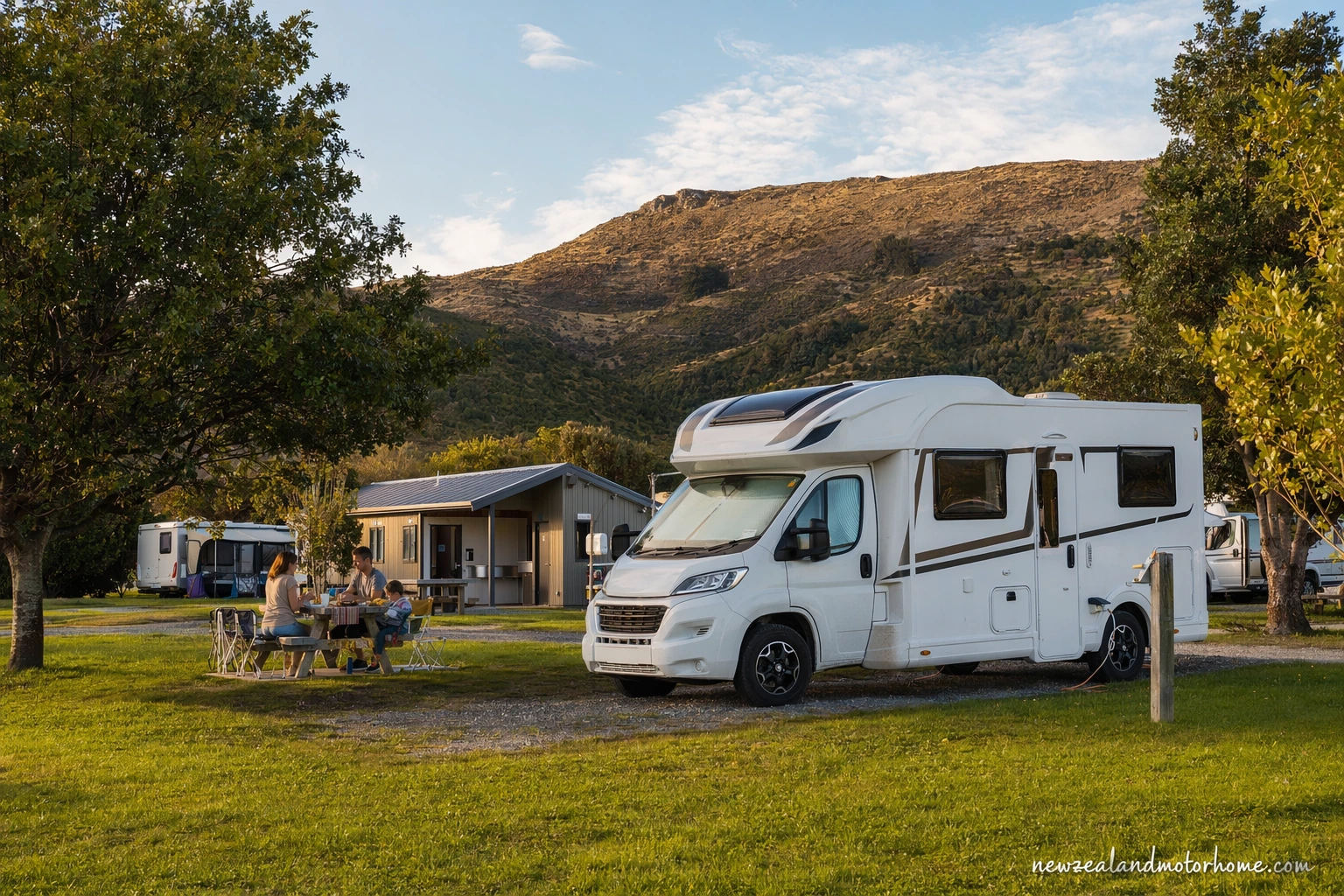
The first thing to understand is that you do not drive your campervan through Abel Tasman National Park. The road network wraps around it, with holiday parks and campgrounds Abel Tasman visitors use sitting in gateway settlements. From there you leave the van parked and go in by water taxi, kayak, shuttle or on foot.
Motueka is the practical resupply base, Kaiteriteri is the polished beach-and-water-taxi base, Marahau is the closest southern road-end feel, and Golden Bay suits slower travellers who want the northern side of the park and more space between stops.
- Motueka: easiest for supermarkets, fuel, LPG swaps, dump stations and a reset night on power.
- Kaiteriteri: handy for beach access and boat departures, but book ahead in busy months and check site size for longer motorhomes.
- Marahau: good for walking into the park; roads and sites can feel tighter in peak summer.
- Tākaka and Pōhara: better for Golden Bay beaches, the northern track access points and a quieter rhythm once you are over the hill.
Powered sites, unpowered sites and facilities to look for
Powered sites Abel Tasman holiday parks offer are worth booking if you are staying more than one night, especially with a compressor fridge, e-bike batteries or wet towels after kayaking. In summer, shaded sites are valuable; in cooler months, a powered site lets you run a heater safely and dry gear overnight.
Unpowered sites can work well for certified self-contained vans with decent house batteries and solar, but check whether you still have access to showers, camp kitchens, water taps and dump facilities. Some coastal campgrounds feel relaxed until you arrive in a long van and discover the turning space is designed more for compact campervans than large motorhomes.
- Ask for your site length if you are over 7 metres, towing, or travelling with a high-roof motorhome.
- Check whether fresh-water taps are potable before filling your onboard tank.
- Use a proper grey-water hose where required; do not drain onto grass or gravel.
- If you need a powered site, carry a compliant caravan lead and avoid relying on extension improvisations.
Freedom camping, dump stations and water around Abel Tasman
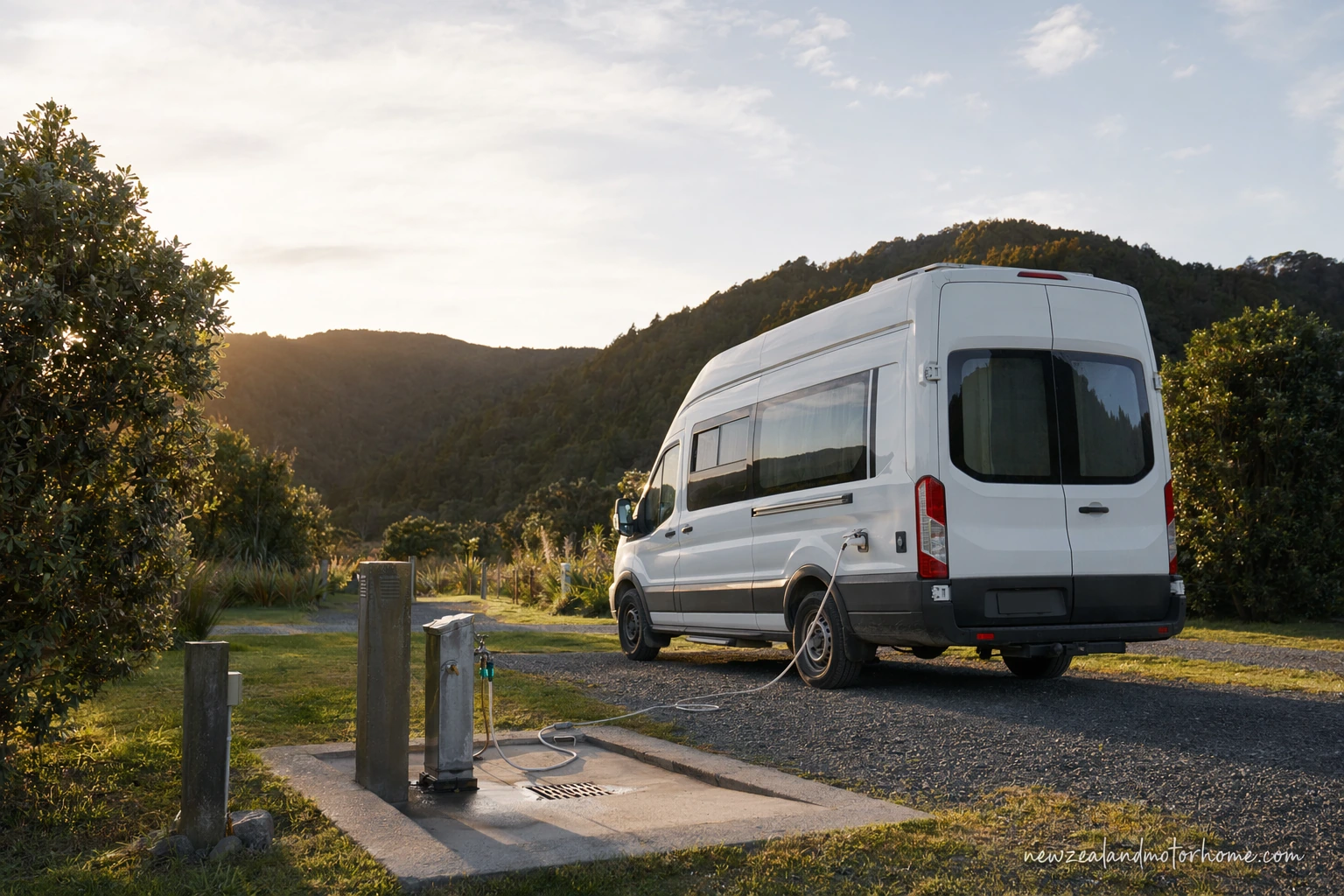
Freedom camping around Abel Tasman is controlled by local council rules and can change by season, location and vehicle certification. A certified self-contained van is the starting point, not a guarantee that you can stay anywhere. Beach car parks, reserve edges and town foreshore areas are commonly restricted, particularly around Kaiteriteri, Marahau and busy Golden Bay spots.
Plan dump stations and water fills before you are down to the last light on the gauge. Motueka and Tākaka are the most useful service towns, and some holiday parks provide guest dump points, fresh water and rubbish facilities. LPG is generally easier to sort in larger service towns than at small coastal road ends.
- Use signed dump stations only, and rinse the cassette area clean after use.
- Arrive with drinking water topped up before heading to smaller beach bases.
- Do not assume public toilets make a non-self-contained overnight stay legal.
- Check current council maps or campground advice on the day you travel, especially in summer.
Driving between Motueka, Kaiteriteri, Marahau and Golden Bay
Distances look short on the map, but Abel Tasman driving is not motorway driving. The road into Kaiteriteri has bends and holiday traffic, Marahau is a slower coastal-road run, and the Tākaka Hill road over to Golden Bay is winding, scenic and tiring in a bigger motorhome.
Use low gear on descents, give following traffic safe passing opportunities, and take your time through roadworks or slip-prone sections after heavy rain. If your hire van is tall, watch overhanging branches in older campground lanes and be deliberate when entering tight beach parking areas.
- Motueka to Kaiteriteri is an easy day-hop, but allow extra time in January and school holidays.
- Kaiteriteri to Marahau is close, yet not ideal for repeated back-and-forth if you dislike narrow roads.
- Motueka to Tākaka crosses Tākaka Hill; check weather and road updates before committing.
- Longer motorhomes should avoid arriving at small coastal parks after dark, when site markers and trees are harder to judge.
Which base unlocks which Abel Tasman experience
If your priority is the Coast Track, Marahau and Kaiteriteri are the easiest southern bases because you can leave the campervan on-site or in arranged day parking and head out by foot or water taxi. For a beach-first stay with cafés and organised departures nearby, Kaiteriteri is convenient, though it can feel busy and tightly parked in high season.
Motueka suits travellers who want a practical overnight between Nelson, Abel Tasman and Golden Bay. It is also a sensible place to recover after a few unpowered nights: plug in, empty tanks, restock food and sort laundry before moving on. If you searched for a top 10 holiday park Abel Tasman list, use it as a starting point, but choose by base, facilities and van fit rather than ranking alone.
- Best for walking into the park: Marahau, if your site suits your van length.
- Best for boat access and beach time: Kaiteriteri, especially with pre-booked parking or campground sites.
- Best for services: Motueka, before or after the coast.
- Best for a slower northern loop: Tākaka or Pōhara, once you are comfortable taking the van over the hill.
If you want help stitching these overnight stops into a sensible loop, you can use our talk-to-us trip-planning step and we’ll shape it around your van, season and driving pace.
Booking rhythm and busy-season campervan tips
Abel Tasman is one of the South Island places where winging it in a campervan can become stressful. Summer, long weekends and school holidays fill the beachside holiday parks first, and the remaining sites may be unpowered, small or awkward for a longer motorhome.
Outside peak season there is usually more breathing room, but do not skip the practical checks: late arrivals, office hours, gate access, dump station use, and whether the ground stays firm after rain. Coastal grass sites can be lovely until you are trying to level a heavy van in the dark.
- Book powered sites ahead for December to February and public-holiday weekends.
- Carry levelling ramps; many coastal sites are slightly sloped.
- Arrive before dusk if you are unfamiliar with the campground layout.
- Keep one flexible night in Motueka or Tākaka for laundry, charging and tank resets.
Keep planning
Holiday parks abel tasman park
Read onFarmers markets abel tasman
Read onAbel tasman park campervan guide
Read onCampervan guide abel tasman nz
Read onBest time to visit abel tasman nz
Read onBest campervan stops abel tasman
Read onCommon questions
Are there holiday parks inside Abel Tasman National Park for campervans?
Do I need a powered site near Abel Tasman?
Can I freedom camp around Kaiteriteri or Marahau?
Where should I base the van for the Abel Tasman Coast Track?
Is Tākaka Hill suitable for a motorhome?
Have a planner shape this for your dates
Send a short outline — your dates, party size, and the kind of trip you want. A planner replies with a vehicle recommendation, a paced route, and the realistic budget.