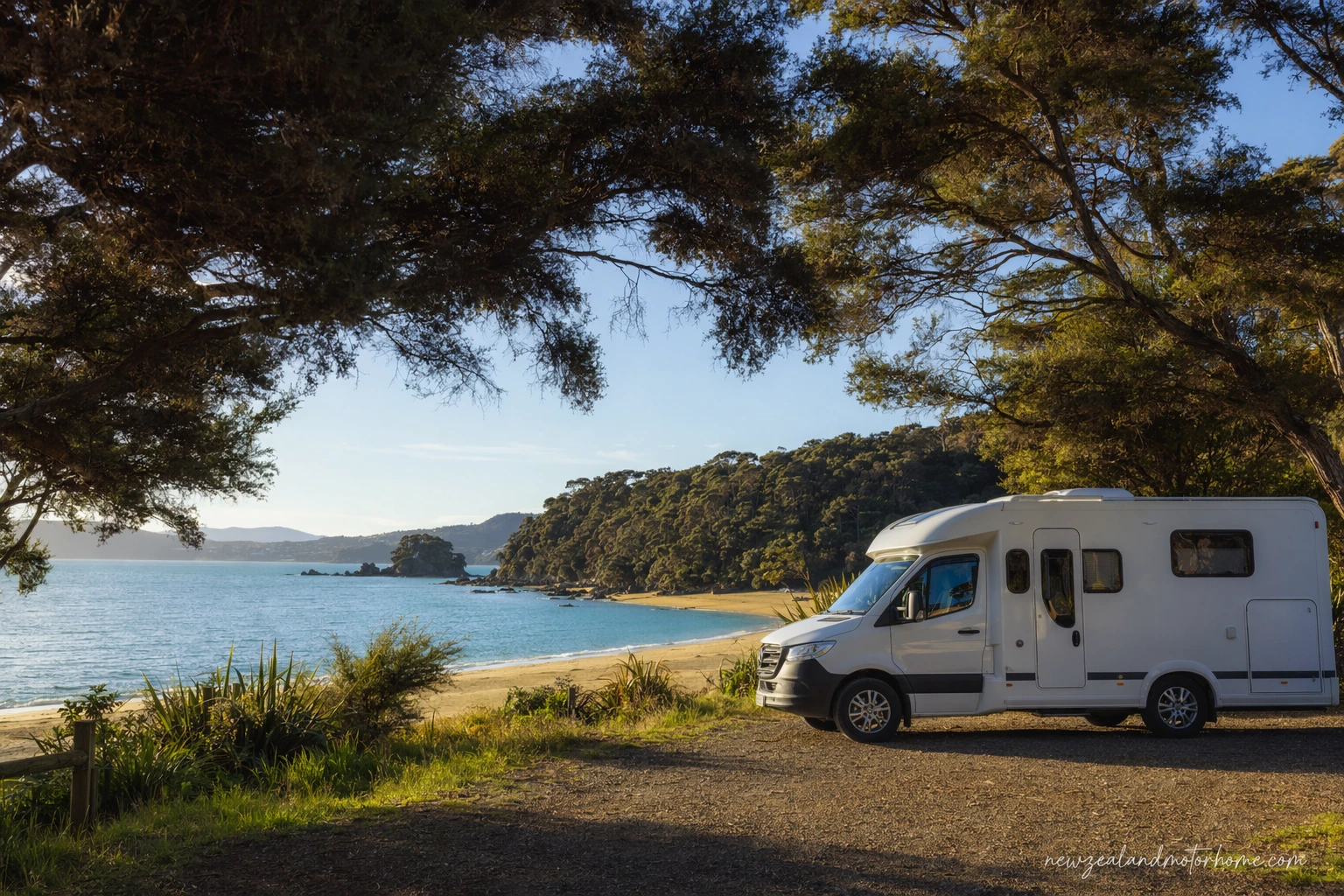
- Best with 2–4 nights
- No drive-through park road
- Book summer campsites early
- Tākaka Hill is slow in large vans
- Use legal overnight sites only
Abel Tasman is one of those places that rewards slow travel, but it is not a park you simply drive through in a campervan. The road reaches the edges, then the beaches, tracks and coves take over. For a self-drive trip, the trick is choosing the right gateway, parking the van sensibly, and booking an overnight base that suits your vehicle and your walking or kayaking plans.
This abel tasman park campervan guide is written for travellers sleeping in their own hired van or motorhome, with practical notes on access roads, day parking, powered and unpowered stays, dump stations, fresh-water fills and how to connect the park with Nelson, Golden Bay or the West Coast.
Getting to Abel Tasman by campervan
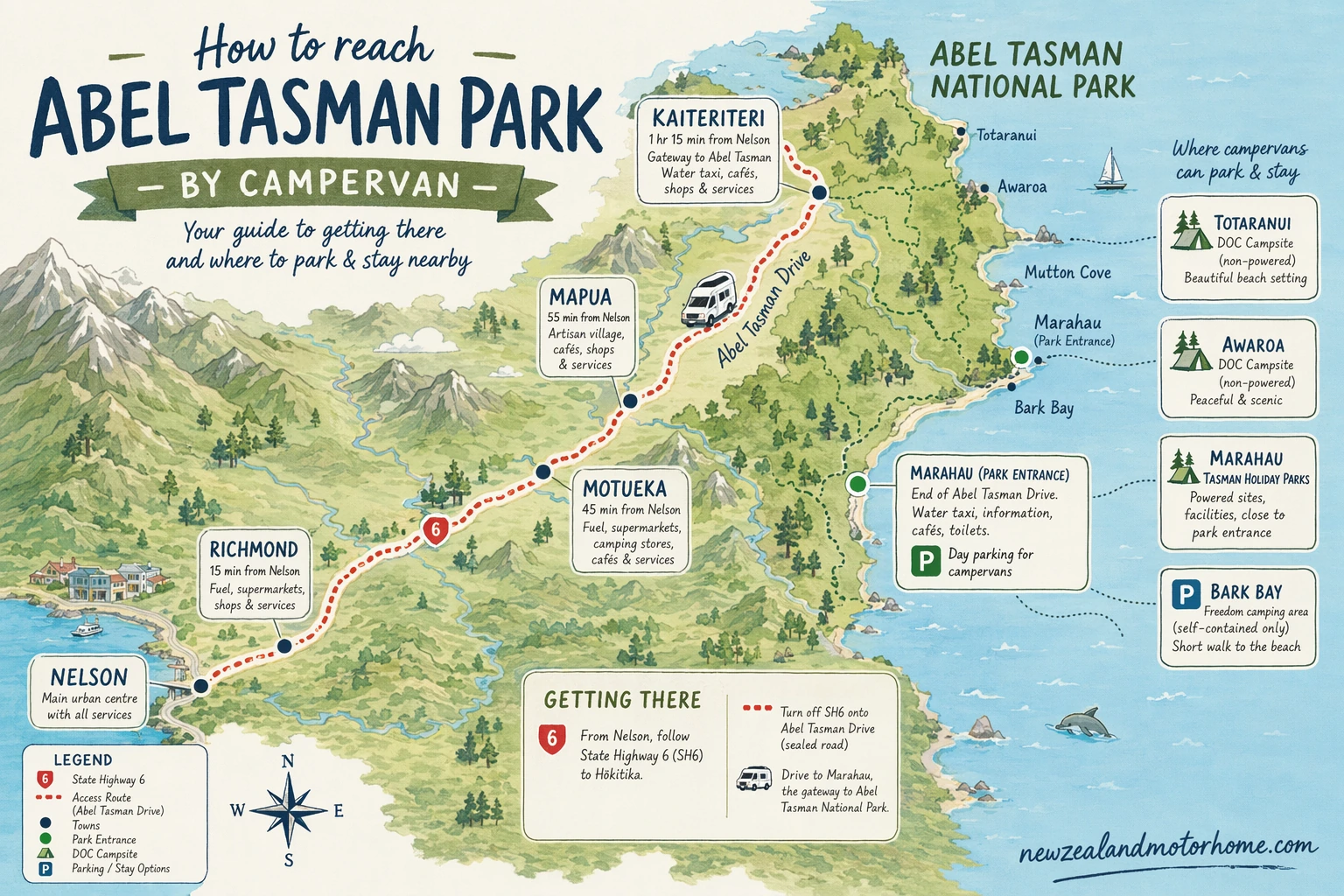
Most campervan Abel Tasman Park trips use one of three gateways: Mārahau at the southern end, Kaiteriteri for beaches and boat departures, or Tōtaranui if you are coming from Golden Bay. There is no road running through Abel Tasman National Park itself, so your motorhome becomes your base outside the park while you walk, kayak or take a water taxi.
From Nelson or Richmond, the drive to Motueka is straightforward, with services and larger supermarkets before the final coastal approach. The road from Motueka to Mārahau and Kaiteriteri is sealed but can be busy in summer, with tighter bends, beach traffic and pedestrians around the villages. Larger motorhomes should take it gently and avoid arriving late in the day when everyone else is leaving the beach.
- Mārahau: best for the Abel Tasman Coast Track start and water taxi connections.
- Kaiteriteri: good for beach time, boat departures and a more holiday-town feel.
- Tōtaranui: reached over Tākaka Hill and through Golden Bay; remote, beautiful and slower in a van.
Parking the van while you walk, kayak or swim
Parking is one of the big planning points for a motorhome Abel Tasman Park visit. In Mārahau, look for signed day-parking areas near the track end and water taxi meeting points, and follow time limits carefully. In Kaiteriteri, parking pressure builds fast on hot weekends and school holidays, so arrive early if you are in a longer van.
Do not assume you can leave a campervan overnight in a beach car park unless signage clearly allows it. Many scenic-looking pull-offs are day-use only, and enforcement around popular coastal spots can be firm. If you are heading into the park for a night at a hut or tent site, arrange an approved place to leave the van rather than trying to tuck it away near the sand.
- Check height clearance before using small shaded beach car parks.
- Reverse into spaces only where it is safe and permitted; some areas are tight for rear overhangs.
- Keep valuables out of sight before leaving the van for a full-day walk.
- Use designated busier parking areas rather than narrow roadside shoulders.
Where to stay overnight near the park
Camping near Abel Tasman Park ranges from holiday parks with powered sites to simpler unpowered campgrounds and bookable DOC-style stays near the park edges. If you want showers, laundry, easy device charging and a place to plug in after a few days off-grid, base yourself around Motueka, Kaiteriteri or Mārahau. For a quieter feel, look towards Golden Bay, but allow for the slower drive over the hill.
Freedom camping is not something to wing here. Tasman District rules vary by location, vehicle certification and season, and many beachfront areas are restricted or prohibited overnight. Even with a certified self-contained campervan, you should use signed, legal overnight spots and check current local rules before settling in.
- Powered site: useful before or after a Coast Track day, especially for fridges, batteries and wet gear.
- Unpowered site: fine for shorter stays if your house battery, water and grey-water capacity are in good shape.
- DOC-style campground: more basic; book ahead in peak periods and read vehicle-access notes.
- Park huts or tent sites: separate from your van stay, so plan where the vehicle will be left.
Water, dump stations, LPG and food supplies
Top up the practical things before you roll into the smaller coastal settlements. Motueka is the most convenient service town for the southern gateways, with fuel, groceries and access to campervan essentials. Nelson and Richmond are better for a bigger pre-trip shop, while Tākaka is the logical stop if you are approaching from Golden Bay.
Public dump stations and fresh-water points exist in the wider district, but do not rely on finding one right beside the beach when your grey tank is full. LPG bottle swaps or fills are more dependable in larger towns than at the park edge. Build your errands into the drive rather than spending your first beach morning hunting for a hose fitting.
- Empty grey and black water before heading to Mārahau or Tōtaranui for a multi-night stay.
- Carry enough fresh water for cooking, rinsing sandy feet and a simple van wash-down.
- Check LPG levels before crossing Tākaka Hill or parking up for several unpowered nights.
- Use campground potable-water taps only as signed; not every tap is for filling tanks.
Road notes for larger motorhomes
The Nelson-to-Motueka run is comfortable for most hired campervans, but the last approaches to beach settlements need patience. Watch for cyclists, people stepping out from between parked cars, and tight turning areas near boat ramps. If your van is long, choose parking and turnaround points with an exit plan rather than nosing into small beach lanes.
The biggest road decision is Tākaka Hill between Motueka and Golden Bay. It is sealed and scenic, but it is also steep, winding and slower than the map suggests. In a larger motorhome, use lower gears on descents, let faster traffic pass where safe, and avoid tackling it tired or in poor visibility.
- Allow extra time for hill roads and summer congestion.
- Secure cupboards before the bends; the hill will test loose crockery.
- Check your vehicle height before entering tree-covered or older campground areas.
- Fuel up before remote side trips, especially if continuing beyond Tōtaranui.
Fitting Abel Tasman into a wider campervan route
Abel Tasman works well as a two to four-night pause on a Top of the South loop. Many van travellers come in from Picton, Blenheim or Nelson, slow down around Motueka and Mārahau, then continue over Tākaka Hill to Golden Bay. Others make it the relaxing beach section before turning south towards Murchison and the West Coast.
If you are planning around ferry times, weather windows and campground bookings, it helps to avoid making Abel Tasman a rushed one-night detour. A better rhythm is to park the van, do one proper track or water day, then leave a spare morning for the beach, laundry, tank fills and a calm departure. If you want us to help stitch this into a sensible self-drive route, you can talk to us before locking in your dates.
- Short stay: one night near Motueka or Mārahau plus a half-day walk or beach stop.
- Comfortable stay: two or three nights with one full park day and one flexible weather day.
- Longer loop: add Golden Bay, Farewell Spit area and a slow return over the hill.
Keep planning
Holiday parks abel tasman park
Read onHoliday parks abel tasman
Read onFarmers markets abel tasman
Read onCampervan guide abel tasman nz
Read onBest time to visit abel tasman nz
Read onBest campervan stops abel tasman
Read onCommon questions
Can I drive my campervan into Abel Tasman National Park?
No, not in the way you might drive through some national parks. Roads reach gateway areas such as Mārahau, Kaiteriteri and Tōtaranui, but the coast itself is explored on foot, by kayak or by boat. Plan to park the van legally outside the park while you head in for the day.
Is freedom camping allowed near Abel Tasman Park?
Freedom camping is tightly controlled around the popular beach settlements. Even if your campervan is certified self-contained, you need to follow current local signage and Tasman District rules. In peak season, a booked campground or holiday park site is the safer, less stressful option.
Which gateway is easiest for a larger motorhome?
Mārahau and Kaiteriteri are generally the easier southern gateways from Motueka, though parking can be tight when busy. Tōtaranui is beautiful but more remote and involves the winding Tākaka Hill drive plus narrower Golden Bay roads, so allow more time in a larger motorhome.
Do I need to book camping near Abel Tasman Park ahead?
Yes, especially from late spring through early autumn, during school holidays, and on long weekends. Powered sites near the gateways can fill quickly, and DOC-style campsites also need advance planning. Booking gives you a legal overnight base rather than relying on last-minute freedom camping.
Where should I empty tanks and fill water?
Use service towns such as Motueka, Nelson, Richmond or Tākaka for dump stations, fresh water, fuel and LPG before heading to the smaller beach settlements. Do not assume every coastal car park or campground tap is available for tank filling. Arrive with empty waste tanks and enough fresh water for your stay.
Have a planner shape this for your dates
Send a short outline — your dates, party size, and the kind of trip you want. A planner replies with a vehicle recommendation, a paced route, and the realistic budget.