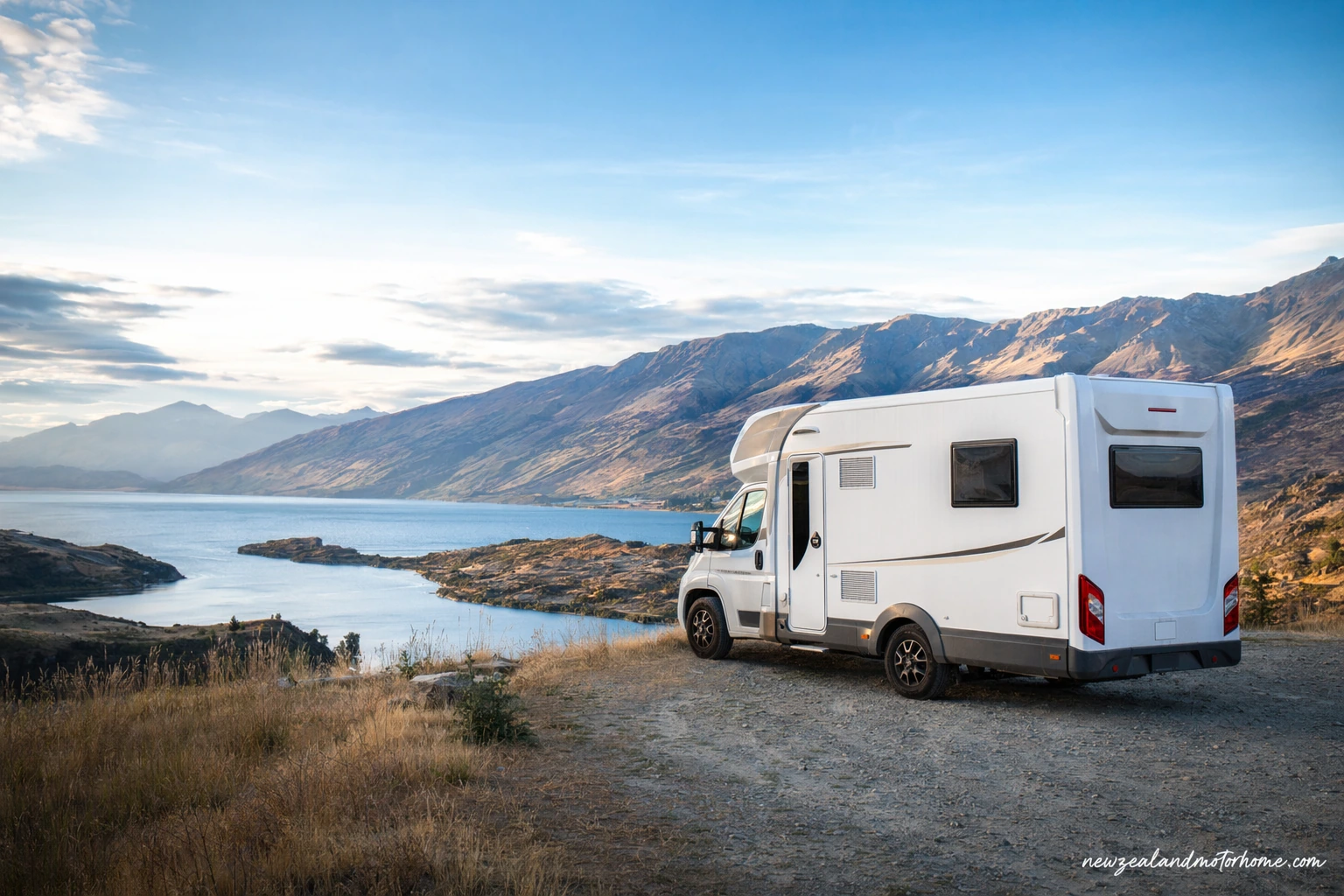
The best campervan stops Central Otago for views, overnights and easy van days
- Best with 3–7 days
- Certified self-contained needed for many freedom spots
- Main towns have the easiest dump and water access
- Take care on gravel side roads
- Powered sites useful in winter and peak heat
Central Otago suits a campervan rhythm: short driving days, wide gravel lay-bys, old stone towns, lake edges, fruit stalls and long evening light over dry hills. The trick is knowing which stops are worth pulling into with a van, where you can turn around without fuss, and which towns make practical overnight bases.
This guide gathers the best campervan stops Central Otago offers for self-drive travellers, including scenic pull-ins, holiday park bases, freedom camping Central Otago notes, and the small but important details: dump stations, fresh-water fills, LPG, road width, gravel access and where a larger motorhome may feel tight.
Cromwell and Lake Dunstan: easy first stops with big views
Cromwell is one of the easiest places to settle into Central Otago by campervan. The roads are broad, services are close together, and there are several lake-edge and orchard-country stops that do not require a long detour. It is a sensible place to stock the van, fill fresh water where available, empty the cassette at an approved dump station, and decide whether you are heading towards Clyde, Wanaka, Queenstown or the Maniototo.
For a relaxed scenic stop, park near the Cromwell Heritage Precinct and wander the old stone buildings on foot. Long vehicles may find the busier waterfront parking tighter in peak summer, so arrive early or use a larger general parking area and walk in. Lowburn and other Lake Dunstan pull-ins give those classic calm-water views, but always check current signs before assuming an overnight is permitted.
- Good for: first-night orientation, lake views, food supplies, dump station access and fresh-water planning.
- Van fit: most 6–7 metre motorhomes are comfortable around Cromwell; take extra care in small heritage car parks.
- Stay options: holiday parks around Cromwell offer powered sites; freedom camping is only in permitted areas and usually requires certified self-containment.
- Nearby pull-in: Bannockburn Sluicings has striking gold-mining landscapes, but parking is more limited, so avoid blocking access roads or turning bays.
Clyde and Alexandra: river stops, historic streets and practical bases
Clyde and Alexandra make a neat paired stop for campervan travellers because they are close enough to explore without rushing, yet different in feel. Clyde is compact, stone-built and slow-paced, while Alexandra has more services and a broader choice of fuel, groceries and van facilities. If you are wondering where to stay campervan Central Otago style, this stretch is one of the most convenient bases.
In Clyde, park the van before the narrowest historic streets and walk the village, river edge and dam viewpoints. In Alexandra, the town parking is generally more forgiving for larger vans, but hilltop viewpoints and smaller side roads can be steeper or tighter than they look on a map. The Alexandra clock area is best approached with caution in a larger motorhome; if in doubt, park lower down and enjoy it as a leg-stretcher.
- Good for: powered holiday park nights, laundry, groceries, river walks and the Central Otago Rail Trail atmosphere.
- Facilities: look for approved dump stations and potable water points in the main towns rather than leaving it until a small settlement.
- Road note: the Clyde–Alexandra section is straightforward, but wind can push a high-sided van around on exposed stretches.
- Overnight approach: use established campgrounds or clearly signed freedom camping areas; do not assume a quiet riverside lay-by is legal overnight.
Roxburgh and the Teviot Valley: fruit stalls, gorge roads and quieter nights
South of Alexandra, the road follows the Clutha Mata-Au through a warmer, fruit-growing valley. This is a lovely campervan day because the stops are simple: pull in for river views, buy seasonal fruit, pause near historic bridges, then choose a small-town overnight rather than trying to cover too many kilometres.
Roxburgh is a practical base with access to the gorge, the lake and the Clutha Gold Trail country. Parking is usually easier than in busier resort towns, although you should still avoid taking a long motorhome into small picnic areas if the turnaround is unclear. Pinders Pond and other water-edge areas are scenic, but overnight rules can change, so check on-site signs and council information before settling in.
- Good for: unhurried driving, cycling sections, summer swimming stops and quieter powered or unpowered sites.
- Van fit: SH8 is manageable for standard hire campervans, but keep an eye out for narrow shoulder pull-offs beside the river.
- Supplies: top up groceries and drinking water in Alexandra or Roxburgh before heading further into smaller valleys.
- Best rhythm: drive short, stop often, and choose an overnight with a legal toilet, waste and water plan.
Maniototo, Naseby and St Bathans: big skies and more careful planning
The Maniototo feels different from the lake-and-river side of Central Otago: open plains, big skies, frosty mornings, old railway towns and gravel-road detours to places such as St Bathans. It is excellent in a campervan if you are happy to slow down and plan services ahead, because facilities are more spread out than around Cromwell or Alexandra.
Naseby is a rewarding stop for forest walks, curling history and a quieter overnight. Ranfurly is a useful service town and a good place to check fuel, water and waste options. St Bathans and the Blue Lake are memorable, but the approach includes narrower rural roads and sometimes gravel; drive to the conditions, expect dust or corrugations, and do not take a large motorhome beyond your comfort level.
- Good for: clear night skies, Rail Trail detours, historic pubs and slow rural driving.
- Winter note: frosts can be hard, roads may be icy early, and unpowered freedom camping is less pleasant without a warm bedding setup.
- Van fit: compact campervans are easier around St Bathans and Ophir; longer motorhomes should be conservative with side-road detours.
- Avoid: using Danseys Pass as a shortcut in a hired motorhome unless your rental agreement and conditions clearly allow it; the road is narrow, exposed and partly unsealed.
Freedom camping Central Otago: how to do it without guessing
Freedom camping Central Otago can be excellent, but it is not a blanket permission to sleep anywhere scenic. Rules vary between council areas, reserves and road corridors, and many legal spots require a certified self-contained vehicle. If your van is not certified self-contained, plan around holiday parks, camping grounds or DOC-style sites with toilets where permitted.
Before you put the handbrake on for the night, check the sign at the site, the current council camping map and any time limits or vehicle caps. Avoid parking over grass when the ground is soft, keep clear of boat ramps and farm gates, and never drain grey water onto the ground. Central Otago is dry country, but that does not make it a dumping ground.
- Self-containment: carry and display the correct certification for your hired van if required.
- Waste: use approved dump stations for toilet cassette and grey water; do not rely on small settlements having one.
- Water: fill potable water in main towns when you can, especially before the Maniototo or side valleys.
- LPG and fuel: Cromwell, Alexandra and larger towns are the safest places to sort refills or swaps before quieter legs.
A simple campervan route linking the best stops
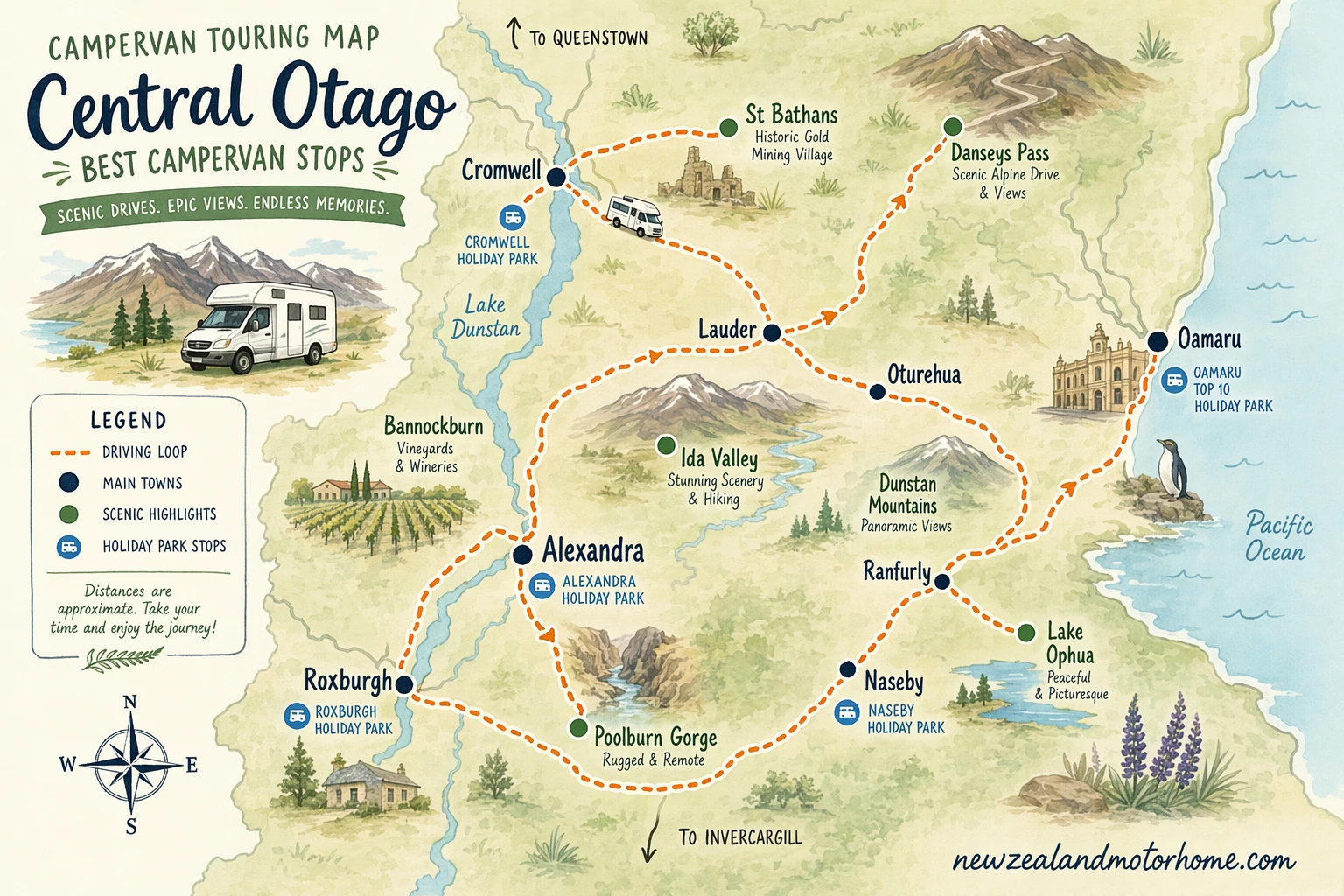
A good first Central Otago campervan loop is not long on paper, but it rewards lingering. Start in Cromwell for Lake Dunstan and Bannockburn, roll through Clyde and Alexandra for the river towns, continue to Roxburgh for the Teviot Valley, then cross into the Maniototo for Ranfurly, Naseby and St Bathans before returning via Alexandra or heading onward towards Waitaki or Dunedin.
Allow three days if you mainly want the highlights and have booked powered sites ahead. Five to seven days is better if you want slow mornings, cycling sections, historic town walks and a couple of unpowered nights. If you would like help matching these stops to your van size, season and comfort with gravel roads, you can use the talk-to-us step and we will help shape the route around how you actually drive.
- 3-day idea: Cromwell or Clyde, then Alexandra/Roxburgh, then Naseby or Ranfurly.
- 5-day idea: Cromwell, Clyde, Roxburgh, Naseby, St Bathans or Ranfurly.
- Longer trip: add slower Rail Trail sections, lake swims in summer, and extra nights where dump and water access are easy.
- Booking note: powered sites can be tight in peak summer and around events, so secure key nights rather than relying on late arrivals.
Common questions
Can I freedom camp anywhere in Central Otago if my campervan is self-contained?
No. Certified self-containment helps, but you still need to use places where overnight camping is allowed. Check current council maps and on-site signs, and move on if a site is full or restricted.
Where should I base the van for a first Central Otago visit?
Cromwell, Clyde, Alexandra and Roxburgh are the easiest first bases because they combine scenery with fuel, groceries, dump stations and powered sites. The Maniototo is wonderful too, but it needs a little more water, waste and weather planning.
Are Central Otago roads suitable for larger motorhomes?
Main highways such as SH8 and SH85 are generally suitable for standard hire motorhomes. Side roads to historic sites, lake edges and gravel viewpoints can be narrow or corrugated, so check the turnaround before committing a long vehicle.
Do I need to book holiday parks in Central Otago?
It is wise to book powered sites in peak summer, school holidays and during cycling or local events. Outside busy periods, you may have more flexibility, but do not leave dump, water and charging needs to chance.
What is the best season for a Central Otago campervan trip?
Autumn is superb for colour, calmer days and cooler nights, while summer is best for lake stops and long evenings. Winter can be beautiful but cold, with frosts and icy mornings, so powered sites and good heating become more important.
Have a planner shape this for your dates
Send a short outline — your dates, party size, and the kind of trip you want. A planner replies with a vehicle recommendation, a paced route, and the realistic budget.